





RELATED: CDL & Non-CDL Driver’s Files: What’s the Difference?
Short-Haul Exceptions to the Rule
Those who travel short distances with their commercial motor vehicles (CMVs) often wonder if they are subject to the same Federal Motor Carrier Safety Regulations (FMCSRs) as over-the-road trucking companies.
September 28, 2016

The majority of the safety regulations and subsequent recordkeeping are the same for all interstate carriers.
Photo: Getty Images
3 min to read
Those who travel short distances with their commercial motor vehicles (CMVs) often wonder if they are subject to the same Federal Motor Carrier Safety Regulations (FMCSRs) as over-the-road trucking companies.
The majority of the safety regulations and subsequent recordkeeping are the same for all interstate carriers. This includes Driver Qualification files, U.S. DOT markings, cargo securement, insurance, equipment specifications, vehicle inspection and maintenance, and so forth.
But, a driver is not required to create a record of duty status (log) if the criteria in Section 395.1(e) are met for one of two “short-haul exceptions.” Note that a driver using either exception is still subject to the 10-hour off-duty rule, the 11-hour driving rule, and the 60/70-hour limits. And, the crossing of state lines has no bearing on whether a log must be completed.
100-Air-Mile Radius Exception
For a property-carrying driver to qualify for the short-haul exception in Section 395.1(e)(1), he or she must operate within a 100 air-mile radius (115.08 statute miles) of the normal work reporting location, return to the location, and be released from work within 12 consecutive hours. This specific exception applies to all CMVs, not just those requiring commercial driver’s licenses (CDLs).
150-Air-Mile Radius Exception
Section 395.1(e)(2) is an exception for property-carrying drivers that operate CMVs that do not require a CDL. To qualify, the driver must operate within a 150 air-mile radius (172.6 statute miles) of the normal work reporting location, and return to the normal work reporting location at the end of each duty tour.
In addition, the driver is prohibited from driving after the 14th hour after coming on duty on five days of any period of seven consecutive days, or after the 16th hour after coming on duty on two days of any period of seven consecutive days.
Proper Recordkeeping
The motor carrier must maintain a specific time record on the driver when utilizing either short-haul exception. It must show:
The time the driver reports for duty each day.
The time the driver is released from duty each day.
The total number of hours on duty each day.
Total time on duty for the preceding seven days for drivers used for the first time or intermittently.
This record is kept for six months, just as any other hours-of-service document. Neither exception requires the motor carrier to maintain time records for the driver’s days off.
A driver is not expected to carry proof of either exception while operating the CMV. To avoid confusion during roadside inspections, the driver needs to explain the lack of daily logs to enforcement. The driver should simply state which exception he or she is claiming.
For either short-haul provision, the driver is excepted from the requirement in Section 395.3(a)(3)(ii) to take a 30-minute break every eight hours.
16-Hour Short-Haul Exception
Another short-haul exception is provided in Section 395.1(o). As long as a driver returns to the normal work location for his or her last five duty tours, the exception allows the driver to extend the 14-hour period by two hours. This can be done once per week or once since the driver’s last 34-hour restart. A driver taking advantage of a short-haul exception — that normally does not complete logs — must fill one out on the days he or she uses the 16-hour exception. This is due to the fact the driver exceeds the 12-hour limitation needed to make use of the either exception.
Subscribe to Our Newsletter
More Safety & Compliance

Navigating the Effects of Daylight Saving Time on Work Truck Fleets
Discover how daylight saving time impacts work truck fleets and get essential tips for fleet managers and drivers to navigate the "fall back" transition.
Read More →
How Halloween Changes the Job for Work Truck Drivers
Truck traffic doesn’t take the same Halloween break as other drivers. What fleet managers should know about timing, neighborhood stops, and braking data.
Read More →
Tips for Driving Safely on Halloween Night
This video features a reminder from the Connecticut Department of Transportation (DOT) and the Connecticut Police Chiefs Association, urging drivers to prioritize safety this Halloween.
Read More →From Our Partners



Re-rating Gross Vehicle Weight Ratings (GVWR): Why and How it's Done
Sometimes, it is not in a fleet’s best interests to have a vehicle at a given GVWR. Changing the GVWR to a special value can be done, but the process is complicated.
Read More →
When a Work Truck Gets Stolen, the Real Loss Is Time
A stolen work truck can take more than a vehicle off the road. From tools and access cards to crew downtime, here’s how fleets can prepare for theft before it disrupts the entire workday.
Read More →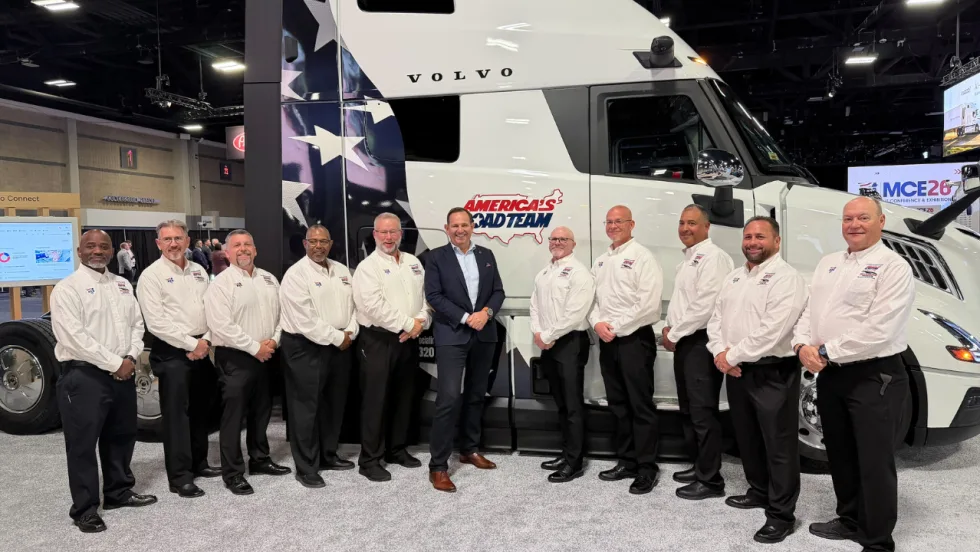
Volvo Trucks Marks 25 Years as Exclusive Sponsor of America's Road Team
Volvo Trucks North America will serve as the exclusive sponsor of the American Trucking Associations' America's Road Team, marking 25 years of Volvo sponsorship. The group of professional drivers promotes safety and the industry as they travel the country.
Read More →
Streamlight’s High-Output Scene Light Recognized with Occupational Safety Award
Streamlight’s Portable Scene Light III (PSL III) won the 2026 Occupational Health & Safety (OH&S) New Product of the Year Award in the Lighting category.
Read More →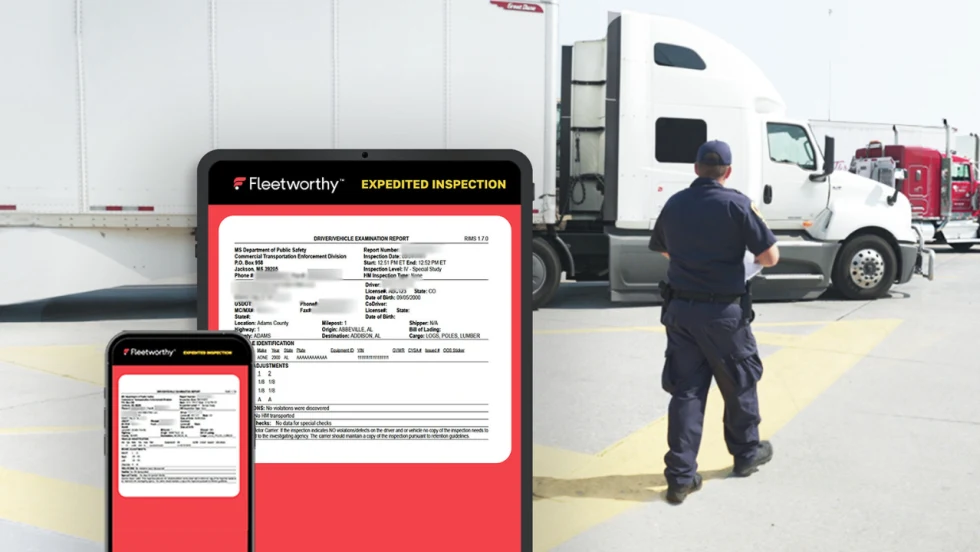
Fleetworthy Expands Expedited Inspection to 5 States
Following its industry-first launch in Nevada, Fleetworthy’s automated inspection technology is now live in California, Michigan, Vermont, and Maine.
Read More →
Crossing State Lines in a Light-Duty Work Truck? Check These Rules First
Crossing state lines in a lighter work truck? J.J. Keller's Kathy Close explains when IRP registration, trip permits, and towing rules come into play.
Read More →
Simple Tire Checks That Help Keep Your Business Fleet Moving
A survey found that nearly one in every 10 passenger vehicles has at least one bald tire. What's more, 27% -- more than one in four -- of vehicles are driven with one or more severely under-inflated tires.
Read More →