




Learn More: How Fleet Managers Can 'Sell' Themselves & Be 'Seen'
How to Comply with 'Reasonable Accommodations' Mandates
The Americans with Disabilities Act (ADA) requires employers accommodate an employee's disability or religion. Strategies and procedures can be developed to guide managers in complying with the regulations without creating "undue hardship" to the company.
by Richard D. Alaniz
April 21, 2009
Federal law creates special protections for employees who either suffer from a disability or have religious obligations to which they must adhere.
Photo: Flickr
7 min to read
No one likes to get sued. But lawsuits have become part of the cost of doing business in most industries, including fleet management. Employers have had to respond by adopting policies and procedures that reduce the likelihood an employee will sue, or if they do sue, win.
One of the most confusing aspects of discrimination law is what's called "reasonable accommodations." Reasonable accommodations are required by federal law, which means if you don't understand them, you will be sued. Many states and local governments also have their own reasonable accommodations regulations.
What Exactly is a 'Reasonable Accommodation'?
Federal law creates special protections for employees who either suffer from a disability or have religious obligations to which they must adhere. The Americans with Disabilities Act - now the Americans with Disabilities Amendments Act - and Title VII of the Civil Rights Act make it illegal to discriminate against employees because of a disability or religious belief.
To further this purpose, the law requires employers to alter the ordinary circumstances and conditions of employment to accommodate the employee's disability or religion to the extent that it doesn't create an "undue hardship" on the company. However, what is an undue hardship is judged on a case-by-case basis. According to the Equal Employment Opportunity Commission (EEOC), there are three types of reasonable accommodations:
Modifications or adjustments to a job application process that enable a qualified applicant with a disability to be considered for the position such qualified applicant desires.
Modifications or adjustments to the work environment, or to the manner or circumstances under which the position held or desired is customarily performed, that enable a qualified individual with a disability to perform the essential functions of that position.
Modifications or adjustments that enable a covered entity's employee with a disability to enjoy equal benefits and privileges of employment as are enjoyed by its other similarly situated employees without disabilities.
Take for, example, a fleet driver with particularly short legs who has trouble reaching the vehicle's brake pedal. His short legs may constitute a disability under the recently amended Americans with Disabilities Act. Therefore, he is entitled to request from you, as his employer, a reasonable accommodation.
In this circumstance, that would probably be customizing the brake pedal so it is easier for the employee to reach. The minimal cost, in relative terms, of such an accommodation probably would not rise to the level of an "undue hardship."
The federal government and case law offer guidance on determining when a request for reasonable accommodation crosses the line into an undue hardship. However, a truck cab is very different from an office cubicle, and as a result, the line is not always as clear to truck fleet managers and drivers themselves. Unfortunately, the wrong decision can quickly lead to a discrimination lawsuit, so it's important for trucking companies to plan ahead and be prepared to manage different scenarios that might arise.
Understanding Medical Disabilities & Accommodations
Often, the issue isn't just the truck - it's a driver's physical state. When drivers have illnesses or get hurt, employers need to examine whether physical limitations could be considered disabilities. If so, the employer must abide by ADA rules when accommodating the worker.
Physical issues that could compromise safety - of drivers, co-workers, customers, and others - represent a particularly tricky accommodation to make. Under the ADA and laws of numerous states, employers must prove the nature of the job and the specific aspects of a driver's disability would make him or here a "direct threat" and the driver's medical or mental limitation cannot be accommodated reasonably.
When deciding whether a disability represents a direct threat, employers must look at several factors, including the length of the risk, the type and seriousness of potential harm, and the likelihood and imminence of potential harm. Even if a driver or would-be driver presents a direct threat, employers must consider whether they can reasonably accommodate that person to manage or eliminate the potential threat.
Companies must take into account an individual's specific medical condition and the requirements of the job in question. Take the example of a driver with diabetes, a condition clearly a "disability" if not managed appropriately. Unmanaged diabetes can lead to spells of disorientation and confusion - obviously a worrisome situation for a truck driver.
Many diabetics successfully manage their disease for years without incident. These drivers likely would not be considered direct threats. However, a driver who has had several episodes in which the diabetes was not under control may well represent a direct threat. Keeping that driver out of the truck would not be discriminatory.
Understanding Religious Beliefs & Accommodations
Under Title VII of the Civil Rights Act, employers are also required to accommodate an employee's religious beliefs. With an increasingly diverse workforce, this area presents unique challenges, especially regarding employees with less common religious obligations.
In one recent Texas case, a driver sued for discrimination, claiming his employer required him to make overnight runs with a female partner, which was against his religion. Under company rules, more senior drivers selected their road trips while newer drivers picked up the remaining runs based on the order of their last trip. The complaining driver wanted to be skipped over for trips on which he would be paired with a female driver. In that case, the court ruled the company did not discriminate against the driver because requiring a skip-over on a regular basis would constitute an undue hardship.
Understanding When Cost is an Undue Hardship
For many companies, an undue hardship is one that hits the bottom line. When determining whether an accommodation for a particular driver or group of drivers is reasonable, the EEOC considers how much the hardship would cost relative to the employer's size and operating costs, as well as the number of employees. Size affects whether the accommodation is an undue hardship.
When choosing truck models, employers look at various factors, including the economic, technological, and environmental impacts of different vehicle models. Smaller trucks may be cheaper and better for the environment, but they also have less cab space, which may present difficulties for larger drivers or those with physical problems. Shorter drivers may have problems driving and loading and unloading taller trucks.
More sophisticated hardware and software, which can offer huge advantages in efficiencies and tracking drivers' movements, also reduce the available space in a cab and can affect its ergonomics. The smaller space can cause difficulties for drivers with back problems or other issues that could fall under the category of physical disabilities.
When a driver says he or she is unable to drive a specific model, managers must weigh whether providing a different vehicle is a reasonable accommodation or would create an undue hardship. If the company cannot offer the driver another type of truck, buying a different vehicle model for one driver would probably represent an undue hardship.
However, if a company has several drivers with similar issues and a large fleet with different models, it may not be an undue hardship to assign those drivers to trucks that accommodate their particular difficulties.
Practical Tips: Begin with Planning Ahead
Striking the right balance between granting a reasonable accommodation and avoiding an undue hardship is often tricky. The first step is to plan ahead. Assign a single, trusted manager to handle all requests for reasonable accommodations. Take the time to ensure the manager is educated about the legal issues involved and knows who to contact when he or she doesn't know the answer to a question.
It's also a good idea to have specific procedures in place, including for the requesting employee. Require all requests for reasonable accommodations be made in writing. Require employees to identify either the disability or religious observance that affects their work performance and the type of reasonable accommodation for which they are asking. The employee is responsible for seeking reasonable accommodation.
After reviewing the employee's request, and perhaps consulting with your employment attorney, give the employee your determination in writing. If the request is denied, include an explanation justifying the decision. Document every step of the process. This documentation will prove invaluable if you are later called upon to defend the decision in court.
Reasonable accommodations in qualifying circumstances are not easy issues for managers, but it is the law of the land. Employers should develop strategies and procedures to guide their managers in how to handle these issues. Otherwise they risk more costly lawsuits.
Subscribe to Our Newsletter
More Safety

Recalls You Need to Know About in June 2026
In June 2026, what recalls might impact your fleet? Work Truck has the answers in this comprehensive overview of recent NHTSA recalls.
Read More →
J. J. Keller Safety Professional of the Year Awards Nominations Now Open
J. J. Keller & Associates is accepting nominations for the 2026 J. J. Keller Safety Professional of the Year (SPOTY) Awards. Winners will receive prize packages valued at up to $47,200.
Read More →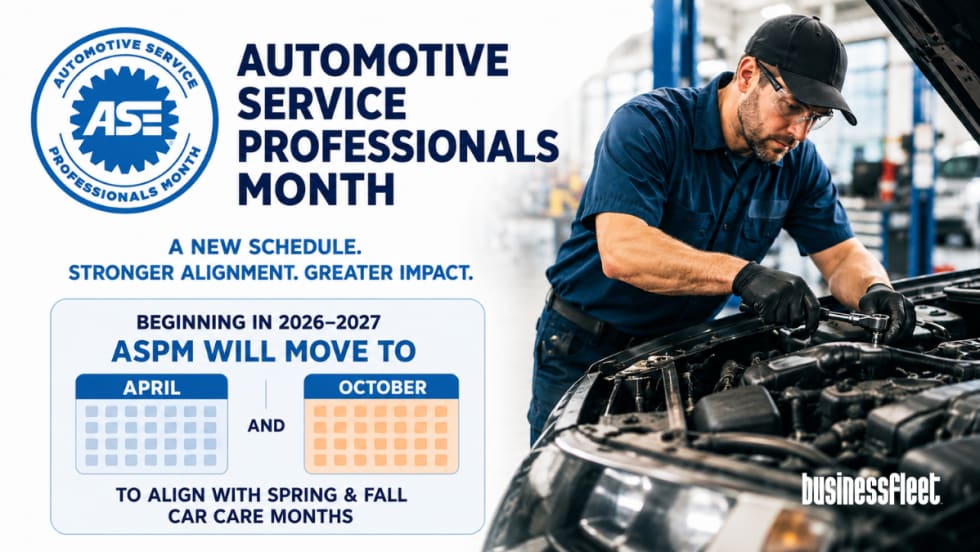
ASE Aligns Automotive Service Professionals Month With Spring and Fall Vehicle Maintenance Campaigns
ASE will move Automotive Service Professionals Month to April and October beginning in 2026-2027, aligning recognition with Car Care Month events.
Read More →

Sponsored•June 1, 2026
Turning Connected Vehicle Data Into Decisions That Matter
Fleet leaders have more data than ever, but turning that data into clear, actionable decisions remains a challenge. This white paper shows how leading organizations are using connected vehicle data to improve safety, reduce costs, and optimize fleet performance. Learn how to turn insight into action across your fleet.
Read More →
Driver Retention: Motive Automates Driver Coaching & Driver Rewards
New automated rewards and recognition capabilities from Motive can help organizations engage drivers, reinforce positive behavior, and reduce turnover. AI Coach has also been updated to deliver personalized feedback across safety, fuel, and compliance.
Read More →
Experts Forecast Broader Impact of Wildfires in 2026
This year’s wildfire season will likely be more intense than in 2025. The 2026 wildfire forecast from AccuWeather is for fewer fires, but even more acreage will be impacted this year.
Read More →
A Walkthrough of the DataQs Process
Bad data on your carrier record can cost you. Here’s how DataQs helps fleets challenge errors before they hit CSA scores, insurance, and your bottom line.
Read More →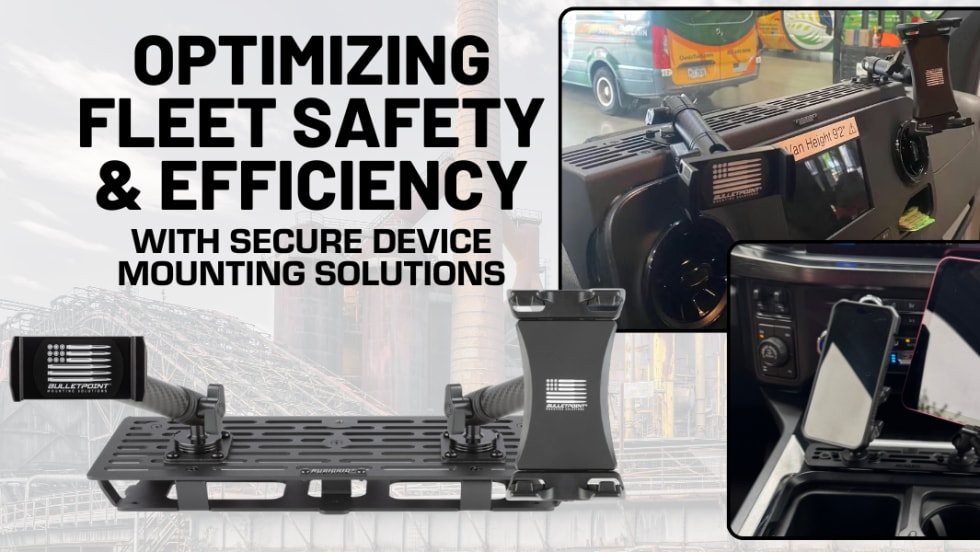
Sponsored•May 26, 2026
Optimizing Fleet Safety with Secure Device Integration
Unsecured devices are a hidden liability. Learn how precision-engineered mounting solutions enhance driver safety, streamline workflows and protect your technology.
Read More →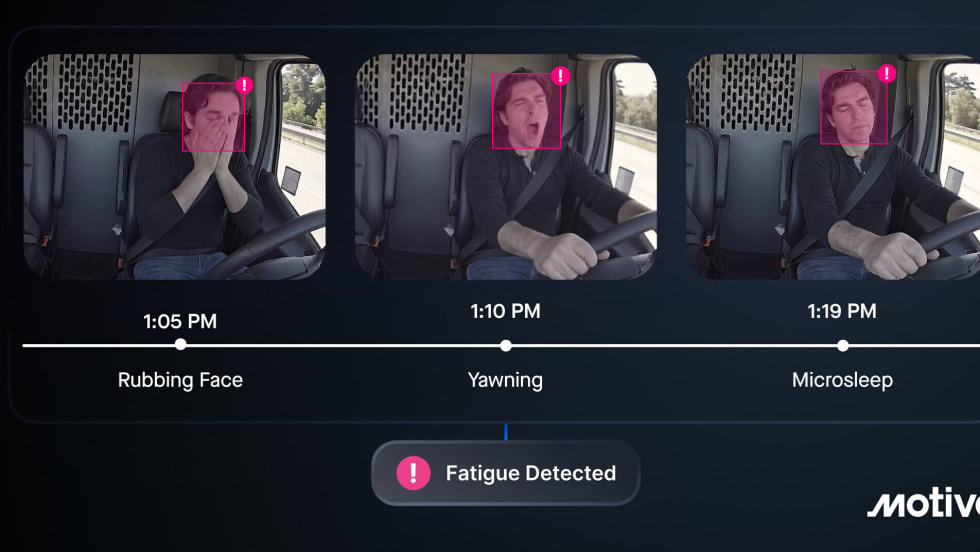
Motive Launches New Edge AI Capabilities to Help Prevent Collisions and Capture Critical Incidents in Real-Time
New AI models from Motive can detect signs of fatigue and eating, plus capture low-severity collisions often missed by telematics.
Read More →
Pro-Vision Acquires Convoy Technologies to Expand Fleet Safety and Video Solutions
Pro-Vision has acquired Convoy Technologies in a deal it said will broaden customer relationships and add specialized vehicle video capabilities for commercial fleets.
Read More →