




Materials of Trade - Are You Sure You Know the Limits?
Hazmat fines can cost your company tens of thousands of dollars. Familiarity with key areas of the MOT can save time, money, and confusion.
January 1, 2008

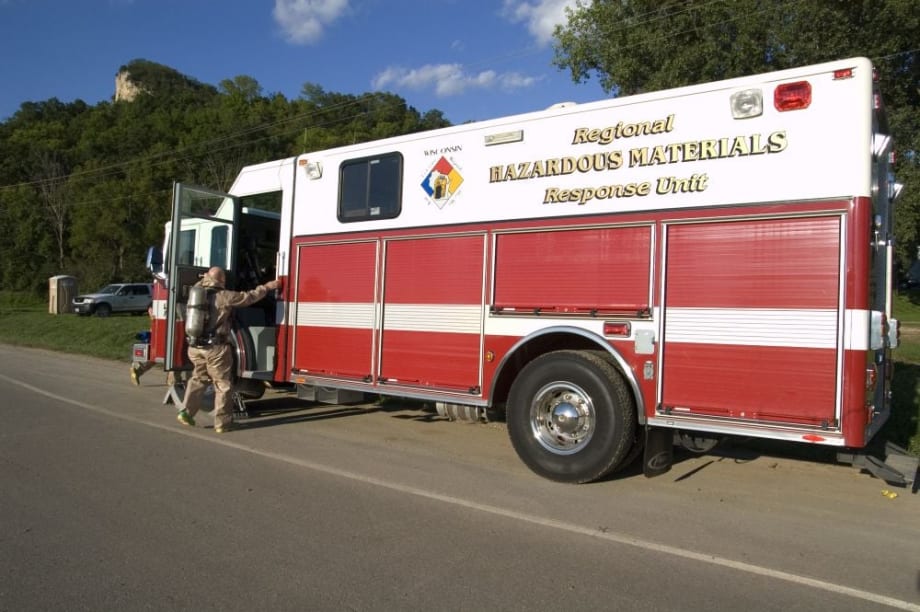
Hazardous materials (hazmat) fines can run in the tens of thousands of dollars. Drivers, as well as the company, may be subject to fines.
Photo: FEMA
5 min to read
"We do not transport hazardous materials, and none of our trucks are close to 1,000 pounds of anything hazardous!" As a commercial or work truck fleet manager, does this statement sound familiar?
Unfortunately, many companies confuse the Materials of Trade (MOT) limit with quantities greater than regulations allow. This lack of understanding can be very costly. Hazardous materials (hazmat) fines can run in the tens of thousands of dollars. Drivers, as well as the company, may be subject to fines.
MOT exceptions can be found in the Hazardous Material Regulations (HMR), 49 CFR 173.6. Mandatory compliance with this section was required by October 1, 1998.
Who Does Materials of Trade (MOT) Affect?
Many organizations transport limited quantities of hazardous materials in support of their business. Examples include utility, construction, welding, lawn care, plumbing, building maintenance, and other service-related organizations.
These companies may use products such as spray paints, lubricants, welding gases, or gasoline, classified as hazmat. For example, gasoline used by a lawn care company is a flammable liquid classified as hazardous, according to the HMR.
MOT exceptions allow non-transportation companies to transport limited quantities of hazardous material. These materials must meet specific guidelines to be classified as a MOT.
Materials transported using this exception are exempted from shipping papers, placarding, emergency response information, and specific training requirements.
That being said, the exceptions do not apply to the following hazard types:
Self-reactive (HMR 49 CFR 172.124).
Poisonous by inhalation (HMR 49 CFR 173.133).
Hazardous waste (HMR 49 CFR 171.8).
What Qualifies as a 'MOT'?
MOTs are hazardous materials transported on a motor vehicle for the following purposes:
To protect the health and safety of the driver and passenger.
To support the operation or maintenance of the vehicle (including auxiliary equipment).
To support the primary business of a private motor carrier or vehicles operated by a rail carrier not transported by a motor vehicle.
A hazardous material must meet specific quantity limits and hazard classifications to be considered an MOT. The material must belong to one of the hazard classes in the table below:
Class/Division | Hazard Description |
|---|---|
Division 2.1 | Flammable Gas |
Division 2.2 | Nonflammable Gas |
Class 3 | Flammable Liquid |
Division 4.1 | Flammable Solid |
Division 4.3 PG II or PG III | Dangerous When Wet |
Division 5.1 | Oxidizer |
Division 5.2 | Organic Peroxide |
Division 6.1 | Poison |
Class 8 | Corrosive |
Class 9 | Miscellaneous |
ORM-D | Other Regulated Material |
Quantity limits. Hazard classes 3, 8, 9: division 4.1, 5.1, 6.1, and ORM-D quantities include gross mass or capacity and include the weight of the packaging.
PG I: Not to exceed one lb. (0.5 kg) or one pint (0.5 L).
PG II, III, or ORM-D: Not to exceed 66 lbs. (30 kg) or eight gallons (30 L).
Diluted mixtures of a Class 9 (misc.): Not over 2% concentration — may not exceed 400 gallons (1500 L).
Division 2.1 (flammable gas) or 2.2 (nonflammable gas) in a cylinder: The gross weight of the gas and cylinder must not exceed 220 lbs. (100 kg).
Permanently installed tanks for division 2.2 non-liquefied material with no subsidiary hazard must meet ASME standards, and the capacity must not exceed 70 gallons.
The package must have a gross capacity of less than or equal to one ounce for division 4.3 material in PG II or PG III.
If you need assistance identifying the hazard class, division, or packing group, contact your supervisor or the individual responsible for your company's safety program.
Total weight. The total allowable weight of a MOT is 440 lbs. per vehicle. As a side note, it is important to remember that a vehicle towing a trailer is considered a single vehicle. So again, the 440-lb. rule applies to combination units. The amount is important because the driver must know the total weight of all hazardous materials transported in their fleet truck.
Example: A welding company transports a cylinder of oxygen and a cylinder of acetylene to a job site.
Acetylene is a Hazard class 2.1 flammable gas, and oxygen is a Hazard 2.2 nonflammable gas. Each cylinder must be 220 lbs. or less, and the total combined weight for all MOTs must be 440 lbs. or less.
Package requirements. MOT packages must meet the following requirements.
Liquids and gases must be in packages that are:
Leak-proof.
Securely closed.
Secured to prevent movement.
Protected against damage.
Solids must be in packages that are:
Sift-proof.
Securely closed.
Secured from movement.
Protected against damage.
Cylinders or other pressure vessels. Cylinders used in transport must conform to packaging, maintenance, and use requirements specified in the HMR regulations. Manifolding of cylinders is currently authorized, but this rule is under review. A best practice is to remove the regulators and install safety covers secured against movement.
Gasoline. Must be in a metal or plastic container and meet HMR requirements or the OSHA requirements found in 29 CFR 1910.106(d)(2) or 1926(a)(1).
Original packaging. Materials must be in the original packaging or have equal strength and quality. An outer package is not required for cans and bottles secured in cages, carts, or boxes. Keep in mind that they must be secured against movement.
What are the Marking Requirements?
Nonbulk packages, those with a capacity of 119 gallons or less, must be marked with the common name or proper shipping name. Cylinders must be marked and labeled as per HMR mandates. The table can be found in HMR 49 CFR 172.101.
Any diluted mixture of Class 9 (miscellaneous) carried in a bulk tank (greater than 119 gallons) must be marked on two opposing sides with the four-digit ID number. ID numbers are also found in the hazmat table and must be displayed on an orange panel or a white square-on-point configuration of the same size as the placard.
What Drivers Must Know
All commercial and work truck drivers must know that they are transporting hazardous materials. The MOT exceptions require the operator to be aware of the presence of the materials as well as the requirements in HMR 173.6. Many companies choose to cover these requirements as part of orientation. Some organizations cover this issue on a daily checklist.
The MOT exception relieves the company of shipping paper requirements and provides relief from other HMR requirements as long as the hazardous materials transported meet the MOT criteria. If the limits are exceeded, the corporation is subjected to all of the HMR rules.
Someone within your organization must be identified as the individual responsible for ensuring compliance with hazardous materials regulations. The company should formalize its program concerning the MOTs. If the need arises, this effort will help to demonstrate the company's compliance with the regulations.
Subscribe to Our Newsletter
More Safety
J. J. Keller Safety Professional of the Year Awards Nominations Now Open
J. J. Keller & Associates is accepting nominations for the 2026 J. J. Keller Safety Professional of the Year (SPOTY) Awards. Winners will receive prize packages valued at up to $47,200.
Read More →
ASE Aligns Automotive Service Professionals Month With Spring and Fall Vehicle Maintenance Campaigns
ASE will move Automotive Service Professionals Month to April and October beginning in 2026-2027, aligning recognition with Car Care Month events.
Read More →
Sponsored•June 1, 2026
Turning Connected Vehicle Data Into Decisions That Matter
Fleet leaders have more data than ever, but turning that data into clear, actionable decisions remains a challenge. This white paper shows how leading organizations are using connected vehicle data to improve safety, reduce costs, and optimize fleet performance. Learn how to turn insight into action across your fleet.
Read More →

Driver Retention: Motive Automates Driver Coaching & Driver Rewards
New automated rewards and recognition capabilities from Motive can help organizations engage drivers, reinforce positive behavior, and reduce turnover. AI Coach has also been updated to deliver personalized feedback across safety, fuel, and compliance.
Read More →
Experts Forecast Broader Impact of Wildfires in 2026
This year’s wildfire season will likely be more intense than in 2025. The 2026 wildfire forecast from AccuWeather is for fewer fires, but even more acreage will be impacted this year.
Read More →
A Walkthrough of the DataQs Process
Bad data on your carrier record can cost you. Here’s how DataQs helps fleets challenge errors before they hit CSA scores, insurance, and your bottom line.
Read More →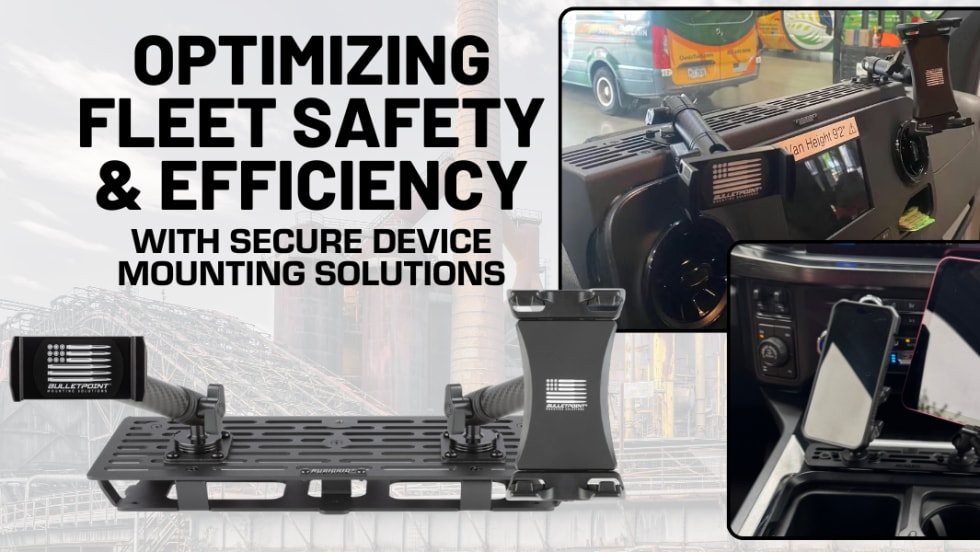
Sponsored•May 26, 2026
Optimizing Fleet Safety with Secure Device Integration
Unsecured devices are a hidden liability. Learn how precision-engineered mounting solutions enhance driver safety, streamline workflows and protect your technology.
Read More →
Motive Launches New Edge AI Capabilities to Help Prevent Collisions and Capture Critical Incidents in Real-Time
New AI models from Motive can detect signs of fatigue and eating, plus capture low-severity collisions often missed by telematics.
Read More →
Pro-Vision Acquires Convoy Technologies to Expand Fleet Safety and Video Solutions
Pro-Vision has acquired Convoy Technologies in a deal it said will broaden customer relationships and add specialized vehicle video capabilities for commercial fleets.
Read More →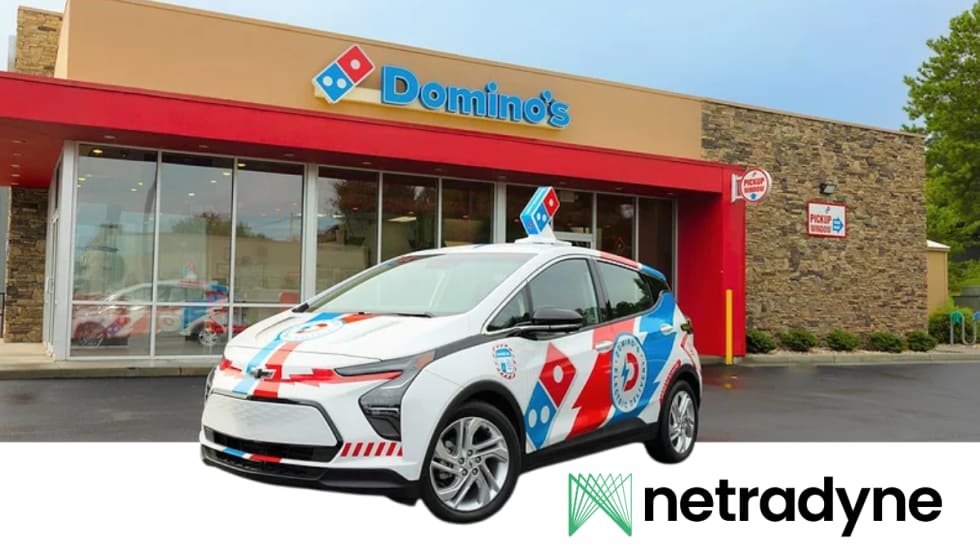
Netradyne Delivers 66% Reduction in At-Fault Crashes Across Domino's Franchise Network
Five Domino's franchises and more than 1,000 vehicles are now running on Netradyne's AI-powered fleet safety and performance platform. Designed for fleets that use personal or non-owned vehicles, FlexMount allows drivers to quickly install and remove Driver-i.
Read More →