




Re-rating Gross Vehicle Weight Ratings (GVWR): Why and How it's Done
Sometimes, it is not in a fleet’s best interests to have a vehicle at a given GVWR. Changing the GVWR to a special value can be done, but the process is complicated.

Changing a truck’s GVWR involves more than a new label. Fleets should address engineering support, certification responsibilities, and compliance implications before the vehicle is completed.
Work Truck
- Adjusting a vehicle’s GVWR can be beneficial for fleet management.
- The GVWR is altered to meet specific needs, but it's a complex procedure.
- Careful consideration and understanding of the process are required for changing GVWR.
*Summarized by AI
Changing a truck’s GVWR can affect payload planning, certification, and compliance. Here’s what fleets should understand before requesting a higher or lower rating.
Ordering a truck starts with identifying what it needs to carry and specifying the vehicle accordingly. Sometimes, however, the available configurations or operating requirements lead a fleet to ask whether a truck’s gross vehicle weight rating (GVWR) can be changed.
That conversation should happen early. Rerating a new vehicle involves engineering and certification responsibilities, and modifying a truck already in service does not establish a new manufacturer-assigned GVWR. Understanding that distinction can help fleets avoid buying a vehicle that does not fit the job.
Why Should You Rerate a Commercial Vehicle’s GVWR?
Requests to change GVWR or gross axle weight ratings (GAWRs) often begin with a practical concern. A fleet may need more carrying capacity for a particular body or equipment package, or it may be evaluating a lower-rated configuration to meet operating requirements.
However, a different number on a label is not a substitute for choosing the right truck. Fleets must consider the completed vehicle’s capabilities, the applicable regulations, and who will take responsibility for certifying any changes.
What Does GVWR Mean?
GVWR is the manufacturer-specified maximum loaded weight of a single vehicle. It includes the truck, body, permanently installed equipment, occupants, fuel, and cargo.
GVW is different. It is the vehicle’s actual weight at a particular time, which changes as people, materials, and equipment are added or removed.
GAWR identifies the rated load-carrying capacity of an individual axle system. A truck can be within its overall GVWR and still overload an axle if the load is distributed incorrectly, making weight distribution and payload planning part of the same conversation.
Why Up-Rate a Vehicle?
Fleet purchasers may request a higher GVWR to accommodate a heavier body, additional equipment, or more cargo. The question is whether the proposed vehicle can support that rating while meeting applicable requirements.
A rating change may require more than upgraded springs or another axle. Braking performance, chassis limitations, and certification documentation also need review.
NTEA’s guidance on rerating GVWR and GAWRs explains that adding axles does not automatically increase GVWR. The sum of the axle ratings is not necessarily the vehicle’s GVWR, and warranty coverage may also be affected.
Common Misconceptions
- Adding capacity to one component changes the truck’s rating. A component upgrade alone does not establish a higher GVWR.
- A lighter load changes GVWR. Carrying less reduces actual GVW, not the assigned rating.
- Lowering GVWR makes compliance simpler. A lower rating can introduce requirements that did not apply at the original rating.
- A replacement label rerates a used truck. A label applied after modifications does not, by itself, establish a new GVWR.
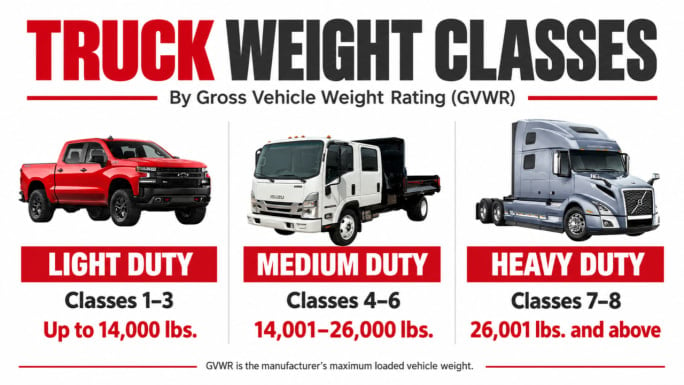
Truck weight classes are based on GVWR, the manufacturer’s maximum loaded vehicle weight. Actual operating weight, axle loading, and trailer combinations require separate consideration when planning vehicle assignments and reviewing compliance. Sometimes Class 3 and Class 7 vehicles can be considered medium-duty depending on configuration.
Work Truck
The Process of Rerating Trucks
Start with the chassis manufacturer and the company responsible for completing or altering the new vehicle. Before committing to a purchase or modification, determine whether the proposed rating is supported and what engineering documentation will be needed.
NTEA recommends consulting the OEM because it knows the components and limiting factors behind the original ratings. Where OEM documentation does not support a change, the manufacturer performing the work must independently establish compliance with applicable requirements.
The discussion should address:
- The proposed GVWR and GAWRs.
- The completed body, equipment, occupants, and expected cargo.
- Required component changes and engineering support.
- Responsibility for certification and labeling.
- Warranty implications.
Federal rules require a qualifying alterer to take responsibility for conformity with the standards affected by its work. When ratings change, the additional certification label must show the modified values while the original manufacturer’s label remains in place.
How to Derate a Truck
Requests for a lower GVWR may involve licensing considerations, vehicle classification, or purchasing costs. Those questions should be resolved during vehicle selection and the new-vehicle build process.
Lowering a rating is not automatically easier than raising it. NTEA cautions that moving a new vehicle into a lower weight range can trigger additional safety requirements, with responsibility falling on the manufacturer making the change.
Does a Lower GVWR Remove CDL Requirements?
A GVWR of 26,000 pounds or less does not automatically mean a driver can operate the vehicle without a commercial driver’s license.
Under federal CDL definitions, a single vehicle meets the heavy straight vehicle weight threshold when its GVWR or actual GVW, whichever is greater, reaches 26,001 pounds. Combination vehicles have separate criteria involving combined rated or actual weight and the weight of the towed units. Passenger capacity and certain hazardous materials can also trigger CDL requirements below the weight thresholds.
Before choosing a configuration, review the truck’s intended use, trailer assignments, and applicable state licensing requirements. For another part of the compliance picture, see Do I Need a U.S. DOT Number?.
What About Federal Excise Tax?
The 12% federal excise tax applies to the first retail sale of specified heavy truck chassis, bodies, and other taxable articles. Federal regulations include an exclusion for truck chassis and bodies suitable for vehicles with a gross vehicle weight of 33,000 pounds or less.
However, tax treatment involves suitability, rating, and documentation rules. Fleets should not assume that requesting a lower rating automatically eliminates the tax. Confirm the treatment of the specific chassis and body with the seller and a qualified tax adviser before purchasing.
What About Rerating Used Vehicles?
A truck already in service presents a different situation. Changing its body, removing suspension components, or applying another label does not create a new manufacturer-assigned GVWR.
In a 2002 interpretation involving a used delivery truck, NHTSA explained that the company modifying the truck did not qualify as a final-stage manufacturer or alterer under its certification rules. NHTSA continued to recognize the original 29,000-pound GVWR rather than the lower rating on the replacement label.
The agency also distinguished an informational label describing an appropriate loaded weight from an officially assigned GVWR. That distinction matters when evaluating a used truck advertised as “derated” or suitable for operation without a CDL.
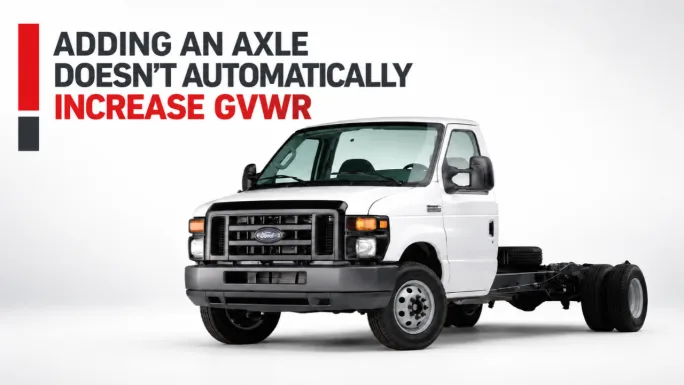
Adding an axle does not automatically increase a truck’s GVWR. Braking performance, chassis limitations, and certification requirements must also be considered when evaluating a higher rating.
Work Truck
Questions to Ask Before Requesting a Different GVWR
Before pursuing a rating change, fleet managers should be able to answer a few basic questions:
- What problem are we solving? Identify whether the concern is payload, driver licensing, vehicle configuration, or cost.
- Is this a new or used vehicle? Establish that before discussing rerating options.
- What will the completed truck weigh? Account for the body, equipment, occupants, fuel, and expected load.
- Who will support and certify the change? Identify the responsible manufacturer and required documentation.
- Will the truck still fit the operation? Review axle loading, trailer use, warranty coverage, and compliance obligations.
The best time to resolve a GVWR question is before the truck is ordered or completed. Starting with the right chassis and configuration can prevent a fleet from spending money on modifications that do not deliver the rating or operating flexibility it expected.
For more on selecting the right ratings, read The Role of GVWR and GCWR in Spec’ing Work Trucks.
Editor’s Note: Originally published in 2008, this article was updated in October 2026 to clarify CDL considerations, new- and used-vehicle certification limits, and questions fleets should ask before requesting a different GVWR.
Quick Answers
GVWR stands for Gross Vehicle Weight Rating, which is the maximum permissible weight of a vehicle when fully loaded.
*Summarized by AI
More Safety & Compliance
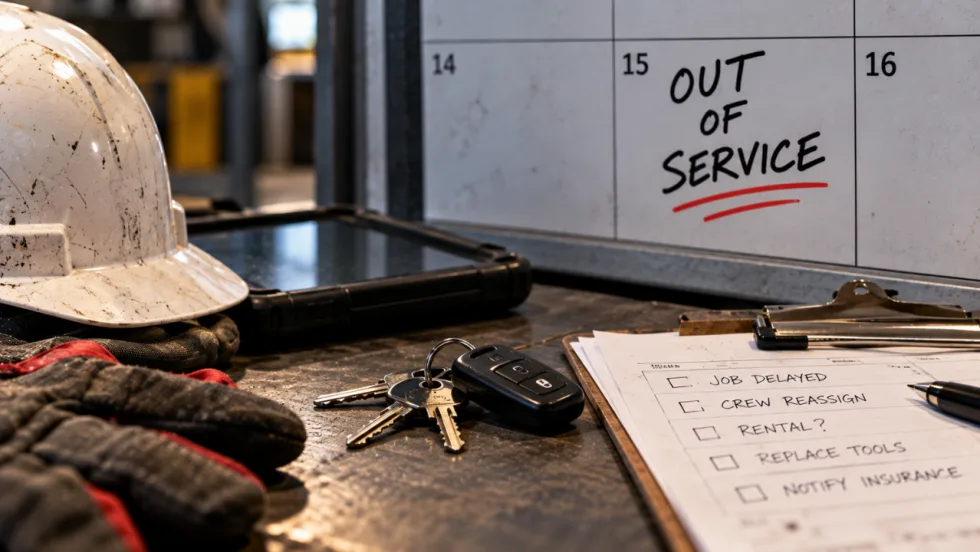
When a Work Truck Gets Stolen, the Real Loss Is Time
A stolen work truck can take more than a vehicle off the road. From tools and access cards to crew downtime, here’s how fleets can prepare for theft before it disrupts the entire workday.
Read More →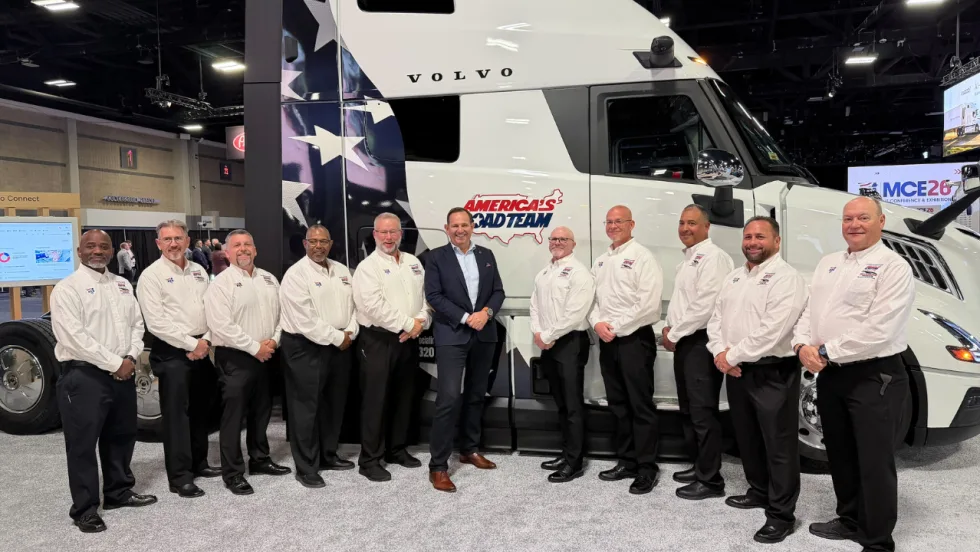
Volvo Trucks Marks 25 Years as Exclusive Sponsor of America's Road Team
Volvo Trucks North America will serve as the exclusive sponsor of the American Trucking Associations' America's Road Team, marking 25 years of Volvo sponsorship. The group of professional drivers promotes safety and the industry as they travel the country.
Read More →
Streamlight’s High-Output Scene Light Recognized with Occupational Safety Award
Streamlight’s Portable Scene Light III (PSL III) won the 2026 Occupational Health & Safety (OH&S) New Product of the Year Award in the Lighting category.
Read More →From Our Partners


Fleetworthy Expands Expedited Inspection to 5 States
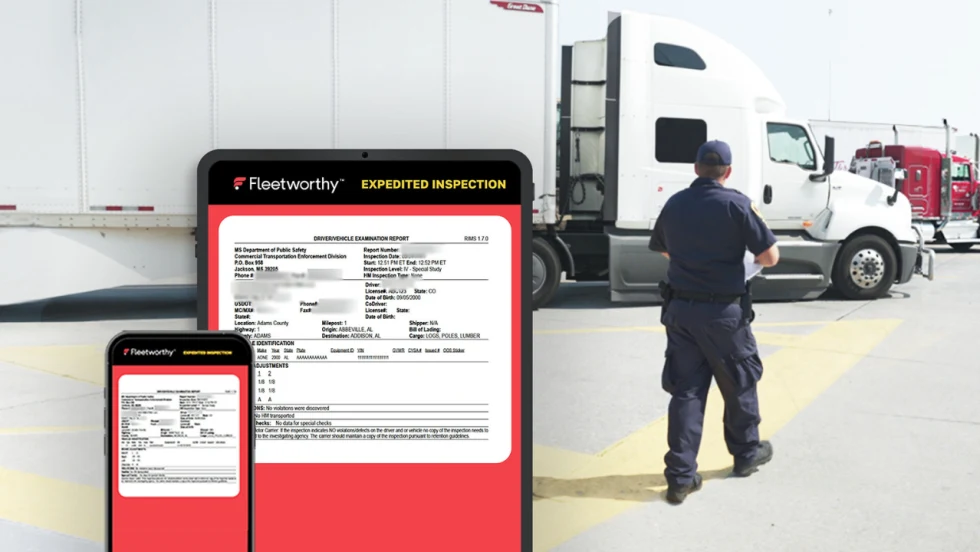
Following its industry-first launch in Nevada, Fleetworthy’s automated inspection technology is now live in California, Michigan, Vermont, and Maine.
Read More →
Crossing State Lines in a Light-Duty Work Truck? Check These Rules First
Crossing state lines in a lighter work truck? J.J. Keller's Kathy Close explains when IRP registration, trip permits, and towing rules come into play.
Read More →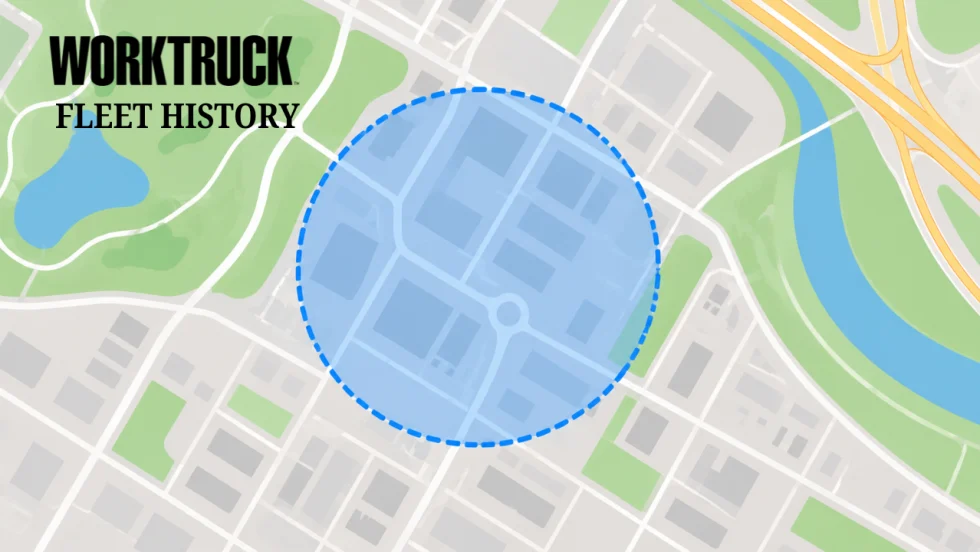
GeoFencing Adds to Your Truck Security Arsenal
Geofencing is a familiar fleet tool today, but its early adoption marked a major shift in vehicle tracking, route monitoring, and the debate over employee privacy.
Read More →
Recalls You Need to Know About in October 2026
In October 2026, what recalls might impact your fleet? Work Truck has the answers in this comprehensive overview of recent NHTSA recalls.
Read More →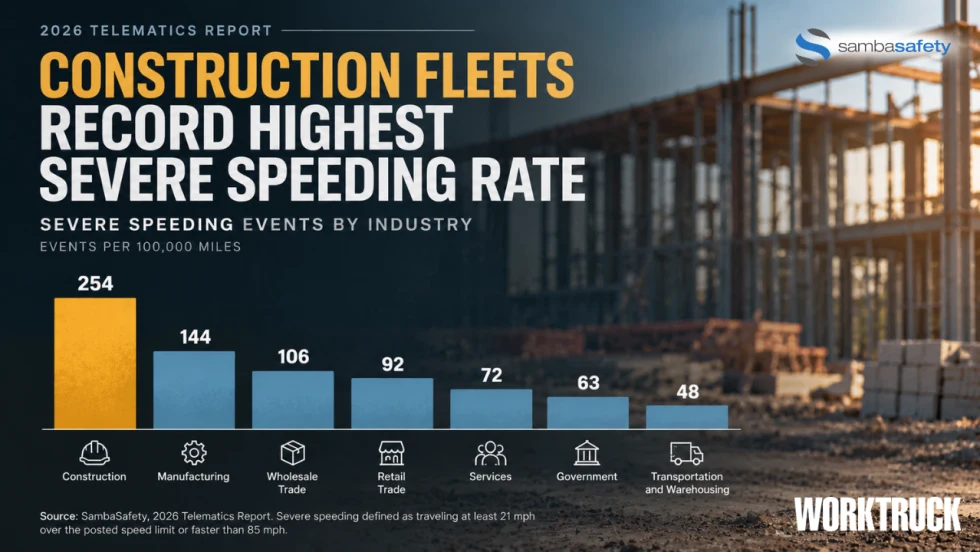
Construction Fleets Show Telematics Adoption Alone May Not Reduce Driving Risk
SambaSafety found construction fleets monitor roughly 92% of their vehicles but recorded the highest severe speeding rate among industries studied.
Read More →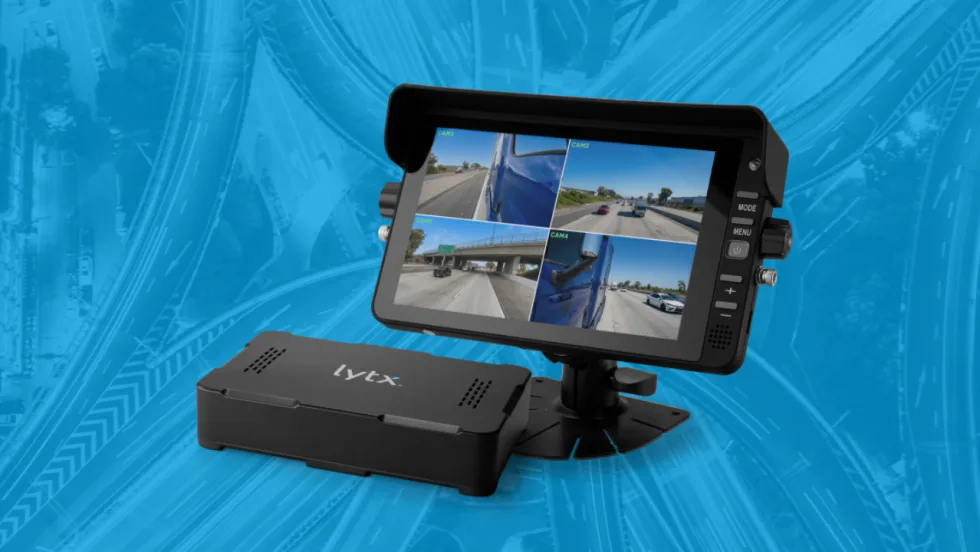
Lytx Launches 360 Hub Kit for Expanded Fleet Camera Visibility
Lytx’s new AI-ready gateway and HD auxiliary camera ecosystem, the Lytx 360 Hub Kit, extends visibility across side, rear, cargo, and blind-zone views to help fleets see more and respond faster.
Read More →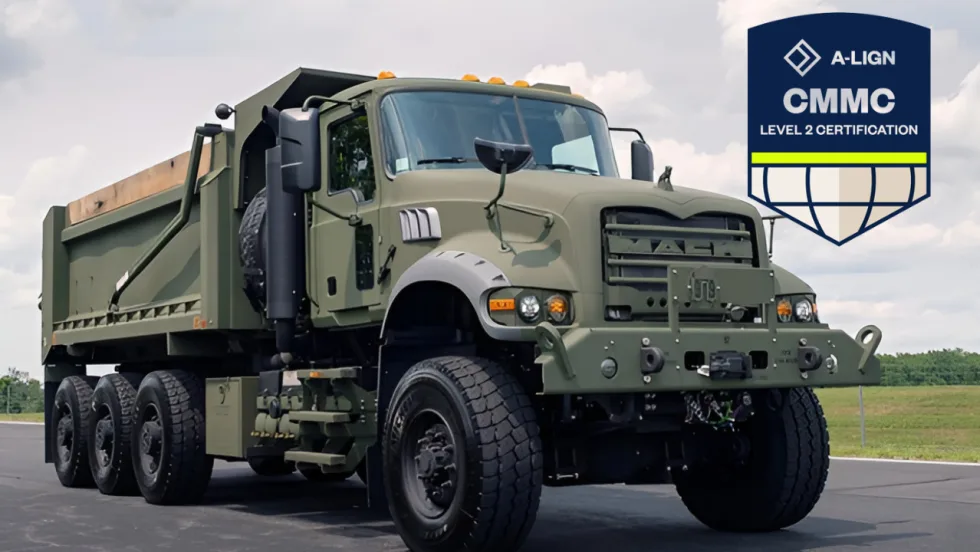
Mack Defense Achieves Cybersecurity Maturity Model Certification Level 2
After an assessment conducted by an authorized Certified Third-Party Assessment Organization (C3PAO), Mack Defense has achieved Cybersecurity Maturity Model Certification (CMMC) Level 2.
Read More →