




CNG Tank Tech: NW Natural to Test ‘Adsorbed’ Storage Systems
Natural gas tanks and compressors have been fairly standardized in the last couple years because of the pressure needed to fill an on-board tank. But in a new tank technology, adsorbed natural gas storage systems could drastically change the market, allowing tanks to be filled at lower pressures thereby changing the shape of the tank entirely, and its future.

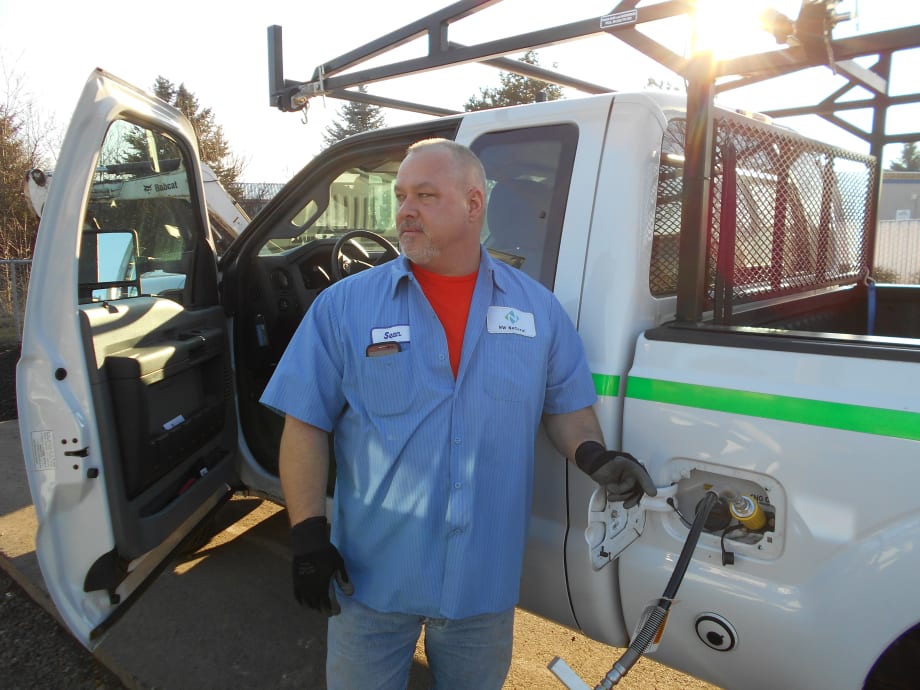
Photo courtesy of NW Natural.
NW Natural will test new CNG tank technology from EnerG2 to see whether it’s viable in real-world scenarios, particularly for fleet applications.
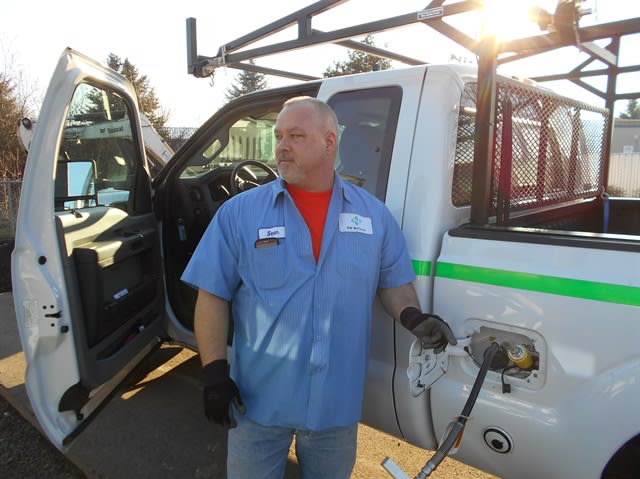
Photo courtesy of NW Natural.
NW Natural will test new CNG tank technology from EnerG2 to see whether it’s viable in real-world scenarios, particularly for fleet applications.
With about 100 CNG bi-fuel vehicles in fleet and experience with more than 1,000 CNG vehicles over the course of a 150-year history, Portland-based NW Natural is offering up its fleet as testing grounds for a new tank technology: adsorbed natural gas (ANG) storage systems. The tests will be conducted in partnership with the energy storage systems company EnerG2, headquartered in Seattle.
The ideas surrounding an ANG system have been around for more than 100 years, but research and development on the technology didn’t surface until recently. The EnerG2 and NW Natural tests will shed light on whether it’s viable in real-world scenarios, particularly for fleet applications.
What is an “adsorbed natural gas” (ANG) storage system?
An ANG system is engineered to gain more out of an on-board CNG tank. It is made with a porous, synthetic carbon-based interior, which allows the gaseous fuels to essentially soak in to the “nano pores” of the material. This liquid-like state, in which the gas becomes very dense around these materials, is what’s referred to as an “adsorbed state,” according to Aaron Feaver, Ph.D., EnerG2’s chief technology officer. “It’s somewhere between a liquid and a gas, so when you use these types of materials you’re able to store gas at a higher density but lower pressure.”
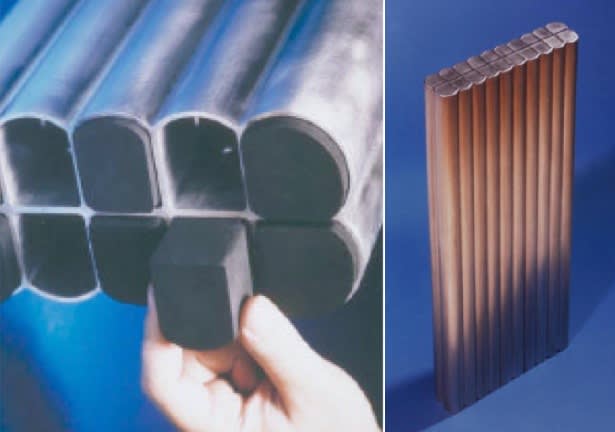
Photo courtesy of EnerG2.
Here's an example of an adsorbed natural gas (ANG) CNG storage system.
The main goal of the EnerG2 ANG system is exactly that: it allows the user to fill up at much lower pressures. This means that a high-end 3,600 psi (pounds per square inch) compressor would not be required to fill up a tank, nor would the cylindrical tank shape be necessary to provide the strength needed for high pressures.
Feaver says that per volume on a lower-pressure ANG tank, you might store the same amount of CNG as you would using a 3,600 psi compressor, but using an 800-1,000 psi compressor instead. This lowers the cost of the compressor and helps reduce the electricity costs associated with running a CNG compressor.
Another benefit is that because an ANG tank can be filled at lower pressures, engineers can depart from the standard cylindrical shape seen in CNG tanks:
“The efficiency you gain from changing the tank geometry allows you to get a lot more natural gas on board the vehicle because you're putting gas in unoccupied corners. Most vehicles have roughly rectangular spaces available, not spherical or cylindrical spaces. You want to be able to fill in all those gaps and really have efficient geometric utilization of the space on board the vehicle,” Feaver says.
So, if you were to take a 3,600 psi compressor and fill up two same-sized cylindrical tanks, but one uses ANG materials, the ANG cylinder would hold 10-20% more gas, according to Feaver. Taking it a step further and comparing that to a low-pressure, non-cylinder shaped tank that utilizes as many nooks and crannies available on board the vehicle, he says the increased fuel capacity could go up to 50%. This increase, he adds, could make CNG a more appealing option for higher-mileage routes such as in long-haul trucking or in areas where public infrastructure is scarce.
NW Natural: Why participate?
As a natural gas company, NW Natural has obvious alignments with the alternative fuel, and in a recent announcement, the utility has also received approval from the Public Utility Commission of Oregon to offer a service to install, own and maintain CNG compression equipment for its business customers. So in addition to its own fleet, NW Natural has its eye on fleet customers and the consumer market as well.
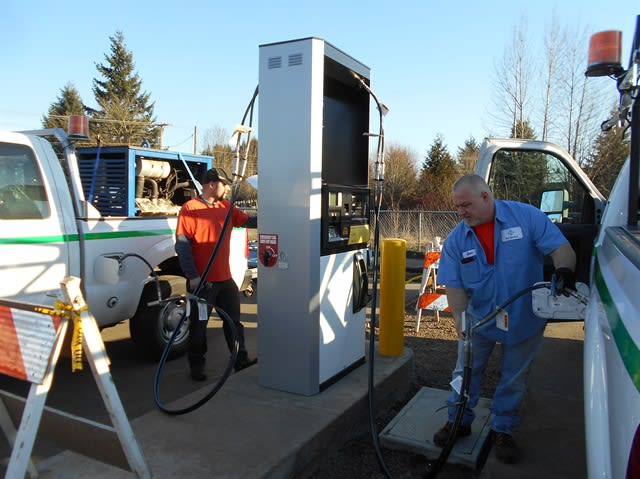
Photo courtesy of NW Natural.
Pending more tests, an adsorbed natural gas storage system is likely to significantly increase the amount of CNG on board a vehicle.
Chris Galati, NW Natural’s CNG program manager in business development, who has been with the company for 15 years, says that tank technology and fuel compression is what the utility sees as one of the biggest hurdles in growth and could help reduce the “chicken and egg” problem with CNG infrastructure. “We got into ANG because it has a lot of promise for all fleets, regardless of vehicle size or weight,” he says. “It has this tremendous promise of either increasing range or decreasing pressure for the same range. For example, on a passenger vehicle, what's important could be range, but also conformal tank technology that fits the geometry of the vehicle better.”
Galati adds that from what he’s observed, not only is it providing range and shape benefits, but the materials are lighter weight than CNG tanks currently in use.
But it really comes down to the compressor, especially when it comes to proliferating CNG into the fleet and consumer markets. “The capital expenditure upfront for a 3,600 psi compressor is significant,” Galati says. “It can cost as much if not more than the incremental cost of your CNG vehicle.”
The ANG Tests
NW Natural and EnerG2 will first conduct bench tests, and will then put the tanks into two Ford F-150 bi-fuel trucks in the next couple months. “The first thing we want to do is understand the properties we’re testing out,” Galati says. This includes:
Understanding in detail the differences in filling up the ANG tank at different pressures
How easy it is to release the gas from the vessels with an ANG storage tank in it
What the migration characteristics are of the material
How easy it is overall to work with an ANG tank
The conclusions from the bench tests will guide the field tests and how they’re conducted. Galati expects the field tests to take about two months. From there, EnerG2 may decide to modify the tanks or move forward with the current model.
With a total fleet size of around 1,000 vehicles, NW Natural has high hopes for the study. “The real story is if a company like NW Natural starts embarking on this in a meaningful way, others will follow,” Galati says. “Companies like ours have a role to play in the CNG market beyond just being a gas supplier. We’re on the cutting edge of something that’s potentially game changing, and that’s exciting.”
NW Natural is also testing other CNG-related technology, such dual fuel applications and refining CNG fill nozzles at the pump.
Stay tuned with Utility Fleet eNews as we follow the ANG test results. You can also find more CNG news at our sister publication, Green Fleet Magazine.
More Utility Fleet
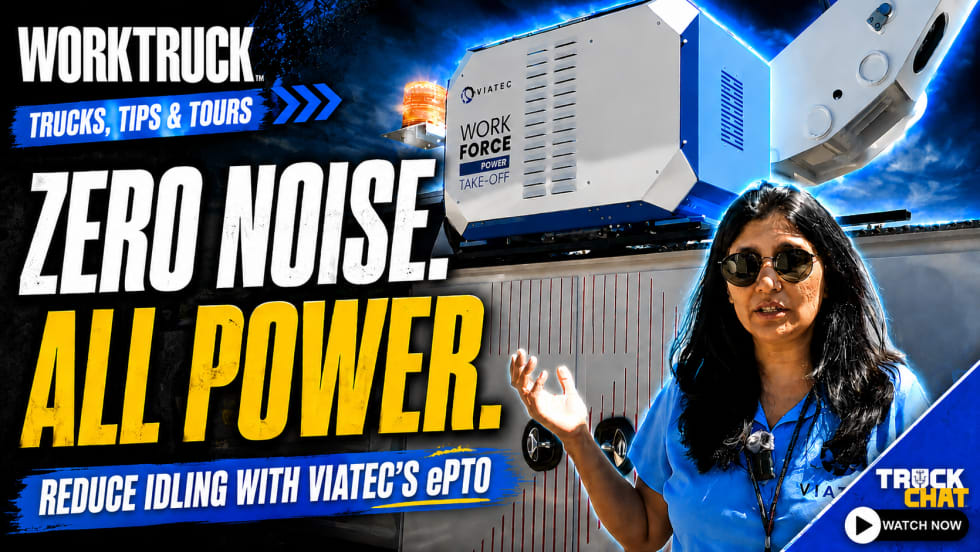
Reduce Noise & Idling with Viatec’s ePTO
Viatec's Workforce ePTO lets utility trucks power booms, outriggers, and auxiliary equipment using battery power instead of idling the engine. Learn how this technology helps reduce fuel use, noise, engine wear, and emissions while improving operator comfort.
Read More →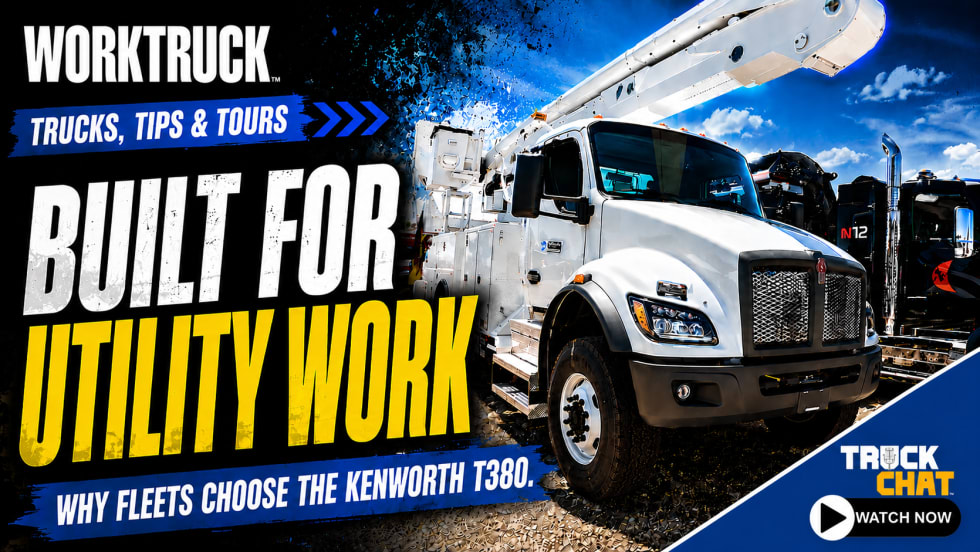
Why Utility Fleets Choose the Kenworth T380
The Kenworth T380 is engineered for utility fleets with custom chassis layouts, optimized frame rails, 4x4 capability, and improved driver visibility. See how its design helps maximize upfit flexibility and field performance.
Read More →
PALFINGER PB 38 AT P: Purpose-Built for Telecom Fleets
Purpose-built for telecommunications crews, the PALFINGER PB 38 ATP combines a 43-foot working height, flexible basket stowage, integrated cameras, and operator communication systems to improve productivity and safety during fiber and overhead cable installation.
Read More →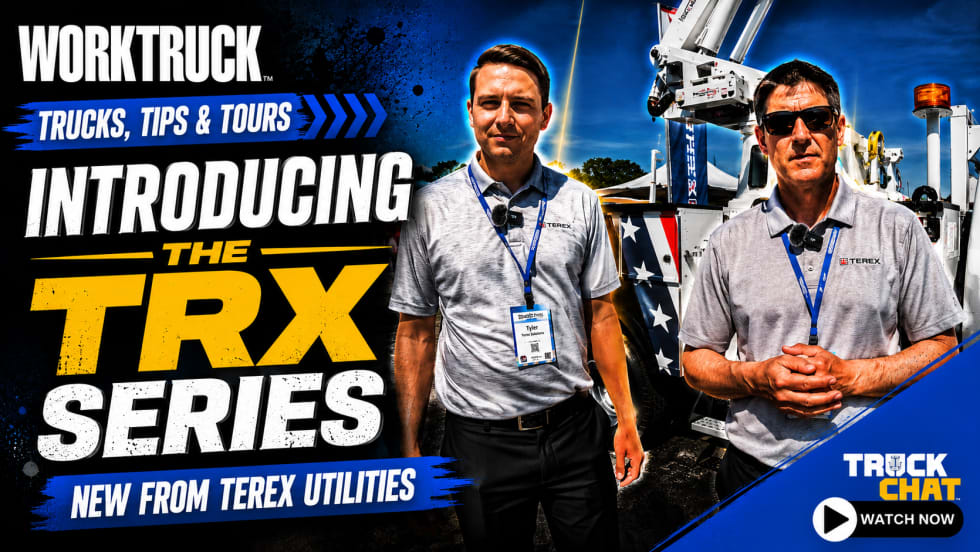
Inside Terex Utilities' Latest Work Truck Innovations
Terex Utilities is advancing utility fleet operations with its new TRX aerial platforms, Flex Pro controls, and AI-powered 3rd Eye safety technology. See how these innovations are helping fleets work safer, smarter, and more productively.
Read More →
Walkaround of International MV607 Digger Derrick
The International MV607 combines advanced safety technologies, excellent visibility, vocational flexibility, and seamless body integration to create a powerful platform for utility fleet operations. Take a closer look at this Altec digger derrick configuration from EUFMC.
Read More →
Inside the Electric Utility Fleet Managers Conference
What is EUFMC? For more than seven decades, the Electric Utility Fleet Managers Conference has served as a hub for collaboration, education, and innovation within the utility fleet industry. In this video, Work Truck talks to EUFMC President Greg Loew to learn more.
Read More →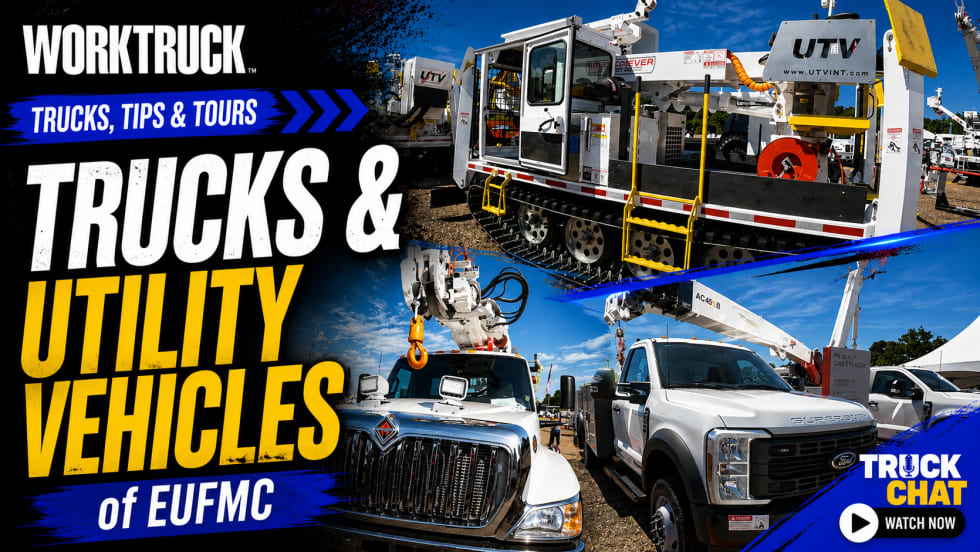
Inside the EUFMC Equipment Expo & Drive-Through
Follow Work Truck as we check out the trucks and other vehicles that were showcased at the Electric Utility Fleet Managers Conference in Williamsburg, Virginia. Whether looking for something on tires or treads, it was there for fleet managers to see.
Read More →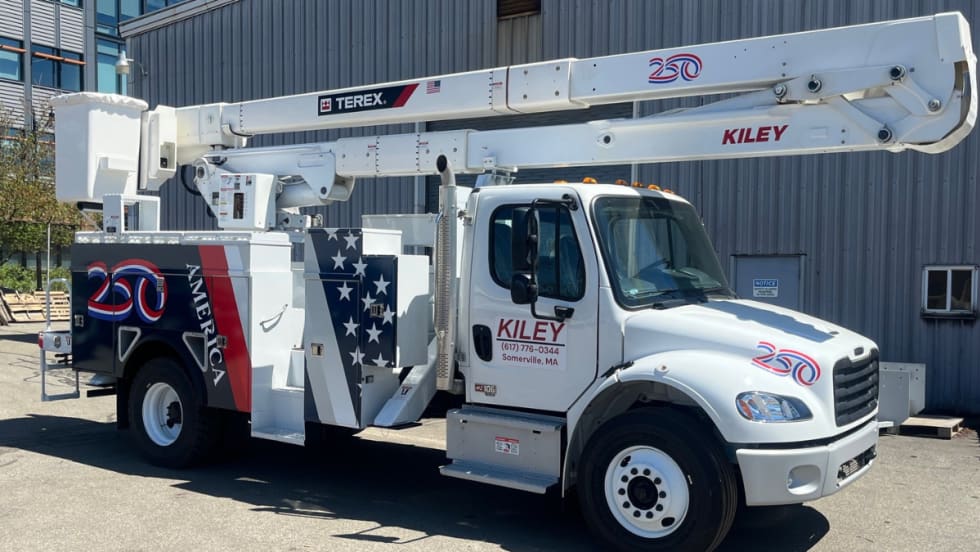
Terex Utilities & Kiley Unveil Custom America 250 Bucket Trucks at EUFMC 2026
Terex Utilities showcased a patriotic spirit in its booth this week during the Electric Utility Fleet Managers Conference in Williamsburg, Virginia, by debuting two custom-wrapped bucket trucks celebrating America’s upcoming 250th anniversary.
Read More →
Panasonic Connect & Anterix Strengthen Connectivity Options for Utilities and Field Workers
The Panasonic Connect Toughbook 56 is the first Toughbook to earn the AnterixActive badge, which means it can connect to and operate on Anterix’s 900 MHz network even in the most remote locations.
Read More →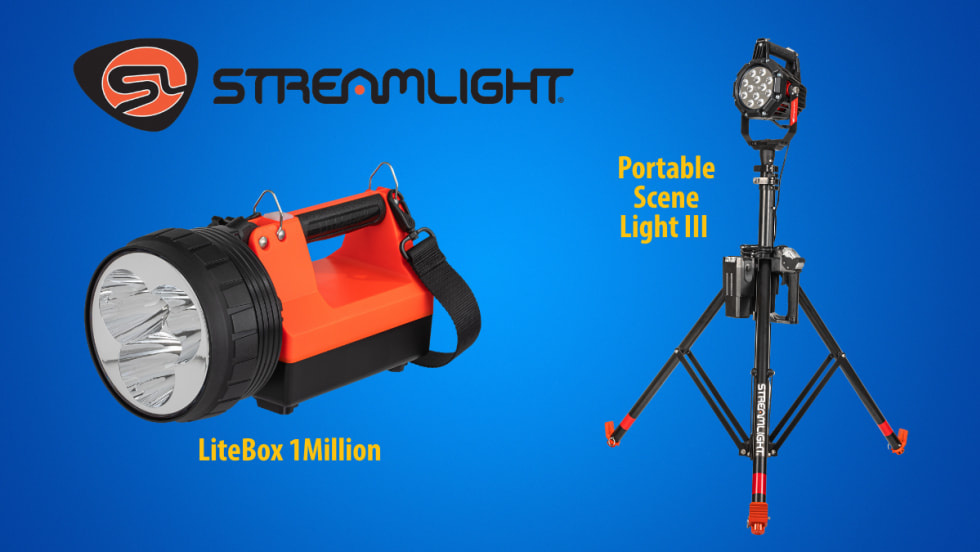
Streamlight Launches Portable Scene Light III & LiteBox 1Million
Streamlight has launched its Portable Scene Light III (PSL III), which delivers up to 10,000 lumens, and the LiteBox 1Million, a long-range search light that delivers one million candela.
Read More →