




New FMCSA Hours-of-Service Enforcement Set for July 1
A 2011 law revising the federal hours-of-service requirements for commercial truck drivers in the U.S. will be enforced starting July 1.
As thoughts of summer begin to take hold with the lead-in to the Memorial Day weekend, Wheels reminded its accounts and fleets in general that a 2011 law revising the federal hours-of-service requirements for commercial truck drivers in the U.S. will be enforced starting July 1.
The law, enacted by the U.S. Department of Transportation’s Federal Motor Carrier Safety Administration (FMCSA), reduces the maximum number of hours the driver of a commercial motor vehicle (CMV) can work per week. Under the old rules, CMV drivers could work an average of up to 82 hours within a seven-day period. The new rules limit a driver’s weekly on-duty time to 70 hours, after which he or she must “restart” his or her weekly clocks with at least 34 consecutive hours of off-duty time. As part of this provision, drivers who maximize their weekly work hours must take at least two nights’ rest from 1:00 a.m. to 5:00 a.m. during the 34 hour restart period.
The new law retains the 11-hour daily driving limit (within the 14-hour duty window) after 10 consecutive off-duty hours. However, CMV drivers now cannot be on duty for more than eight consecutive hours without taking a break of at least 30 minutes. Drivers can take the 30-minute break at any time during the eight-hour period; however, if eight hours of consecutive on duty time have elapsed without rest, the driver must immediately take a 30-minute break before driving. The 30 minute rest break does not apply to carriers in Alaska if they are using the Alaska exemption.
Companies should be aware that under the new rule, driving for three or more hours beyond the daily driving-time limit of 11 hours could be considered an “egregious” violation, Wheels noted. Companies whose drivers commit such violations face fines of up to $11,000 for each offense, while individual drivers can be fined up to $2,750.
The new law, which was originally published in December of 2011, has technically been in effect since February 27, 2012. But the “grace period” implemented by the FMCSA has postponed active enforcement of the law until July 1, 2013.
For additional details regarding the new law and information on what type of vehicle qualifies as a CMV, please visit the FMCSA’s website.
More Safety

Fleetworthy Integrates Lytx Video Snapshots to Improve Driver Coaching
Fleetworthy’s integration of Lytx video snapshots enables fleet managers to combine visual event evidence with Safety+ risk data, helping them make faster, more informed coaching decisions without leaving the Fleetworthy platform.
Read More →
Recalls You Need to Know About in June 2026
In June 2026, what recalls might impact your fleet? Work Truck has the answers in this comprehensive overview of recent NHTSA recalls.
Read More →
J. J. Keller Safety Professional of the Year Awards Nominations Now Open
J. J. Keller & Associates is accepting nominations for the 2026 J. J. Keller Safety Professional of the Year (SPOTY) Awards. Winners will receive prize packages valued at up to $47,200.
Read More →

ASE Aligns Automotive Service Professionals Month With Spring and Fall Vehicle Maintenance Campaigns
ASE will move Automotive Service Professionals Month to April and October beginning in 2026-2027, aligning recognition with Car Care Month events.
Read More →
Turning Connected Vehicle Data Into Decisions That Matter
Fleet leaders have more data than ever, but turning that data into clear, actionable decisions remains a challenge. This white paper shows how leading organizations are using connected vehicle data to improve safety, reduce costs, and optimize fleet performance. Learn how to turn insight into action across your fleet.
Read More →
Driver Retention: Motive Automates Driver Coaching & Driver Rewards
New automated rewards and recognition capabilities from Motive can help organizations engage drivers, reinforce positive behavior, and reduce turnover. AI Coach has also been updated to deliver personalized feedback across safety, fuel, and compliance.
Read More →
Experts Forecast Broader Impact of Wildfires in 2026
This year’s wildfire season will likely be more intense than in 2025. The 2026 wildfire forecast from AccuWeather is for fewer fires, but even more acreage will be impacted this year.
Read More →
A Walkthrough of the DataQs Process
Bad data on your carrier record can cost you. Here’s how DataQs helps fleets challenge errors before they hit CSA scores, insurance, and your bottom line.
Read More →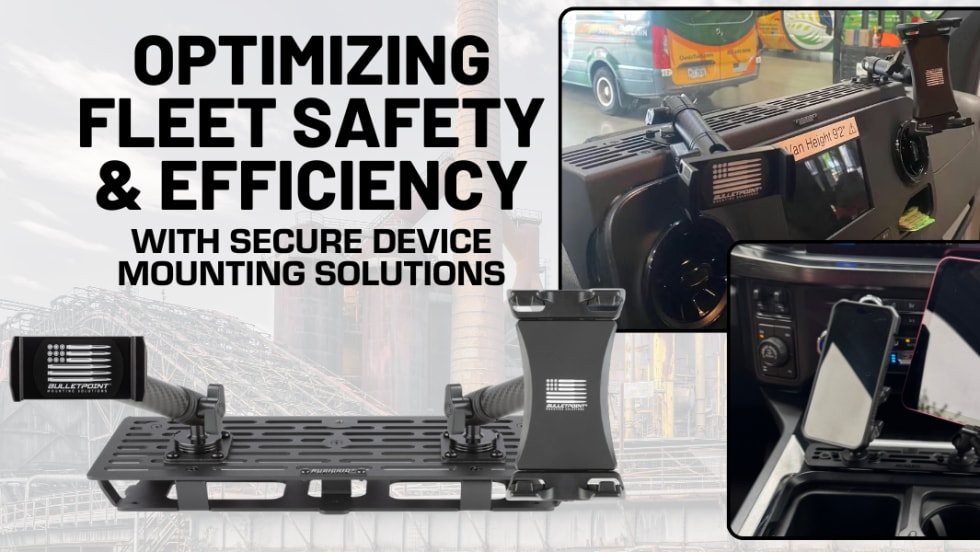
Optimizing Fleet Safety with Secure Device Integration
Unsecured devices are a hidden liability. Learn how precision-engineered mounting solutions enhance driver safety, streamline workflows and protect your technology.
Read More →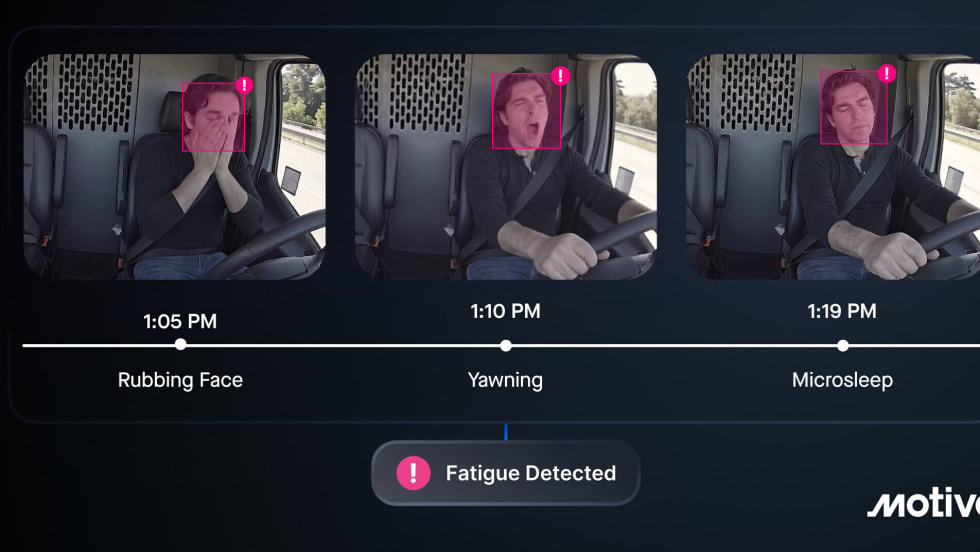
Motive Launches New Edge AI Capabilities to Help Prevent Collisions and Capture Critical Incidents in Real-Time
New AI models from Motive can detect signs of fatigue and eating, plus capture low-severity collisions often missed by telematics.
Read More →