




The Latest Trends in Medium-Duty Truck Maintenance
How current and future challenges are affecting medium-duty fleets.

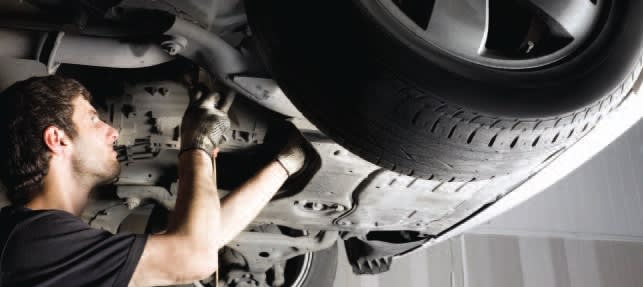
New diesel emissions technologies, as well as upcoming greenhouse gas 2014 compliant engines, are anticipated to increase maintenance costs.
A lot has happened since 2007 to impact medium-duty truck maintenance costs and protocols — for better and for worse.
First, there was the introduction of expensive diesel emissions technologies, such as diesel particulate filters (DPFs), selective catalytic reduction (SCR) systems, and diesel exhaust fluid (DEF). Now, medium-duty fleets are anticipating new greenhouse gas (GHG) regulations in 2014, which could lead to new technologies being developed for engines, tires, transmissions, and fluids — all of which will likely affect truck maintenance.
With so many changes in the medium-duty truck world in recent years and more on the horizon, what should fleet managers expect when it comes to keeping their trucks in optimal condition?
Work Truck magazine spoke with subject-matter experts from fleet management companies ARI and PHH Arval to get their outlook on these current and upcoming challenges. They shared these seven trends to help fleet managers navigate the current and future truck maintenance landscape.
1. New diesel emissions technologies are driving higher maintenance costs, and more downtime in certain applications.
One key issue is drivers not allowing for full regeneration (burning off of soot) of the DPF in urban applications, where there are as many as 30 to 40 stops per day, according to Don Scare, regional fleet services manager for PHH Arval, a fleet management services provider in the U.S. and Canada.
“If drivers don’t get the truck up to highway speed long enough to allow for a full regeneration cycle, what will eventually happen is that the DPF filter will clog. Then you have to remove that filter for maintenance, which is very expensive,” he said, adding that the cost for DPF removal and cleaning is roughly $3,000 to $5,000.
Tony Piscopo, director, global fleet management product management for ARI, agreed, but said that the increased costs related to new emissions technologies have begun to level off as fleets and drivers have become more familiar with the trucks.
“When first introduced, these [new emissions] systems caused a great deal of new expense and downtime to clients’ fleets,” Piscopo said. “Parts and fluid availability, as well as driver and technician training, were lacking. Worse, fleets were responsible for bearing the expense.”
Over the past few years, these maintenance costs have flattened and decreased somewhat, because of better training and technology. “Trained drivers, in-cab warning systems, an increase in the number of trained technicians, better equipped facilities, and the increased availability and price-competitiveness of parts have kept prices down,” Piscopo noted.
2. Drivers are increasingly more responsible for proper maintenance protocols.
“It’s key for drivers to understand the type of trucks they’re operating,” Scare said. “When it comes to filling the DEF tank. You have to use the right solution. In a lot of cases, we have found with the introduction of DEF that drivers are putting the wrong product in the wrong tank. Of course, that adds to maintenance cost because you have to go back to clean the system. It all boils down to proper driver instruction on their maintenance responsibilities when operating the vehicle.”
This hasn’t always been the case. Scare remembered a time when drivers could jump in the truck in the morning, drive it all day, then bring it back and just drop off the keys.
“The maintenance garage would take care of the oil change intervals and whatever else that may go wrong with the vehicle on a given day,” Scare said. “But, now with the new emissions technologies, drivers need to be more engaged and aware of what they are to do for DPF regeneration, refilling the DEF tanks and so forth.”
3. While tire costs are increasing, new technology offers improved fuel economy and lower operational costs.
Piscopo noted that fluctuations in the cost of raw materials used in the production of tires have led to increased prices for replacements. He attributed the fluctuations in cost to an increased global demand for raw materials.
Said Scare of PHH, “Rolling resistance of tires is going to continue to play a big role into the future. Tire manufacturers are looking for ways to improve their product — to lessen that resistance to increase fuel economy and also to meet a lot of the new environmental and EPA requirements.”
4. More OEMs are offering disc brakes, increasing replacement intervals over drums.
With more OEMs offering disc brakes in the medium- to heavy-duty class vehicles, Scare sees the advantages for medium-duty fleet vehicles.
“The airflow onto the brake components on a disc brake operation versus drum is considerably better, which reduces heat during braking, resulting in longer replacement intervals for disc brakes,” Scare said.
5. Enhanced synthetic lubricants increase PM Intervals.
“One of the most interesting maintenance trends that we are seeing is the increased use and acceptance of synthetic lubricants,” Piscopo said. “As the cost of synthetics has continued to decrease and availability has continued to increase, the majority of our clients are using synthetics in certain applications.”
Said Scare, “The synthetic oils reduce resistance within the moving parts of the engine, creating less engine sludge and longer drain intervals, driving lower costs in the long-run.”
6. New greenhouse gas 2014 (GHG14)–compliant engines are expected to increase maintenance costs.
“In most cases, changes to engine technology or calibrations affect maintenance costs, usually causing expenses to rise for a period,” Piscopo said. “Repair costs (and/or downtime) often rise as the change is implemented and perfected. These costs are usually related to decreased availability of parts and fewer trained technicians. While we do not believe that the GHG14 requirements will have as significant an impact as other recent emissions changes, we do believe there will be an uptick in the cost to maintain these units.”
7. Improved vehicle quality will eventually drive lower maintenance costs.
The upside with diesel emissions changes is that OEMs have built a better vehicle, said Scare. “The quality of the vehicles is much better, which has lowered the cost of operating in areas that traditionally companies spend a lot of money,” he noted.
Said Piscopo for ARI, “We believe there will continue to be an increased focus by OEMs and component manufacturers to use technology to produce higher quality components, with the end goal being to lengthen maintenance intervals and increase vehicle uptime. Higher quality and longer life tires, brakes and fluids — while costing more in the near-term — will lead to lessened downtime and ultimately lower overall maintenance costs.”
More Maintenance
Les Schwab Expands Commercial Tire Footprint Into Arizona
Les Schwab Tires has expanded into Arizona with two commercial tire locations in Phoenix and Tucson, strengthening its fleet service footprint in the Southwest.
Read More →
Volvo Trucks’ 'Lock and Leave' Software Updates Go Live Across North America
Unattended over-the-air software updates are now available in Volvo trucks across the U.S. and Canada. The new capability lets trucks stay current with the latest software without interrupting operations or requiring a dealership visit.
Read More →
Why Technician Appreciation Can’t Be a Once-a-Year Thought
For fleets trying to keep skilled technicians, recognition cannot begin and end with Technician Appreciation Week. Learn what year-round appreciation really looks like and why the everyday technician experience matters just as much as pay when fleets are trying to keep good people.
Read More →
How Faster Driver Reporting Can Keep Small Truck Problems Small
When minor damage, warning lights, or equipment issues are reported late, small problems can quickly become bigger maintenance headaches. Conversational AI can help shorten the path from what a driver notices in the field to the person who can act on it.
Read More →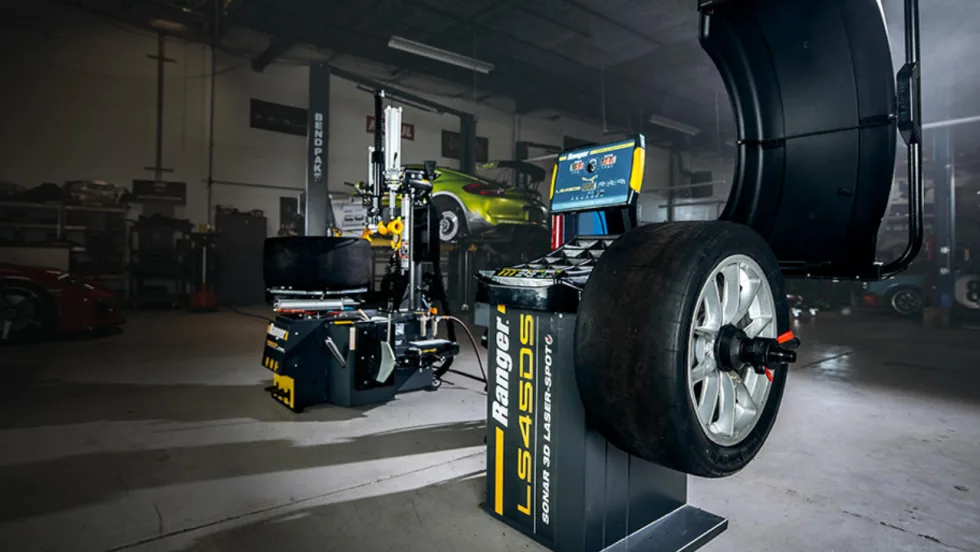
BendPak’s Ranger Wheel Service Equipment Achieves North American Safety Certification
BendPak’s full line of Ranger tire changers and wheel balancers has been ETL certified to UL and CSA standards to improve operator safety.
Read More →
Isuzu & U.S. Department of Labor Celebrate Milestone for Veterans Apprenticeship Program
The Isuzu Veterans Apprenticeship Program (IVAP) signing ceremony highlighted Isuzu’s long-term commitment to veterans, Isuzu dealers, and the skilled workforce supporting its customers and the commercial transportation industry.
Read More →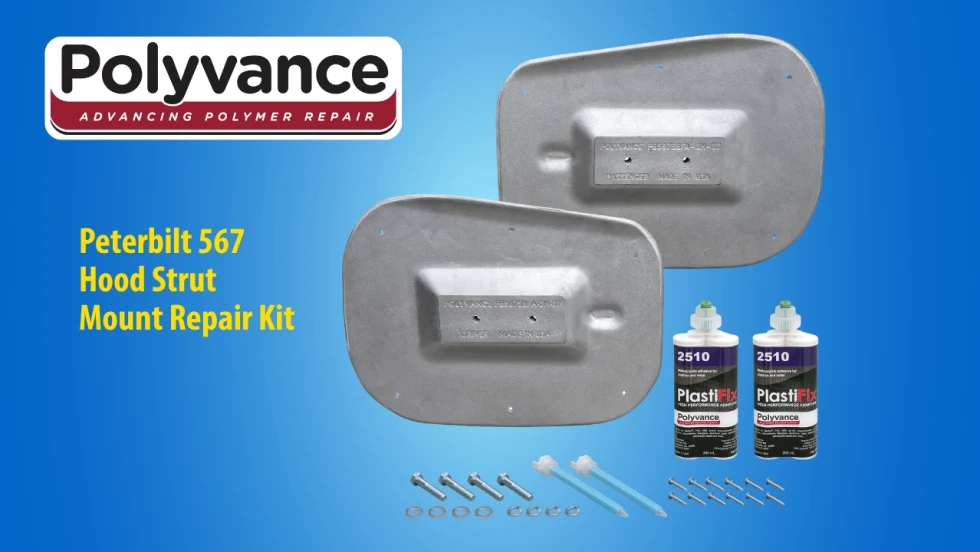
Polyvance Introduces New Peterbilt 567 Hood Strut Mount Repair Kit
Polyvance has launched a repair solution for Peterbilt 567 hood struts, helping truck owners and repair facilities avoid costly hood replacements.
Read More →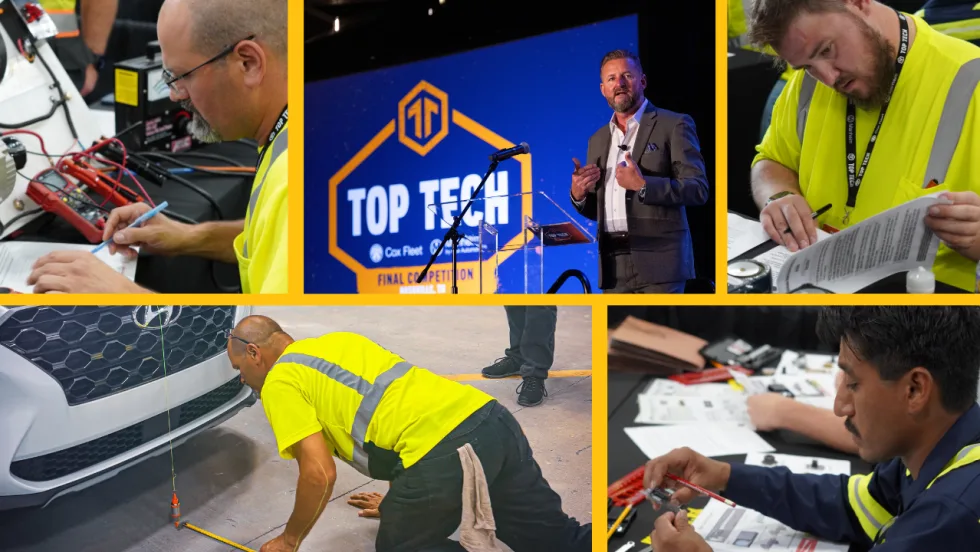
Cox Automotive Celebrates Technical Excellence at 2026 Top Tech Finals
The top technicians from Cox Fleet and Manheim tested their skills in Nashville, Tennessee, at Cox Automotive’s 2026 Top Tech Finals. The overall winners will advance to compete at the American Trucking Association’s TMC SuperTech competition.
Read More →
Grote Industries Appoints Vice President of North American Operations
Grote Industries has appointed Patrick Smith as vice president of North American operations as it celebrates 125 years of innovation and manufacturing excellence. He has more than 20 years of manufacturing leadership experience.
Read More →
Winter Fleet Prep: Expert Tips to Keep Vehicles Running Smoothly
Cold weather can expose weak batteries, tires, fuel systems, and maintenance gaps fast. Use this winter fleet checklist to prepare trucks and drivers before temperatures drop.
Read More →