




FMCSA Unveils Chassis Rule
The Federal Motor Carrier Safety Administration (FMCSA) published an intermodal equipment rule that should boost truckers’ productivity by speeding up operations and ensuring chassis are safer.

The Federal Motor Carrier Safety Administration (FMCSA) published an intermodal equipment rule that should boost truckers’ productivity by speeding up operations and ensuring chassis are safer, according to Transport Topics.
In addition, FMCSA stiffened review procedures for new trucking companies by requiring a safety audit within 18 months after operations begin.
When the rule becomes effective in March, chassis providers will be required to maintain equipment in roadworthy, or “roadable” condition that meets federal motor carrier safety standards. Truck drivers who have been penalized for defects in chassis that weren’t theirs will now be able to insist that they receive equipment with safe tires, brakes, and lights before hitting the highway.
Prior efforts by ATA and others to address roadability went nowhere until Congress made chassis owners responsible for safety and maintenance in the 2005 transportation law. FMCSA’s rule implements that law.
FMCSA said drivers waste three hours each time a defect forces them to wait for repairs or find a roadable alternative, pegging delay costs at $140.
The rule lacks a cumulative savings estimate. Based on the estimated $140 cost per incident, fleets would save $3 million annually if the rule eliminated all out-of-service incidents, which totaled 21,154 in 2006, according to Transport Topics.
Casey said IANA was disappointed that the rules ignored existing intermodal inspection standards and rejected an industry proposal to create an electronic equipment registry, eliminating the need to physically mark each piece of equipment.
FMCSA will instead require chassis marking with a six-digit U.S. Department of Transportation number. It will be displayed on a sticker, kept in a weatherproof packet, permanently marked on the chassis or listed on drivers’ paperwork that travels with the shipment.
FMCSA’s rule requires chassis providers to:
File information forms about themselves.
Create or maintain files that document what equipment is under their control.
Identify equipment with a DOT number.
Have a system for reporting and correcting equipment defects.
Providers will have 12 months to register and create recordkeeping systems and 12 additional months to mark all chassis.
The rule requires drivers to do a pre-trip inspection before hitting the road and creates a process for reporting and rectifying defects. However, the agency acknowledged the potential for inspection difficulties because drivers may not be able to see defects if there’s a container on the chassis.
FMCSA said equipment providers’ compliance costs could reach $333.4 million over 10 years, with added startup costs of up to $33.8 million.
FMCSA said the rule could trim the current percentage of intermodal equipment placed out of service during roadside inspections to 13 percent — the same rate as trailers — from the current 19 percent.
More Safety
J. J. Keller Safety Professional of the Year Awards Nominations Now Open
J. J. Keller & Associates is accepting nominations for the 2026 J. J. Keller Safety Professional of the Year (SPOTY) Awards. Winners will receive prize packages valued at up to $47,200.
Read More →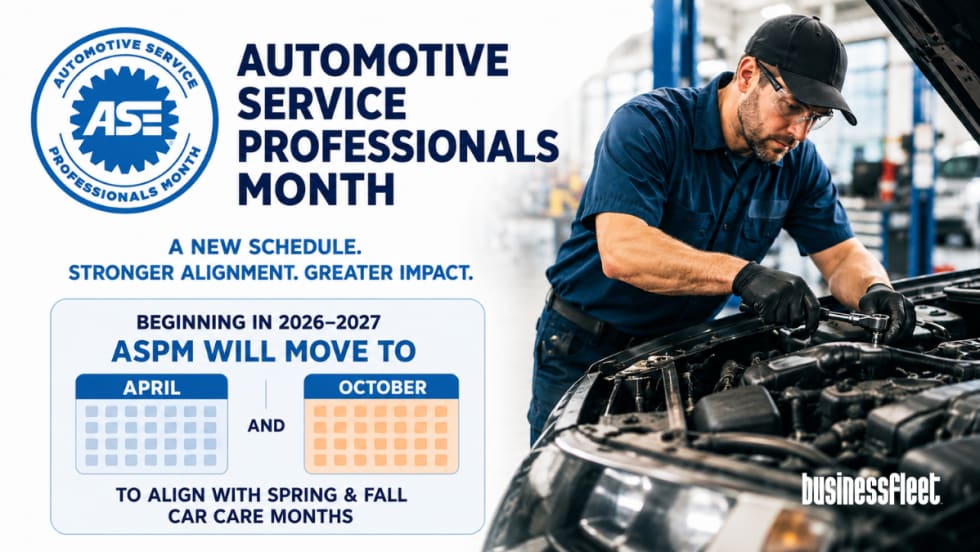
ASE Aligns Automotive Service Professionals Month With Spring and Fall Vehicle Maintenance Campaigns
ASE will move Automotive Service Professionals Month to April and October beginning in 2026-2027, aligning recognition with Car Care Month events.
Read More →
Turning Connected Vehicle Data Into Decisions That Matter
Fleet leaders have more data than ever, but turning that data into clear, actionable decisions remains a challenge. This white paper shows how leading organizations are using connected vehicle data to improve safety, reduce costs, and optimize fleet performance. Learn how to turn insight into action across your fleet.
Read More →

Driver Retention: Motive Automates Driver Coaching & Driver Rewards
New automated rewards and recognition capabilities from Motive can help organizations engage drivers, reinforce positive behavior, and reduce turnover. AI Coach has also been updated to deliver personalized feedback across safety, fuel, and compliance.
Read More →
Experts Forecast Broader Impact of Wildfires in 2026
This year’s wildfire season will likely be more intense than in 2025. The 2026 wildfire forecast from AccuWeather is for fewer fires, but even more acreage will be impacted this year.
Read More →
A Walkthrough of the DataQs Process
Bad data on your carrier record can cost you. Here’s how DataQs helps fleets challenge errors before they hit CSA scores, insurance, and your bottom line.
Read More →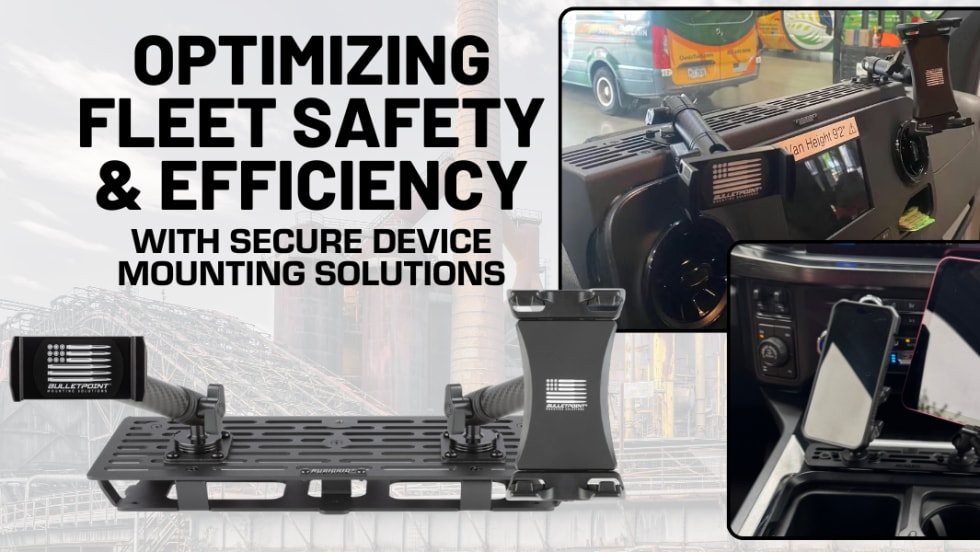
Optimizing Fleet Safety with Secure Device Integration
Unsecured devices are a hidden liability. Learn how precision-engineered mounting solutions enhance driver safety, streamline workflows and protect your technology.
Read More →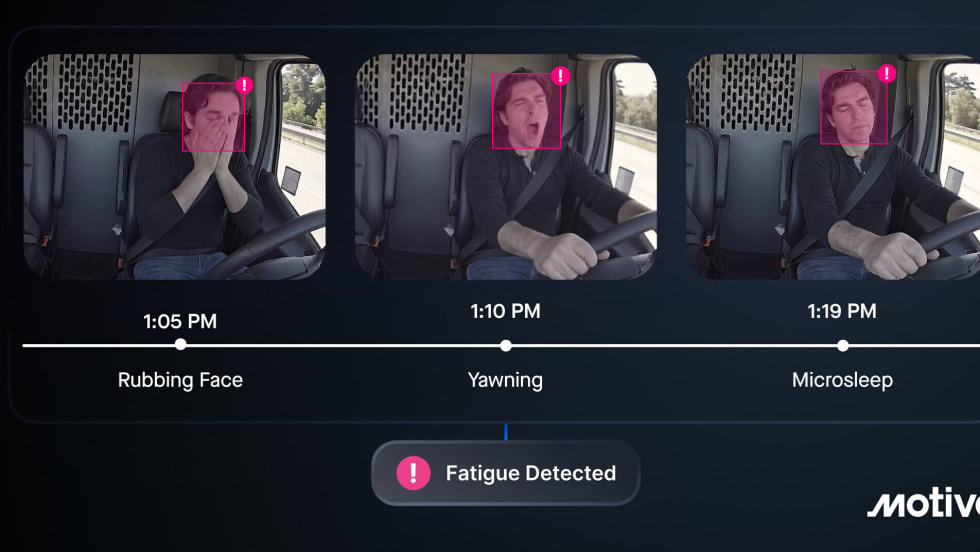
Motive Launches New Edge AI Capabilities to Help Prevent Collisions and Capture Critical Incidents in Real-Time
New AI models from Motive can detect signs of fatigue and eating, plus capture low-severity collisions often missed by telematics.
Read More →
Pro-Vision Acquires Convoy Technologies to Expand Fleet Safety and Video Solutions
Pro-Vision has acquired Convoy Technologies in a deal it said will broaden customer relationships and add specialized vehicle video capabilities for commercial fleets.
Read More →
Netradyne Delivers 66% Reduction in At-Fault Crashes Across Domino's Franchise Network
Five Domino's franchises and more than 1,000 vehicles are now running on Netradyne's AI-powered fleet safety and performance platform. Designed for fleets that use personal or non-owned vehicles, FlexMount allows drivers to quickly install and remove Driver-i.
Read More →