


TOP NEWS

April 30, 2008

Advancements Help Minimize the Environmental Impact of Trucks and Diesel Engines, According to Navistar

ARTICLE TOOLS        | E-MailPrint

WARRENVILLE, IL – As the world becomes more vigilant and active about key environmental issues, many industries have renewed commitments to green initiatives. According to Navistar, one group that has been steadily improving the environmental landscape is the commercial transportation industry. The industry has traditionally been thought of as unfriendly to the environment, but new technology has transformed many of today’s trucks and buses into environmentally responsible forms of transportation.


Below is Navistar’s list of its products now helping to green the vehicle industry:

American Idle — Do Trucks Really Need to Idle at Truck Stops? The U.S. Department of Energy estimates that each year trucks use 10 percent of diesel fuel idling — costing nearly $10 billion annually and emitting countless amounts of greenhouse gases into the atmosphere.

However, new technology provides trucks the necessary in-cab power without needing engines to idle. A MaxxPower auxiliary power unit (APU) from Navistar provides truck drivers with a power system that can save each truck more than $7,000 in fuel costs each year because the trucks will not need to idle to produce power. No idling means less diesel fuel used. The APU can produce the power many trucks rely on while using only two-tenths of a gallon per hour.

Are Semi-Trucks Fuel-Guzzlers? New advances in truck design allow for more aerodynamic, fuel-efficient travel. The International ProStar semi-truck achieved a fuel savings of more than $5,000 per truck. The fuel savings is based on traveling 144,000 miles annually and when compared to a leading competitor. It results in 1,300 gallons of fuel saved each year, per truck. The ProStar and the new International LoneStar both feature aerodynamic designs that make a difference both in reducing diesel fuel consumption as well as lowering greenhouse gas emissions.

Along with idle management products such as the MaxxPower APU and cleaner diesel engines, today’s semi-trucks are more environmentally responsible than ever before.

We Have Hybrid Cars, Why Not Hybrid Trucks? To date, Navistar has built more than 100 hybrid trucks that are in service by more than a dozen major utility companies, including Florida Power & Light, Exelon, and American Electric Power.

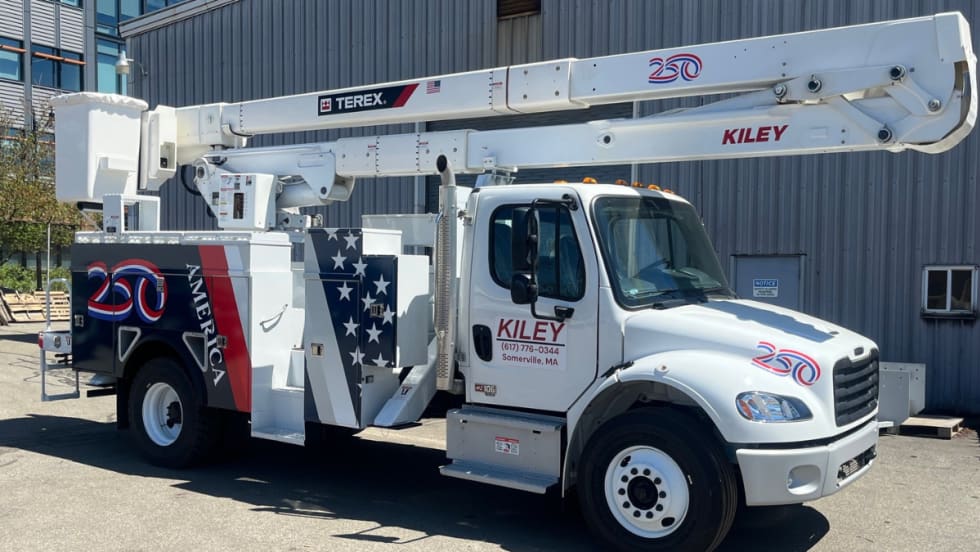
The International DuraStar Hybrid can provide fuel savings of 30 to 40 percent in many applications. Fuel efficiency can increase to more than 60 percent in utility-type applications. Diesel emissions are completely eliminated when the hybrid truck operates equipment (such as overhead utility booms) solely on the truck’s battery power, instead of allowing the engine to idle.

Navistar also partnered with the EPA, the U.S. Army, UPS, and Eaton Corporation to develop the first-ever series of diesel hydraulic hybrid urban delivery vehicles. Last year, Navistar received the 2007 Blue Sky Award from WestStart-CALSTART, the nation’s leading advanced transportation technology organization, for its contributions to the commercial development of diesel hybrid technology.

Aren’t Diesel Engines Smoky and Noisy? Today’s diesel engines meet strict EPA emissions requirements. With diesel fuel, drivers can get 40 percent more miles to the gallon than gasoline. Plus, diesel engines burn cleaner due to reformulated diesel fuel introduced in 2007 called Ultra Low-Sulfur Diesel.

In 2007, new diesel engines were introduced that eliminate more than 90 percent of particulate and hydrocarbon emissions, leaving the exhaust smokeless, odorless and much cleaner for the environment. In 2010, diesel engines will be even cleaner, with aggressive, near-zero emissions goals.

Navistar’s new MaxxForce mid-range diesel engines are 9-13 percent more fuel efficient. In fact, MaxxForce 7 and MaxxForce DT engines include a fuel efficiency guarantee. If customers don’t experience improvement in fuel economy over their previous engines, they are eligible to be refunded the difference (up to $1,000).


RATE THIS STORY

Average Rating: Not yet rated

COMMENT ON THIS STORY

Please log in to write comment.

New user? Sign up for new membership now!

E-NEWSLETTER

Authoritative & Targeted! We offer e-newsletters that deliver targeted news and information for the entire fleet industry. Subscribe to one or all of them...they're FREE. SUBSCRIBE!

View the latest eNews WEEKLY

NEWS ARCHIVE SEARCH

Click Here

Sponsored Links

Flexible & Powerful Fleet Software
Chevin fleet management software - Where flexibility comes standard. Solutions for all types of vehicle and transport operations. Click Here.

BLOG

Replacement Tires: A Growing Fleet Expense

By Mike Antich
Replacement tires are the third-largest expense category for fleets. In the past three years, this expense category has grown as a result of multiple price increases from all major tire OEMs. In 2008, year-to-date tire replacement costs have increased 4-10 percent. This follows a 3-4 percent price increase in 2007 and an 8-10 percent price increase in 2006. The consensus is replacement tire prices will increase again in 2009.

Fuel Continues to be the No. 1 Threat to Fleet

By Mike Antich
The number one threat to fleets continues to be the price of fuel, despite the fact that fuel prices have been declining due to the global economic slowdown. Year-to-date, the cost of fuel has increased 30 percent in 2008 compared to 2007. The Energy Information Administration is projecting fuel to average $3.82 per gallon in calendar-year 2009. Fuel is the potential game changer of the fleet industry. Consider two recent examples as harbingers of things to come.

Federal Reserve Invokes Emergency Powers to Support the Commercial Paper Market

By Mike Antich

Anti-Idling Programs: A Quick Way to Reduce Fuel Spend

By Mike Antich

STORE

$10.00

F&I Magazine - June 2008

In This Issue:
Eliminating Dealer Service Fees, Will There Be Financing?, Determining Compliance Levels and much more…