




Kenworth Truck Company Offers Key Tips on Spec’ing for Medium-Duty Trucks
LEBANON, MO - Kenworth Truck Company recommends that companies know their payload, terrain conditions, and body requirements to better spec medium-duty trucks for business applications.
LEBANON, MO – For years, a key criterion for spec’ing medium-duty trucks has been the gross vehicle weight rating (GVWR). Users select trucks primarily on the basis of their class. So a Class 6 vehicle may be suitable for one application and a Class 7 may work better for another, according to www.truck.net. Medium-duty trucks fall into the Class 5 (16,001 to 19,500 lb. GVWR), Class 6 (19,501 to 26,000 lb. GVWR), and Class 7 (26,001 to 33,000 lb. GVWR).
Kenworth Truck Company recommends that companies know their payload, terrain conditions, and body requirements to better spec medium-duty trucks for business applications. While the vehicle’s GVWR is still important, buyers are increasingly focusing on other factors when making their selection, according to Judy McTigue, medium-duty marketing manager for Kenworth Truck Company.
“Customer expectations of medium duty trucks have continued to increase in recent years,” McTigue said. “Many users look for a business solution that provides superior uptime and reliability. An increased focus on fuel efficiency and efforts to reduce the environmental footprint are driving interest in hybrids, such as the Kenworth T270 and T370 straight trucks for pickup and delivery and utility applications and T370 tractor for local haul applications, including beverage, general freight and grocery distribution. Dependability is also high on the list because, day in and day out, medium duty trucks are work trucks and customer satisfaction is based on making timely deliveries, pick-ups, or service calls.”
Some of the first things to consider are the type of load, annual mileage, and type of operating environment. Buyers can choose from a wide range of bodies that can be mounted differently depending on the truck’s wheelbase and local weight regulations.
McTigue said that Kenworth dealers use a special vehicle spec’ing software called Prospector that makes it easier for a salesperson to put together the right spec.
“We always review every order that comes in to make sure the spec will meet the customers requirement,” she said. “Some clients want to over spec or under spec their vehicle. This won’t necessarily improve the truck and may add to the operating costs and result in poor fuel economy and performance.”
Other important driver factors are driveability, startability, maneuverability, visibility, and ease of entrance and exit into and from the truck.
Also, a carefully spec’d drivetrain can lower your total operating costs over the truck’s life. Be careful not to over-spec the engine, McTigue added.
More Operations

What Does a Potato Have to Do with Leadership?
From simple process improvements and creative problem-solving to the little moments that strengthen team culture, this conversation dives into the power of unexpected ideas and why innovation doesn't always arrive wrapped in new technology or a major initiative.
Read More →
Looking for a New Podcast for the Road? Start Here!
Looking for a new podcast? Truck Chat delivers fleet leadership insights, industry deep dives, AI discussions, innovations, and real-world stories.
Read More →
Did You Know What You Don't See May Be Costing You Big?
As more employees choose personal vehicles (including hybrids and EVs) for business use, companies face new challenges around visibility, insurance, liability, and cost control.
Read More →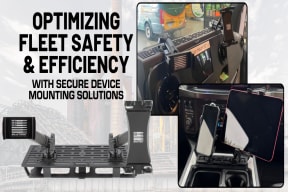
Veteran Voices in Fleet | How Military Service Shapes Fleet Leaders
Across every perspective, one message is clear: the experiences gained through military service continue to influence how veterans contribute to the fleet industry every day.
Read More →
The Fleet Lessons That Don’t Show Up on a Spreadsheet
From index cards to predictive maintenance, Robert Martinez shares the hard-earned leadership lessons that shaped nearly 40 years in fleet.
Read More →
People, Leadership & the Skilled Trades Opportunity | Weekly Cheat Sheet
People, data, leadership, and the skilled trades opportunity. See what's shaping fleets today in this week's Truck Chat Weekly Cheat Sheet.
Read More →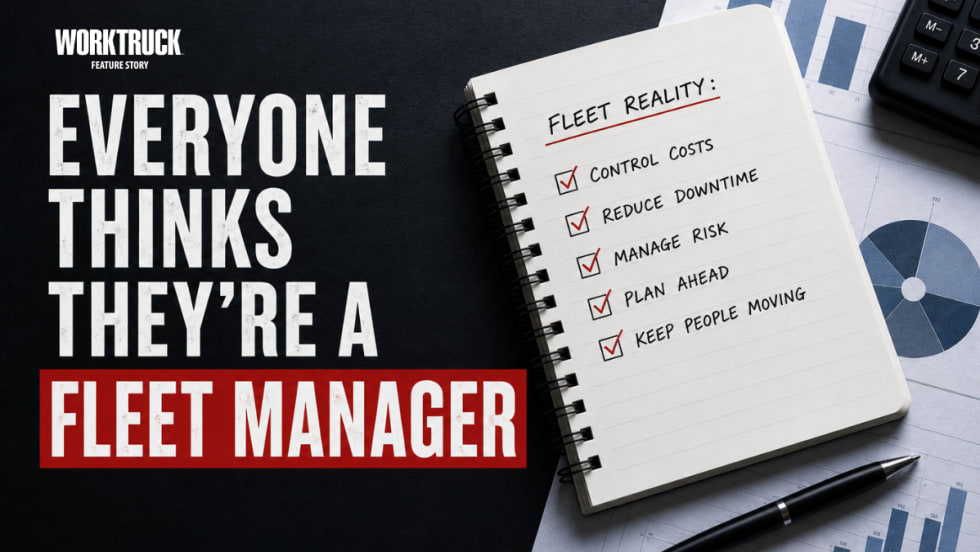
Everyone Thinks They’re a Fleet Manager
From oil changes to procurement decisions, fleet work is often underestimated by the very people who depend on it most. Bob Stanton makes the case for why communication, not just technical expertise, is one of the most important leadership skills in fleet.
Read More →
Turning Connected Vehicle Data Into Decisions That Matter
Fleet leaders have more data than ever, but turning that data into clear, actionable decisions remains a challenge. This white paper shows how leading organizations are using connected vehicle data to improve safety, reduce costs, and optimize fleet performance. Learn how to turn insight into action across your fleet.
Read More →
From Military Service to Fleet Leadership | Shades of Fleet
Military service ends, but the lessons don't. Hear how veterans are shaping fleet leadership through adaptability, teamwork, and mission-driven thinking.
Read More →
Are You Tracking Your Fleet's True Total Cost of Ownership?
Bobit Business Media surveyed 190 fleet professionals and found that while most fleets are tracking costs, fragmented systems and data gaps are keeping true TCO visibility out of reach. With rising pressure to control spend in an increasingly volatile environment, the gap between what fleets think they know and what the data actually shows is wider than you might expect. See how your peers are managing costs today and where the industry still has room to improve.
Read More →