




Verizon Tests New Hybrid Technology
Verizon paired its communications technology with hybrid vehicles to green the company fleet.

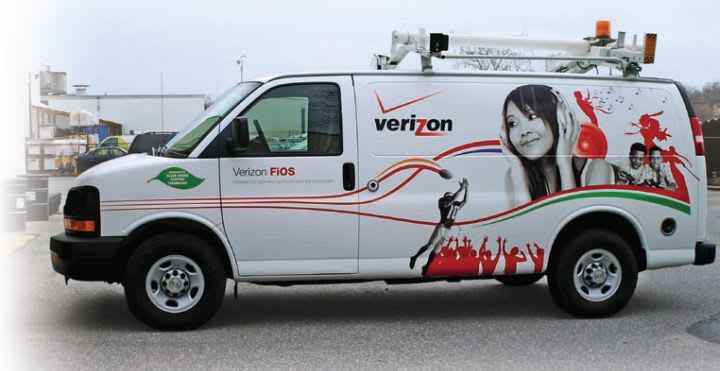
At first glance, Verizon’s efforts to become a greener fleet aren’t what one might expect. Where some assume the obvious initial step is to assess the company’s vehicles and look for ways to reduce emissions, Verizon has turned to its own telecommunications technology for solutions. For Verizon, the best way to reduce emissions is to eliminate driving altogether. The company has been using its technology to eliminate travel without compromising business.
However, company technicians still must make service calls and carry out other business requiring travel. For that, Verizon looked to hybrid technology to green the company fleet.
“Verizon has long been committed to reducing the impact of its operation on the environment, so the use of hybrids in the company’s fleet was a natural next step,” said Ralph Mayfield, executive director of fleet operations for Verizon Communications Inc. “Other examples of Verizon’s commitment include pursuing network equipment and building energy-reduction initiatives, using alternative energy sources in the network, buildings, and vehicle fleet, and promoting the company’s technology as an alternative to travel."
In 2006, Verizon developed its first innovation in creating an environmentally friendly fleet by introducing 14 specially designed service vans powered by hybrid-engine systems in Maryland and Texas.
“No domestic motor vehicle manufacturer currently makes hybrid vehicles in the van category, so Verizon worked closely with a company that specializes in hybrid-power systems, and it retrofitted the new vehicles to Verizon’s specifications. These vans are primarily used by field technicians,” Mayfield said.
Last December, Verizon introduced 100 new hybrid sedans into its fleet for use primarily as management and supervisory vehicles. Verizon has committed to an additional 100 Prius vehicles in 2008, and Mayfield said the potential exists that more will follow. With a national fleet of more than 56,000 vehicles, Verizon’s continuing commitment to creating a greener fleet could make a big difference.
According to Mayfield, Verizon’s fleet is similar to others in the industry. However, if anything sets it apart, it’s the company’s long-standing commitment to introduce and test new technology. For instance, in New Jersey and Texas, Verizon has trial-tested use of 20-percent biodiesel fuel (B-20) to power service vehicles. The biodegradable and nontoxic fuel is a domestic, renewable resource projected to reduce greenhouse gases.
“Also in [New Jersey and Texas], Verizon has been using environmentally friendly lubricants made from vegetable oils as part of the process to cut sections of fiber-optic cable where the company is installing and maintaining its digital all-fiber-optic FiOS services. These lubricants are far more biodegradable than the traditional alternatives,” Mayfield said.
While Verizon’s green fleet initiatives are still in the early stages, Mayfield foresees positive results for fleet, the community, and the company’s business model.
“Our expectation is to realize a reduction in fuel consumption and emission of greenhouse gases,” he said. “The communications industry is very green compared to many other industries. From a branding perspective, the sedans effectively convey to passersby that Verizon is a green company.”
In the future, Verizon plans to remain committed to its determination as a green company, which includes its fleet operations. “Verizon is committed to reducing the environmental impact of its operations, so what you’ll see is a continued willingness to experiment with new technology in an efficient and smart way,” Mayfield said.
Originally posted on Automotive Fleet
More Green Fleet
Fuel Management's Next Evolution Centers on Connected Fleet Technology
Learn how fleets are integrating fueling, telematics, tank monitoring, EV charging, and data systems to improve efficiency and visibility.
Read More →
Landi Technologies Achieves CARB Certification of Ford 7.3L RNG/CNG Platform
Landi Technologies has gained CARB certification of its Ford 7.3L Renewable Natural Gas (RNG) and Compressed Natural Gas (CNG) platform for the Ford E-450, F-450/550/600, F-650/750, and F-53/59 platforms.
Read More →
Turning Connected Vehicle Data Into Decisions That Matter
Fleet leaders have more data than ever, but turning that data into clear, actionable decisions remains a challenge. This white paper shows how leading organizations are using connected vehicle data to improve safety, reduce costs, and optimize fleet performance. Learn how to turn insight into action across your fleet.
Read More →
Are You Tracking Your Fleet's True Total Cost of Ownership?
Bobit Business Media surveyed 190 fleet professionals and found that while most fleets are tracking costs, fragmented systems and data gaps are keeping true TCO visibility out of reach. With rising pressure to control spend in an increasingly volatile environment, the gap between what fleets think they know and what the data actually shows is wider than you might expect. See how your peers are managing costs today and where the industry still has room to improve.
Read More →
Epic Charging Acquires Bluedot Technologies
Epic Charging has acquired Bluedot Technologies, expanding EV fleet charging access to more than 80% of U.S. public charging networks.
Read More →
CALSTART Adds 64 New Sites and Features to Its Medium- and Heavy-Duty Zero-Emission Infrastructure Map
CALSTART’s interactive National Medium- and Heavy-Duty Zero-Emission Infrastructure Map now locates approximately 1,500 ports at 162 total public, semi-public, and shared electric vehicle (EV) charging and hydrogen refueling facilities for Class 2b-8 trucks.
Read More →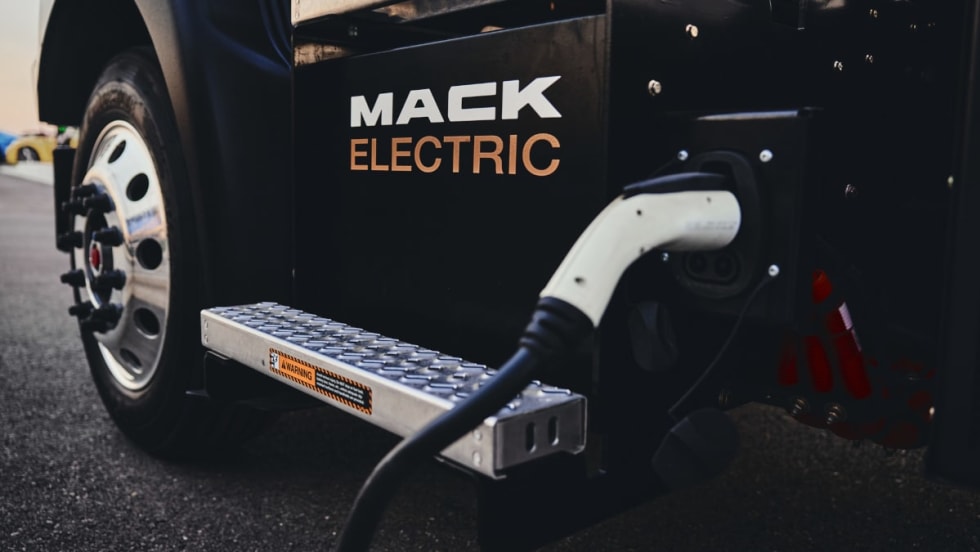
Mack Trucks Expands Full-Service EV Infrastructure Providers
Mack Trucks has expanded its comprehensive Turnkey Solutions program for Mack battery-electric vehicle customers with the addition of two new full-service providers, ABM and Lane Valente Industries.
Read More →
EV Realty Opens Major Truck Charging Hub in California’s Inland Empire
EV Realty’s San Bernardino Powered Properties’ truck charging hub, which has now opened, can serve over 200 medium- and heavy-duty trucks per day.
Read More →
WEX Launches Solution to Close the EV At-Home Charging Visibility Gap for Fleets
WEX unveiled its EV At-Home with Vehicle Fraud Protection, which ensures accurate and secure reimbursement for at-home charging.
Read More →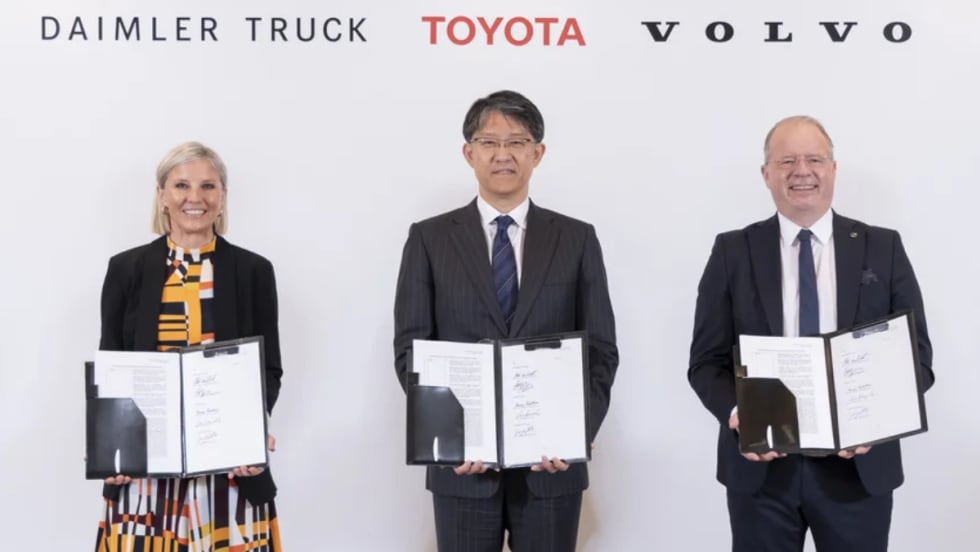
Toyota Motor Corporation to Join Daimler Truck & Volvo Group in Fuel Cell Joint Venture Cellcentric
Toyota intends to join Daimler Truck and Volvo Group as an equal shareholder in Cellcentric. All three shareholders intend to further strengthen Cellcentric as a leading manufacturer of fuel cell systems for heavy-duty commercial applications.
Read More →