




ZAP Xebra Electric Trucks Deliver in Urban Settings
The ultra-compact Xebra trucks allow the Coca-Cola Company, Domino’s Pizza, and UPS to get closer to customers while saving fuel and helping the environment.

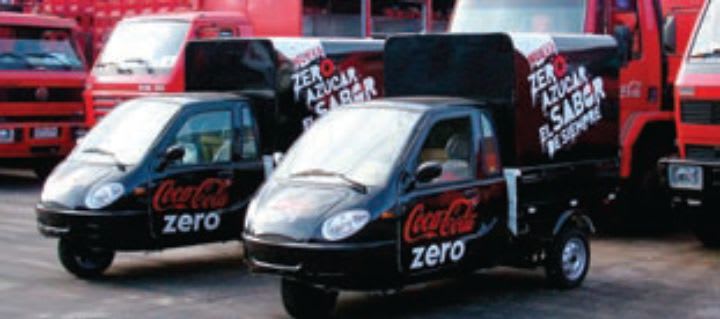
The Xebra trucks are fitted with a lockable cargo box for the Coca-Cola delivery service.
Photo: Zap
The Coca-Cola Company and alternative transportation pioneer ZAP announced a project to use 30 Zap Xebra compact electric trucks for a new beverage distribution system in Montevideo, Uruguay.
Coca-Cola recently announced a pledge to the environment as part of its policy of corporate social responsibility. The beverage company will focus on three areas of great impact: water use, packaging, and energy use and climate protection. Jorge Apesetche, distribution manager for Monresa (Uruguay) says the project with ZAP is the kind of initiative Coca-Cola wants to make to do its part in good environmental policy.
New Distribution Model Created
As cities become more and more congested, making door-to-door deliveries becomes more difficult. Parking is more difficult, especially in older cities that do not have service alleys to keep delivery vehicles out of street traffic. And the alternative, double-parking, simply magnifies the problem.
Around the world, rising fuel prices, traffic congestion, pollution, and parking shortages restrict the use of large delivery trucks. Coca-Cola officials say the new distribution model using the Zap electric trucks averages about 20 percent of the fuel consumption of the former model.
Coca-Cola subsidiary Monresa has received its initial order of 30 ZAP Xebras and is now placing them into service to deliver beverages throughout Montevideo, the capital of Uruguay. The Xebras will be incorporated into a mobile distribution hub model where larger delivery trucks will no longer be used throughout the city, but will transfer beverages into ZAP trucks at distribution hubs.
Modified with enclosed, lockable cargo boxes, the ZAP Xebras can easily navigate narrower, inner-city streets, making deliveries to smaller retail locations. Because the ZAP trucks operate more easily in this environment, officials from Coca-Cola say their drivers can deliver goods and collect payment at the same time, whereas collections were not practical when using the larger trucks.
UPS Uses a Similar Model
Coca-Cola’s new distribution model is similar to the one set up recently by United Parcel Service (UPS) in Northern California. A fleet of 42 ZAP trucks and sedans were used to expand small parcel deliveries during peak holiday demand. After UPS delivery vans transfer smaller packages to a locked storage unit, a Xebra transports the packages into dense urban and residential areas where parking and traffic are easier for the smaller vehicles.
More Green Fleet
Landi Technologies Achieves CARB Certification of Ford 7.3L RNG/CNG Platform
Landi Technologies has gained CARB certification of its Ford 7.3L Renewable Natural Gas (RNG) and Compressed Natural Gas (CNG) platform for the Ford E-450, F-450/550/600, F-650/750, and F-53/59 platforms.
Read More →
Turning Connected Vehicle Data Into Decisions That Matter
Fleet leaders have more data than ever, but turning that data into clear, actionable decisions remains a challenge. This white paper shows how leading organizations are using connected vehicle data to improve safety, reduce costs, and optimize fleet performance. Learn how to turn insight into action across your fleet.
Read More →
Are You Tracking Your Fleet's True Total Cost of Ownership?
Bobit Business Media surveyed 190 fleet professionals and found that while most fleets are tracking costs, fragmented systems and data gaps are keeping true TCO visibility out of reach. With rising pressure to control spend in an increasingly volatile environment, the gap between what fleets think they know and what the data actually shows is wider than you might expect. See how your peers are managing costs today and where the industry still has room to improve.
Read More →
Epic Charging Acquires Bluedot Technologies
Epic Charging has acquired Bluedot Technologies, expanding EV fleet charging access to more than 80% of U.S. public charging networks.
Read More →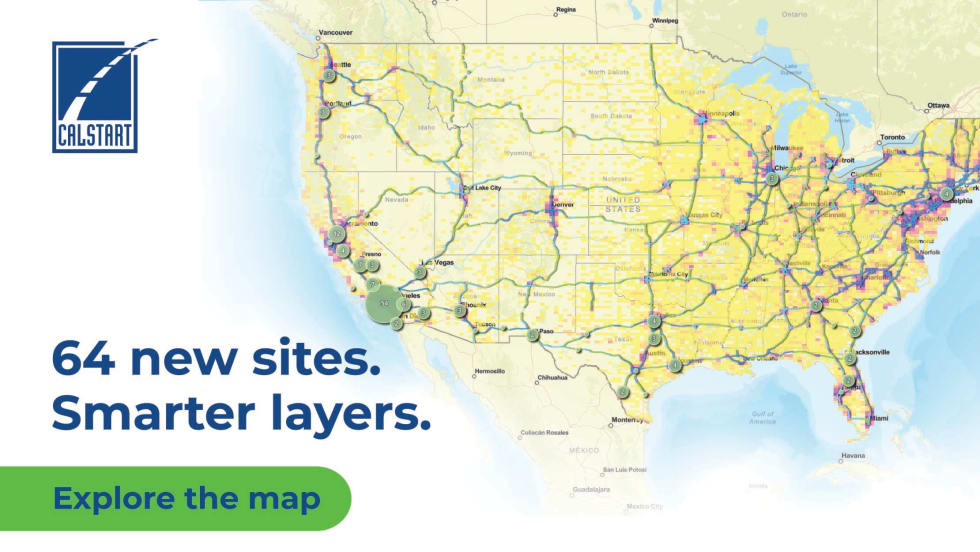
CALSTART Adds 64 New Sites and Features to Its Medium- and Heavy-Duty Zero-Emission Infrastructure Map
CALSTART’s interactive National Medium- and Heavy-Duty Zero-Emission Infrastructure Map now locates approximately 1,500 ports at 162 total public, semi-public, and shared electric vehicle (EV) charging and hydrogen refueling facilities for Class 2b-8 trucks.
Read More →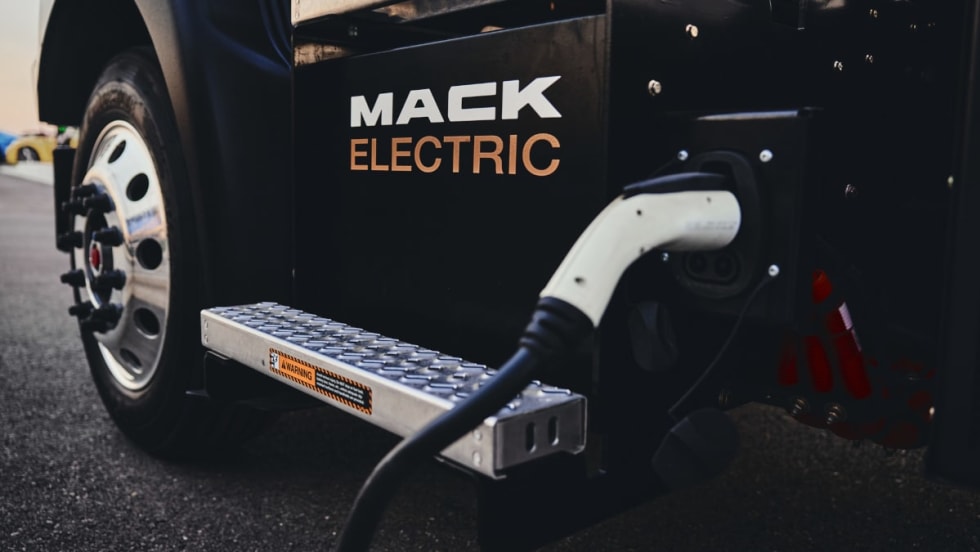
Mack Trucks Expands Full-Service EV Infrastructure Providers
Mack Trucks has expanded its comprehensive Turnkey Solutions program for Mack battery-electric vehicle customers with the addition of two new full-service providers, ABM and Lane Valente Industries.
Read More →
EV Realty Opens Major Truck Charging Hub in California’s Inland Empire
EV Realty’s San Bernardino Powered Properties’ truck charging hub, which has now opened, can serve over 200 medium- and heavy-duty trucks per day.
Read More →
WEX Launches Solution to Close the EV At-Home Charging Visibility Gap for Fleets
WEX unveiled its EV At-Home with Vehicle Fraud Protection, which ensures accurate and secure reimbursement for at-home charging.
Read More →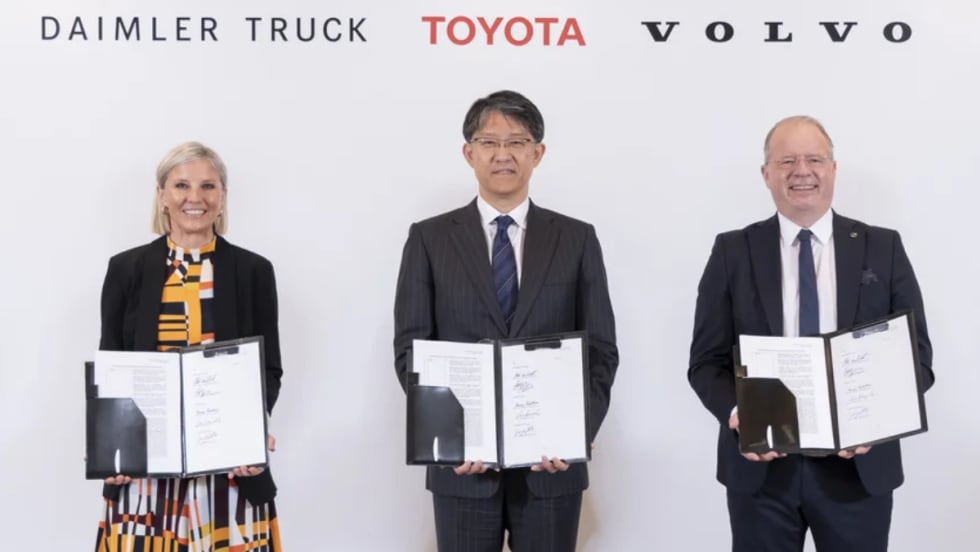
Toyota Motor Corporation to Join Daimler Truck & Volvo Group in Fuel Cell Joint Venture Cellcentric
Toyota intends to join Daimler Truck and Volvo Group as an equal shareholder in Cellcentric. All three shareholders intend to further strengthen Cellcentric as a leading manufacturer of fuel cell systems for heavy-duty commercial applications.
Read More →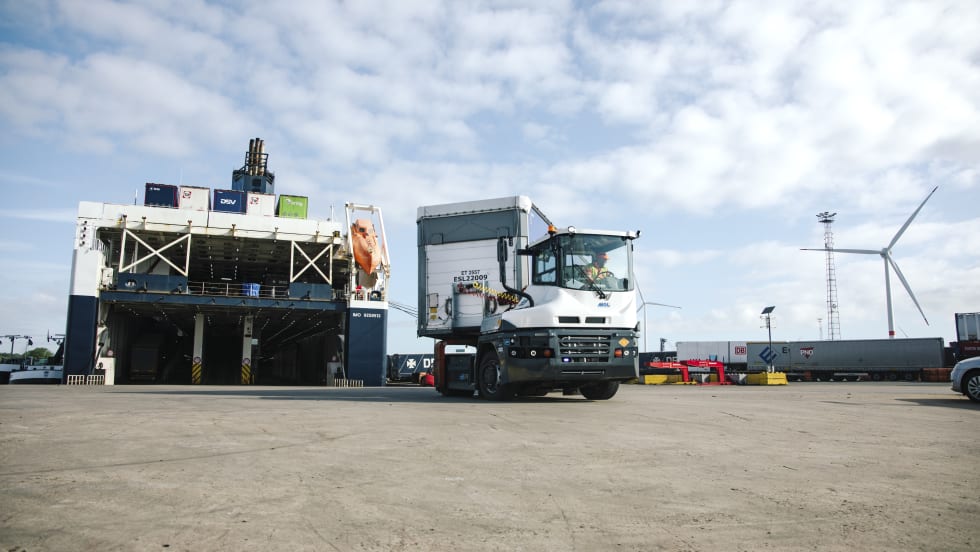
Volvo Penta Electric Drivetrain Powering Terminal Tractors
Volvo Penta and Volvo Financial Services (VFS) have partnered to support one of Northern Europe's largest shipping and logistics companies in its ambition to transition to electric terminal tractors.
Read More →