




Dig Deeper: Digging into Work Truck Fleet Costs
Best Practices in Truck Fleet Cost Control
Fleets looking to lower operational costs should focus on strategies designed to cut back on fuel and maintenance expenses.
by Grace Suizo & Chris Wolski
January 3, 2012
Allowing a vehicle to idle not only contributes to harmful pollutants in the air we breathe, but is also one of the most wasteful practices of a fleet. Idle reduction is one of the most common and effective ways to cut costs.
Photo: Canva
8 min to read
In 2011, a truck fleet's total per-vehicle operating cost ranged from $1,600 to $2,100 depending on the type (light truck, van, SUV) and vehicle mileage. With the largest commercial truck fleets operating at least 2,000 of these types of vehicles on top of medium- and heavy-duty units last year - UPS had the most with nearly 80,000 - keeping costs under control can prove a daunting task.
Strategies for smart spending to help stay within budget are available, but fleets must make sure to consider the best fit for their operations.
Fuel for Thought
Maximizing fuel economy and reducing fuel consumption is the best bet for fleets looking to cut back on fuel costs, the largest expense of fleets. In 2011, Automotive Fleet reported monthly fuel expenses for Class 1 through Class 2 trucks alone to be no less than $270 per vehicle - approximately $3,200 per year per vehicle. Truck fleets operating units classified as Class 3 and above surely exceed these numbers. Getting the most bang for the buck as far as fuel goes can be handled in several ways.
● WASTE NOT. How a vehicle is operated can make a significant impact on how much fuel is consumed. Ensuring vehicle operators engage in fuel-efficient driving practices should be an area of focus for fleets seeking fuel savings.
Wasteful driving practices include speeding, braking abruptly, and, especially, engine idling.
Engine idling is among the most inefficient ways to operate a vehicle. Any method that can prevent 0 miles per gallon, the worst fuel economy, is worth looking into.
Joy Global, the parent company of P&H Mining and Joy Mining Machinery, has managed to reduce idle time by 75 percent using fleet management software and satellite-based tracking.
UPS, the largest commercial fleet in the U.S., also uses technology to cut back on idling. In its sustainability report, the delivery company said telematics prevented 15.4 million minutes of engine idling time in 2010. The telematics initiative, in place since 2008, helps reduce vehicle idle time by 15 minutes per driver per day, which adds up to 25 gallons of fuel per driver annually. The company planned to have 32,000 vehicles in the U.S. and Canada equipped with telematics technology by the end of 2011, which means a potential fuel savings of 800,000 gallons.
Safelite Autoglass, operating 6,000 vehicles, has educated its drivers using a Web seminar to ensure all individuals understand their role in maximizing fuel efficiency. The national auto glass repair and replacement services company targeted engine idling with an anti-idling campaign to help support its fuel initiative of reducing fuel consumption by 10 percent.
Just as wasteful as leaving an engine idling is using more fuel than needed, which is often due to inefficient routing. Optimizing routes to determine the most efficient travel will also help reduce fuel consumption.
Advancements in vehicle routing technologies and working with its drivers to operate their vehicles in a more fuel-efficient manner enabled UPS to cut 63.5 million miles out of its vehicle routes in 2010 and cut emissions by 68,000 metric tons.
FedEx's routing technology, which it calls Route Optimization and Decision Support (ROADS), allows FedEx Express station managers to change vehicle routes daily, regardless of the volume of incoming packages. The system also creates "what-if" scenarios to help managers alter delivery zone boundaries. The system is also used to help train new employees by assisting them in making better routing decisions. The company said it uses the ROADS system when a region experiences inclement weather that disrupts normal routes to redraw territory boundaries, for example in areas hit by flooding, tornadoes, or snowstorms.
Limiting the operation of vehicles to business use only is another strategy to manage unnecessary fuel spend. In 2011, AF reported average personal use was $118, up from previous years.
LKQ Corp., a national supplier of quality recycled automotive parts, keeps close tabs on fuel use to eliminate abuse. Fuel is purchased with a fuel card that requires an assigned driver PIN. Using this method allows control over the gallon maximum per day per fill and limits the number of fill-ups per day. In addition, weekend and after-hours fuel use is tracked using exception reports that provide the date and time, gallons, amount of fuel purchased, fuel type, and station location. Both fuel cards and keys to the vehicles are secured in a lock box at night.
● Alternative Thinking. Deciding which fuel is more cost-effective for a fleet operation depends on its needs. Fleets should conduct a cost-benefit analysis to determine which would help save the most.
According to the U.S. Department of Energy, diesel engines offer 30- to 50% greater fuel economy than comparable gasoline engines. Diesel has a heftier price tag than gasoline but also generates the same amount of energy with less fuel. Diesel usually makes more financial sense for Class 3-4 trucks operating more than 30,000 miles per year because of the higher up-front cost of the engine. Gasoline is considered a better fit for vehicles driven 30,000 miles or less.
FedEx was able to reduce the amount of fuel it consumed by 276,000 gallons with its fleet of 408 electric and hybrid-electric vehicles, also contributing to a CO2 emissions reduction of nearly 2,800 metric tons. In terms of overall fleet fuel efficiency, the company was able to improve its fuel economy by a total of 15.1 percent in 2010 since it started focusing on this effort in fiscal-year 2006. The company's goal is to have improved fleet fuel efficiency by 20 percent by 2020.
The company also recently announced that it is rolling out 4,000 new trucks for its FedEx Express division (primarily BlueTEC clean diesel Sprinter vans), which is part of its efforts to meet its fuel-efficiency goals. FedEx reported a savings of more than 66 million gallons of fuel since implementing its first Sprinter in 2000.
Staples has also taken the electric route with all-electric trucks, which it says are ideal for shorter routes and inner city metropolitan-type markets. The company added 41 new all-electric Class 6 Smith Newton delivery trucks to its 2,000-vehicle North American fleet in 2011 as part of its ongoing fuel-efficiency initiative (started in 2006) to achieve a 40-percent improvement in fleet fuel economy by 2015 and significantly reduce its carbon footprint.
UPS also added 130 new hybrid-electric delivery trucks in 2011 to its alternative-fuel fleet in New York, New Jersey, and California - urban areas with heavy stop-and-go traffic that would allow fleets to benefit from the vehicles' regenerative braking feature. The units are estimated to improve fuel economy by 35 percent, saving more than 66,000 gallons of fuel and 671 metric tons of CO2 annually.
Fleets are also using compressed natural gas (CNG), biodiesel, and E-85 to boost fuel efficiency. Verizon is using all of these sources to fuel its models, with the latest addition to its alternative-fuel fleet being 13 cargo vans converted to run on CNG. Its alt-fuel fleet is estimated to help the company conserve approximately 290,000 gallons of fuel and cut more than 2,550 metric tons of greenhouse gas emissions.
As part of its Sustainable Efficiency program, ThyssenKrupp Elevator introduced propane-autogas trucks into its fleet. Working with ROUSH CleanTech, ThyssenKrupp introduced the propane trucks into its Phoenix fleet and is gearing up to deliver additional trucks to its branches in Los Angeles, San Diego, and Seattle.
One of the biggest challenges ThyssenKrupp faced was the fueling infrastructure. Since its drivers take their vehicles home at night, they needed to be close to a fueling site. Working with Ferrellgas and other autogas suppliers, fleet was able to find fueling stations near drivers' homes that dispensed propane autogas. In some cases, they were at conventional gasoline fueling stations that happened to have a propane-autogas pump. Ferrellgas also worked with existing stations to upgrade their equipment or found new locations to add propane autogas.
In addition to its propane vehicles, ThyssenKrupp recently took delivery of its first electric vehicle - a Ford Transit Connect Electric from Azure Dynamics.
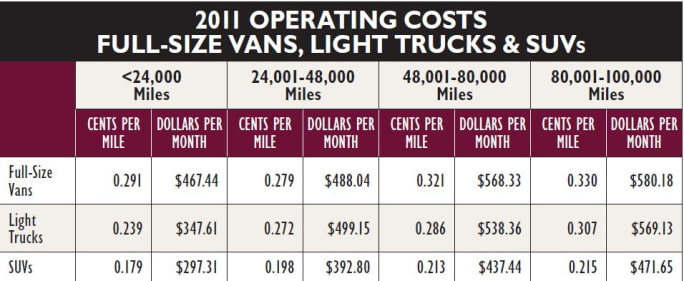
In 2011, the average monthly cost of operating a full-size van was the highest expense among the van/truck/SUV categories at $580.18 for vehicles with 80,001-100,000 miles.
Source: Work Truck
● LIGHTEN UP. Lessening the load can also help cut back on fuel costs. This can be achieved by shifting to smaller vehicles that can still meet job requirements.
In 2010, State Farm began moving its claims representatives out of full-size vans into four-cylinder Transit Connect models, which provided better fuel economy and still offer enough space for the fleet's upfit package.
Joy Global also rightsized approximately 150 units in its fleet beginning in 2007 by moving from Ford F-150s to Escapes and Fusions for its sales positions.
Shifting from vans to pickups with self-contained inserts or capsules may also be beneficial for fuel economy. According to Paul Maranda Enterprises, a fiberglass capsule manufacturer, fleets report 14-15 mpg on a ½-ton pickup with an insert versus using a cargo van that only gets, at most, 10.4 mpg when loaded.
Last year, Verizon replaced its cargo vans with Chevrolet Silverado 1500 Hybrids upfitted with fiberglass inserts from Texas-based BrandFX Body Company. One thing to keep in mind, however, is that fuel economy savings diminish at the ¾- and 1-ton class.
Work with What You’ve Got
As the saying goes, “an ounce of prevention is worth a pound of cure.” Average monthly maintenance expenses in 2011 were reported as high as $87.63 per vehicle.
Staying on top of preventive maintenance items can greatly impact the life of a vehicle. Oil changes, fluid levels, and tire pressure checks are some of the basic methods to help reduce unexpected repairs, in turn keeping downtime in check. Keeping a vehicle well-maintained will also help score a higher resale value.
In addition, some smaller fleets consider leasing (versus buying) as a strategy to combat maintenance expenses. The Idaho Youth Ranch (IYR), a Boise-based nonprofit operating a fleet of 33 trucks, discovered the cost to maintain its fleet was up to 60 cents per mile for some units. The company partnered with Trebar PacLease to lease 13 trucks, including 10 medium-duty Kenworth T300s. Through leasing, IYR only pays a fraction of the premium for new diesel engine controls.
Subscribe to Our Newsletter
More Green Fleet
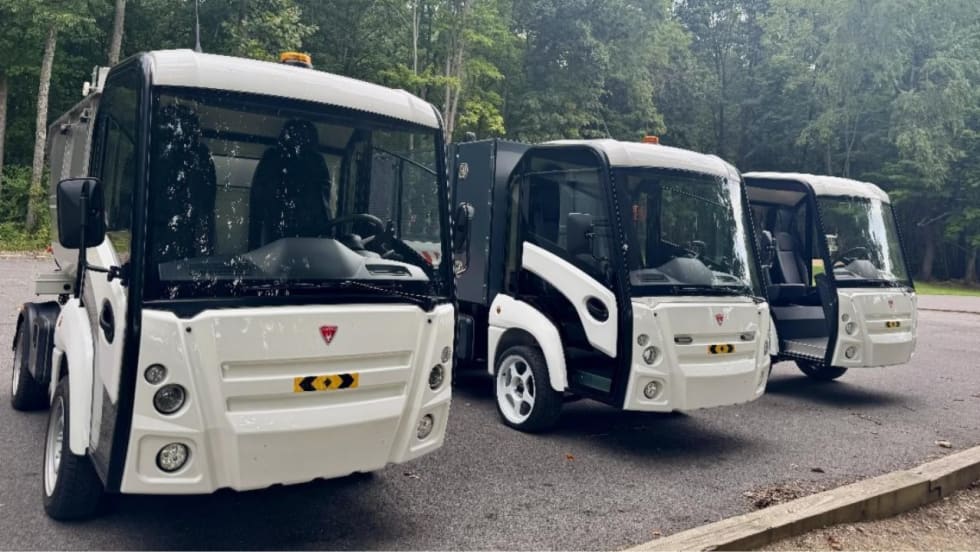
Narro Trucks Introduces Electric Utility Vehicle
Narro Trucks officially launched its operations on Aug. 20 and hosted a ride and drive to showcase its electric truck, which will be produced in Virginia.
Read More →
Samsung SDI Takes Full Control of GM Battery JV as Indiana Plant Pivots to Energy Storage
Samsung SDI is taking full control of its Indiana battery plant with GM, marking a major shift from the EV-focused joint venture Charged Fleet first covered in 2023.
Read More →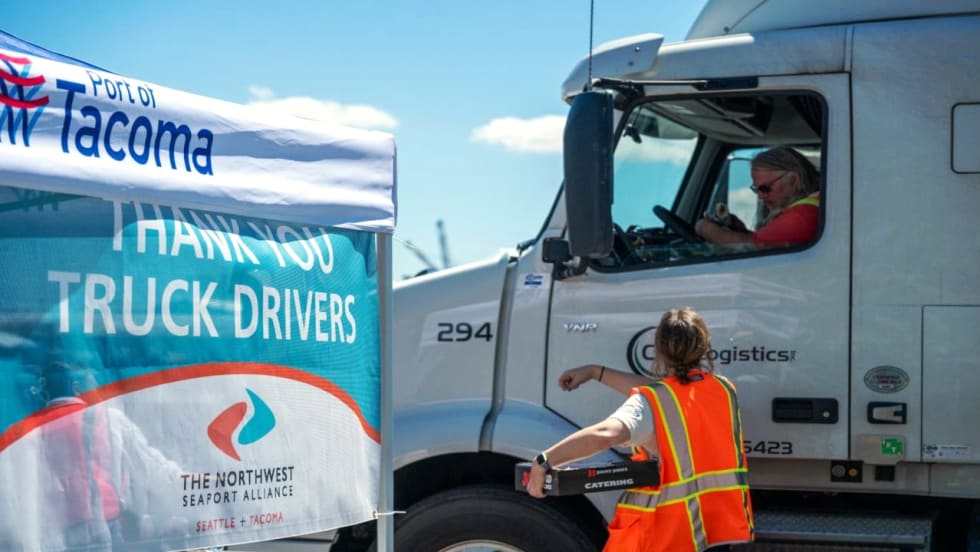
NWSA Taps CALSTART to Administer Zero-Emission Drayage Assistance Program
CALSTART will provide free technical assistance services to drayage fleets serving the Ports of Seattle and Tacoma and looking to transition to cleaner technologies and help decarbonize freight hubs.
Read More →
EV Fleet Reality Check: What Operators Wish They Knew Before Electrifying Their Work Vans
Electric work truck upfits bring new compatibility questions. Learn how parts availability, OEM guidance, power demands, and route planning can affect fleet performance.
Read More →
Peterbilt Expands Sourcewell Partnership with Electric Vehicle Lineup
Peterbilt Motors Company’s cooperative purchasing agreement with Sourcewell and its Canadian partner, Canoe Procurement Group, now includes including Peterbilt's battery-electric vehicle lineup.
Read More →
WTC Group Expands Sustainable Operations with Kalmar Ottawa T2 EV Fleet
Commercial adoption of the Kalmar Ottawa T2 EV terminal tractor continues to grow as customers add the zero-emission yard tractor to their fleets. WTC Group has placed an order for a Kalmar Ottawa T2 EV.
Read More →
Where Propane Autogas Fits in Today's Fleet Fuel Strategy
Learn more from PERC's Joel Stutheit, as he explains why propane autogas remains a practical alternative for fleets seeking to reduce emissions without sacrificing operational flexibility.
Read More →
Schneider Electric Simplifies Commercial EV Charging with New Charge Pro for the U.S.
Schneider Electric’s updated Charge Pro Level 2 chargers deliver reliable, flexible charging for multi-unit dwellings, fleets and workplaces, as well as public and destination charging locations such as hotels and retail centers.
Read More →
ChargePoint and Onvo Expand Highway Fast Charging Across the Northeastern U.S.
ChargePoint is working with Onvo, a locally owned travel plaza brand headquartered in Pennsylvania, to install ultra-fast EV charging stations at locations in the Northeastern U.S.
Read More →