





Dig Deeper: Trailers - Tracking the Forgotten Asset
The Fundamentals of Spec'ing Work Trucks for Towing
Despite being similar in size, medium-duty trucks offer a wide variance in maximum towing capacities - from 5,000 lbs. to more than 11,000 lbs.
September 6, 2011
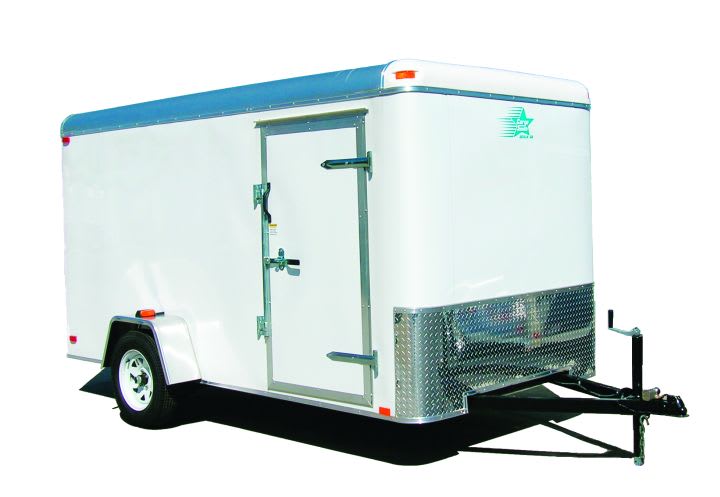
If a vehicle will be hauling cargo that requires protection from the elements, an enclosed trailer should be selected.
Photo: Cargotrailerstore.com
9 min to read
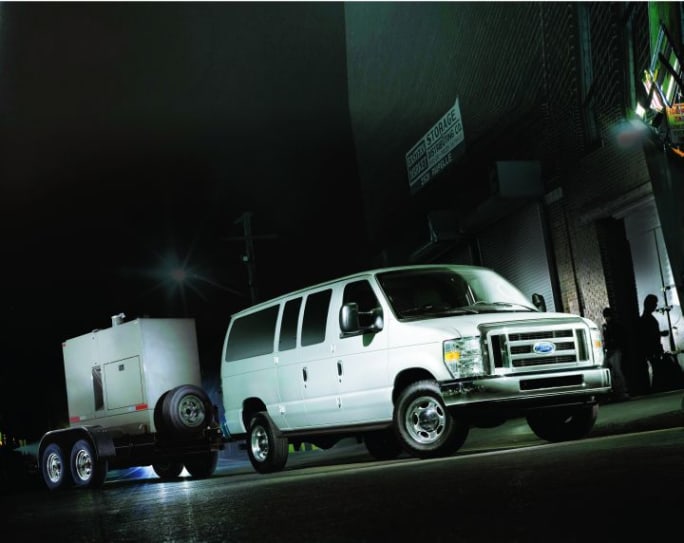
The type of vehicle is important in spec'ing. Most vans are considered light-duty, with van cutaways typically falilng under medium-duty.
Photo: Ford
When reviewing truck towing capacities published by truck manufacturers, fleet managers may notice a wide range available for each truck class. For example, ½-ton pickups can offer trailering capacities that range from 5,000 lbs. to more than 11,000 lbs.
Why such a large difference for the same size work truck?
The answer lies in how the truck is spec'd and the type of trailer and hitch used. Put together the right combination and a truck can handle trailer loads with optimal power, efficiency, and safety. However, if the trailer weight exceeds the truck's capacity to pull it, the vehicle will encounter severe stress, leading to premature maintenance and component failure, and creating potential safety and liability issues, which could be costly to a company's bottom line.
How do fleet managers ensure they've properly equipped trucks to handle required towing requirements?
5 Questions to Define Towing Requirements
The starting point is to define exactly what requirements are needed for the trailer. Use these five questions as a guide:
1. What will the trailer haul? Will it be a dense load, with loose rock or dirt? Will it be bulky construction or lawn debris? Will the trailer haul heavy equipment, such as a backhoe or excavator? Make a list of all possible cargo types planned to pull with that trailer - and what is anticipated to be placed on the trailer at the same time.
2. What are the cargo dimensions? This addresses cargo volume. Based on the dimensions of the payload, how much space is needed?
3. How much weight will be hauled? Look at a list of the different types of cargo the work truck will need to haul. What are the estimated weights of each type? What quantity of each will be on the trailer at maximum load? What will that total payload weigh?
4. What type of trailer? Consider the cargo type. If hauling loose dirt, gravel, or construction debris, an open trailer would be a good fit. If the cargo needs protection from the elements or extra security, then select an enclosed trailer. For construction equipment or vehicles, a flatbed trailer often works best.
5. What is the total anticipated weight of the trailer and the cargo? Once cargo weight is calculated at maximum load, add the weight of the trailer. This determines the maximum towing capacity the vehicle needs to handle. As a general rule of thumb, add a buffer of at least 20% or more to capacity calculations to reduce risk of under-spec'ing the tow vehicle.
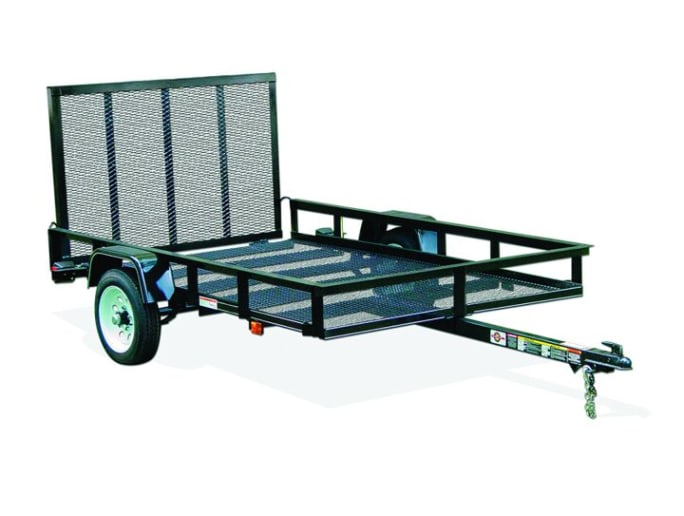
An open trailer is good for hauling materials that do not require protection from the elements, or for items that do not fit in the space constrictions of an enclosed trailer.
Photo: Cargotrailerstore.com
Differences in Truck Classification
Once a clear idea of the weight and type of trailer a truck will need to pull, the next step is identifying the truck classification required to handle the load. Here are key terms to know when determining truck class:
As-spec'd curb weight. This factor is defined as the shipping weight of the truck or cab and chassis, without aftermarket upfits, including all standard equipment and options, fluids, and a full tank of fuel. Consult the truck's original equipment manufacturer (OEM) or dealer rep for curb weight estimates on chassis closest to spec requirements.
Gross vehicle weight rating (GVWR). This refers to the maximum allowable weight, as certified by the manufacturer, a vehicle can weigh (including all fluids, people, and cargo) to safely start and stop. Gross weight is different than gross combined weight, which includes the weight of the vehicle and trailer.
Payload capacity. This is the maximum amount of combined weight of cargo, equipment, and occupants a vehicle can safely carry. Calculate payload capacity by subtracting the vehicle's as-shipped curb weight from its GVWR. For example, if the GVWR is 19,500-lbs., and as-shipped curb weight is 9,500-lbs., the truck's payload capacity is 10,000-lbs.
Putting Towing Needs Together
How is this all put together? If a truck's actual payload, including weight of occupants, is 2,000 lbs., and as-spec'd curb weight is 4,500 lbs., then the estimated gross vehicle weight (GVW) of the tow vehicle is 6,500 lbs. Whether it's a crew cab or an extended cab, the weight of the vehicle is what we are looking at.
What Class does this truck's GVW fit within? The following is a truck classification breakdown by GVWR:
Class 1: 0-6,000 lbs.
Class 2: 6,001-10,000 lbs.
Class 3: 10,001-14,000 lbs.
Class 4: 14,001-16,000 lbs.
Class 5: 16,001-19,500 lbs.
Class 6: 19,501-26,000 lbs.
Class 7: 26,001-33,000 lbs.
In the example above, the truck would fit within the Class 2 range.
Value of Vehicle Type
Once the truck class is determined, what type of work truck will best suit the fleet's application?
The following are vehicle types, segmented by truck classification:
Class 1-2: Options include pickups, vans, SUVs, and smaller (single rear wheel) van cutaways.
Class 3-4: Options include pickups (dual-rear-wheel), van cutaways, and medium-duty cab and chassis (including cab-forward and conventional cabs).
Class 5-7: Medium-duty cab and chassis.
Importance of Towing Capacity
Now that the proper truck class and type is selected, the next factor to consider is gross combination weight rating (GCWR), which is the maximum allowable combined weight (as determined by the truck OEM) of the truck and its payload, with the trailer weight at maximum load.
GCWR is essential to calculating accurate tow capacity because it takes into account the tow vehicle's intended payload. Why is this important?
Most tow capacity charts published by truck OEMs don't account for a truck's specific application. When adding weight to the truck, this detracts from the vehicle's towing capacity.
For example, suppose a truck, at maximum load, has a GVW of 6,500 lbs. and its GCWR is 18,500 lbs. Subtract the GVW (6,500 lbs.) from the GCWR (18,500 lbs.) to come up with an estimated maximum towing capacity of 12,000 lbs.
An additional 500 lbs. to the truck's payload, which would bring the GVW to 7,000 lbs., would then reduce towing capacity by 500 lbs., to 11,500 lbs.
The tow vehicle's payload, therefore, directly impacts tow capacity. Lightening the truck's payload boosts towing capacity and vice versa.
Tips in Powertrain Selection
However, how does all of this explain that ½-ton pickups, despite being the same size, offer such a wide variance in maximum towing capacities - from 5,000 lbs. to more than 11,000 lbs.? The differences lie in powertrain specification, including the engine, transmission, and rear (drive) axle ratio - all of which directly impact GCWR.
Engine. Which is the best engine choice for a fleet's towing requirements? For Class 1-3 trucks, the decision is usually between one diesel engine option and a variety of sizes of gas engines. As a general rule of thumb, the diesel offers the largest GCWR and, thus, the highest towing capacity because of its significantly higher torque. The downside is that the diesel option costs $8,000 more up-front than the gasoline-powered engine, so make sure the towing weight requires diesel.
For larger medium-duty trucks, especially in the Class 6-7 range, engine selection is a bit more complicated because there could be more than a dozen different diesel engine options to choose from, based on horsepower and torque, that determine GCWR.
Transmission. Should a manual or automatic transmission be spec'd? Depending on the vehicle type or manufacturer, options may not be available. In most cases, the automatic is the only transmission available. However, where there is an option, check with the vehicle manufacturer or dealer representative about which transmission will best handle your trailer load.
Also, for most Class 2 through Class 3 pickup trucks and vans, OEMs offer a tow package that includes a transmission cooler to help prolong transmission life when the truck is under constant, heavy loads.
Rear axle ratio. The rear axle ratio represents the relationship between driveshaft revolutions (driven by the transmission) and rear axle revolutions. Typically, the higher the ratio, greater pulling power is gained, but at the expense of fuel economy. The inverse often holds true. Lowering the ratio improves fuel economy, but sacrifices pulling power. Speak with a truck OEM rep to determine the ratio that best fits the fleet's trailering requirements and fuel efficiency objectives.
Other Towing Considerations
In addition to powertrain specs, here are other options to consider when selecting the right tow vehicle:
Two- or four-wheel drive. Will the truck and trailer need to operate in off-road conditions? If so, how often would the four-wheel-drive need to be engaged for added traction?
These questions are important because the incremental cost for the four-wheel-drive can be as much as $4,000. Also, four-wheel drive adds substantial weight to the truck, diminishing payload and trailering capacity. Does the fleet's application warrant this extra cost and weight? If not, stick with two-wheel drive.
Rear suspension. If spec'ing a "smooth ride" suspension but keeping the truck under a constant heavy load pulling a trailer, there is a risk of creating premature maintenance issues and shortening a work truck's life. Select a rear suspension designed to handle the rigors of regular trailering.
Side-view mirror configuration. With full-size pickups and some full-size SUVs, there is an option for extendable side-view mirrors. These help improve visibility and safety, especially when pulling an enclosed trailer that may impede a driver's rear-view capabilities.
Selecting a Tow Hitch
At this point, trailering requirements have been determined and a tow vehicle has been spec'd that's up to the task. What type of hitch will do the best job pulling that load?
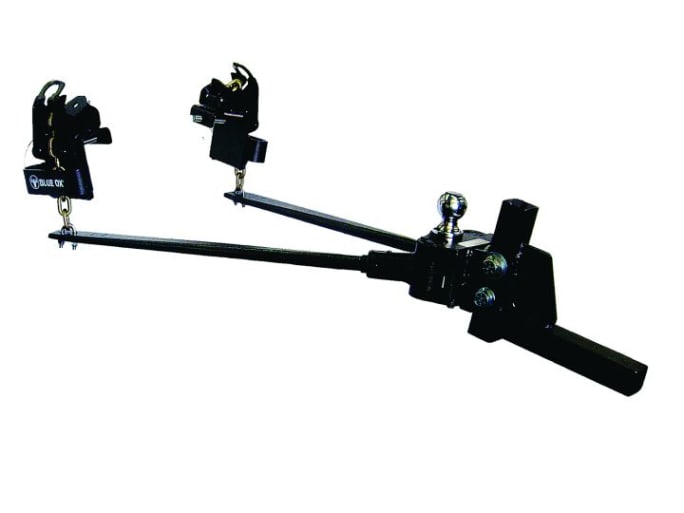
The Sway Pro weight distribution hitch by Blue Ox is designed to eliminate trailer sway utilizing two sway-control loops and two points of friction. A simple thumbscrew is used for head-angle adjustment.
Photo: BlueOx SwayPro
Receiver hitch. This is the most common hitch type, with the hitch located below the rear bumper, often with a ball or heavy-duty pintle hook attached to it. This hitch allows a vehicle to pull a trailer without impacting cargo capacity in the pickup bed. There are two types of receiver hitches:
Weight-carrying hitch. Also known as a "dead-weight hitch," this hitch must support the trailer's full tongue weight, concentrated behind the truck's rear axle, making it best suited for light- to medium-sized loads.
Weight distributing hitch. Designed for heavier trailer loads, this hitch system includes spring bars that distribute the trailer's tongue weight from the vehicle's rear axle to the front axle, helping take stress off the rear of the truck and maximizing tow capacity.
Gooseneck hitch (for gooseneck trailers). This hitch is attached to the frame near the rear axle, nestled below the surface of the body. When you're not pulling the trailer, you can close the trap door, making it flush with the body, giving you the full surface area of the flat bed to haul cargo.
Fifth-wheel hitch (for fifth-wheel trailers). This hitch is a large horseshoe-shaped plate, located at the center of the truck bed. The fifth-wheel hitch offers maximum towing capacity and is common for trucks used primarily as a trailer hauler.
Consult with both a truck OEM representative and trailer dealer to determine which type of hitch best fits the trailer, vehicle, and tow capacity requirements.
The Bottom Line
Just because published tow ratings for a vehicle may be 10,000 lbs., 12,000 lbs., or 20,000 lbs., does not necessarily mean that's what a fleet's truck can handle. Dig deeper, using the tips in this article, to calculate a precise towing capacity. This will help fleet managers put together a truck and trailer combination that hauls the load safely and efficiently.
Subscribe to Our Newsletter
More Vehicle Insights
GM Unveils New Sixth-Generation Small Block Engines for 2027 Light-Duty Pickups
General Motors unveiled two new small-block engines, backed by extensive real-world validation and more than 70 years of small-block V8 manufacturing experience, as part of the engine portfolio for the 2027 Chevrolet Silverado 1500 and GMC Sierra 1500.
Read More →
Chevrolet Silverado 1500 Fleet Guide Specs Capability and 2027 Model-Year Updates
The next-generation 2027 Chevrolet Silverado 1500 brings new V-8 engines, updated technology, expanded safety features, and a fleet-focused Work Truck. Here’s what commercial fleets need to know so far.
Read More →
2026 Ram 1500 Tradesman Put to a Real-World Fleet Test
A few days behind the wheel of a 2026 Ram 1500 Tradesman turned into a test of visibility, parking, work-ready features, and even severe-weather driving.
Read More →
Isuzu N-Series Gas Fleet Guide: Specs, Capability and 2027 Model-Year Updates
Explore Isuzu Truck North America’s N-Series Gas fleet specs, engine performance, GVWR and payload capability, configurations, chassis dimensions, work-focused features, and 2027 model-year information.
Read More →
Ram ProMaster City Fleet Guide Specs Cargo Capacity and 2027 Updates
Work Truck’s Ram ProMaster City Fleet Guide tracks the latest specifications, cargo capability, configurations, fleet technology, pricing, and model-year updates for Ram’s mid-size commercial van.
Read More →
Ford F-150 Fleet Guide Specs Capability and 2026 Model-Year Updates
Explore 2026 Ford F-150 fleet specs, engines, towing and payload capability, configurations, work features, technology, and model-year updates.
Read More →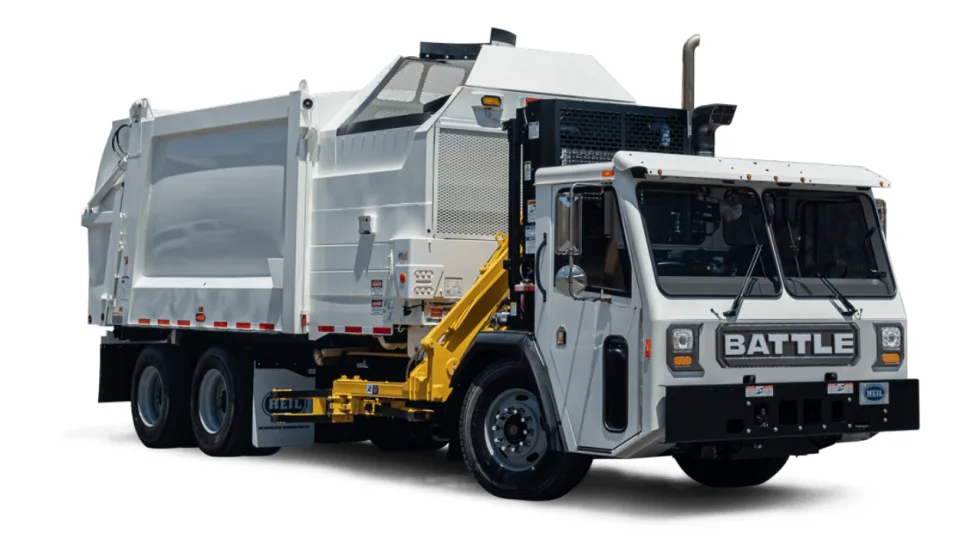
TCI Now Sells & Supports Battle Motors’ Vocational Trucks
Midwest truck dealer Truck Centers, Inc. (TCI) has expanded its transportation solutions with sales and service support for Battle Motors’ heavy-duty vocational trucks at locations in locations in Indiana, Illinois, and Missouri
Read More →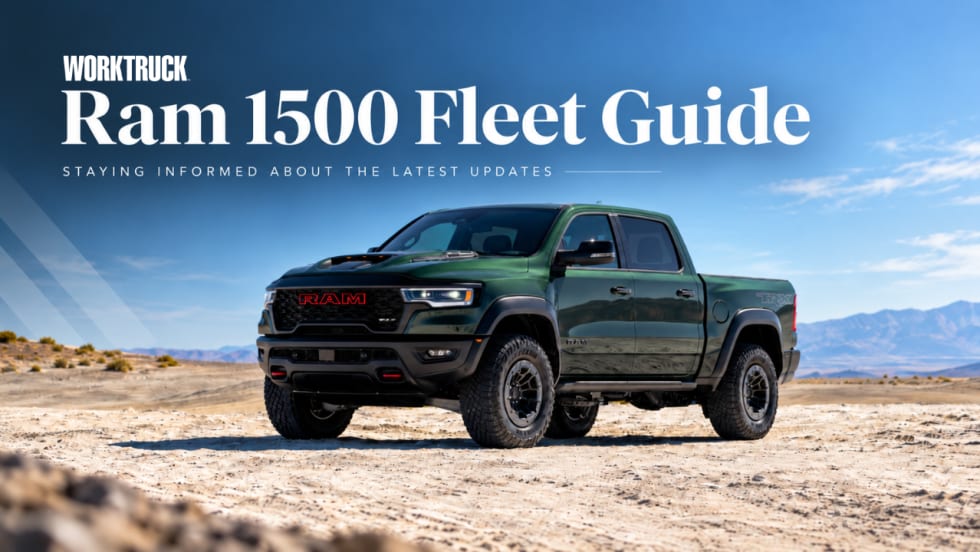
Ram 1500 Fleet Guide Specs, Capability and 2027 Model-Year Updates
Explore always up-to-date Ram 1500 fleet specs, engines, towing and payload capability, configurations, technology, pricing updates, and model-year changes.
Read More →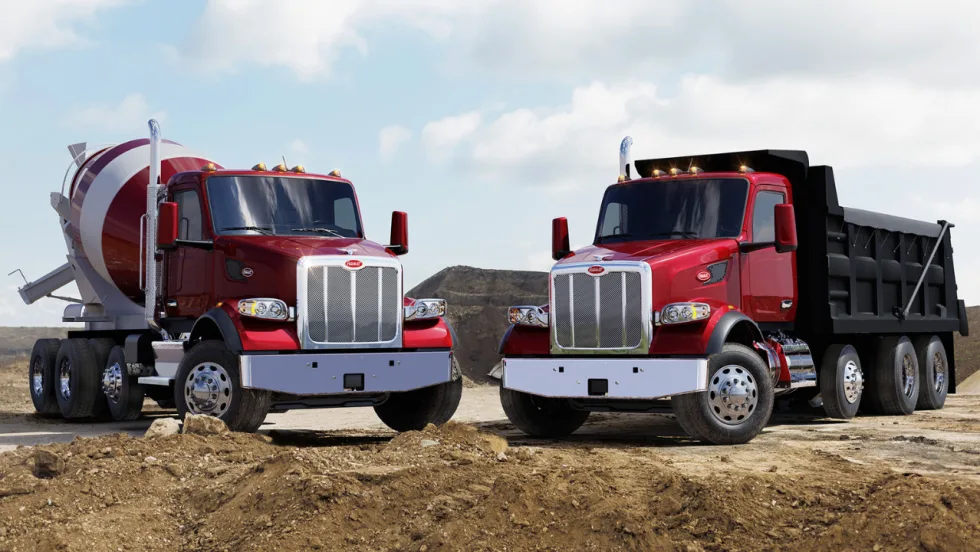
Peterbilt Trucks Equipped with Paccar TX-18 Pro Boost Efficiency for Maryland Fleet
Patuxent Companies is replacing aging trucks with the Peterbilt Model 567 and Model 589, specified with the Paccar TX-18 Pro 18-speed automated transmissions, and is reporting an 8% to 10% improvement in fuel economy.
Read More →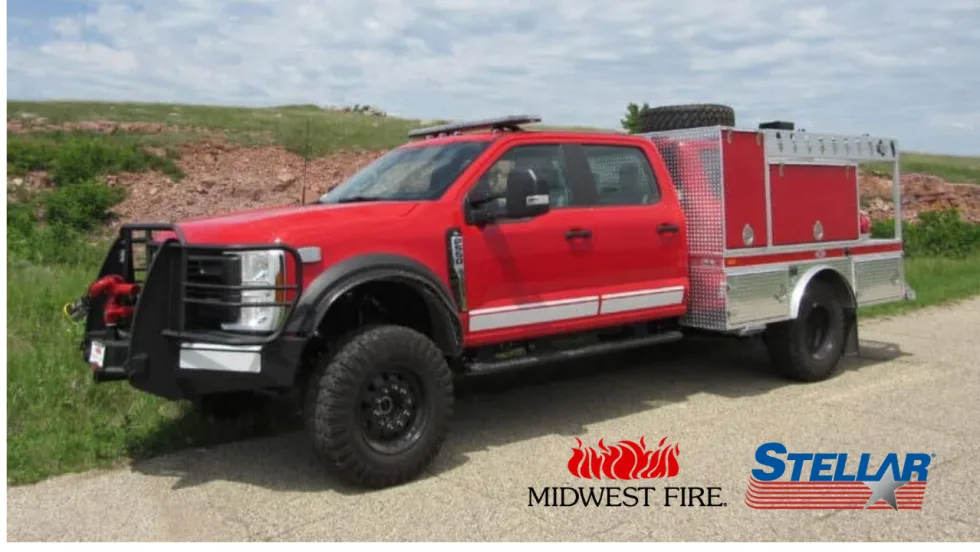
Stellar Expands into Fire Apparatus Market with Acquisition of Midwest Fire
Stellar Industries has acquired Midwest Fire, a custom fire apparatus manufacturer headquartered in Luverne, Minnesota, with nearly four decades of specialized apparatus experience.
Read More →