




UPS Trademark Brown Delivery Trucks Go Green
With the purchase of 130 hybrid-electric vehicles, the package delivery company grows its alternative-fuel vehicle fleet and increases its dedication to a “green” fleet.

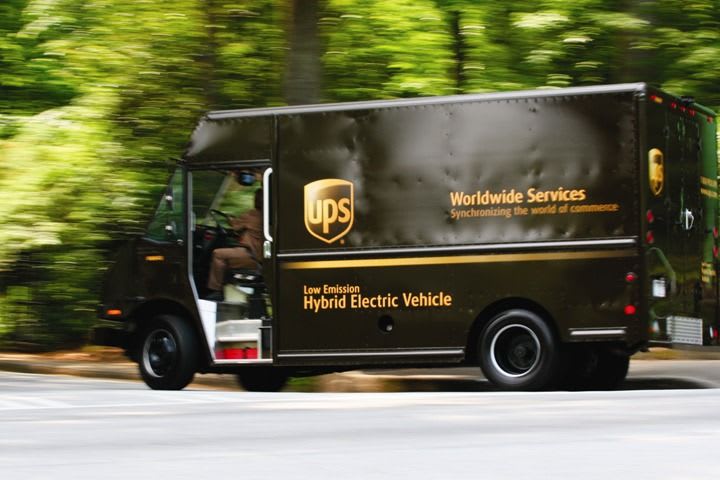
Since its founding in 1907, UPS has been looking for the most efficient ways to operate. In 1998, it was the first package delivery company to employ hybrid-electric vehicles. Over the years, the company has invested more than $25 million in its alternative-fuel vehicle fleet.
Photo: UPS
In an effort to "green" its trademark brown delivery trucks, UPS recently added 130 hybrid-electric delivery trucks to its fleet. The new units join the UPS fleet of 1,949 alternative-fuel vehicles (AFVs), one of the largest private green fleets in the transportation industry. UPS plans to put the new hybrid-electric vehicles (HEVs) in service in 2011, with 30 slated for service in New York and New Jersey, and 100 in California.
The Right Vehicle for the Right Market
Mike Britt, UPS director of vehicle engineering, said acquiring HEVs for the New York, New Jersey, and California markets was a strategic choice that makes the most of hybrid-electric technology.
"Certain technologies fare better in certain types of locations. We place these vehicles on delivery routes where they will be the most effective," he said. "HEVs are best suited for urban areas with heavy stop-and-go traffic and low interstate miles. Frequent stops and stop-and-go traffic allow for electric energy to be recaptured through regenerative braking. High interstate miles would utilize the fuel engine over the electric component, diminishing fuel economy."
Although the new units make up only a small percentage of the 100,000-vehicle fleet, the company anticipates significant results. It estimates the new HEVs will improve fuel economy by 35 percent, saving 66,085 gallons of fuel and 671 metric tons of CO2 annually - the equivalent of removing 128 passenger cars from the road.
According to Britt, in addition to fewer emissions and improved fuel efficiency, contributing to a healthier environment and cleaner air for the community is an advantage as well. "Fostering goodwill between a company and the communities it serves is a great benefit," he said.
He added that overall, HEV units were met with great acceptance, with both drivers and customers responding well to them. In fact, other than labeling on the side of the trucks identifying them as hybrids, they appear to be identical to traditional delivery trucks, making the transition seamless.
"Our drivers are the best in the business, and they have adapted quickly to the new technologies we have introduced over the years. With HEVs, efficiency is dependent in part on how the driver operates the vehicle, so UPS has trained drivers assigned to HEVs to modify their driving habits to maximize the vehicle's efficiency," said Britt. "They look very similar to non-alternative-fuel vehicles, so customers don't often notice the fact their packages are being shipped in a more sustainable manner."
A History of Efficiency
UPS is not new to HEVs. In fact, in 1998 it was the first package delivery company to employ such technology in daily operations. Currently, UPS already has 250 HEVs making deliveries in the U.S. and features two different size vehicles. Both are built with a Freightliner Custom Chassis combined with a hybrid drive system from Eaton Corp.
Over the years, the company has invested more than $25 million in its AFV fleet, which includes not only hybrid-electric units, but also compressed natural gas (CNG), liquefied natural gas (LNG), propane autogas, and all-electric vehicles. Since 2000, this alternative-fuel fleet has traveled more than 185 million miles.
"We take a 'rolling laboratory' approach to our AFVs, meaning we view them as a way to study how the technologies would work on a larger scale," said Britt. "We haven't committed to any one technology, but remain focused on making sure it works within our fleet, that it meets and exceeds our expectations, and is viable for implementation on a larger scale. Certain alternative-fuel vehicles perform better under certain conditions, which is why our 'rolling laboratory' approach is so critical to ensure we achieve maximum benefit."
Britt said UPS plans to continue its commitment to finding the right vehicles to increase fuel efficiency and decrease emissions, particularly since making changes in a fleet of its size can yield equally sizable results.
"Traditional energy sources, such as gasoline, are becoming more expensive and difficult to acquire as sites for mining are harder to reach and global demand increases," he said. "UPS has been looking for the most efficient ways to operate since our founding in 1907. With a fleet of more than 90,000 vehicles, we are very conscious of fuel consumption and are constantly looking for new ways to minimize that overhead, both for our own bottom line and the customers. UPS will continue to look for ways to expand the alternative-fuel vehicle delivery fleet and will continue to place the right technologies in the most advantageous locations."
More Green Fleet
Fuel Management's Next Evolution Centers on Connected Fleet Technology
Learn how fleets are integrating fueling, telematics, tank monitoring, EV charging, and data systems to improve efficiency and visibility.
Read More →
Landi Technologies Achieves CARB Certification of Ford 7.3L RNG/CNG Platform
Landi Technologies has gained CARB certification of its Ford 7.3L Renewable Natural Gas (RNG) and Compressed Natural Gas (CNG) platform for the Ford E-450, F-450/550/600, F-650/750, and F-53/59 platforms.
Read More →
Turning Connected Vehicle Data Into Decisions That Matter
Fleet leaders have more data than ever, but turning that data into clear, actionable decisions remains a challenge. This white paper shows how leading organizations are using connected vehicle data to improve safety, reduce costs, and optimize fleet performance. Learn how to turn insight into action across your fleet.
Read More →
Are You Tracking Your Fleet's True Total Cost of Ownership?
Bobit Business Media surveyed 190 fleet professionals and found that while most fleets are tracking costs, fragmented systems and data gaps are keeping true TCO visibility out of reach. With rising pressure to control spend in an increasingly volatile environment, the gap between what fleets think they know and what the data actually shows is wider than you might expect. See how your peers are managing costs today and where the industry still has room to improve.
Read More →
Epic Charging Acquires Bluedot Technologies
Epic Charging has acquired Bluedot Technologies, expanding EV fleet charging access to more than 80% of U.S. public charging networks.
Read More →
CALSTART Adds 64 New Sites and Features to Its Medium- and Heavy-Duty Zero-Emission Infrastructure Map
CALSTART’s interactive National Medium- and Heavy-Duty Zero-Emission Infrastructure Map now locates approximately 1,500 ports at 162 total public, semi-public, and shared electric vehicle (EV) charging and hydrogen refueling facilities for Class 2b-8 trucks.
Read More →
Mack Trucks Expands Full-Service EV Infrastructure Providers
Mack Trucks has expanded its comprehensive Turnkey Solutions program for Mack battery-electric vehicle customers with the addition of two new full-service providers, ABM and Lane Valente Industries.
Read More →
EV Realty Opens Major Truck Charging Hub in California’s Inland Empire
EV Realty’s San Bernardino Powered Properties’ truck charging hub, which has now opened, can serve over 200 medium- and heavy-duty trucks per day.
Read More →
WEX Launches Solution to Close the EV At-Home Charging Visibility Gap for Fleets
WEX unveiled its EV At-Home with Vehicle Fraud Protection, which ensures accurate and secure reimbursement for at-home charging.
Read More →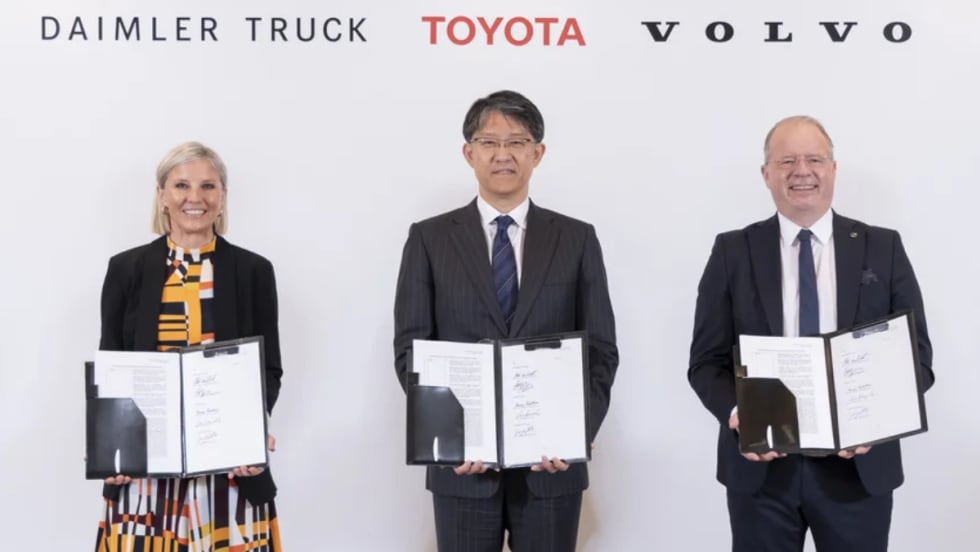
Toyota Motor Corporation to Join Daimler Truck & Volvo Group in Fuel Cell Joint Venture Cellcentric
Toyota intends to join Daimler Truck and Volvo Group as an equal shareholder in Cellcentric. All three shareholders intend to further strengthen Cellcentric as a leading manufacturer of fuel cell systems for heavy-duty commercial applications.
Read More →