




Can Neighborhood Electric Vehicles Work for Your Fleet?
With environmental benefits, low operating costs, and application flexibility, NEVs may offer a viable alternative for your fleet. Yet there is much to consider before taking the leap to fully battery-powered vehicles.

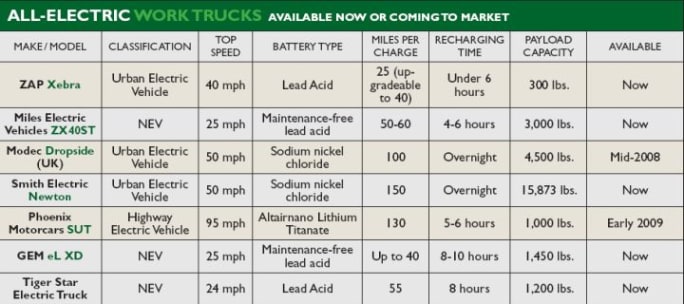
Source: Work Truck
From inner-city deliveries and cross-campus transport to warehouse maintenance work and community patrols, neighborhood electric vehicles (NEVs) target the task with the right type of vehicle.
But with a built-in set of limitations, can they work for your fleet? The following questions and their answers will help you decide.
What is an EV Exactly and What Can I buy Now?
An EV’s power comes from electricity supplied by a rechargeable battery. Almost all EVs currently available are classified as low-speed vehicles (LSVs) and are commonly termed NEVs.
These vehicles are restricted to a top speed of 25 mph and are legal on most U.S. streets with posted speed limits of up to 35 mph.
The latest NEVs hold a charge for 30 to 60 miles and run on an array of deep-cycle lead-acid batteries, similar to car batteries. Most can be fully recharged with a standard 120-volt outlet in seven to 12 hours.
Why Should I Consider NEVs for my Fleet?
- Environmental benefits:
NEVs offer emissions-free operation, although if recharged from an electric power grid that burns only coal, a NEV lifecycle accounts for about 7 lbs. CO2 emissions over 25 miles. A standard gas-powered vehicle emits 22 lbs. of CO2 in similar circumstances.
- Inherently low operating costs:
Fully recharging an NEV to run 30 to 60 miles costs less than $1. NEVs cost little to maintain relative to gasoline-powered vehicles.
- Flexibility of use:
NEVs are allowed access inside buildings and on sidewalks where gasoline-powered vehicles can’t travel. They fit the vehicle to the task when a larger, gasoline-powered vehicle is overkill.
What Types of NEVs are on the Market?
Today’s NEVs have a range of customizable body types and engine capabilities. Passenger carrier models range from two to eight seats with storage upgrades. Industrial-use models can be equipped with stake beds, enclosed cargo carriers, toolboxes and ladder racks.
To satisfy National Highway Traffic Safety Administration (NHTSA) safety criteria for street operation, NEVs are equipped with three-point seat belts, windshields and windshield wipers, running lights, headlights, brake lights, reflectors, rear view mirrors, and turn signals.
Most NEVs are doorless, open-air units, though a market is being established for EVs that more closely resemble cars for a wider variety of applications and all-season use, with fully enclosed aluminum alloy frames, sophisticated batteries, longer charges and features such as heat, air conditioning and audio systems.
Major manufacturers include Chrysler-owned Global Electric Motor Cars (GEM), ZAP, ZENN, Columbia ParCar, Dynasty Electric Car, and Miles Electric Vehicles, to name a few.
How Do I Spec a NEV?
Spec’ing a NEV is similar in many ways to spec’ing a gasoline-powered vehicle with a few unique parameters to consider:
What’s the range of miles you’ll need to drive each day?
Battery packs can be configured for a certain range. Range can be extended if your routes have stops with outlets for an "opportunity charge." Recharge times can be shortened with an off-board fast charger.
Can you perform functions off road, such as shuttling people and cargo around an office park or campus, on sidewalks, and in large buildings? Can you legally drive the NEV on your routes?
Remember, NEVs are only allowed on streets with 35 mph speed limits. NEVs that travel on public streets must be licensed and insured.
What are your passenger and payload requirements? What is the driving terrain?
Payload and terrain have a significant impact on the range of NEVs. Typical payloads for NEV cargo haulers are up to 1,000 lbs. Some models, such as the Columbia BC5 Burden Carrier, can carry up to 5,200 lbs. of cargo.
Range can vary by as much as 50 percent for a hilly terrain or if an NEV is heavily loaded with passengers or cargo. For these heavy burdens, look for batteries with a higher power density.
In what climate will the vehicle be operated?
Cold climates negatively impact driving range. Businesses located in cold climates should plan to garage the vehicle in a heated area for charging. Many NEVs have options such as heaters, defrosters, and doors (both hard and soft canvas).
What are Fleet Operating Costs for a Typical NEV?
New NEVs run $6,000-$18,000 and cost less than 3 cents per mile to run on electricity.
As an example, a two-seat GEM e2 base model costs $7,500. To operate this one vehicle for three years and 3,600 miles (assuming $900 for insurance costs, $90 in electricity, $50 to license the vehicle for public roads and $300 for a maintenance service contract) would cost a total of $4,840.
Battery pack warranty terms are for two to three years in most cases. After three years of operation, add the cost of a new battery pack, which runs $600-$1,000.
Are Grants or Tax Incentives Available for EV Purchases?
Programs are funded at the city, county, state, and federal level that may be specific to electric vehicles or fall under an alternative-fuel grant. Try the U.S. Department of Energy’s Energy Efficiency and Renewable Energy Web site. (See "For More Information" sidebar).
For local programs, check with your DMV and other local agencies.
Should I Consider a Used NEV?
Buying used NEVs is an option, but use caution. Some considerations:
Examine the condition of the batteries. When were they bought?
How old is the vehicle? There have been considerable improvements to NEVs manufactured after 2002.
How many average miles does the vehicle travel on a charge?
Does the seller have a written maintenance log?
As with any pre-owned vehicle, thoroughly inspect the vehicle. Check the lights, brakes, seat belts, wipers, and turn signals. Check the plastic body panels for cracks or blistering.
Used NEVs can run as low as $3,000, though a low-mileage GEM four-seater will sell for around $6,000. Used NEV prices can vary considerably; at present, pricing guidebooks such as Kelley Blue Book do not list NEVs.
What About NEV Preventive Maintenance?
With substantially fewer miles driven, fewer moving parts, and no coolants, fluids, oil, lubricants, or exhaust, a NEV will have much fewer service requirements than an internal combustion car.
Regular operational checkups are nonetheless recommended. Jim Gaw of Nautical Wheelers, a Texas-based tourist rental operation, keeps his fleet of 40 NEVs on a weekly maintenance program in the busy summer season. In addition to a thorough cleaning, he checks the lubrication, lights, tire pressure, brakes, and water levels of the batteries.
Gaw handles preventive maintenance tasks himself. However, fleets with no maintenance facilities should establish contract services for repair issues. Larger NEV fleets with in-house maintenance capabilities should consider electric vehicle training for one or more mechanics.
How Do I Best Maintain the Batteries?
The greatest amount of maintenance, preventive or otherwise, involves the batteries.
There are two types of lead-acid batteries: flooded lead-acid (FLA) batteries and valve-regulated lead-acid (VRLA) batteries. The single biggest battery maintenance chore involves checking FLA batteries and "watering" them if fluid levels are low. This should be done weekly.
If they are not watered, FLA batteries will dry out and fail prematurely. VRLA batteries are sealed and require no watering, though they are a few hundred dollars more expensive.
Protective covering should be used when watering batteries. It should be done in an area that can contain any acid that may drip from the batteries during watering or when the batteries are charged.
Check for battery corrosion. A cleansing additive called Charge It dissolves the lead sulfate on the battery plates. Properly maintained batteries should provide at least a three-year battery life.
What Other Steps Can I take to Protect the Batteries?
Like all lead acid batteries, those in your NEV will hold a charge longer by using and recharging them regularly.
NEVs have a parasitic load that can drain the battery even when the vehicle is turned off. If the vehicle is not used frequently, this load can discharge the vehicle battery in less than two weeks to a "zero state of charge," and damage the battery.
Look to see if your NEV has a battery disconnect switch for times when the vehicle will be inoperable for more than a few days. Don’t leave batteries plugged in longer than necessary.
What Other Types of Maintenance Issues Might I Experience?
A 2006 government study of NEVs in fleets found these recurring problems:
Onboard charger failure, especially for vehicles operated frequently and charged for extended periods every day. Many failed because of exposure to the environment.
Motor controller failure.
Motor overheating during missions that required high power for hill climbing or carrying heavy loads.
DC-DC converter failure because of water splash to circuit board and fuse connections.
Any Tips on Charging NEVs?
For small NEV fleets, charging from a standard 120-volt convenience outlet is generally sufficient. However, large numbers of vehicles aggregated at the same location for charging can overload a circuit. Additional charging outlets are recommended at NEV parking locations.
Buy a timer to charge on non-peak electricity grid hours.
Make sure the charging cord is the proper gauge to prevent overheating.
New batteries will likely not charge to full capacity until after 20-30 charge cycles.
FLA batteries may have considerable gassing; therefore, it is recommended to charge outdoors. Gel-capped VRLA batteries do not need such ventilation.
When charging outdoors, make sure you have an outdoor-safe outlet and plug that can withstand inclement weather as well as direct sunlight.
Fast charging can provide an emergency backup when vehicles do not receive an overnight charge. Fast chargers recharge a battery pack at about a mile for every minute charged.
What is Important in Warranty & Service Support?
Before you purchase, ask manufacturers about warranty and service support.
Will service requests be handled through on-site service calls, or will the service center pick up the vehicle from your location?
Is the service center in your area?
Will you need to deliver the vehicle for service?
What are typical repair times?
What are typical repair costs for out-of-warranty servicing?
What parts are stocked locally for NEV repair?
What types of non-manufacturer repairs will void the warranty?
Where Do I Sell Used NEVs?
Many sources remarket NEVs: your selling dealer, auctions, Internet sales portals such as eBay and Craigslist, and special interest groups (resort/retirement communities, colleges, etc). Ask your selling dealer for guidance on how to price your used NEV.
Should I Wait Before Investing in EV Tech?
The next step for the EV is a highway-capable vehicle with longer range and shorter charge times. Companies such as Phoenix Motorcars, Miles Automotive, and the well-publicized Tesla Motors are on the verge of bringing a utility truck, passenger sedan, and sports car to market.
For fleet use, the Phoenix Motorcars SUT is closest to viability, with stated plans for fleet sales in early 2009. The SUT claims a top speed of 95 mph and a charge range of more than 100 miles.
This brave new world of all-electric transportation hinges on advances in battery technology. The industry is leapfrogging from lead-acid batteries to nickel metal hydride batteries (that power the Prius) to lithium-ion technology, which have four times the energy density of lead-acid batteries.
This technology positions EVs as true competitors to fossil-fueled vehicles. However, the technology is in its infancy and is expensive. Aside from battery considerations, any fleet considering highway-capable vehicles from a new manufacturer must judge crash tests, product quality issues, and the manufacturer’s long-term viability.
The neighborhood electric vehicle market, while still growing itself, has established dealer networks, parts and service support, and is real-world tested.
Numerous sources contributed to the article:
-- Ed Kjaer, director of electric transportation, SoCal Edison (Rosemead, Calif.); -- Dean Taylor, technical specialist, electric transportation division, SoCal Edison;
-- Michael Coates, CEO of MightyComm, an environmental automotive communications company (Sacramento, Calif.);
-- Jim Gaw, owner of the NEV rental operation Nautical Wheelers (Port Aransas, Tex.);
-- Belinda Forknell, marketing manager, Global Electric Motorcars;
-- Tim Yopp, CTO of Eckhaus Fleet, an independent electric vehicle distributor. Also consulted was a U.S. Department of Energy Study, "Guidelines for the Establishment of a Model Neighborhood Electric Vehicle (NEV) Fleet," June 2006.
More Vehicle Research
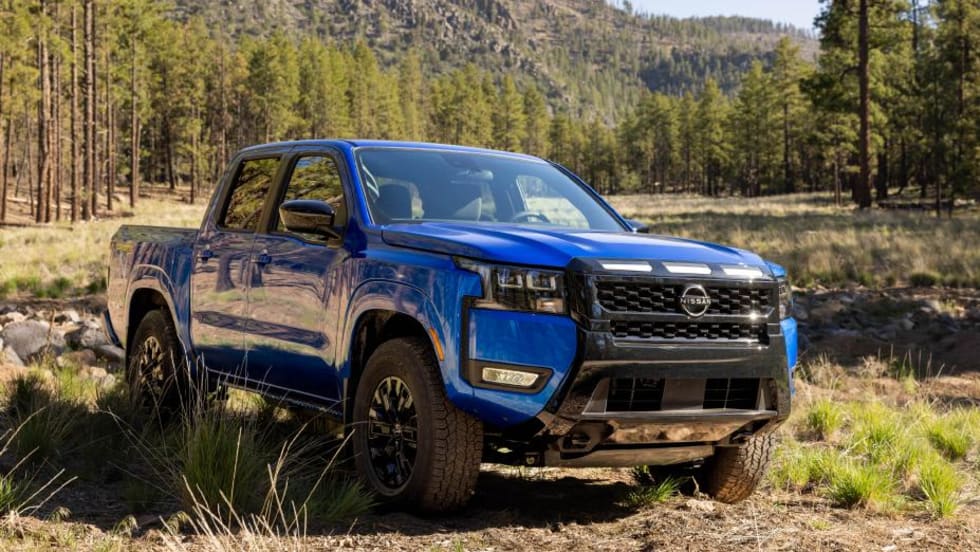
Nissan Frontier Sport Edition: Off-Road Ready with Upgrades Available
Nissan’s 2027 Frontier Sport Edition gives customers off-road features, including all-terrain tires, an aluminum skid plate, fog lamps, and front accent lighting. Like every Frontier, it comes standard with Nissan's 3.8-liter V6.
Read More →
Hand-Painted Mack LR Models Unveiled During Trucks of Art Program in New York City
The New York City Department of Sanitation, in collaboration with its nonprofit partner the Sanitation Foundation, unveiled five new hand-painted Mack LR refuse vehicles during New York City’s Trucks of Art program.
Read More →
Ford Pro Extends 5-Year/100,000-Mile Limited Powertrain Warranty to Ranger, Maverick and E-Transit
Ford Pro expands its 5-year/100,000-mile Limited Powertrain Warranty to the 2027 Ranger and E-Transit for eligible fleet buyers.
Read More →
Are You Tracking Your Fleet's True Total Cost of Ownership?
Bobit Business Media surveyed 190 fleet professionals and found that while most fleets are tracking costs, fragmented systems and data gaps are keeping true TCO visibility out of reach. With rising pressure to control spend in an increasingly volatile environment, the gap between what fleets think they know and what the data actually shows is wider than you might expect. See how your peers are managing costs today and where the industry still has room to improve.
Read More →
AP Fleet Management Opens Midland Hub to Expand Access to Upfitted Work Trucks in Texas
AP Fleet Management’s new Midland location expands access to bucket trucks, crane trucks, vans, and faster upfitting services for Texas fleets.
Read More →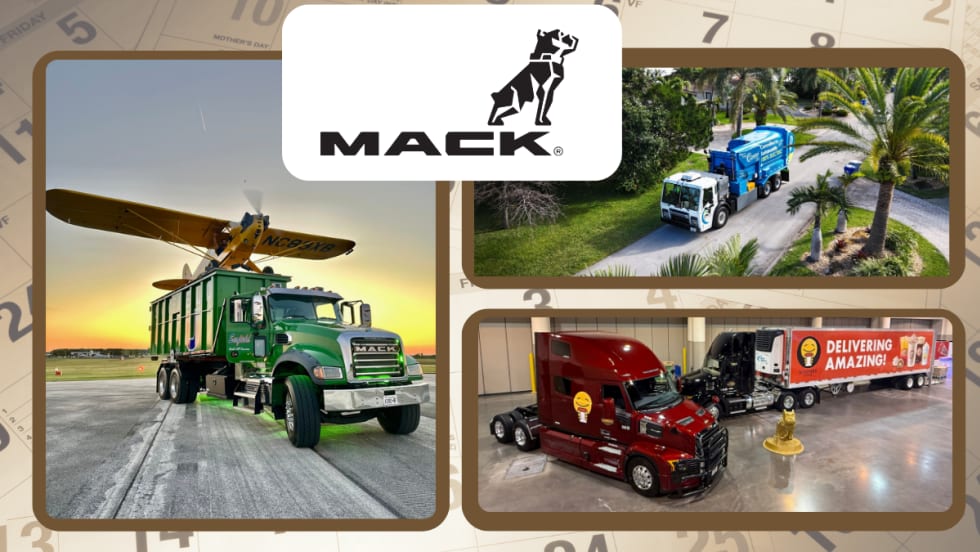
Mack Trucks Announces 2027 Mack Calendar Contest Winners
From a 1954 L Model still on the job to battery-electric trucks like the LR Electric and MD Electric, this year’s Mack Trucks Calendar Contest winners showcase the full range of capabilities, models, and years.
Read More →
Why the PALFINGER ETC MH 40 IH Is More Than a Bucket Truck
Take a closer look at the PALFINGER ETC MH 40 IH material handler, a 40-foot articulated telescopic aerial lift designed for utility, telecom, sign work, or any task that requires an elevated work platform with a jib.
Read More →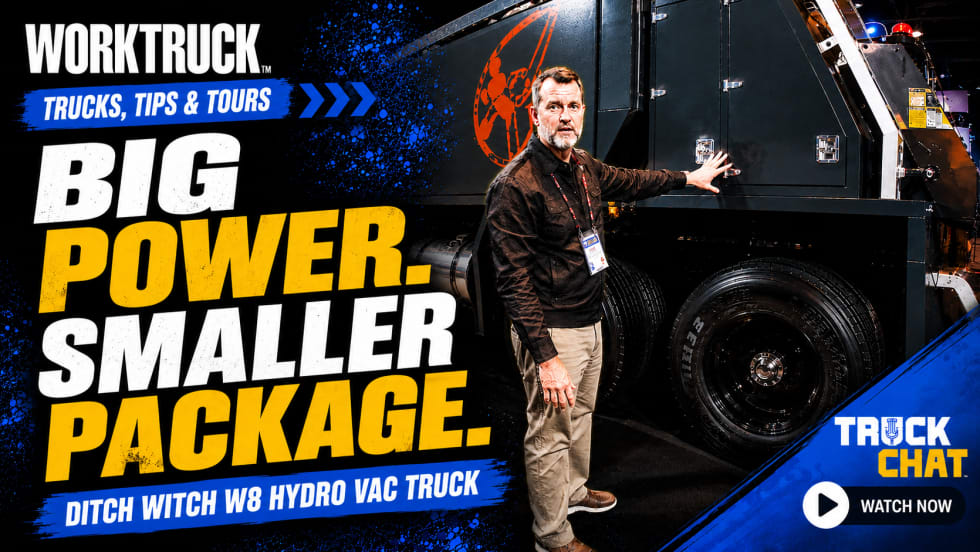
Ditch Witch W8 Hydro Vac Truck Walkaround
The Ditch Witch W8 hydro vac truck delivers serious hydro excavation performance in a more compact package than the larger W12. This walkaround video explains the Warlock Series’ direct-drive blower system, cyclonic filtration, safe excavation technology, and powerful vacuum performance.
Read More →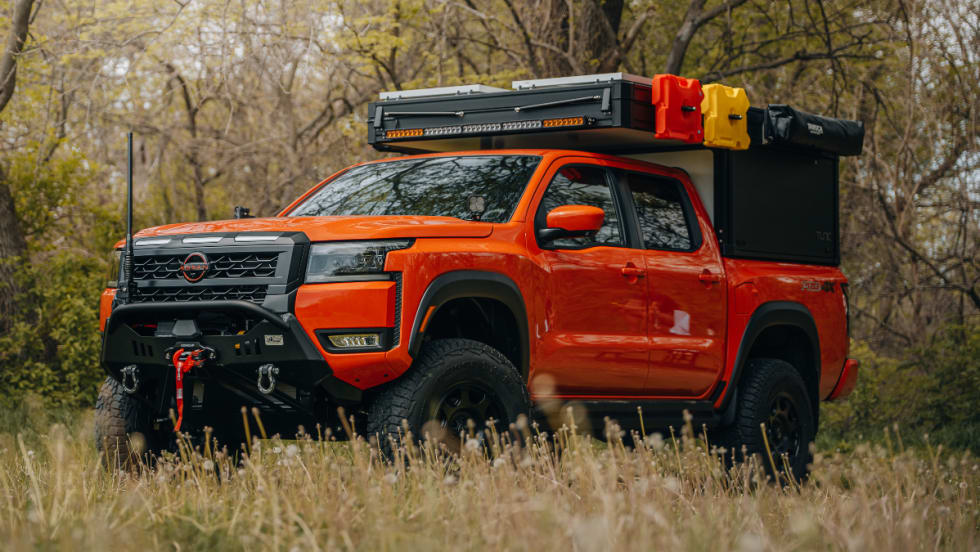
Nissan Frontier Overland Build Spotlights Real-World Truck Capability
Nissan’s latest Frontier build is aimed at overlanders, but the rugged platform and durability story could resonate with fleet buyers too.
Read More →
Why Fleet Managers Are Replacing Departmental Vehicles with Shared Motor Pools
Departmentally assigned vehicles often create hidden costs through underutilization, poor visibility, and increased administrative burden. This white paper explores how shared motor pool strategies help fleets reduce costs, improve accountability, and optimize vehicle utilization.
Read More →