




How to Select & Specify Service Bodes
Developing an optimum service body specification selection requires considerable forethought. Research available options and utilize end-user input to guide your decision.

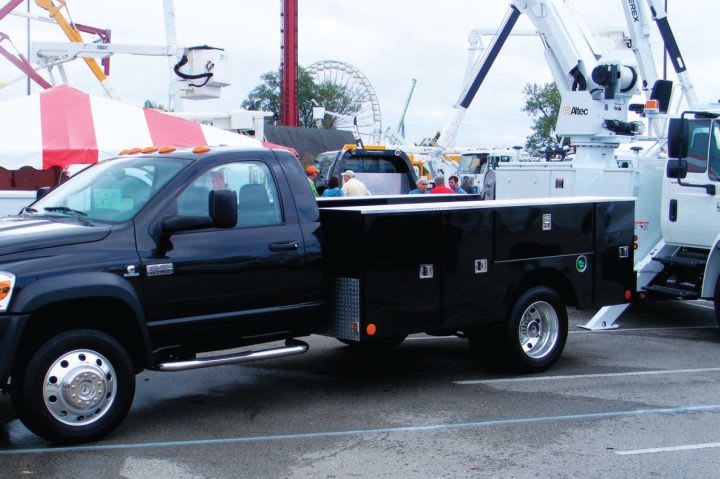
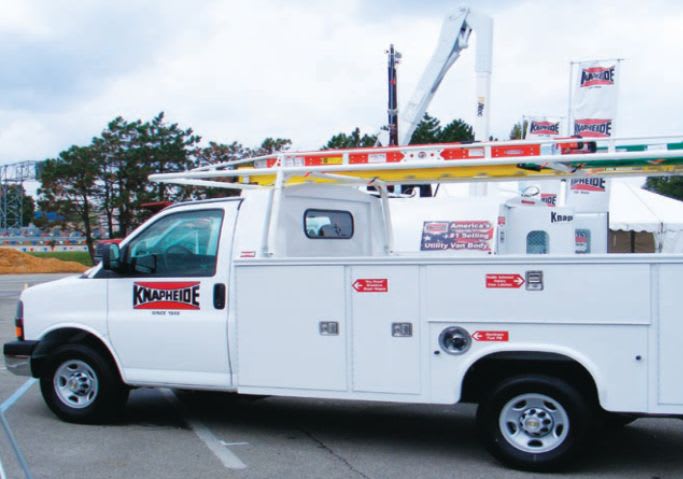
A written specification, when properly used, defines the fleet manager’s requirements; serves as a basis for written quotations and all quality and conformance inspections; and is the controlling document for the resolution of any disputes that may arise between the fleet manager and the vendor.
Photo: Knapheide
Acquisition cost is often a primary driver in the selection of work truck chassis, their associated service bodies, and equipment.
At the same time, many fleets also desire to avoid DOT regulations by operating under 10,001-lb. GVW trucks. This has led to overloading vehicles or buying smaller sizes, such as a Ford F-350 Super Duty, rather than the F-450 the fleet really needs to do the job.
And now, with the rapid rise in fuel prices, fleets are also looking to downsize with smaller trucks and smaller bodies.
These factors can result in developing a body that doesn’t meet the specific requirements of the driver using the truck.
As Bob Johnson, director of fleet relations for the Farmington Hills, Mich.-based National Truck Equipment Association (NTEA), points out, "If the unit isn’t optimized for its intended application, its lifecycle cost will usually be higher than a properly designed, or spec’d unit."
Dave Decker, manager of truck engineering for fleet management company Wheels Inc. adds, "Usually, if you cut corners and take something generic, when you need custom work, it ends up costing you more in the long run."
For the safety and convenience of drivers and to make the job more productive, the majority of Wheels’ customers, for example, use customized service bodies, according to Decker.
Overall, service bodies typically require some degree of upfitting to adapt them for their intended application.
And, ultimately, coming up with the optimum selection and specification requires considerable forethought.
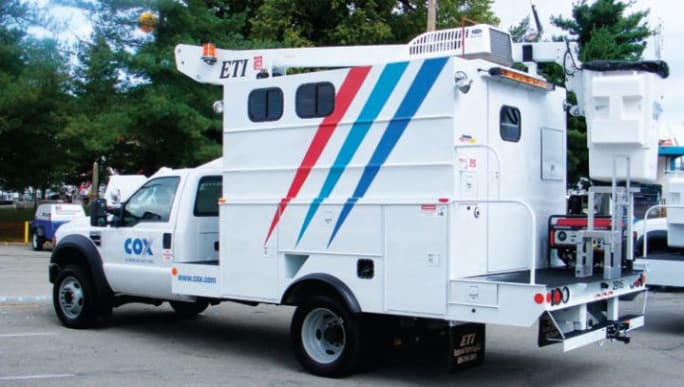
Safety and productivity go hand-in-hand in selecting and spec’ing body requirements. In spec’ing service bodies, place a priority on driver safety and ergonomics.
Photo: Cox Automotive
Select the Body First
Spec’ing experts, including Dave Duford, specifications engineer with Mt. Laurel, N.J.-based fleet management company Automotive Resources International (ARI), typically recommend selecting the service body before choosing the chassis.
"The body is the tool portion of the truck," said Duford. "How that’s going to be used, along with considerations such as compartment and shelving placement, will tell you what type of chassis to pick."
Conversely, if the chassis is selected first, there’s a risk that it, or some part of it, may not fit the body.
Differences in the fuel tank placement of some Ford, Chevrolet, and Dodge chassis, for example, could interfere with a fleet’s desired placement of the body shelving and ultimately prevent use of a preferred chassis supplier, for example.
Again, putting an underbody compressor on a medium service vehicle, for example, may also pose problems with certain exhaust systems.
User Input is Key to Decision-Making
With all the considerations required for proper spec’ing — ranging from how much operators need to carry, in what kind of locality and terrain, and any special handling and storage requirements — end-user input is really key to making the right decisions.
Large fleets, including Kinder Morgan and BP Products North America, typically rely on meetings with department heads for their input. Kinder Morgan, with its fleet of approximately 3,600 light- and medium-duty trucks, has an annual fleet council meeting in which "we bring in key people and ask what’s working and not working," as well as discussing special requirements, says John Drozd, fleet manager in Lakewood, Colo.
The company also holds yearly specifications reviews with its Des Plaines, Ill,-based fleet management company Wheels Inc. and its Bensenville, Ill., -based upfitter Auto Truck Group. During these meetings, "All three of us look at the specs," said Drozd. "We ask a lot of questions and they provide a lot of input. It’s a very effective relationship."
Similarly, BP Products North America fleet officials "talk to the folks in the field every year," including approximately 40-50 team leads of trucks for feedback and potential changes in requirements, said Joe Smolar, the company’s fleet services manager in Warrenville, Ill.
"In my terminology, ‘end user’ is the specific department and sometimes the vehicle operator," adds the director of another large Southern fleet. "We carry a lot of fittings and plumbing supplies and need a good understanding of the end-user’s inventory and size. This determines how deep or large the compartments should be, whether they work in daylight or darkness and need lights in the compartments of the service bodies, and whether they need emergency lighting on the outside."
This fleet group takes particular care in researching operational requirements on service bodies with top-mounted cranes due to the critical nature of the specifications, including lift, weight capacity, and other data relating to the geometry.
Problems Gauging Body Impact
One of the biggest problems ARI encounters is fleet operators underestimating the weight of a service body’s impact in determining payload and gross vehicle rating.
"They take a service body, which is relatively heavy and treat it as a pickup truck. You have to find out exactly what’s in there, the type of tooling, and how the truck will be used," Duford says.
With a crane application, for example, the body itself needs reinforcement, so the crane won’t twist on the body during operation.
On a lighter-duty body, this may mean adding an additional leaf spring on the right rear axle. On medium-duties with larger/longer bodies, it may require adding manual or hydraulic outriggers to stabilize the truck on the ground.
Safety & Productivity Concerns While Spec'ing
Safety and productivity go hand-in-hand in selecting and spec’ing body requirements.
"There will always be some compromises driven by both cost and usability," says Johnson. And, even though fleet officials will never be able to eliminate all safety concerns, they should be able to show a "good faith" effort to do so, he adds.
In spec’ing service bodies, BP Products North America fleet officials, for example, place a priority on driver safety and ergonomics, says Smolar.
Aside from larger considerations, such as suspension of the upfit to make sure there are no problems with the added weight, safety influences other variables in the company’s specs. Examples include the length of drawers, number of shelves, and compartments in the upfit.
The company also seeks to minimize bending and lifting while placing equipment to prevent back and knee injuries. It also uses bed slides or platforms that slide out of the rear of the truck, where needed, to bring equipment to operators. This minimizes the need to climb in and out of the truck, Smolar adds.
Within the past year, Rhino Linings and other spray-on bed liners have also become increasingly popular with fleets due to the product’s safety and protective benefits.
While helping prevent rust and damage from tools thrown around, these products also improve traction and help prevent sliding on wet or slippery surfaces.
The liners are used throughout the inside of the cargo area on service bodies with some fleets covering the surfaces of bumpers to help prevent slippage, Wheels’ Decker notes.
Writing Out Spec Requirements
"Unless you’re buying a completed unit out of stock, you should always use some form of a written specification to define your requirements," advises NTEA’s Johnson.
He cautions against letting a vendor provide a sales order and saying, "This is the specification that we will be using.
"When you use a sales order as a specification, you leave yourself open to changed orders and increased costs," Johnson adds.
Vendors always issue sales orders; however, that’s a vendor document, and it can be interpreted however the vendor wants. The key, says Johnson, is to make sure the order references the fleet’s specifications as the controlling document.
NTEA’s Web site, NTEA.com, provides a list of distributor member companies that specialize in truck upfitting. Those with a rectangular "MVP" (Member Verification Program) logo, have provided documentation to NTEA stating they comply with various minimum safety, quality assurance, and completed chassis requirements. They must also have certified technicians, such as welders and electricians, in their employ and meet minimum insurance requirements.
Most truck equipment upfitters are reputable companies. In fact, their long-term survival depends on the maintenance of a reputation for quality service.
Unfortunately, a few vendors still may seek to take advantage of a fleet by building a first unit, for example, in such a way that the fleet official is forced to change it — thereby potentially incurring changed order charges.
Having a well-written customer-supplied specification as the controlling document gives the customer the final word if any differences in the interpretation of the vehicle order arise.
A written specification, when properly used, defines the fleet manager’s requirements; serves as a basis for written quotations and all quality and conformance inspections; and is the controlling document for the resolution of any disputes that may arise between the fleet manager and the vendor.
Johnson also advises to be specific regarding performance requirements and critical dimensional minimums and provide clear and concise details as to the required layout of the unit. However, he cautions against fleet managers making themselves "the design engineer."
"Tell the vendor what you want, but don’t tell them how to do it," Johnson says. "If you tell the vendor how to design or how to engineer a product, you’re taking on a lot of the liability for product safety and performance." In the same context, he advises allowing vendors flexibility when possible.
As a final caution, Johnson advises against incorporating a feature unique to a single vendor unless absolutely necessary. He noted instances in which a vendor’s sales representative has volunteered to help write a fleet’s specifications, doing it in such a way as to gain an advantage over competitors. That might include spec’ing a minor proprietary feature, unique to that vendor.
"Every other vendor that quotes on that upfit will have to take an exception. The company that helped write the spec knows that, and it will drive the price up," says Johnson.
"There’s nothing wrong with allowing a sales rep to help you write the spec. But, after you’re done, take out any proprietary features in the spec, which only that upfitter can provide," he adds.
Specs should also include all of a fleet manager’s miscellaneous requirements as well as reference existing industry and government standards, whenever applicable (Department of Transportation, American National Standards Institute, Society of Automotive Engineers, American Society of Mechanical Engineers, etc.).
Body Construction Specifications: Steel vs. Aluminum
Body material plays a significant role in overall upfit cost. The vast majority of large fleets, for example, favor steel service bodies for their cost and durability.
A steel service body life can be virtually limitless, though it will show signs of wear more readily than fiberglass or aluminum, according to Eric Nelson, truck engineer with Wheels.
For that reason, steel bodies are also preferred by fleets that trade trucks in on a three- to five-year cycle, which lease and fleet management companies have determined is the best cycle to achieve maximum dollar return for a used service-body vehicle. Complete units, sold with body and chassis intact, provide the best resale.
"There are any number of independent contractors who don’t want to spend the up-front money for a new unit and just want a unit that runs and works for a few years," Nelson says.
Kinder Morgan is among the fleets using steel service bodies. The service bodies are typically mounted on Ford Super Duties, have a basic Knapheide 108-type design with flip-top compartments, and are primarily used for carrying tools and parts. The company operates its trucks on a "one-time lifecycle" basis, according to Drozd.
"We go for a product with a decent price," Drozd says. "We own our own vehicles and keep them until they’re worn out. Then we retire the whole thing off the books."
The bodies are "terminated" along with the chassis, when the latter wear out — typically about seven to eight years/120,000 to 150,000 miles.
Conversely, at BP Products North America, "We try to use aluminum. In some cases, we use fiberglass to keep the weight down," says Smolar. The longer-lasting appearance benefits of these materials (which still have steel understructures) also help increase their resale value.
Smolar’s fleet includes more than 1,100 light- and medium-duty trucks. The light-duties are typically spec’ed for a 10-year/100,000 mile trade-in cycle, though they usually reach their mileage limitation first, Smolar adds.
At that point, the company remarkets the bodies with their chassis.
Maintenance & Ship-Thru Affect Choice
Maintenance and ship-thru also affect a fleet’s choice of an upfitter. Regional upfitters may offer an opportunity to save money; however, if the fleet is national in scope and has vehicle accident issues, for example, a regional upfitter may not have locations for adequate servicing.
"On any given day, there are many options for having the same piece of equipment installed," Nelson says. "Often, we get three different quotes on bodies and chassis.
For a ship-thru to work, an upfitter and/or distributor must be located next to a major truck plant. The order for the equipment installation and upfitter is given to one of the Detroit 3 truck manufacturers, for example, which handle the logistics of delivering the vehicle to a designated dealer.
More Upfitting
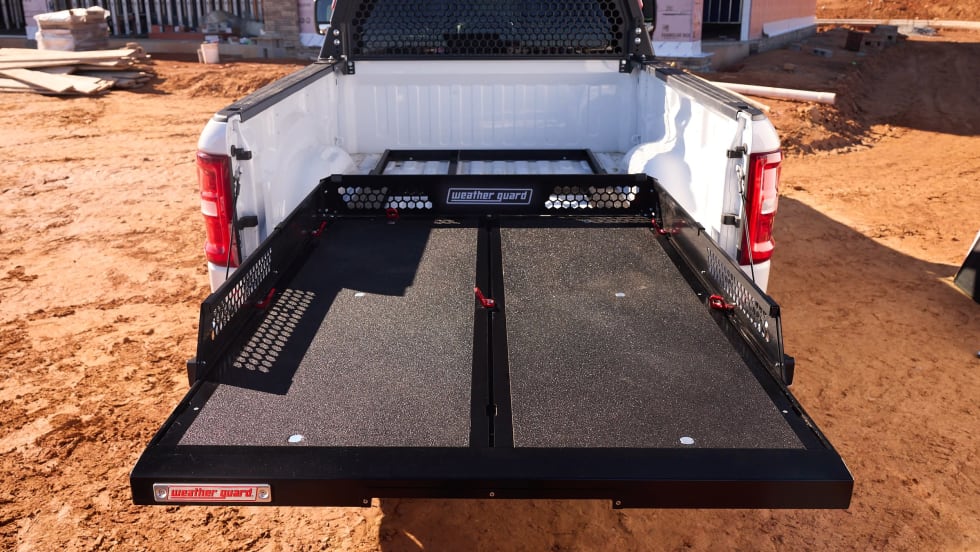
Weather Guard Launches Heavy-Duty Sliding Truck Bed System
Weather Guard’s new Sliding Bed System gives crews full tailgate access to tools and materials while reducing climbing, overreaching, and repetitive strain and is now available.
Read More →
DECKED Wants Fleet Dads to Take a Break This Father’s Day
DECKED’s Father’s Day campaign offers 100 hardworking dads a paid day off to unplug, recharge, and spend time where it matters most.
Read More →
What Fleet Managers Should Expect From Adrian’s Next Era
After 30 years at Adrian, CEO Marc Jackson shares how operational discipline, consistency, and trust are shaping the company’s next chapter.
Read More →
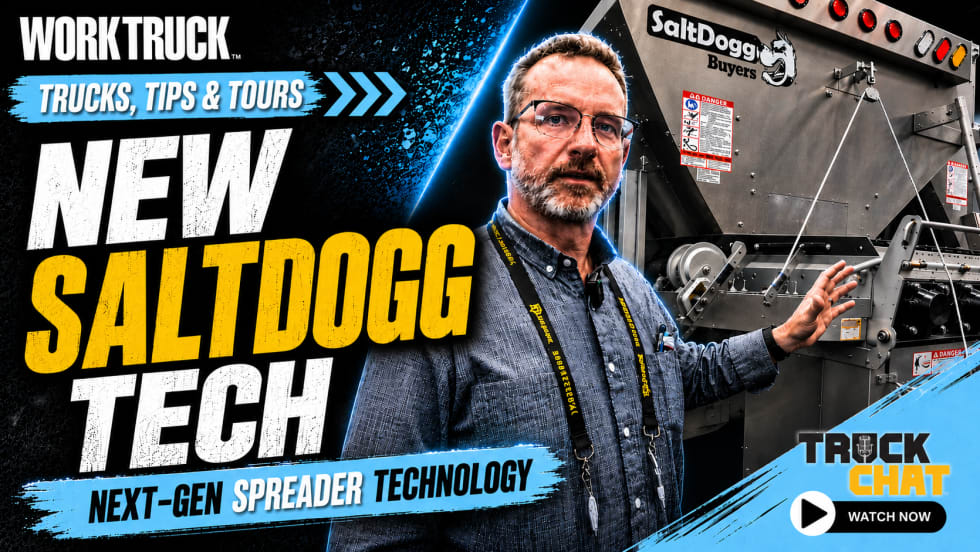
Buyers Products Showcases New SaltDogg Innovations
Winter maintenance fleets continue demanding equipment that is easier to maintain, more reliable, and simpler to install. In this walkaround video, Scott Moorman from Buyers Products Company highlights several new SaltDogg spreader innovations.
Read More →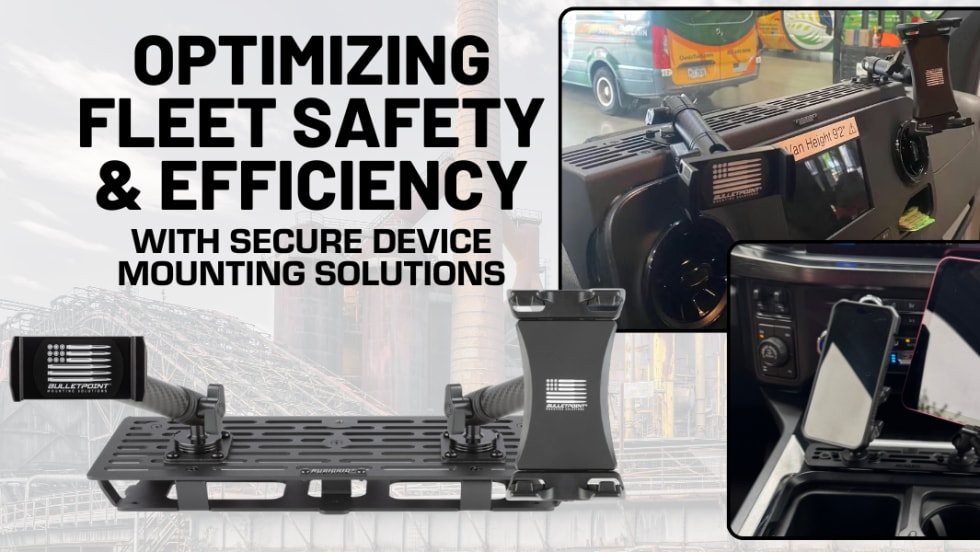
Optimizing Fleet Safety with Secure Device Integration
Unsecured devices are a hidden liability. Learn how precision-engineered mounting solutions enhance driver safety, streamline workflows and protect your technology.
Read More →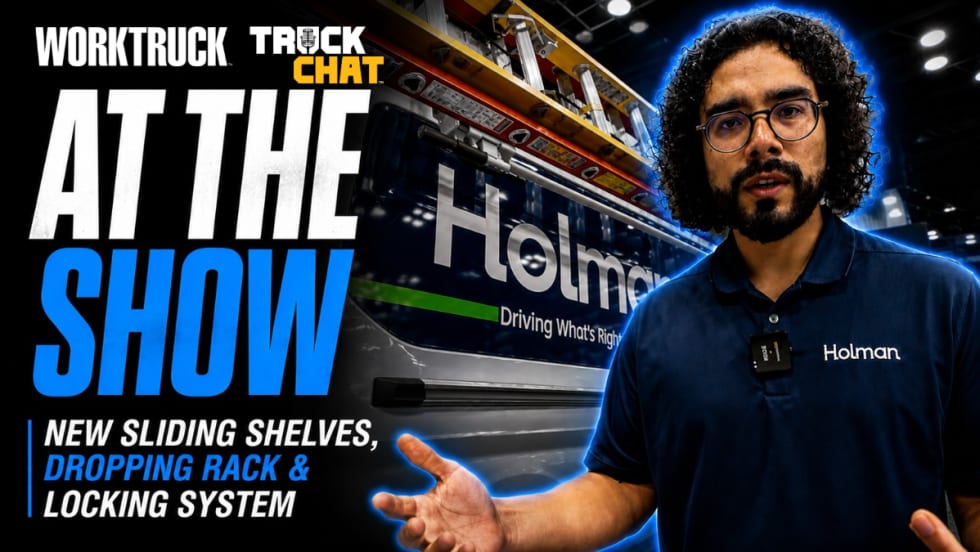
Holman Showcases New Van Upfit Innovations Built for Technician Efficiency
Holman showcased new van upfit solutions focused on technician efficiency, security, storage, and accessibility for commercial fleets and service vans.
Read More →
VMAC Supports BC Forest Discovery Centre with G90 Air Compressor to Advance Railway Restoration
The BC Forest Discovery Center is working on an extensive railway tie replacement project across the property. Crews are making the job easier with VMAC’s new G90 Gas Driven Air Compressor with FlexDrive AirFlow Management System (AMS).
Read More →
TigerTough New Floor Liners are Tough Enough for Real Fleets
TigerTough expands beyond seat covers with new work truck floor liners designed for durability, precision fit, and heavy fleet use.
Read More →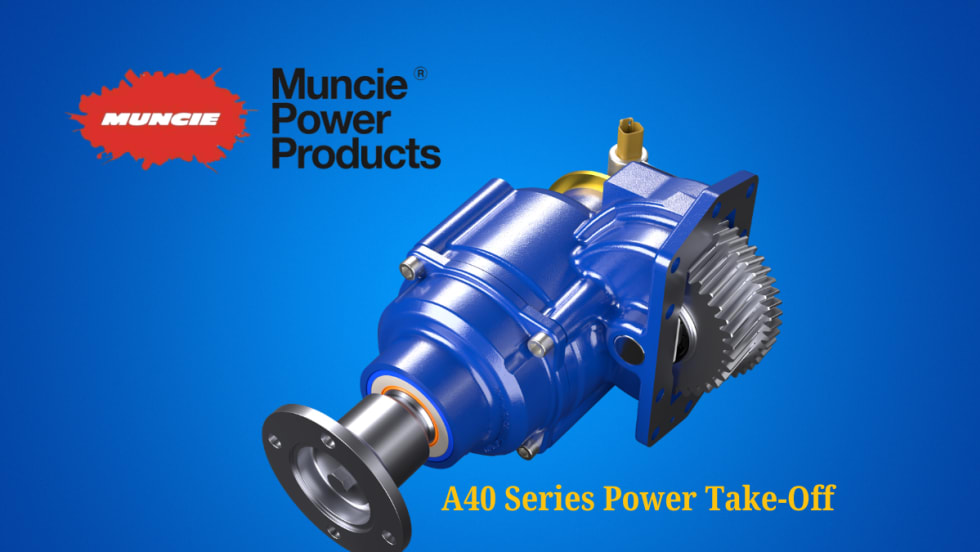
Muncie Power Products Launches Heavy-Duty A40 Series Power Take-Offs for Allison 3000/4000 Series Transmissions
Muncie Power Products has released its A40 Series power take-off, which features a small envelope, making it ideal for applications with space limitations.
Read More →
Exploring WALTCO’s New Liftgates
WALTCO launched its new MDV-40 liftgate and the DD Series, which can lift a technician up to 120 inches. In this video, Work Truck takes you on a full tour of the new liftgates to learn about their functions and benefits.
Read More →