




How to Maximize Fuel Efficiency
Truck fleet fuel saving strategies include right-sized vehicles, alt-fuel use, and driver education.

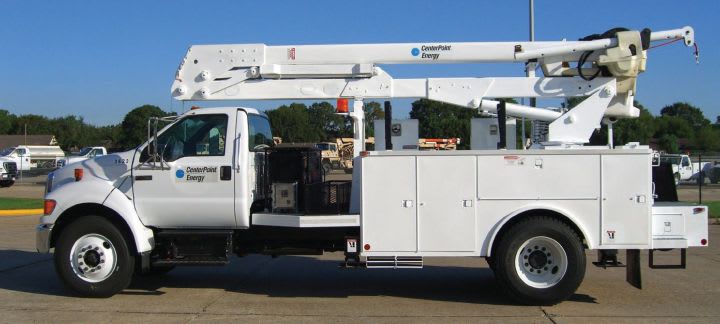
High fuel prices have taken an especially hard toll on fleets, in which larger vehicles consume more gasoline. Various efforts to maximize fuel are discussed.
[EMPTY CREDIT]
Persistently high fuel prices have many fleet operators redoubling their efforts to cut costs. Their various efforts range from "right-sizing" — and even reducing — their fleet size, to speedier shifts to alternative-fuel vehicles and increased driver education regarding fuel conservation.
Overall, the rate of change promises to significantly impact the industry and its vehicle composition for the foreseeable future.
‘Right-Sizing’ Trucks to Particular Applications
Richland County, S.C., and Center-Point Energy, Houston, are just two of many fleets rightsizing trucks to better fit particular job applications.
As Bill Peters, fleet manager for Richland County, points out, "It’s hard to downsize the work truck, especially if that truck size is needed in the first place."
But during the growth of the county’s fleet — a time when fuel prices were more reasonable — some employees were inclined to order a truck or "more truck" than they really needed "simply because they could," Peters adds.
Richland County now closely scrutinizes whether employees really need big SUVs, for example, and has found Ford’s Escape Hybrid is at least one alternative.
The fleet’s supervisors have also started buying Ford F-150s, rather than F-250 Extended and Regular Cab models, because "they really don’t need to carry as much going from crew to crew," Peters notes.
Richland County is also seeking to eliminate some trucks by using others more efficiently. Within the past year, the county has begun using Ford F-350 Crew Cabs, for example, to transport all workers and their equipment to a particular job site at one time, rather than having two or three trucks make separate trips.
"We’re still checking the effectiveness of it, but I like it so far," Peters concludes.
Meanwhile, CenterPoint Energy is also downsizing its vehicles, closely evaluating the "needs of the job" and what operators "have to have," rather than "what they want," says Edward Sparks, fleet and shop services manager.
That’s also led to replacing Ford F-150s with Escapes and Rangers, for example, and being more receptive to other brands and powertrain configurations.
"We used to be a Ford fleet, chiefly operating F-Series models because they offered that company’s best truck quality," Sparks adds.
Now, as CenterPoint Energy seeks to right-size its company fleet, managers are open to considering other makes, such as Chevy, Dodge, and even Suzuki.
That openness is also true as the company seeks out new fuel-saving technology, such as variable displacement engine trucks for rural areas of Oklahoma, Arkansas, Mississippi, and Louisiana, to name a few. For this application, it has been evaluating Dodge and Chevrolet models.
In its underground service trucks, CenterPoint Energy has also installed a slow battery charger and Honda generator to power auxiliary equipment, such as strobe lights, rather than using the truck’s large engine for the extra power.
The generator provides enough power to operate the slow battery charger, as well as other tools and equipment. The system eliminates the need to idle the truck engine while crews are working in underground vaults. CenterPoint Energy currently operates 12 of these units.
A number of the company’s bucket trucks also use a 29-hp four-cylinder Kubota diesel auxiliary power unit (APU) to power the aerial device and all the essential accessories for crews to perform their jobs safely — again saving fuel cost and wear-and-tear of running the truck engine, according to Rick Hackstedt, fleet and shop services manager.
Sparks and Hackstedt handle different geographic areas of the company’s 6,000-vehicle fleet operation and also rely on GE Capital Solution Fleet Services for maintenance assistance.
Meanwhile, the city of Flagstaff, Ariz., has also been conducting utilization studies — targeting and eliminating underused vehicles. In addition, it has been switching from gasoline to diesel-powered trucks in Class 2-4 vehicles and replacing full-size pickups and SUVs with hybrid models, according to Jim Brohamer, fleet manager superintendent.
Over the past year, the city also began replacing ¾-ton, 1-ton, and medium-duty gasoline engine trucks with diesels, after its records indicated that the latter provided 13-15 mpg versus 7-8 mpg for the gasoline engine models, Brohamer says.
Since 2003, Flagstaff has been operating all its diesel engine trucks — currently about 300— on biodiesel fuel.
However, with the requirement to use ultra-low sulfur diesel fuel, the city ran into a snag using B-20 due to the lack of available winter blend (kerosene mixed with diesel) in its locale, required from October to April. "Until that’s resolved, we’re using B-5 rated biodiesel," Brohamer adds.
Flagstaff, with a 609-unit fleet, has also been aggressively downsizing and moving into more fuel-efficient hybrids. Full-size pickups and SUVs have been replaced with Ford Escape Hybrids, for example. The fleet now includes 15 hybrid light-duty models with five more on order.
"We’re identifying candidates for hybrids everywhere we can," says Brohamer.
Among other measures, in July the city will also require vendors, as part of their specs, to provide EPA ratings "so we can include the most efficient available vehicles," Brohamer says.
Similarly, Maersk Inc., a Madison, N.J.-based intermodal cargo transporter and container shipping company, has removed all large SUVs with standard V-8 engines from its fleet. It also eliminated any high performance V-6 engine models. This step improved average mileage to 15.5 mpg from a previous 13 mpg, with a savings of $2,481 per vehicle over a two-year period, according to Hans Sorensen, fleet director.
At the beginning of the 2007 model-year, Maersk also identified drivers living in highly congested traffic areas. These drivers were offered a specific hybrid at no additional cost.
While the up-front acquisition fee was a $3,500 premium, the company estimated savings over a 48-month/80,000-mile period would net a cost reduction in fuel expenses (based on $2.50/gallon) of $4,300 for the 25 vehicles used in the pilot program. The net cost savings (all-inclusive fuel, lease, resale, and operating costs) were estimated at $3,400 per vehicle.
Additionally, drivers who fuel with anything other than regular unleaded are sent reminders of the company’s policy. Posted on the company Intranet, a link allows drivers to input a zip code and find the lowest cost per gallon on fuel.
In its operational fleet at APM terminals, an independent operator serving global ship line containers, runs terminal pickup trucks with an automatic idle shutdown system set at 10 minutes. The idling control also applies to yard tractors (UTRs), top picks, reach stackers, and empty handlers with electronically controlled diesel engines.
The terminal pickup trucks and gasoline-powered pickups in the yard have 25-mph speed governors. (Diesel equipment is already limited to 25 mph). This control was accomplished by a modified engine control computer that electronically limits vehicle speed.
Switching to Alternative Fuels
Fleet operators have accelerated the switch into alt-fuel vehicles and new hybrid designs.
CenterPoint Energy didn’t have much success with compressed natural gas (CNG)-powered vehicles and is in the process of phasing them out. It has been looking at a hybrid bucket truck instead.
The CNG vehicles proved disappointing because there were not enough fueling stations. "It was taking too long for a refill and a lot of people went to gasoline," says Sparks.
But the City of Kansas City, Mo., which is "diversifying as much as we can away from petroleum — gasoline and diesel," according to Sam Swearngin, CAFM fleet superintendent, is a big proponent of CNG vehicles.
The city solved the fueling problem by setting up four natural gas fueling stations for its own use. A fifth station is currently being constructed, and a sixth is in the design stage.
Swearngin refers to CNG as the "Rodney Dangerfield" of alternative fuels because of its lack of media and public respect. "We’ve got more of it than any other alt-fuel. You can buy it and run it now, and it’s the cheapest and cleanest of all the fuels," he adds.
He notes, for example, that 97 percent of natural gas is sourced in North America, and its price is only $1.41 compared to a gasoline gallon equivalent.
Kansas City has been operating CNG-powered vehicles for the past 11 years. Its fleet includes 190 light-duty vehicles and 35 buses at Kansas City International Airport. It is also in the process of adding its first CNG-powered Class 8 trucks.
The 35 CNG-powered buses alone save $500,000 a year in fuel costs, according to a city study. Maintenance costs are "pretty much a wash" with those of a regular gasoline engine truck, Swearngin adds.
Government grants and CNG fuel credit tax write-offs help defray much of the fleet’s CNG operation.
According to Swearngin, his fleet had obtained more than $3 million in federal Congestion Mitigation Air Quality (CMAQ) grants to help pay for the CNG-powered trucks and fueling stations.
CMAQ grants are available in cities with air quality problems. They vary with the vehicle weight class, ranging from $4,000 for a light-duty vehicle, $20,000 for certain medium-duty classes, and $32,000 at the upper end.
Hybrids Grab Momentum
At a meeting of the Hybrid Truck Users’ Forum (HTUF) in September, 19 different models were displayed, covering a range of weight classes and applications.
The wide range, coupled with the introduction of medium-duty models, such as those from International Truck and Engine Corp., in Warrenville, Ill., and Freightliner LLC, in Portland, Ore., clearly illustrate hybrids’ growing momentum.
Both International and Freightliner use Eaton Corp.’s Cleveland hybrid-electric system (HES) in their medium-duty trucks.
Eaton’s system underwent seven years of development and was deployed in preproduction field units by fleets such as FedEx and UPS before going into regular production in 2006.
Eaton is primarily targeting the pickup and delivery (P&D) market and utility vehicle markets with its HES.
In the P&D market, the system provides a 30 to 50-percent improvement in fuel economy. In the utility market, it delivers a 40 to 60-percent reduction in fuel consumption, including the fuel that would otherwise be burned to support power generation at the job site.
The hybrid system uses a parallel, pre-transmission design. Primary components are the Hybrid Drive Unit (HDU), which combines a clutch, a motor/generator, and automatically controlled manual transmission; the motor inverter/controller; the DC/DC converter; and a 2 KWh ion battery pack.
The basic core of the system (HDU, inverter, and battery pack) is the same for both target markets. However, for utility applications, Eaton provides two additional features: auxiliary power generation and the ability to drive PTO (power take operations) with the electric motor.
Features of the system include:
Electric motor vehicle launch and acceleration assist.
Regenerative braking.
Charge-sustaining battery system.
For utility applications, on-board generation capability.
Fallback to engine-only operation in case of hybrid system failure.
A clutch is the interface between the engine and the motor, which is directly connected to the input shaft of the transmission, according to Matthew Johnson, a member of the Eaton hybrid team, who explained the system at the SAE Hybrid Vehicle Technolo eaton.com gy Symposium 2007.
After startup, the clutch disengages and the truck is propelled by the motor. When the battery depletes to a specified state of charge, or when the power demand by the driver exceeds the specified limit, the hybrid control module engages the clutch and begins to blend engine power with motor power for operation. The blending is extremely precise, and clutch slippage is not an issue.
With the Eaton system, the engine is always on during driving operation. That’s due to the lack of electric accessories. The engine stays at low idle even in EV-drive mode to support the belt loads.
For the utility application, when the driver requests PTO, the engine switches off and the motor powers the tools and hydraulic lift. When the battery is depleted, the hybrid control module restarts the engine, closes the clutch, and recharges the battery.
Recharge time is about five minutes. Under constant operation, the battery will support 45 minutes of auxiliary power operation. Since most PTO applications are not constant, actual time between charging can take as long as two hours, according to a PG&E user of the hybrid.
Fuel savings in the utility truck vary with the type of mission, which Eaton reduces to two primary forms: more driving with less time on the job site and less driving with more time on the job site.
Separately, FedEx, headquartered in Memphis, Tenn., has begun preproduction testing of Azure Dynamics Corp.’s parallel hybrid-electric powertrain in Ford’s E-450 hybrid commercial delivery van.
Once the development phase is completed, FedEx has committed to purchase a minimum of 20 preproduction parallel hybrid-electric Ford E-450 delivery vans to be delivered by May, according to John Formisano, vice president, Global Vehicles, FedEx.
FedEx began introducing hybrid-electric vehicles (HEVs) into service in North America in 2004. It has 93 HEVs that have logged more than 1 million miles and has 75 more on order, including gas and diesel models, according to Victoria Mills, projects manager for Environmental Defense Corporate Partnerships program.
Among other activities, Environmental Defense, a Boston-based, nonprofit environmental group, has formed partnerships with companies such as FedEx to look for business-driven solutions to environmental problems. It began partnering with FedEx to develop commercially available hybrid trucks in 2000.
Similarly, United Parcel Service (UPS), Atlanta, runs 50 hybrid-electrical delivery trucks, along with 20,000 low-emissions and alternative-fuel vehicles operating in cities such as Atlanta, Dallas, and Houston.

Reducing an average hour of idling time a day can provide significant savings across an entire fleet.
[EMPTY CREDIT]
Regional Fleets Join In
Regional and localized fleet operators are also joining the hybrid initiative. Florida Power & Light (FPL) in Riviera Beach, Fla., is buying "as many hybrid vehicles as we can get our hands on in the product lines we need," said Claude Masters, CAFM, manager, acquisition and fuel.
That includes smaller hybrids, such as Ford Escapes and Toyota Highlanders, as well as the eight hybrid "bucket" trucks in its fleet, five of which were acquired in 2007. The utility is in the process of ordering six to nine more large hybrids and negotiating additional purchases. The trucks are International models, using Eaton’s HES.
International’s regular hybrid drive truck chassis is a Class 6 that can accommodate any type of truck body. It is currently in the process of migrating up to a Class 7 hybrid.
Its hybrid van/service body application vehicle is built as part of the Workhorse series.
Masters said his fleet has been realizing a 45-60-percent fuel savings with the new hybrids. Hybrids such as the International models can cost $40,000-$45,000 extra.
However, FPL keeps its trucks for about 11 years on average. When it determined the initial business case for the extra cost, "the payback estimated would take about seven years," said Masters. "Now, with fuel prices having gone up, we estimate payback in five to six years."
The utility’s original business case study for the hybrids was simply based on potential fuel savings and on projected maintenance savings. "We got a tax credit on the purchase of the trucks, and that was a bonus," Masters said.
The trucks also run on B-20 biodiesel, providing a 90-percent reduction in emissions.
Florida Power & Light got a big break on its first three medium-duty hybrids. Their extra cost was funded by the Department of Defense (CalStart/WestStart administered the funding) so they didn’t cost more than conventional diesel equivalents.
Altogether, its fleet operates about 3,400 vehicles of all sizes and types.
Although the economics to justify hybrids are clearly evident, the up-front cost differential between conventional and hybrid trucks still poses the greatest challenge to hybrid growth.
The key to producing hybrids in volume is to make them affordable. Suppliers say once orders for new trucks allow them to achieve full manufacturing efficiency, the cost will drop significantly.
Meanwhile, as Environmental Defense’s Mills points out, various federal, state, and local financial incentive programs help offset up-front costs and support alt-fuel investment from a lifecycle cost savings standpoint.
Reduce Idle Time
Many county and municipal fleets, such as the County of Douglas, in Roseburg, Ore., are grappling with budgeting/funding constraints that limit their ability to buy new, more fuel-efficient vehicles.
"We did buy four hybrid vehicles, mainly for the pool and health department, and as things loosen up (financially) and we can buy them, we’ll give careful consideration to fuel economy in our bids," says Michael J. Blanck, director of fleet services.
Meanwhile, he’s directed major efforts at getting drivers to reduce unnecessary idling and also buy fuel at the most optimum price.
"Idle time is a biggie," says Blanck. He addressed the issue of unnecessary idling, spelling out what it meant and its importance to all county departments.
"We stressed the importance of operators shutting down their vehicles whenever they stop somewhere for any period of time," he adds.
The importance of such efforts is borne out by estimates, such as that of International Truck & Engine, that a typical operator burns a half-gallon of fuel every hour a truck idles, in the process, adding about 40 miles of engine wear-and-tear.
Therefore, reducing an average hour of idling time a day can provide significant savings across an entire fleet.
Blanck has also emphasized departments taking greater advantage of the county’s five fueling stations as a means of cutting fuel costs.
"There are several ways to buy fuel, and your personal card or cash is the worst," says Blanck, noting that the county-operated fueling stations are not required to pay tax on diesel fuel and only state tax on unleaded gasoline.
Similarly, City of Waco, Texas, fleet officials have been working with various departments to reduce unnecessary vehicle usage and looking at vehicles that can do more work more efficiently.
"It’s a training thing — all the departments making sure they do a better job of scheduling, and making sure drivers don’t let the vehicle sit and idle unnecessarily when it isn’t being used," says Donald Littleton, operations administrator.
He notes that the city’s refuse trucks, for example, cross paths throughout the day and have been seeking to reschedule their trucks to avoid unnecessary trips.
"They (various operations) are devising new routes so they have better vehicle usage and are looking at a global positioning satellite (GPS) system so they can keep up with them," Littleton adds.
Like other municipalities, the city is also looking at new trucks that can handle more than one task as a way of reducing its fleet size. These include split-body design refuse vehicles, which can pick up and store refuse on one side and recyclable materials on the other — jobs that currently require separate vehicles.
More Fuel
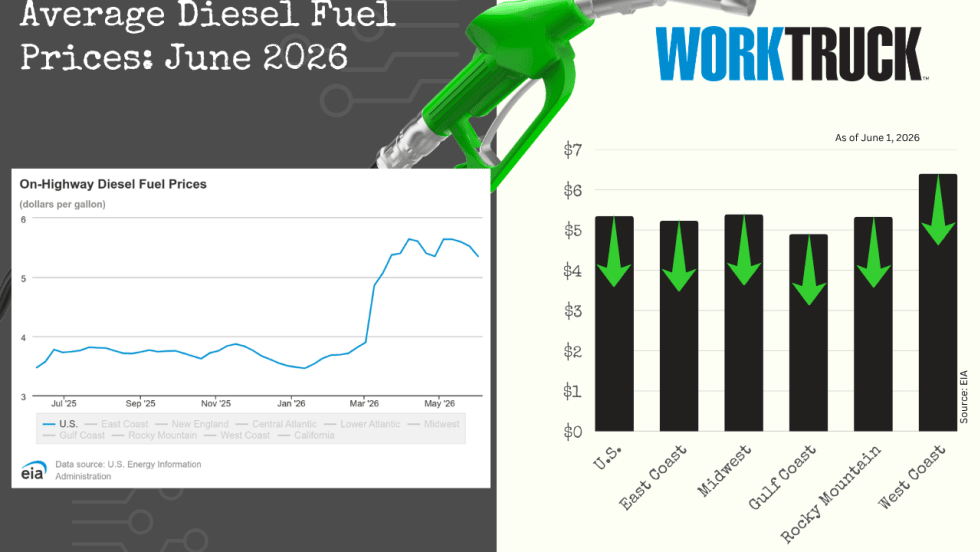
June Diesel Trends Update
The national average price of a gallon of diesel decreased by more than 17 cents this week, and all five regions reported lower prices, ranging from just over 10 cents to more than 23 cents cheaper than a week ago.
Read More →
3 Benefits of Hydrogen as a Fuel
Hydrogen fuel offers zero harmful emissions, incredible energy density, and flexible production pathways. In this video, we learn from a hydrogen industry insider about the three biggest benefits of hydrogen as a fuel to power commercial vehicles.
Read More →
Are You Tracking Your Fleet's True Total Cost of Ownership?
Bobit Business Media surveyed 190 fleet professionals and found that while most fleets are tracking costs, fragmented systems and data gaps are keeping true TCO visibility out of reach. With rising pressure to control spend in an increasingly volatile environment, the gap between what fleets think they know and what the data actually shows is wider than you might expect. See how your peers are managing costs today and where the industry still has room to improve.
Read More →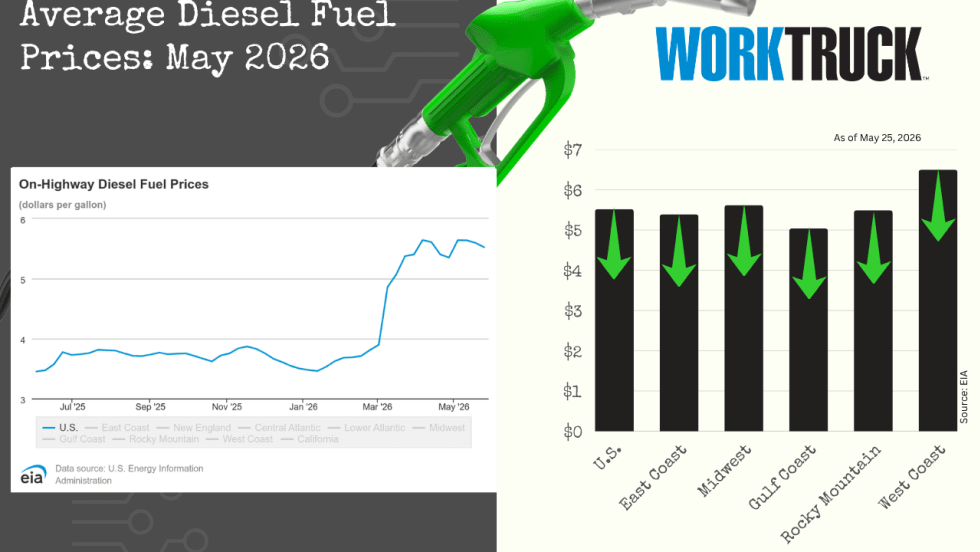
May Diesel Trends Update
The national average price of a gallon of diesel decreased by more than 7 cents this week, and all five regions reported lower prices, ranging from just over 2 cents to more than 12 cents cheaper than a week ago.
Read More →
How Hydrogen Fuel Is Produced for Fuel Cell Trucks
How is hydrogen produced for fuel cell trucks? Let’s learn more about that as Pajarito Powder CEO Christian Mohrdieck walks us through the process in this video.
Read More →
RoadFlex Launches Mobile App for Drivers and Fleet Managers
RoadFlex has launched its mobile app to give fleet teams a faster, easier way to manage fleet card activity, capture receipts, review transactions, and maintain spend visibility from the field.
Read More →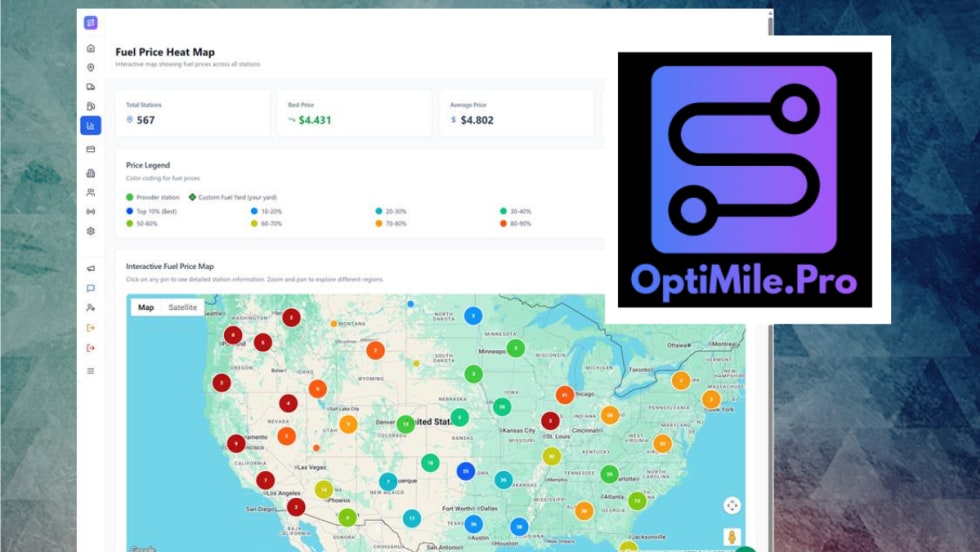
OptiMile Pro Launches Fuel Planning Platform to Cut Fleet Fuel Spend
OmtiMile Pro’s new software replaces the "fill up when empty" habit with a globally optimized fuel plan that picks the cheapest stop in the fleet's contracted network and the precise amount of fuel to load on every run.
Read More →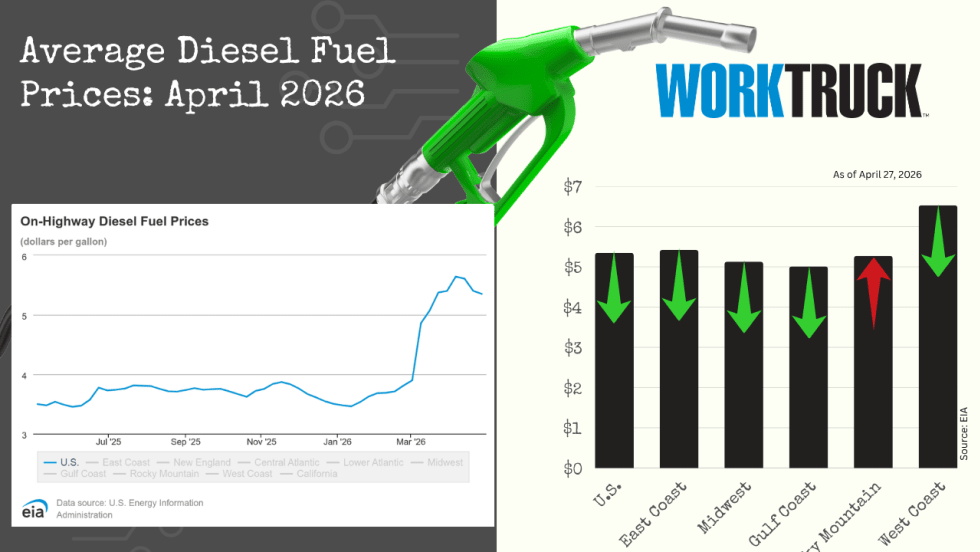
April Diesel Trends Update
The national average price of a gallon of diesel dropped by more than 5 cents this week, and all but one region reported price decreases.
Read More →
ChargePoint & South Coast Air Quality Management District Surpass 90 EV Charger Installations Across Southern California
ChargePoint has enabled more than 90 charging ports for the South Coast Air Quality Management District in Southern California. The project replaced outdated chargers with 55 new, Level 2 ChargePoint units capable of serving 94 vehicles simultaneously.
Read More →
Pajarito Powder Appoints Hydrogen Industry Veteran as New CEO
Pajarito Powder has appointed Christian Mohrdieck, who has a wealth of experience and knowledge in both the fuel cell and electrolyzer businesses, as its new CEO.
Read More →