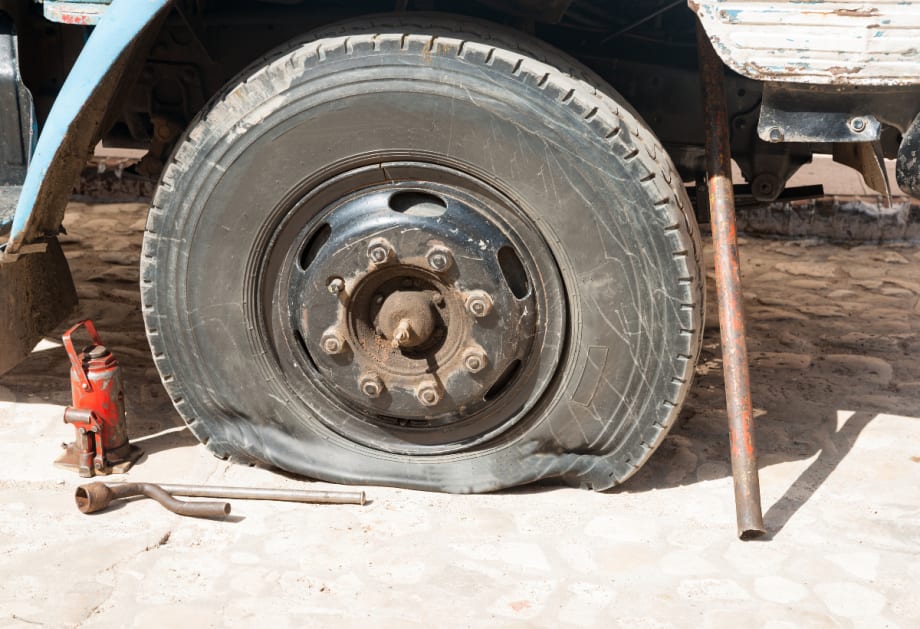
Tire load ratings must be followed when selecting a tire and wheel package. The tire must safely support a given amount of vehicle weight. If the load rating is insufficient, the tire may become overheated and can self destruct.
by Mike Mavrigian
July 1, 2007
Never exceed a tire’s maximum load rating (the limit that is molded into the tire sidewall) or the maximum vehicle load limit shown on the vehicle tire placard, whichever is less.
Photo: Work Truck
4 min to read
Editor's Note: Check out the updated version of this article, including Q&A from readers, here.
Paying attention to a replacement truck tire’s load rating is critical. The tire must be able to safely support a given amount of vehicle weight. If the tire’s load rating is insufficient, the tire may become overheated and can self-destruct.
Ad Loading...
For example, if a passenger car performance tire is selected to replace an original equipment light work truck tire on an SUV, the new tire must meet or exceed the requirement for the specific vehicle weight.
But, what is a tire load rating? What tire load rating do you need? And how do you determine tire load capacity? Check out these tips!
How to Determine Tire Load Capacity
Do you know how to determine a truck tire's load capacity? To roughly determine the tire load range capacity for each individual truck tire, take the vehicle’s gross vehicle weight (or GVW) and divide by four. If the vehicle gross weight is 4,500 pounds, each tire should be able to safely support at least 1,125 pounds.
However, the gross vehicle weight does not take the additional load, such as the weight of the driver, into account. So, you should never select a truck tire that only meets this minimum weight capability.
Always select a truck tire that offers a greater, or “reserve,” tire load capacity, which will help the vehicle handle and respond to higher-stress emergency situations when loaded.
Ad Loading...
Understand a Truck Tire's Max Tire Load Range
How are truck tires rated? The tire’s load rating, or “max load,” indicates the individual tire’s safe maximum load-carrying capacity when inflated to its recommended pressure.
Never exceed a truck tire’s maximum load rating (the limit that is molded into the tire sidewall) or the maximum vehicle load limit shown on the vehicle tire placard, whichever is less. The tire is designed and constructed to handle a specific maximum load, and overloading will result in a buildup of excessive heat in the tire, which could lead to tire failure.
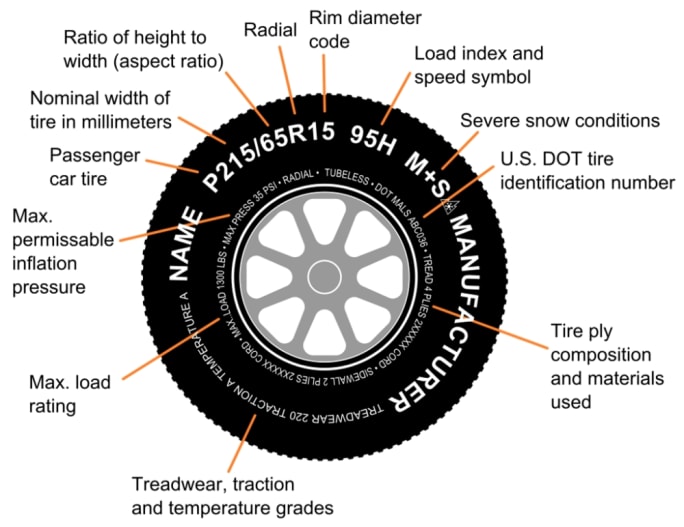
The tire load index rating number, which appears on the tire sidewall, is an assigned number that corresponds to the tire’s load-carrying capacity. Alphanumeric tires will display an alpha code that indicates maximum load. The letter can range from “A” to “N” (the higher the letter, the greater the load-carrying capacity at a given inflation tire pressure).
The max load and maximum inflation numbers found on the tire sidewall indicate the maximum load that can safely be carried and the maximum allowable tire pressure. The construction of the truck tire (belts, bead, carcass, liner) dictates the tire’s ability to withstand pressure. The stronger the reinforcements, the greater pressure the tire can hold.
Most alphanumeric tires feature a load range of B, which indicates that they are restricted to the load that can be carried at a maximum inflation pressure of 32 psi.
Most alphanumeric tires feature a load range of B, which indicates that they are restricted to the load that can be carried at a maximum inflation pressure of 32 psi.
Ad Loading...
Note:
Tire load range C, load range D, or load range E tires are capable of greater loads.
Most load range C, D, and E tires are intended for light-truck applications.
The tire load-carrying capacity of P-metric tires is rated as either Standard or Extra Load. Standard Load tires are limited by the load that can be supported with a maximum inflation pressure of 35 psi. Extra Load-rated tires are limited to the load that can be carried at a maximum inflation pressure of 41 psi.
Generally, a Standard Load tire will not feature a special designation mark, while Extra Load truck tires will feature an “Extra Load” marking.
Extra Load tires will be branded as “Extra Load” and may be identified by an “XL” (for example LT245/75R15 XL).
Ad Loading...
It’s important to note that a Standard Load tire (with a normal inflation pressure recommendation of 35 psi) may be marked with a maximum inflation pressure of 44 psi. This does not indicate an increase in the truck tire’s load-carrying capacity, but indicates the tire’s ability to handle higher inflation pressure to accommodate special performance requirements.
Typically, the tire load rating index of a passenger car tire and light work truck tire ranges from 70 to 110. A speed-rated tire’s sidewall markings will indicate size, followed by the tire load rating index and the speed rating.
Kenworth Truck Company has selected leading Kenworth service professionals for its 2026 Kenworth Service Council, which will promote service and product enhancements. See who was selected and which Kenworth dealers they represent.
In the past year, General Motors has invested nearly $200 million to grow skilled trade careers across the U.S. The goal for GM is to support its current workforce with the skills and development they need while building clear, compelling career paths for the next generation.
Patrick Etheridge has been promoted to director of OEM/truck stop sales for CMA/Double Coin, and Jose Pfirrmann has been promoted to director of sales for Region 1 for CMA.
Installer’s Advantage, by DRiV, brings together more than 5,000 exclusive parts engineered to address common challenges technicians face every day in the service bay.
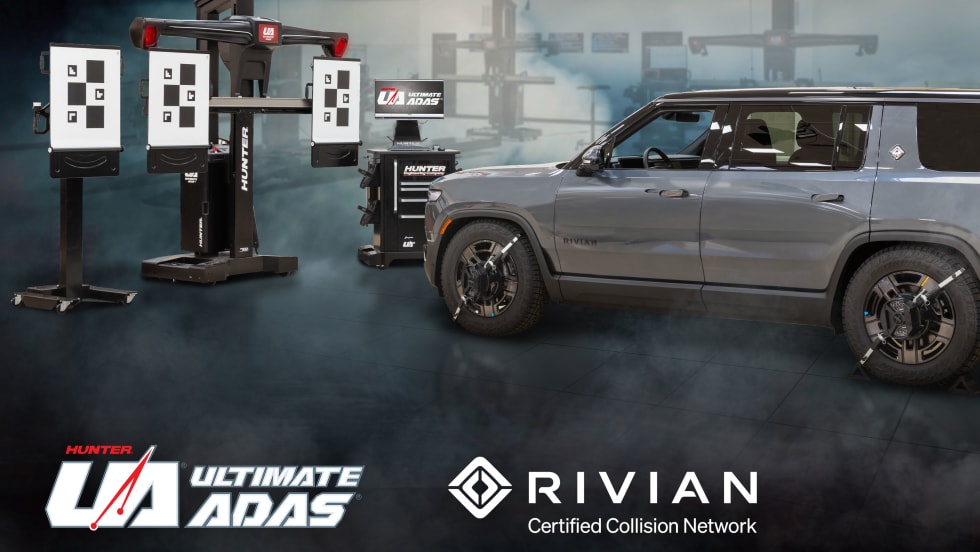
Hunter Engineering’s Ultimate ADAS alignment and calibration system has been approved for Rivian’s entire vehicle lineup. Ultimate ADA provides static calibration coverage for more than 90% of vehicles in operation.
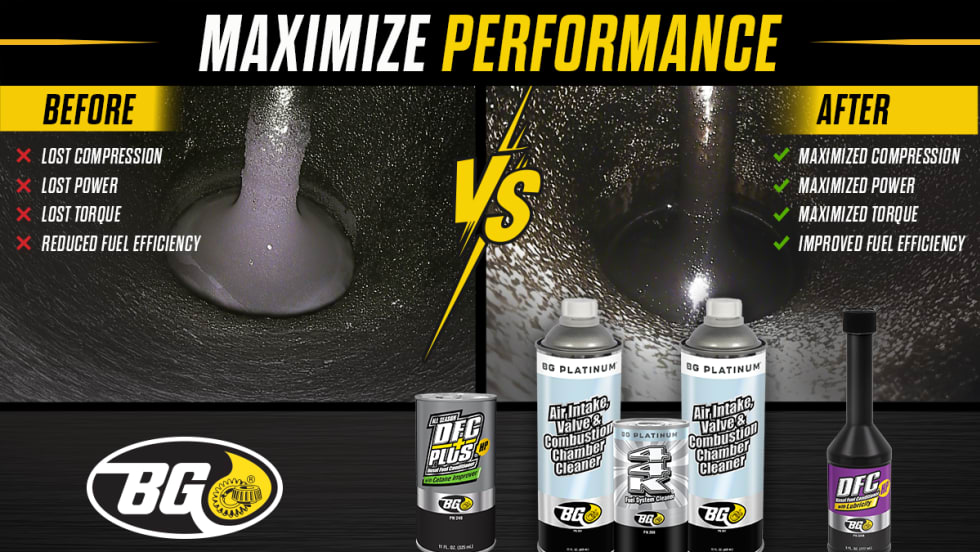
BG Products' offerings and business philosophy strongly align with how fleet managers focus on their business: Increasing uptime. Reducing maintenance expenses. Strengthening resale values. Learn how BG’s product lineup can help achieve those key goals.
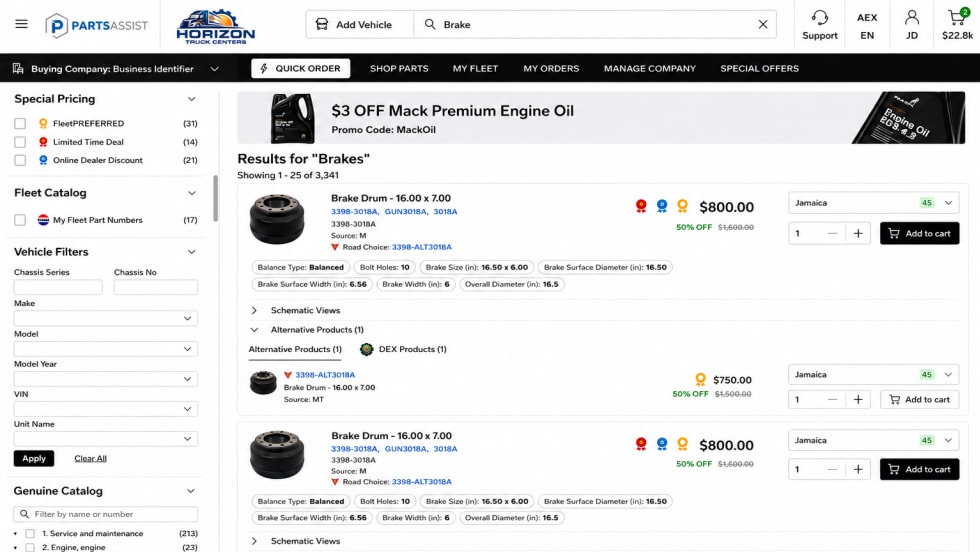
Mack Trucks has redesigned its online parts-ordering platform, PartsASIST. The updated website features a modernized user interface and new tools designed to simplify the parts-purchasing experience for customers and dealers.