Freightliner Custom Chassis Delivers 50,000th Chassis to UPS
A two-decade partnership among two of the most trusted and respected names in the work-truck and parcel-delivery industries reached a major milestone, as Freightliner Custom Chassis Corp. (FCCC) delivered its 50,000th chassis to UPS.
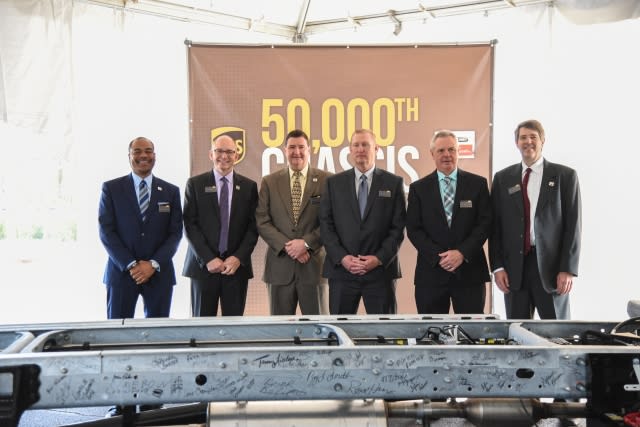
UPS and FCCC celebrate the 50,000th chassis delivered to UPS. Photo courtesy of FCCC
1 min to read
A two-decade partnership among two of the most trusted and respected names in the work-truck and parcel-delivery industries reached a major milestone, as Freightliner Custom Chassis Corp. (FCCC) delivered its 50,000th chassis to UPS.
Leaders from UPS and FCCC were on hand at FCCC headquarters in Gaffney, S.C., to mark the official delivery of the milestone chassis, which was specially branded and displayed for the event. Roger Nielsen, president and CEO of FCCC parent company Daimler Trucks North America (DTNA), was on hand with other DTNA leaders for the celebration, along with elected officials and civic leaders from Gaffney and Cherokee County.
Ad Loading...
FCCC began its partnership with UPS in 1996, delivering more than 600 units of its legendary MT-45 chassis that first year. FCCC has delivered more than 1,000 chassis in a year to UPS 13 times since 1996, with a peak of more than 6,000 in 2015.
(L-R) Carlton Rose of UPS, Roger Nielsen of DTNA; Rick Jordan of UPS, Billy Benson of UPS, Mike Casteel of UPS, and Jeff Sather of FCCC stand behind the autographed 50,000th UPS chassis, an MT-45 model. Photo courtesy of FCCC
While more than half of the 50,000 chassis delivered to UPS have been either gas- or diesel-powered, FCCC and UPS have long developed and deployed a range of alternative-fuel products including hybrid-electric, hydraulic hybrid, electric, compressed natural gas (CNG), and propane autogas.
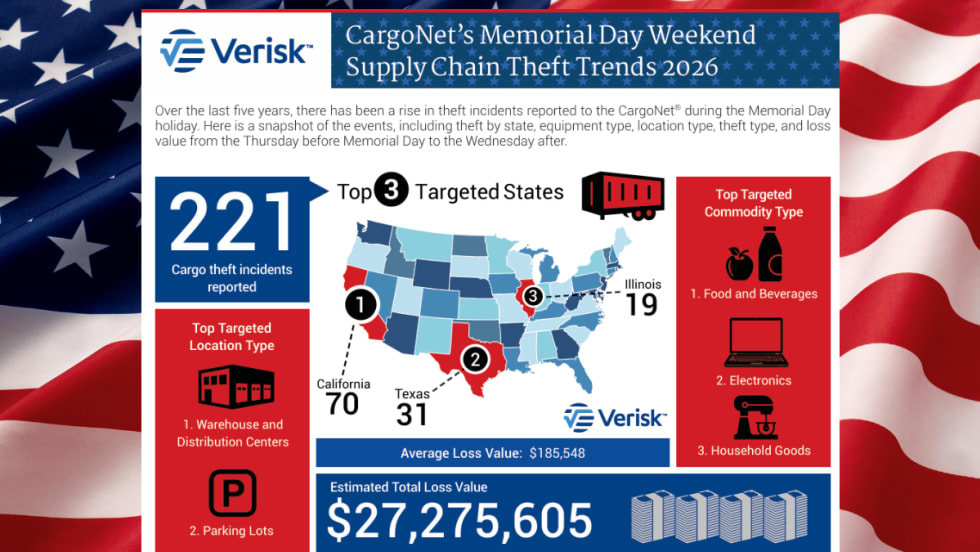
Verisk CargoNet analysts are observing a broader shift in cargo theft behavior and expect elevated holiday theft risk during the Memorial Day period, which runs through next Wednesday, May 27.
Veterans in fleet, it's your turn! share how military experience shapes leadership, discipline, and real-world decision-making across today’s operations.
Departmentally assigned vehicles often create hidden costs through underutilization, poor visibility, and increased administrative burden. This white paper explores how shared motor pool strategies help fleets reduce costs, improve accountability, and optimize vehicle utilization.
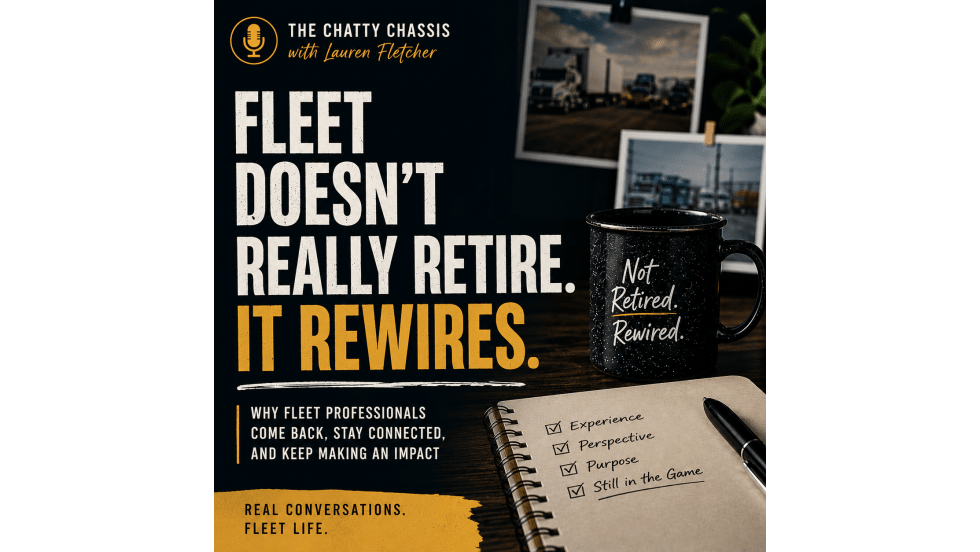
From oil changes to procurement decisions, fleet work is often underestimated by the very people who depend on it most. Bob Stanton makes the case for why communication, not just technical expertise, is one of the most important leadership skills in fleet.