




Chevrolet Re-Enters Low-Cab Forward Market
In the 2016-CY, Chevrolet will offer six low-cab forward models in the Class 3-5 GVW segments. The models will be procured from Isuzu and badged as Chevrolets.

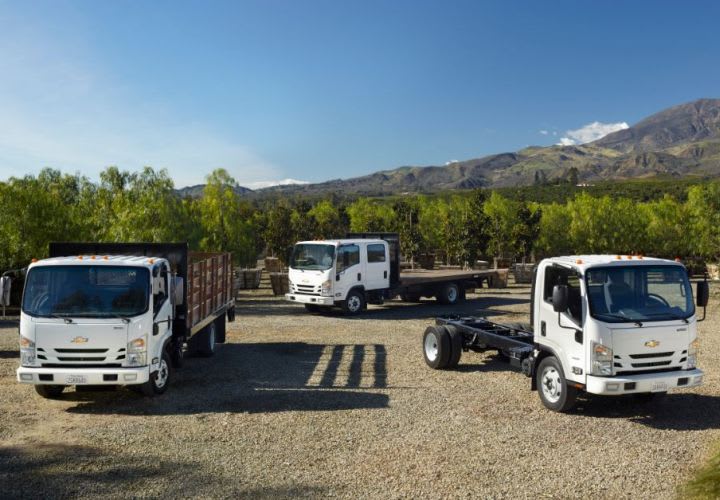
Photo cabover family courtesy of GM.
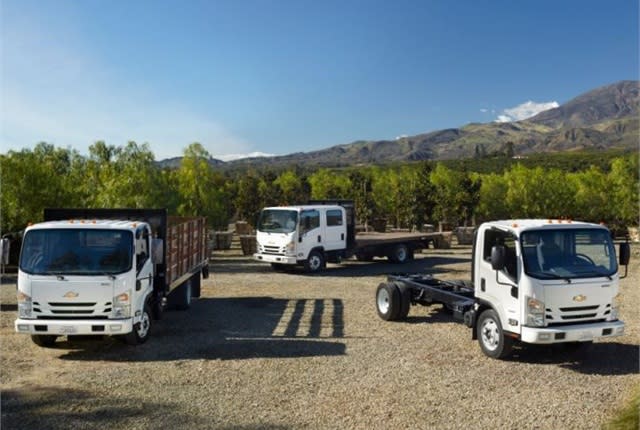
Photo cabover family courtesy of GM.
Chevrolet will offer low-cab forward medium-duty trucks in the U.S. in calendar-year 2016, the automaker announced at its dealer meeting in Las Vegas on June 15, returning the brand to a growing segment of the commercial vehicle market and expanding choices for fleet and commercial truck customers.
The six new models — Chevrolet 3500, 3500HD, 4500, 4500HD, 5500, and 5500HD — are based on the Isuzu N-Series, which General Motors will procure from Isuzu and distribute through Chevrolet dealers.
The six new models will be branded as Chevrolet Low Cab Forward. According to John Schwegman, director of commercial products for GM Fleet and Commercial Operations, the Low Cab Forward models will fill a product hole in the GM lineup in the Class 3-5 truck segments.
The new trucks will be offered in regular-cab and crew-cab body styles. A General Motors’ sourced 6.0L V-8 gasoline engine and 6-speed automatic transmission, or Isuzu-sourced 3.0L and 5.2L turbodiesel engines, will be available, depending on the model. The gasoline-powered models will be assembled from complete knock down (CKD) kits in the U.S. at the Spartan Motors assembly plant in Charlotte, Mich.
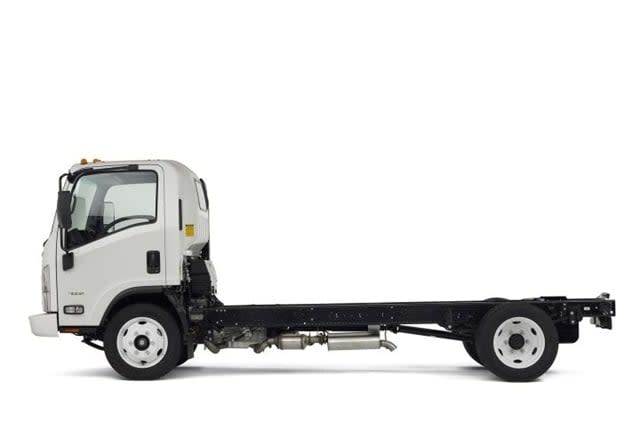
Photo of Chevrolet 4500 cabover courtesy of GM.
Along with the Isuzu-badged versions, the Chevrolet models will be the only low-cab forward trucks in the North American market to offer a gasoline-powered powertrain. Additional features include:
Excellent visibility and maneuverability — especially in urban environments.
Easy driver entry and exit.
Chassis lengths ranging from 109 inches to 212 inches.
Compatibility with a variety of body types, including refrigerated box, stake/flat bed, and service bodies.
Easy-access engine compartment with 45-degree tilting cab.
Additional features and specifications will be available closer to the start of production.
“Bringing low-cab forward trucks back to our portfolio strengthens Chevrolet’s commitment to providing commercial customers with more choices and provides customers with a versatile lineup of trucks, vans, and crossovers,” said Ed Peper, U.S. vice president of GM Fleet and Commercial Sales. “This addition helps our dealers satisfy their commercial customers’ needs all in one place.”
In addition to the new Low-Cab Forward trucks, Chevrolet’s fleet and commercial choices include the full-size Silverado lineup, the Silverado 2500HD and 3500HD full-size chassis cab models, and the mid-size Colorado, which offers a box-delete and seat-delete option, as well as the City Express small van and Express range of full-size vans.
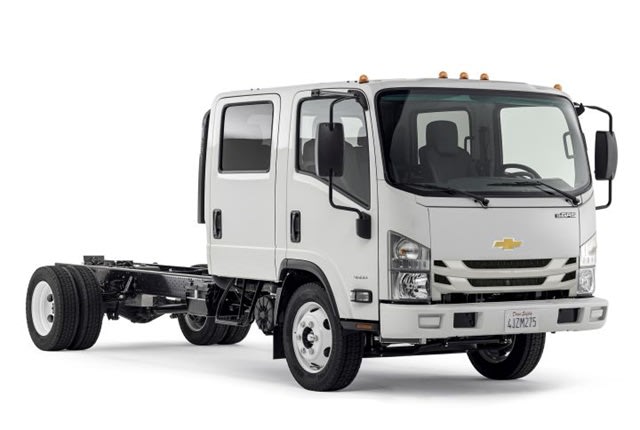
Photo of Chevrolet 4500 cabover courtesy of GM.
According to Peper, key vocational markets being targeted by Chevrolet for the new Low Cab Forward models include refrigerated food delivery, distribution applications, construction industry, landscaping, government, and urban applications.
The vehicle collaboration agreement in the U.S. between General Motors and Isuzu Motors is the latest in a more than 40 year strategic partnership between the two companies that has included other commercial vehicle collaborations throughout the world.
According to both companies, to strengthen the product lineup, GM and Isuzu will explore the use of GM com-mercial vehicle components for Isuzu low-cab forward trucks, and GM will continue to produce and supply the 6.0L V-8 gasoline engine and 6-speed transmission for Isuzu gasoline-powered low-cab forward trucks.
Originally posted on Automotive Fleet
More Operations

Family Ties Inside the Fleet Families Building Careers Across Generations
Three fleet families share what it really takes to work together, learn across generations, and keep business from following them home.
Read More →
Shades of Fleet Call for Voices: Fleet's Hidden Heroes
Fleet’s hidden heroes are often the ones keeping everything moving behind the scenes. September’s Shades of Fleet is looking for dispatchers, coordinators, parts specialists, and other support pros to share their stories.
Read More →
Truck Centers, Inc. Celebrates National Truck Driver Appreciation Week with $1,000 Fuel Card Giveaways
During National Truck Driver Appreciation Week, Truck Centers, Inc. is offering customers a chance to fuel up for free. Customers at all Truck Centers locations can enter to win one of four $1,000 fuel cards from Sept. 14 - 18.
Read More →
Fleet Guides, AI Time-Savers, Truck Tariffs & Fuel Strategy Lead the News
This week’s Truck Chat Cheat Sheet covers new fleet vehicle guides, practical AI use cases, U.S.-Canada truck production, mixed-energy strategy, and more.
Read More →
What Fleet Employers Are Missing When Hiring Veterans
What if some of the strongest candidates for fleet are already out there, but their experience is written in a language our industry does not always recognize?
Read More →
Automotive Fleet Opens 2026 Personal Use Survey for Commercial Fleet Managers
Less than two weeks left! Commercial and corporate fleet managers are invited to share how their organizations handle company vehicle personal-use policies, charges, and driver eligibility.
Read More →
What Resilient Fleets Do Differently When Conditions Change
Fleet resilience is about more than reacting to disruption. Lauren Fletcher talks with AP Fleet’s Alex Coveney about flexibility, planning, scaling, and what helps fleets adapt when business conditions shift.
Read More →
If We Want the Next Generation in Automotive, We Have to Give Them a Reason to Care
The automotive industry talks constantly about its workforce shortage. But before we can recruit the next generation, we may need to do a better job giving kids a reason to care about automotive in the first place.
Read More →
Ram ProMaster City Under $40K, Truck Tariffs, and AI Maintenance Lead the News
A sub-$40K commercial van, tariff questions, AI-powered maintenance, and a new EV production strategy headline this week’s Truck Chat Cheat Sheet.
Read More →
Bob Adamsky Shares the Fleet Lessons You Usually Learn the Hard Way
After more than 30 years in fleet, Arrow International’s Bob Adamsky has learned that the job is about far more than vehicles. He shares the lessons he wishes every fleet manager could learn a little earlier.
Read More →