




Vocational Spotlight: Service, Delivery Fleets
With a wide variety of fleet sizes and make up, service and delivery vocational fleets must find ways to reduce expenses and handle challenges in unique ways.

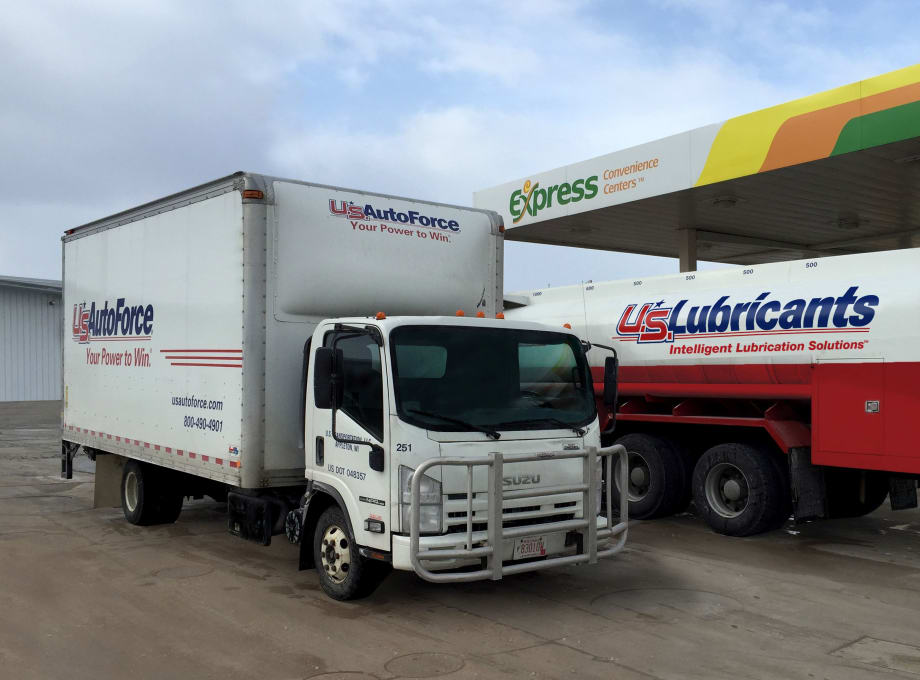
U.S. AutoForce operates a fleet of more than 390 vehicles, including medium-duty trucks. (PHOTO: U.S. AutoForce)
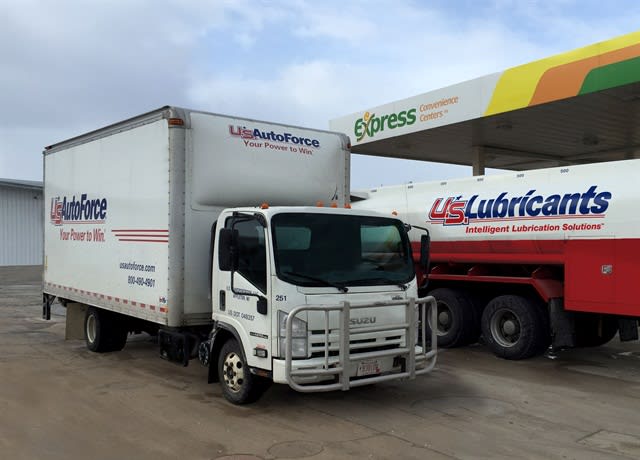
U.S. AutoForce operates a fleet of more than 390 vehicles, including medium-duty trucks. (PHOTO: U.S. AutoForce)
Service and delivery fleets vary greatly in composition, vehicle usage, geographical locations, and mileage traveled. Several such fleets share their current challenges and the solutions they have found to resolve them.
U.S. AutoForce Leverages Partnerships for Savings
U.S. AutoForce, a Division of U.S. Venture, Inc., operates a fleet of more than 390 vehicles, ranging from cars and pickup trucks to vans to medium- and heavy-duty trucks.
Over the past few years, the wholesale business-to-business aftermarket parts supplier has successfully reduced fleet expenses through several initiatives.
“We have reduced cents per mile (CPM) across all categories of vehicles for PMs and repairs by implementing a set PM schedule and standardized process for 140-plus outside shops to follow. Cents per mile in savings add up fast when you factor the total miles your fleet is running in a year,” according to Mark Hanson, director of Logistics & Inventory Control for U.S. AutoForce.
And, when running more than 15.3 million miles per fiscal year as U.S. AutoForce does, those savings can total thousands of dollars for even a small cpm reduction. However, implementing a set PM schedule was not without its challenges.
“Working with 140-plus independent shops can be a challenge, as well as warranty service providers that, at times, bid themselves out of the market on PMs,” Hanson explained. “I prefer to place as much work as I can with shops having the latest diagnostics and training — especially on newer emissions engine technology.”
To update its out-of-date PM schedule, U.S. AutoForce leveraged its industry partnerships. “We partnered with a national fleet service company to get its feedback on what we were doing on our PMs and our DOT inspections, and then created a procedure/policy for the shops to follow with set thresholds, beyond which they needed pre-approvals to proceed with repairs,” Hanson said.
The thresholds were based on truck mileage by vehicle type and the cost of the repair. “These repairs are reviewed by our own truck shop to ensure the labor charged is valid and the PMs are not coming in for more than the flat rate negotiated for each shop before being sent over for payment,” he said.
In addition, Hanson worked to re-spec vehicles based on repairs seen and actual weights the vehicles were hauling.
Negotiating with vendor partners was also key to successful savings. “We also partnered with truck manufacturers to pool spend and negotiate better purchase prices,” Hanson said. “In addition, we negotiated rental agreements for when vehicles did go down and for short-term needs versus keeping ‘spares.’ ”
A further recent success included changes to overall vehicle replacement schedules based on actual mileage data, setting a new schedule for vehicle replacement based on mileage intervals and CPM by truck before major spends were occurring.
At the end of the day, one of the most valuable tools U.S. AutoForce had was data. To be successful, “determine what metrics are relevant to measure in your fleet and begin taking steps to improve the ones you can control. Anything you do will inevitably impact the bottom line, Hanson said. “And, partner with your service providers and look for win-win opportunities as they will impact your up-time.”
Spec’ing & Standardizing for Success
Over the past few years, one approximately 4,000-vehicle service fleet has implemented many changes to reduce expenses, focusing on spec’ing and standardization. “We standardized our medium- and heavy-duty truck choices and order process,” the fleet manager said. “In addition, we added automated-manual transmissions on all of our trucks.”
Benefits of the change included the simplification of driver training, the ability to pull from a larger driver pool, lower overall maintenance needs, increased vehicle fuel economy, and the ability to utilize the transmission’s automated/intelligent shifting decisions.
Many of the fleet’s more tenured drivers were not initially happy with losing a measure of control. “But, as the saying goes, ‘Change will always be a part of life, learn to embrace it,’ ” said the fleet manager, who wished to remain anonymous.
In additional spec’ing-related changes included reducing the spec variety from 300 to 30 options. “The reduction in vehicle options on our selector resulted in reducing order processing time by 50 percent,” the fleet manager said.
Results from the specification changes included a 10% decrease in fuel consumption and reduction of body and equipment weight by 100 to 500 pounds.
Contributing to the decrease in fuel consumption was the addition of a “65-70 mph speed limiter, five-minute idle shutdown feature, and the Allison ‘fuel sense’ feature on all Freightliner models,” the fleet manager commented.
The fleet also developed a comprehensive self-service fleet intranet site, creating a full suite of transaction forms, decreasing fleet calls and e-mails by 100%. “We have increased customer satisfaction by 50%, decreased transactional processing times by 25%, and created more than 20 vendor (chassis, body, and equipment) support and resource pages,” the fleet manager explained.
One of the top challenges noted by the service and delivery fleet was vendor communication, reliability, and product/service quality. “To address these challenges, we have created a vendor expectation document and manage to this with new and existing vendors,” the fleet manager explained. “We require all primary/direct vendors to publish all relevant quotes, reference materials (warranties, lead times, product announcements, etc.) to a Box.com account.”
In the end, to be successful in the service and delivery fleet vocation, the fleet manager recommended the following: “Embrace change — challenge long-standing practices and vendors. Embrace technology. And, be sure to manage, motivate, and communicate to vendors.”
Rollins Keeps Service Fleets Up & Running
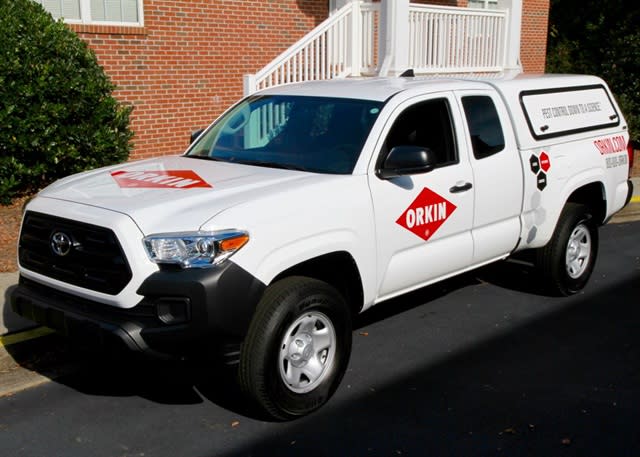
Rollins worked to reduce overall average order-to-delivery time on its upfit vehicles by 20 days. (PHOTO: ROLLINS, INC.)
Rollins, Inc., a global consumer and commercial services company, the wholly owned subsidiaries of which include Orkin LLC and HomeTeam Pest Defense, implemented an open-end leasing program saving the company approximately $12 million.
The 8,800 vehicle fleet consists of mostly light-duty pickup trucks (around 7,400), but also includes more than 1,200 cars, around 60 trucks, 15 vans, and about 100 crossover vehicles.
One of the service fleet’s main challenges revolved around order-to-delivery (OTD) as the business grows.
“We upfit all vehicles for our operating locations which adds additional time to the already long normal cycle,” according to Paul Youngpeter, managing director, Fleet & Corporate Services for Rollins, Inc. “To improve OTD times for our primary service vehicle, we implemented an annual planning meeting with all suppliers involved with the ordering, manufacturing, upfitting, and the design of the truck.”
Through this coordination, Rollins was able to reduce overall average OTD by 20 days and establish processes that cut the time by 60% for emergency orders,” Youngpeter said.
Another issue the fleet faces revolves around driver safety, particularly the challenges posed by distracted driving: cell phones, vehicle technology, etc. “To address distracted driving we are implementing technology that disables the use of cell phones while the vehicle is in motion. This is being coordinated as we upgrade to smartphones for our service technicians,” Youngpeter explained.
Over the past five years, the acquisition costs of the fleet’s primary vehicle have also risen by 70%. “We have implemented full TCO analysis on an annual basis to address rising fuel costs, extended our lifecycle from 36 to 48 months, adjusted depreciation rates to more closely reflect actual depreciation, and implemented tracking reports to minimize lease payment overlapping and excess vehicles in the fleet,” Youngpeter said.
But, on the positive side, “falling fuel prices saved us more than $9 million in 2015,” he said.
Fleet expense is Rollins’ third-highest P&L category, only surpassed by payroll and the cost of the materials used to deliver pest control service. “Consequently, fleet receives a lot of attention and great support from executive management along with deserved scrutiny from our customers in operations. Without an efficient fleet program we would not stay in business — the only way we generate revenue is to put a little white truck in our customer’s driveways and parking lots every day,” Youngpeter said.
Amigos Logistics Delivers on Savings
Recently, Amigos Logistics reduced accidents by 20%, increasing the use of vans versus straight trucks for local deliveries.
“Vans help reduce overhead greatly when it comes to equipment, fuel, and labor,” according to Manny Rangel, CFO of Amigos Foods and president of Amigos Logistics.
The 36-vehicle fleet currently consists of mostly heavy-duty trucks, with three cars, three vans, and a pickup truck. But, plans are to increase the van fleet.
“Our top challenges include ensuring drivers are able to make all deliveries in a timely fashion while staying within the boundaries of the DOT regulations. Finding new drivers has also been a continuing challenge. We recently began a training program for less experienced drivers. We will train a newly licensed CDL driver, up to six months before letting him go on his own,” explained Rangel.
Recently, reduced fuel costs have been a great financial help to the delivery fleet.
“Because of this, we have been able to upgrade our GPS tracking system. Now, we not only monitor the unit, but also driver performance. This will be key to future savings as hard braking, fuel consumption, and other factors are taken into consideration,” Rangel said.
And, more attention given to driver performance will make a big difference in how efficient the fleet is overall, providing increased training abilities,
“Because we are able to bring back product, our inventories are restocked faster and in a more cost-effective manner. Making sure our trailers do not come back empty after a delivery has been huge. Drivers love it because the added work leads to more money for them,” Rangel said.
To ensure downtime remains at a minimum, which is especially important to a delivery fleet, units are leased from PacLease for no more than five years.
One best practice the delivery fleet utilizes revolves around its use of “drive teams.”
“The use of teams, or sending two drivers to make a delivery, is becoming more useful. Also, hiring drivers outside of our home state, in strategic cities, to hand off the tractor to and finish the deliveries,” Rangel said. “For example, a driver from Chicago will drive about nine or 10 hours to Tennessee. He will meet up with a driver living there, hand off the unit and rest in a motel. While the Chicago driver rests, the Tennessee driver delivers to several locations. He usually finishes the deliveries 10-12 hours later, giving the other driver more than enough time to rest,” Rangel said.
More Operations
ATRI Names Next President and CEO
Page Siplon, a longtime transportation and logistics industry executive, has been chosen as the next president and CEO of the American Transportation Research Institute (ATRI).
Read More →
Coltrain Onsite Fleet Care Sponsors 2026 Cure Bowl to Support Cancer Research
The mobile fleet maintenance provider is supporting the annual college football bowl game, which has helped raise $6.83 million for cancer research since 2015.
Read More →
Racing Lessons, Electric Fleet Growth, and Ghostbusters Lead This Week's Work Truck News
Racing lessons for fleets, Republic Services' electric truck expansion, 40 years of fleet wisdom, truck trivia, autonomous yard trucks, and more headline this week's Truck Chat Cheat Sheet.
Read More →From Our Partners
Basic Tracking vs Next Generation Fleet Technology
Sponsored by AT&T Business
5 Facts Every Fleet Manager Should Know About Embedded Telematics
Sponsored by Stellantis/Mobilisights
How AI Video Telematics Boosts Driver Safety and Helps to Avoid Unnecessary Costs
Sponsored by Verizon Connect

Charting the 8 Bottom-Line Benefits of Workforce Optimization
Sponsored by Verizon Connect

A buyer's guide to fleet management software in 2027
Buying fleet management software in 2027 means looking beyond features and price. As fleet operations, technology and expectations evolve, this guide explores what today’s fleet professionals should consider when choosing a system that can deliver value now and adapt to what comes next.
Read More →
How to Build a Lasting Fleet Career by Staying Curious and Connected
Tina Kourakos never planned on a career in fleet. More than 30 years later, she says curiosity, strong relationships, and a willingness to keep learning helped turn an unexpected assignment into a career spanning fleet management and OEM leadership.
Read More →
Think You Know Trucks? Take Our 19-Question Fleet Trivia Challenge
From chicken lights to diesel engines and trucking history, test your knowledge with 19 questions from the 2026 Work Truck Exchange and Heavy Duty Trucking Exchange.
Read More →
Where’s My Truck: Inside the Fleet Logistics Work Nobody Sees
Shades of Fleet video thumbnail featuring Lauren Fletcher beside the text “The People Behind the Process, Keeping Fleets Moving,” with fleet vehicles and logistics imagery in the background.
Read More →
Work Truck Seeks Fleet and Industry Insights on 2026 Trends and 2027 Forecasts
Work Truck is seeking insights from fleet leaders and industry partners on the trends that shaped 2026 and what commercial fleets should prepare for in 2027. Participate today!
Read More →
It's 10 p.m... Do You Know Who Has Access to Your Fleet?
Preventing cargo theft requires investment in technology, operational processes, and employee training. In an industry with tight margins, it can be difficult to justify investments whose value is measured by incidents that might never occur.
Read More →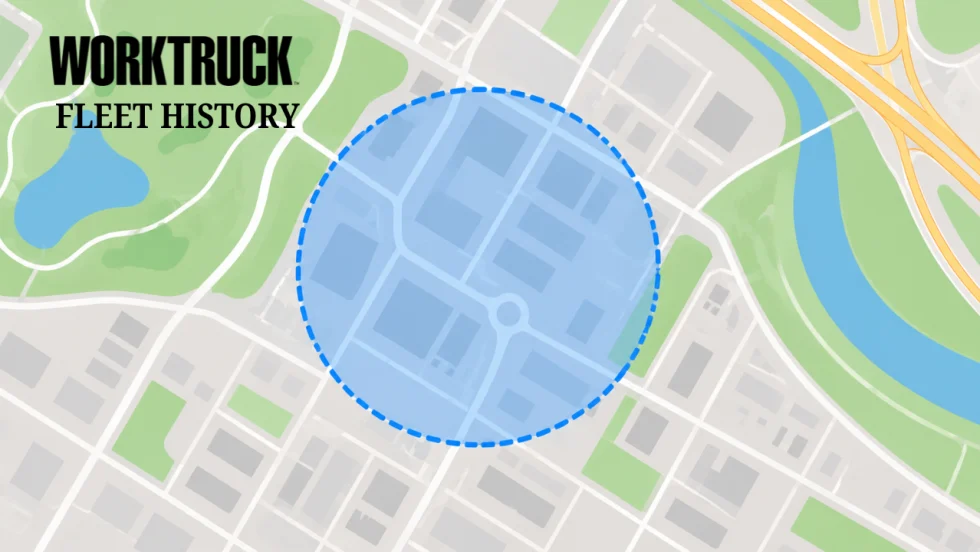
GeoFencing Adds to Your Truck Security Arsenal
Geofencing is a familiar fleet tool today, but its early adoption marked a major shift in vehicle tracking, route monitoring, and the debate over employee privacy.
Read More →