





Related: Tire Maintenance, It’s Not Just Checking Tire Pressure
Tire Prices Experience Upward Pressure
For many vocational truck fleets, price is the key factor when selecting the type of replacement tire. As shown in the past, when replacement tire prices increase, the retread industry benefits since retreads are significantly cheaper.
November 6, 2017
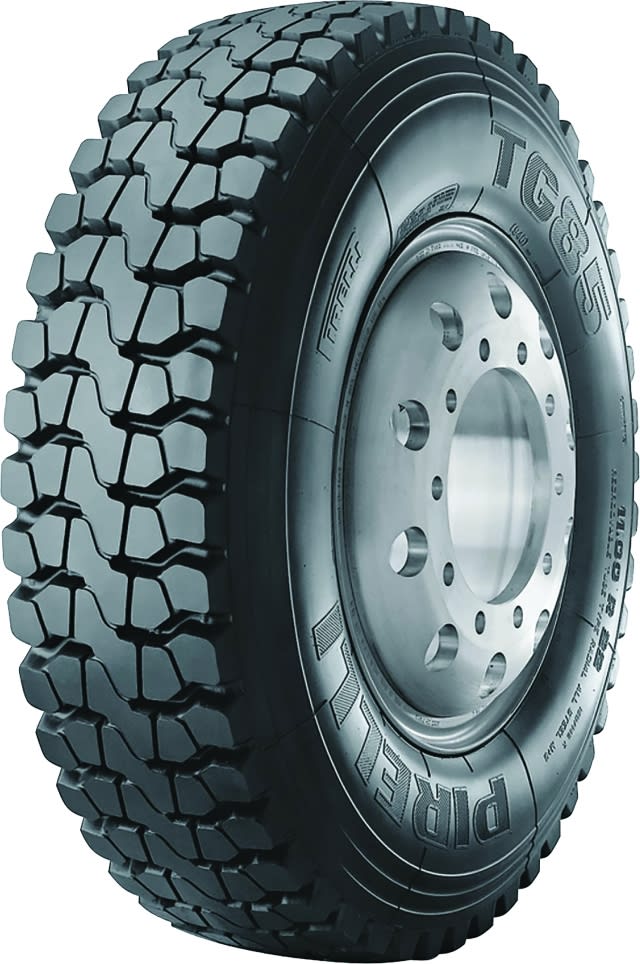
Image courtesy of Pirelli Tires
7 min to read
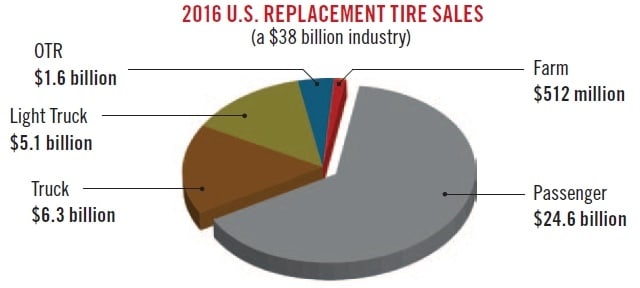
Total U.S. tire shipments surpassed 314 million units in 2016, according to the Rubber Manufacturers Association (RMA). According to the RMA, passenger replacement tire shipments exceeded the previous record set in 2014. (Source: Modern Tire Dealer)
Replacement truck tire prices remain stable, but they are starting to experience upward pricing pressures due to higher prices for the commodities used to manufacture tires. In addition, changes in production, the increased use of retreads, and the experimentation of alternative raw materials are other cost dynamics in the commercial tire industry.
The No. 1 consideration when selecting replacement tires is cost. Typically, replacement tires are the third-largest expense category for fleets.
Predicting future tire costs is very difficult due to the many variables that influence tire pricing. The unpredictable cost variable for tire prices is the price of commodities, such as oil, natural rubber, and steel, which are three key ingredients needed to manufacture tires.
The price of these raw materials has been relatively stable for the past five years, until 2017. The raw commodity price of natural rubber has moderately increased due to shortages in supply, increased demand, and weather-related issues in the regions of the world where rubber trees thrive. The bottom line is that tire costs are driven by raw materials cost. If raw material prices stay consistent, tire prices stay consistent. These costs control most of the fluctuation in tire prices.
Fleet customers have enjoyed flat prices resulting from the downward pressure on commodity prices following the slowdown in the Chinese economy, which is the No. 1 purchaser of these raw materials.
Image courtesy of Pirelli Tires
As the Chinese economy stabilized and started hitting its economic growth projection, the futures market anticipating greater demand for raw materials started exerting upward pressure on commodity prices. This will have a direct impact on future fleet costs.
On average, raw material prices are up 5% to 10% in 2017, and the safe bet is a continuation of current prices into calendar-year 2018. But this forecast, based on past experience, can change quickly given the volatile nature of the commodity markets.
The U.S. tire market is unique compared to the Japanese and European markets. More than 50% of the tires sold are for trucks and SUVs, which is considerably more than in any other country.
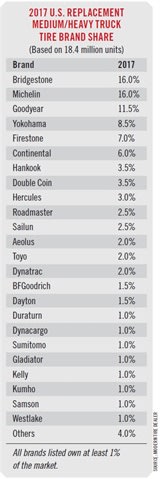
With the top replacement tire brandw in 2017 being tied with 16% market share, Bridgestone and Michelin top the list. (Source: Modern Tire Dealer)
Replacement Tire Pricing Trends
The trajectory for replacement tire prices in 2018 is upward due to current commodity pricing.
Higher commodity pressures exert pressure on tire OEMs to maintain margins as their production costs increase.
It is anticipated that truck replacement tire prices on light vehicles will continue to increase next year to compensate for higher raw material costs. Furthermore, there is upward pressure on prices for truck and bus tires, largely in response to the uncertainty about possible tariffs on commercial truck tires imported from China.
“Tire cost increases are expected to drive total operating cost increases in the upcoming year. Some of our fleet customers with medium- and heavy-duty vehicles are leveraging non-traditional replacement options, such as commercial retread tire programs, to reduce costs as much as 40%. Additionally, more tire manufacturers have developed support teams designed to help fleet customers and FMCs with making targeted tire selections,” said George Albright, director of maintenance & repair management of Merchants Fleet Management.
Barring unforeseen events, the industry consensus is that commodity prices will be higher in 2018, led by higher natural rubber prices, which will translate into higher tire prices.
The magnitude of the price changes will be determined by the sustained strength in prices in the commodity markets.
The confluence of these many factors, such as the international commodities market and product development trends, point to higher replacement tire prices in 2018. The cost of commodities used to manufacture tires, such as the price of oil and rubber, continues to be the key factor driving the price of replacement tires for passenger cars.
Retreading Poised for Growth
Using retreaded tires is one of the ways fleets can manage the higher cost of tires. When replacement tire prices increase, the retread industry is the beneficiary since they are significantly cheaper.
Retreading can extend casing life two, three or even four times, thus significantly lowering the lifecycle cost of the tire. While retread costs vary with the type of tread, the quality of the casing and the contract arrangement with a retreader, prices are approximately one-third to one-half the cost of a new replacement tire.
A number of leading commercial fleets — including FedEx, UPS, and Ryder — have embraced the use of retread tires.
The tire retreading market in the U.S. is forecast to grow 13.5% during the period 2017-2021.
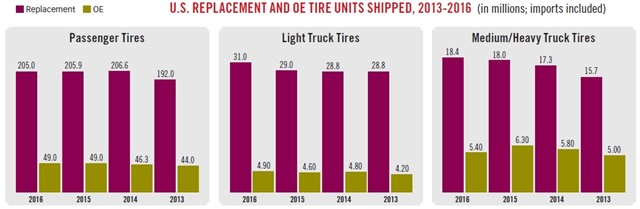
The number of passenger car replacement tires sold in 2016 was 205 million units, down from 205.9 million in 2015. As a
reflection of new-vehicle sales trends, light-duty truck replacement tires increased to 31 million units. Original equipment sale of tires for medium- and heavy-duty truck tires declined to 5.4 million units, but replacement tires increased to 18.4 million units reflecting vehicles being kept in service for longer. (Source: Modern Tire Dealer)
The latest trend gaining momentum in the market is the development of low rolling resistance (LRR) retreads. Low rolling resistance tires are designed to reduce the energy loss as tire roll, decreasing the required rolling effort — and in the case of the truck applications, improving fuel efficiency. Approximately 5% to 15% of the fuel consumed by a typical truck may be used to overcome rolling resistance.
Most tire manufacturers are focusing on tires as means to reduce fuel consumption. The emergence of certain regulatory programs promotes tires that assist in reducing fuel consumption and greenhouse gas emissions by commercial vehicles (CV). For instance, the SmartWay program was started by the U.S. EPA to help companies advance their supply chain sustainability by measuring and benchmarking freight transportation efficiency. The retreads are classified as fuel efficient if they are SmartWay verified.
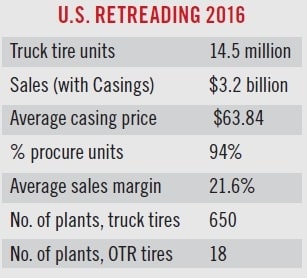
In 2016, 14.5 million truck tires were retreaded. (Source: Modern Tire Dealer)
One of the major drivers for this market is the lower cost of retreading compared with new tires. The cost of tires contributes to one-third of the annual expenditure incurred by fleet operators. Therefore, the adoption of cost-cutting measures in tires is a favored way to streamline fleet-related financial expenditures.
The key market trends in the tire retread industry are:
Development of LRR retreads.
Use of Internet-based reporting system for effective customer service.
Growing popularity of premium tires to enable multiple retreading.
Growing popularity of nanotechnology to reduce wear and tear.
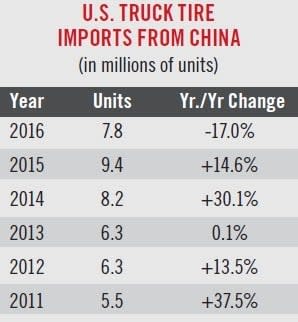
In 2016, the U.S. government threatened
to impose added duties on truck tires imported from China declaring
they were being dumped at belowmarket value. This threat resulted in
a 17% decline in truck tires imported from China. However, imports are expected to increase in 2017 since no tariffs
were adopted. (Source: U.S. Government, MTD)
One factor that impacts the decision on whether to use retreads is low-cost replacement tires imported from China.
Tires are a global commodity. Half of the hundreds of tire brands sold in the U.S. are sourced from China.
Nearly 25% of light-truck tires and 33% of the medium-duty truck tires sold in the replacement tire market are manufactured by Chinese companies.
The influx of Chinese truck tires into the U.S. fleet market is also having a detrimental effect on the tire retreading industry, because many of these “bargain” tires cannot be retreaded. Many Chinese tires do not come with a casing warranty, which makes companies squeamish about retreading.
One factor driving the deluge of Chinese tire exports is the country’s immense tire production overcapacity generated by 508 domestic Chinese tire manufacturers producing a variety of products, ranging from motorcycle to auto, truck, and bus tires. One reason China tire manufacturers have focused on the replacement tire market is because of their difficulty penetrating the OE market, where tires are sold directly to auto manufacturers for vehicle assembly.
Impact on Euro-Style Van Tires
One factor influencing replacement tires for Euro-style vans is the popularity and growing number of units in fleet operation. Sales of Euro-style vans have exceeded total sales of traditional body-on-frame vans since 2015.
“Minivans and full-size vans saw a decrease in the average price of tires. This is a change from last year, when the influx of new vehicle models – such as European-style vans – increased prices as there were fewer competitive options for specific tread patterns and sizes,” said Christopher Foster, manager, truck account administrator for ARI.
There is now a greater availability of Euro-metric sized tires in the aftermarket. “Euro-spec tires (full-size vans and small vans) are more common, and in most cases, availability across several manufacturers has increased and tire costs have remained flat or even lower in these cases,” said Mark Lange, CAFM, managed maintenance consultant for Element Fleet Management.
Manufacturers are adopting Euro spec tires that are helping to keep replacement tire prices down.
“Tire costs have remained flat this past year. One factor increasing the costs has been the introduction of Euro-spec tires and the popularity of vehicles equipped with these tires. In some cases, a vehicle that historically had replacement tires in the $125-$150 range are replaced with a vehicle with Euro-spec tires that have a cost of $275 each,” said Chad Christensen, senior strategic consultant for Element Fleet Management.
Subscribe to Our Newsletter
More Operations

How Cardless Fuel Payments Benefit Commercial Fleets
Is it time for fleets to move beyond plastic fuel cards? David Abraham of WEX explains how cardless fuel payments can help reduce fraud, simplify driver transactions, and improve efficiency by allowing drivers to pay for fuel using their smartphones.
Read More →
Good Fleet Leadership Starts With the People You Already Have
From developing future leaders to listening to employees, discover how better leadership can help work truck fleets retain talent and build stronger teams.
Read More →
ATRI Names Next President and CEO
Page Siplon, a longtime transportation and logistics industry executive, has been chosen as the next president and CEO of the American Transportation Research Institute (ATRI).
Read More →From Our Partners
Basic Tracking vs Next Generation Fleet Technology
Sponsored by AT&T Business

5 Facts Every Fleet Manager Should Know About Embedded Telematics
Sponsored by Stellantis/Mobilisights

How AI Video Telematics Boosts Driver Safety and Helps to Avoid Unnecessary Costs
Sponsored by Verizon Connect

Charting the 8 Bottom-Line Benefits of Workforce Optimization
Sponsored by Verizon Connect


Coltrain Onsite Fleet Care Sponsors 2026 Cure Bowl to Support Cancer Research
The mobile fleet maintenance provider is supporting the annual college football bowl game, which has helped raise $6.83 million for cancer research since 2015.
Read More →
Racing Lessons, Electric Fleet Growth, and Ghostbusters Lead This Week's Work Truck News
Racing lessons for fleets, Republic Services' electric truck expansion, 40 years of fleet wisdom, truck trivia, autonomous yard trucks, and more headline this week's Truck Chat Cheat Sheet.
Read More →
Sponsored•October 14, 2026
A buyer's guide to fleet management software in 2027
Buying fleet management software in 2027 means looking beyond features and price. As fleet operations, technology and expectations evolve, this guide explores what today’s fleet professionals should consider when choosing a system that can deliver value now and adapt to what comes next.
Read More →
How to Build a Lasting Fleet Career by Staying Curious and Connected
Tina Kourakos never planned on a career in fleet. More than 30 years later, she says curiosity, strong relationships, and a willingness to keep learning helped turn an unexpected assignment into a career spanning fleet management and OEM leadership.
Read More →
Think You Know Trucks? Take Our 19-Question Fleet Trivia Challenge
From chicken lights to diesel engines and trucking history, test your knowledge with 19 questions from the 2026 Work Truck Exchange and Heavy Duty Trucking Exchange.
Read More →
Where’s My Truck: Inside the Fleet Logistics Work Nobody Sees
Shades of Fleet video thumbnail featuring Lauren Fletcher beside the text “The People Behind the Process, Keeping Fleets Moving,” with fleet vehicles and logistics imagery in the background.
Read More →
Work Truck Seeks Fleet and Industry Insights on 2026 Trends and 2027 Forecasts
Work Truck is seeking insights from fleet leaders and industry partners on the trends that shaped 2026 and what commercial fleets should prepare for in 2027. Participate today!
Read More →