




Ford and Dow Team up to Cut Truck Weight
DEARBORN, MI. – While fuel economy is an important element in making fleets efficient, vehicle weight also plays an important role, particularly with work trucks that may be filled with products and equipment.
DEARBORN, MI. – While fuel economy is an important element in making fleets efficient, vehicle weight also plays an important role, particularly with work trucks that may be filled with products and equipment.
Cutting the weight of new cars and trucks by up to 750 lbs. by the end of the decade is a key component of Ford's strategy to improve fuel efficiency. In order to help achieve that goal, Ford Motor Company is partnering with Dow Automotive Systems, a business unit of The Dow Chemical Company, to research the use of advanced carbon fiber composites in high-volume vehicles.
"There are two ways to reduce energy use in vehicles: improving the conversion efficiency of fuels to motion and reducing the amount of work that powertrains need to do," said Paul Mascarenas, Ford chief technical officer and vice president, research and innovation. "Ford is tackling the conversion problem primarily through downsizing engines with EcoBoost and electrification while mass reduction and improved aerodynamics are keys to reducing the workload."
Ford is investigating a range of new materials, enhanced design processes and new manufacturing techniques that would enable automotive structures to meet increasingly stringent safety and quality standards while cutting weight.
"Vehicle weight reduction for our customers through intelligent design with a materials focus has been a priority for Dow Automotive Systems," said Florian Schattenmann, director of research and development for Dow Automotive Systems. "This partnership with Ford on carbon fiber composites is a logical next step to progress already achieved through the use of lightweight, high-strength polymers and structural bonding technology."
Carbon fiber composites have been used in aerospace and racing cars for decades due to their combination of high strength and low mass. Until recently these materials have been far too costly for use in high-volume mainstream applications, according to Ford.
Dow Automotive Systems and Ford have signed a joint development agreement that will see researchers from the two companies collaborate on several fronts. The development teams will focus on establishing an economical source of automotive-grade carbon fiber and develop component manufacturing methods for high-volume automotive applications.
The partnership will seek to combine the best of Ford's capabilities and experience in design, engineering and high-volume vehicle production with Dow Automotive's strengths in R&D, materials science and high-volume polymer processing.
"Reducing weight will benefit the efficiency of every Ford vehicle," added Mascarenas. "However, it's particularly critical to improving the range of plug-in hybrid and battery electric vehicles."
The joint development effort will also leverage work that The Dow Chemical Company has already begun through partnerships with Turkish carbon fiber manufacturer AKSA and the U.S. Department of Energy Oak Ridge National Laboratory.
If the joint development effort is successful, carbon fiber components may begin appearing on new Ford vehicles in the latter part of this decade as product development teams work toward meeting new fuel efficiency standards of more than 50 mpg and extending the range of plug-in vehicles.
More Green Fleet

Landi Technologies Achieves CARB Certification of Ford 7.3L RNG/CNG Platform
Landi Technologies has gained CARB certification of its Ford 7.3L Renewable Natural Gas (RNG) and Compressed Natural Gas (CNG) platform for the Ford E-450, F-450/550/600, F-650/750, and F-53/59 platforms.
Read More →
Turning Connected Vehicle Data Into Decisions That Matter
Fleet leaders have more data than ever, but turning that data into clear, actionable decisions remains a challenge. This white paper shows how leading organizations are using connected vehicle data to improve safety, reduce costs, and optimize fleet performance. Learn how to turn insight into action across your fleet.
Read More →
Are You Tracking Your Fleet's True Total Cost of Ownership?
Bobit Business Media surveyed 190 fleet professionals and found that while most fleets are tracking costs, fragmented systems and data gaps are keeping true TCO visibility out of reach. With rising pressure to control spend in an increasingly volatile environment, the gap between what fleets think they know and what the data actually shows is wider than you might expect. See how your peers are managing costs today and where the industry still has room to improve.
Read More →
Epic Charging Acquires Bluedot Technologies
Epic Charging has acquired Bluedot Technologies, expanding EV fleet charging access to more than 80% of U.S. public charging networks.
Read More →
CALSTART Adds 64 New Sites and Features to Its Medium- and Heavy-Duty Zero-Emission Infrastructure Map
CALSTART’s interactive National Medium- and Heavy-Duty Zero-Emission Infrastructure Map now locates approximately 1,500 ports at 162 total public, semi-public, and shared electric vehicle (EV) charging and hydrogen refueling facilities for Class 2b-8 trucks.
Read More →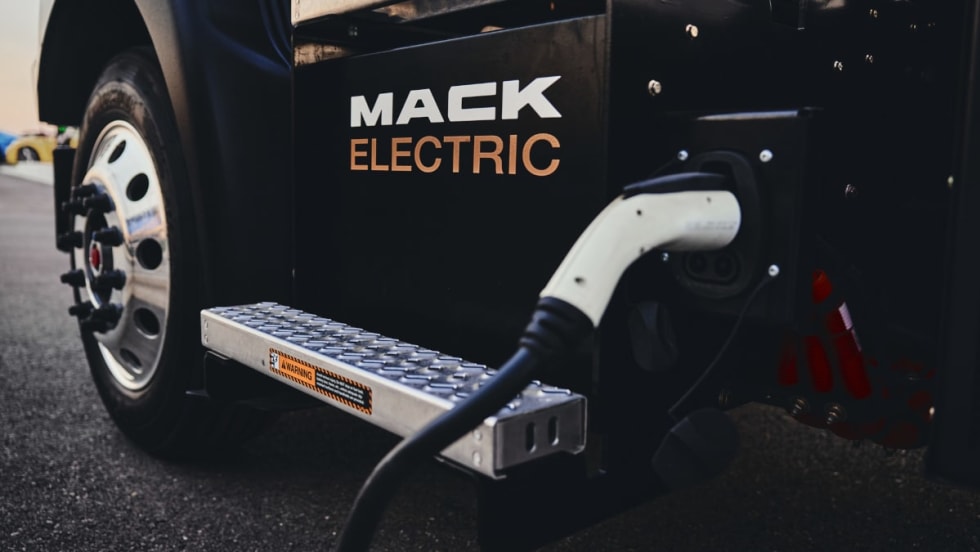
Mack Trucks Expands Full-Service EV Infrastructure Providers
Mack Trucks has expanded its comprehensive Turnkey Solutions program for Mack battery-electric vehicle customers with the addition of two new full-service providers, ABM and Lane Valente Industries.
Read More →
EV Realty Opens Major Truck Charging Hub in California’s Inland Empire
EV Realty’s San Bernardino Powered Properties’ truck charging hub, which has now opened, can serve over 200 medium- and heavy-duty trucks per day.
Read More →
WEX Launches Solution to Close the EV At-Home Charging Visibility Gap for Fleets
WEX unveiled its EV At-Home with Vehicle Fraud Protection, which ensures accurate and secure reimbursement for at-home charging.
Read More →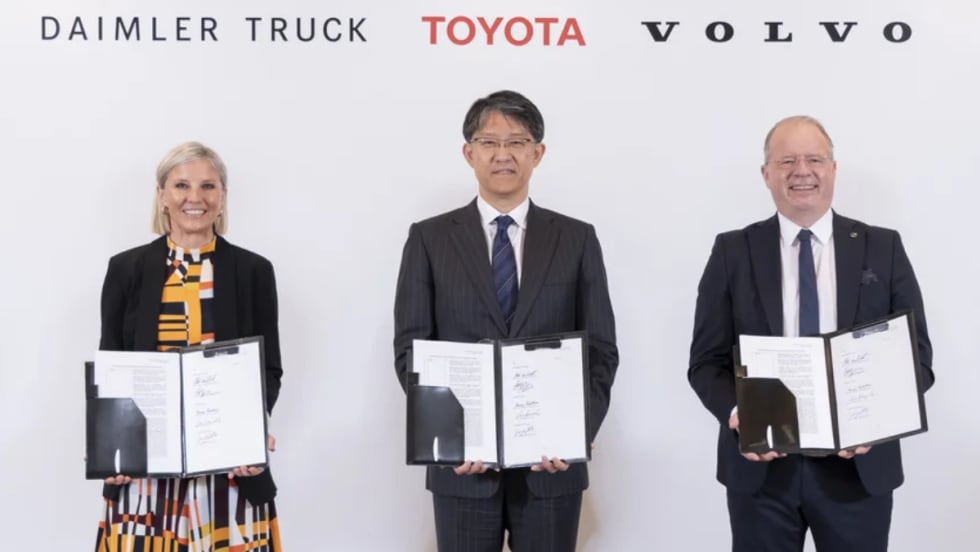
Toyota Motor Corporation to Join Daimler Truck & Volvo Group in Fuel Cell Joint Venture Cellcentric
Toyota intends to join Daimler Truck and Volvo Group as an equal shareholder in Cellcentric. All three shareholders intend to further strengthen Cellcentric as a leading manufacturer of fuel cell systems for heavy-duty commercial applications.
Read More →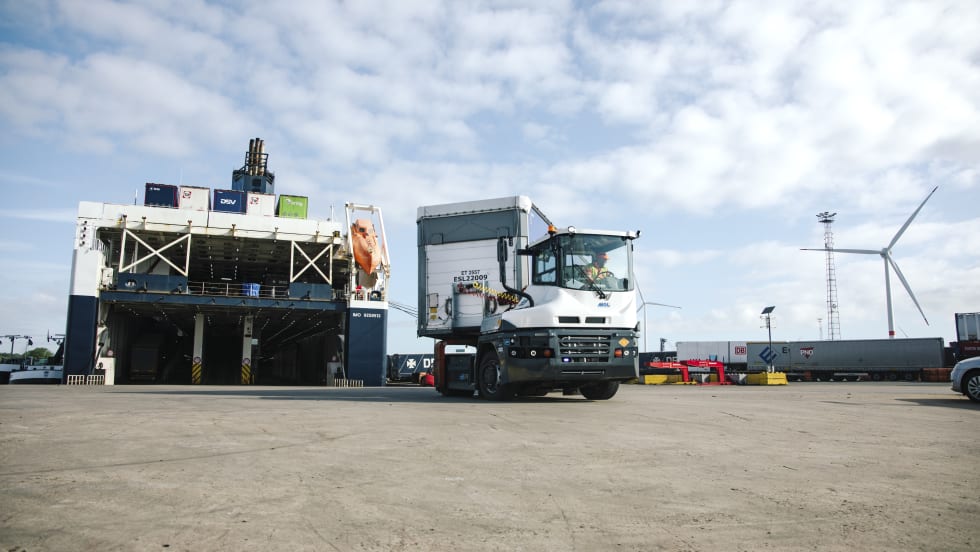
Volvo Penta Electric Drivetrain Powering Terminal Tractors
Volvo Penta and Volvo Financial Services (VFS) have partnered to support one of Northern Europe's largest shipping and logistics companies in its ambition to transition to electric terminal tractors.
Read More →