





RELATED: Gas vs. Diesel - The Bad Investment Only Fleet Managers Know About
Pros & Cons of On-Site Fueling
From pricing to convenience, there are many benefits for an on-site fueling facility. But, time to recoup initial investments and additional maintenance requirements should be considered.
February 27, 2017

Some of the top benefits related to an on-site fueling station are convenience, accessibility, product security, and best price economics.
Photo courtesy of Getty Images
7 min to read
It’s a given: Truck fleets require fuel to operate, whether it’s gasoline, diesel, or one of the many alternative-fuel options.
To acquire the fuel they need, fleets have three main routes: They can choose to utilize gas stations, install an on-site fueling station, or use a combination of the two options.
While our nationwide fueling infrastructure for gasoline and diesel fuel has grown to a size sufficient to support the needs of most fleet operations, there are several reasons why it can be useful to operate an on-site fueling station. However, adding on-site fueling to a fleet operation isn’t for everyone and several factors should be considered before installing a facility.
The Pros of On-Site Fueling
Before a fleet decides whether an on-site fueling station for gasoline or diesel is the best option, important items to consider include the fleet’s annual fuel usage, total annual fuel spend, the type(s) of fuel utilized, and whether the fleets return to base often or remain on the road.
“When done right, on-site fueling can be very favorable,” according to Bernie Kavanagh, SVP and general manager of Large Fleet at WEX. “For example, construction companies that transport heavy equipment and use flatbeds to move tools and equipment to job sites often find it easier to fuel up on-site before the workday begins. Also, transport companies that employ a ‘hub and spoke’ model, or house a fleet in one central location, often find it useful to fuel on-site.”
Some of the top benefits related to an on-site fueling station are convenience, accessibility, product security, and best price economics. “This is particularly true for those with the infrastructure to receive and transport quantity deliveries,” said Scott Effinger, southeast government and fleet card business unit manager for PAPCO. “On-site fueling also helps eliminate driver downtime, which, in turn, reduces operating costs and improves productivity.”
Also, fueling up at retail stations isn’t always a quick in-and-out. “Because the sites are not open to the general public, it’s likely more time-efficient and logistically easier for larger vehicles to enter and exit,” said Jeff Pape, global transportation product and marketing manager for U.S. Bank.
For fleet managers struggling to maintain an accurate fuel budget, “fuel at private sites is typically purchased on a contractual wholesale basis, making it easier to budget and likely to be lower than the street price,” Pape said.
Emergency situations also come to mind, especially for fleets that operate in harsher environments.
"Fleets with on-site facilities have “the ability to control their own fuel inventory in case of shortage or emergency as well as the ability to have ample storage in case of emergency,” according to Joe Basile, VP, Hardware Solutions for AssetWorks.
Kavanagh agreed. “On-site fueling is also advantageous in the event of emergency or disaster situations — many governmental agencies in areas that often experience natural disaster situations utilize their own private fueling sites.”
The Cons of On-Site Fueling
Some potential concerns related to an on-site fueling facility include overall cost, monitoring and tracking issues, as well as environmental liability and changing laws.
As typically lower fuel prices were one of the main pros for an on-site fueling facility, it is important to note that this may not always be the case.
“At times, the contract price of your fuel could be higher than the street price, but if fleets negotiate better pricing, they can minimize this ‘con,’ ” said Pape of U.S. Bank. “Fleet managers need to truly understand their fueling needs in order to not leave anything on the table from a wholesale/bulk fuel contract perspective.”
Also, fleet managers must ensure they are up-to-date with environmental laws and regulations.
“One of the cons of an on-site fueling station relates to the costs of ownership with ever-changing environmental laws, not to mention possible environmental issues such as spills or leaks,” said Basile of AssetWorks. “Also, fleet managers must ensure proper staffing to manage sites and infrastructure.”
Effinger of PAPCO agreed, noting the need for additional “detailed monitoring and tracking of fuel allocation to all assets (vehicles, tanks, and equipment). Fleet managers should also consider the impact of inventory cost exposure related to product turn rate, which could unnecessarily tie-up working capital.”
In addition, there may be the potential for greater fraud.
“Some private sites still use manual, paper-based processes to conduct their transactions. This practice introduces substantially greater fraud and fuel tracking risks. Such risks can be largely eliminated through electronic card-based processing via a point-of-sale device or site controller,” Pape said.
One thing to remember is that on-site fueling stations are a long-term investment, not intended for short-term gains due to the cost of the infrastructure involved.
“A clear setback is the price of the equipment and the risk of a leak or spill. It can be very expensive to purchase and install underground tanks with the required leak protection and monitoring systems. In the long run, fuel will be cheaper, but companies will have to pay off all the equipment they’ve purchased. As such, they may not see a tangible return on this investment for several years at least,” said Kavanagh of WEX.
For fleets that utilize multiple fuel types, having an on-site fueling station for each fuel type may not be a feasible option, so a combination of using an on-site station for one fuel type, such as compressed natural gas (CNG) or propane autogas, may be the best option.
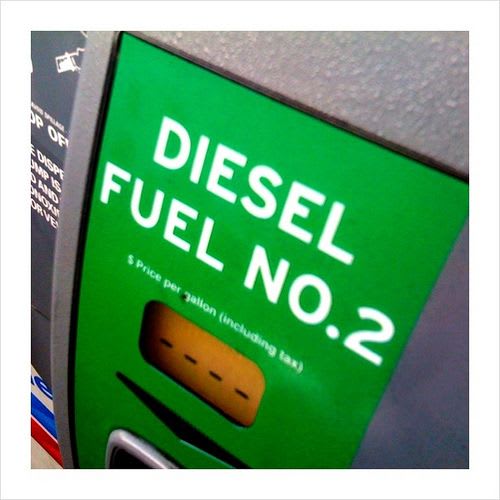
While the nationwide infrastructure is able to support most fleets that operate gasoline or diesel trucks, the alternative-fuel infrastructure is still growing.
Photo courtesy of Flickr/JefferyTurner
Impact of Alternative Fuels on On-Site Fueling
While the nationwide infrastructure is able to support most fleets that operate gasoline or diesel trucks, the alternative-fuel infrastructure is still growing.
For fleets that utilize an alternative fuel, such as compressed natural gas (CNG) or propane autogas in their fleets, there are additional considerations related to on-site fueling infrastructure.
“On-site fueling is a common method for fleets making the conversion to natural gas as their fuel for choice. By having on-site fueling, fleets are able to control their fueling needs and requirements,” said Dan Bowerson, director, Technology & Development for NGVAmerica.
One pro of an on-site natural gas fueling station is related to cost control and budgeting.
“Fleets with an on-site natural gas station are able to control their fueling needs and requirements. These fleets often have long-term contracts with fuel suppliers, allowing the fleet to more accurately plan for future,” Bowerson said.
In addition to whether an on-site station is needed, fleets need to look at the time available for fueling a natural gas vehicle.
“Fleets will need to determine if they need a fast-fill station or if a time-fill station will accommodate. Time-fill stations are common for fleets that return to base every day and can fill overnight. Fleets have confidence that fuel will be available when needed,” he added.
As to propane autogas, perhaps the most obvious pro for on-site refueling for work truck fleets is reduction in total cost of ownership, noted Mike Walters, VP of safety and training for Superior Energy Systems.
“While convenience is important, and so are space considerations, work truck fleet managers should be looking at total cost of ownership as their largest factor in deciding to switch to propane autogas,” he said. “Total cost of ownership is basically everything – fuel cost; cost of installation of not only the components on the vehicle but the dispensing apparatus; and the costs associated with operating the dispensing apparatus, including maintenance and electrical bills.”
For example, Walters said, the cost of a propane autogas dispenser itself, along with installation, maintenance, and electrical costs, is typically less cost-intensive than other alternative fuels. In addition, total cost of ownership can be managed, in part, by the data measurement capabilities of propane autogas dispensers.
Just as with gasoline and diesel, there are reasons fleets may not want to utilize an on-site fueling facility for CNG.
“If fleet activities or priorities change, it can be an additional cost to change from a time-fill station to a fast-fill station. In addition, it should not be considered a con, but just like other fueling stations, on-site fueling requires maintenance, which can be handled internally by the fleet or by contracting an outside firm,” Bowerson said.
According to Walters, “As to cons for propane autogas, there really aren’t any. Certainly, space availability is necessary, but space considerations are a factor no matter what alternative fuel is implemented. It’s part of the process.”
In addition to natural gas and propane autogas, many fleets are going electric, including utilizing hybrid-electric pickup trucks.
Due to the time to charge vehicles and more limited nationwide infrastructure, as well as lower costs to install on-site charging stations, many fleets with electric units choose to utilize on-site charging stations.
Subscribe to Our Newsletter
More Fuel

The Smart Way to Build a Mixed-Energy Fleet Isn’t About Picking a Side
Mixed-energy fleets aren’t about picking a winning fuel. Sarah Booth of WEX explains how vehicle data, duty cycles, charging strategy, and real-world costs can help fleets choose the right energy source for each job.
Read More →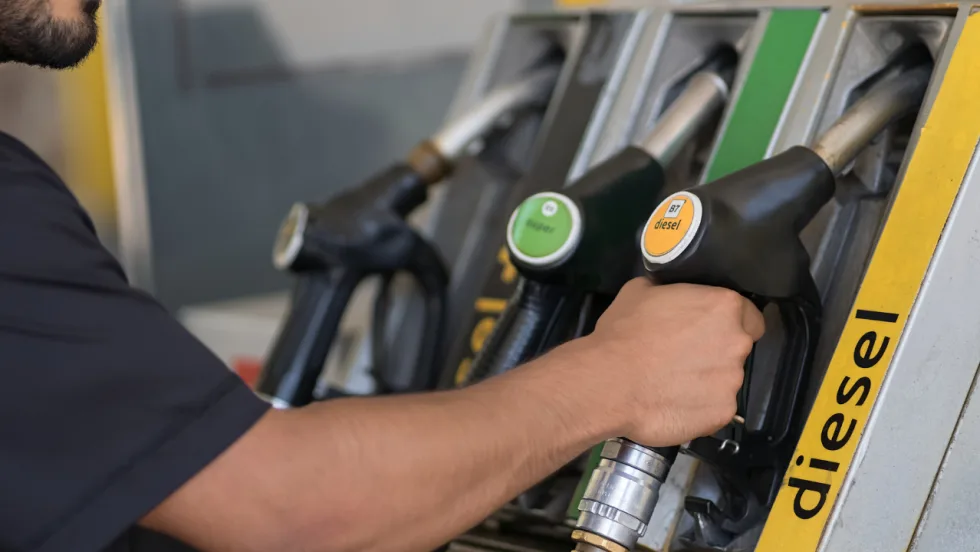
Ignoring This Dashboard Warning Could Cost Your Fleet Thousands in Fuel
New research suggests neglected diesel aftertreatment systems could waste up to $30 in fuel per vehicle each day. Here's why vocational fleets should pay attention.
Read More →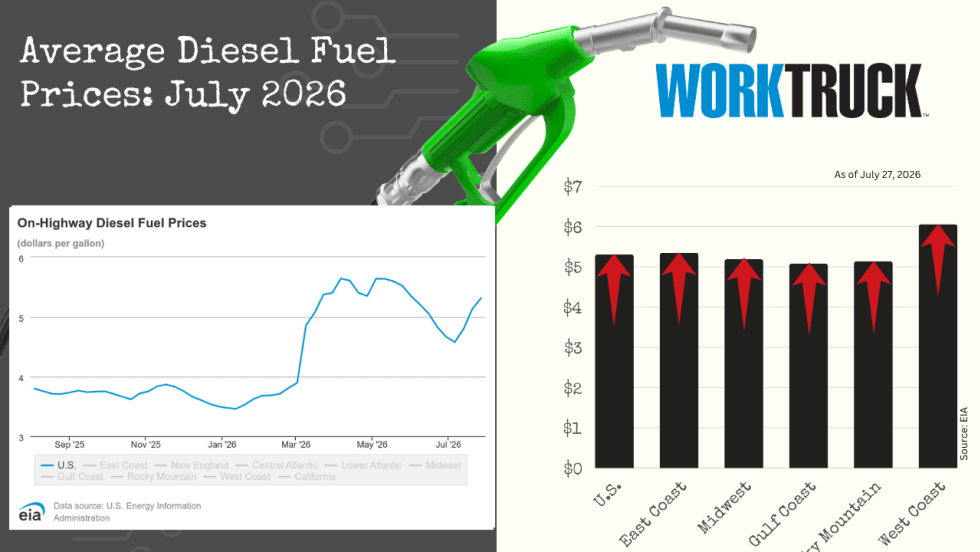
July Diesel Trends Update
The average price of a gallon of diesel increased again this week, and the EIA reported a new national average of $5.31 at the start of the week.
Read More →
WEX Brings Standard Fleet's Connected Vehicle Platform to Fleet Customers
This week’s product launch with Standard Fleet’s connected vehicle platform reflects WEX Venture Capital's strategy of turning startup innovation into customer solutions. Standard Fleet is now available to WEX fleet customers.
Read More →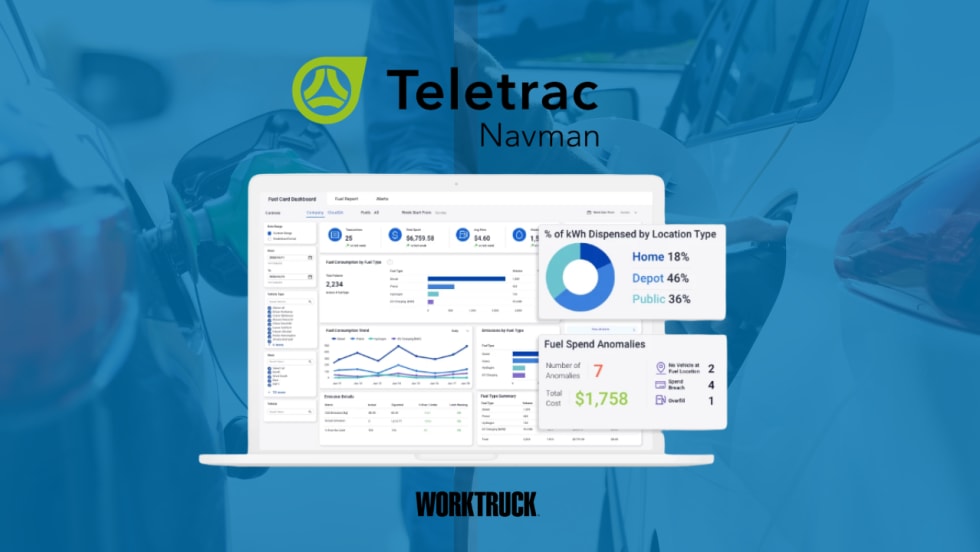
Teletrac Navman Adds Mixed-Energy Fleet Tools to TN360
The new Energy Hub combines fuel transactions, EV charging data, vehicle range, and energy costs in one dashboard for fleets operating multiple vehicle and energy types.
Read More →
WEX DriverDash adds CITGO, Expands Nationwide Access for Fleets
The DriverDash mobile payment app, by WEX, has been integrated into the CITGO merchant network, which means WEX has expanded its U.S. station footprint with the addition of approximately 4,000 CITGO locations.
Read More →
Mixed Energy Fleet Tips for Balancing EVs, Gas and Diesel Vehicles
Mixed energy fleets are becoming the new normal. Learn how fleet managers are balancing EVs, gas and diesel vehicles while controlling costs and planning for the future.
Read More →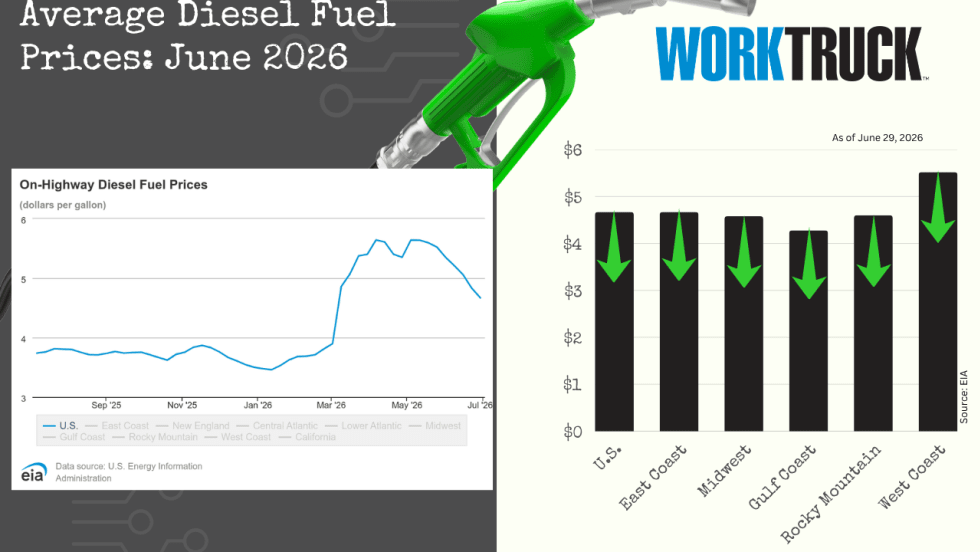
June Diesel Trends Update
The national average price of a gallon of diesel has dropped again, this week by more than 16 cents. All five regions reported lower average prices, ranging from almost 13 cents to more than 28 cents cheaper than a week ago.
Read More →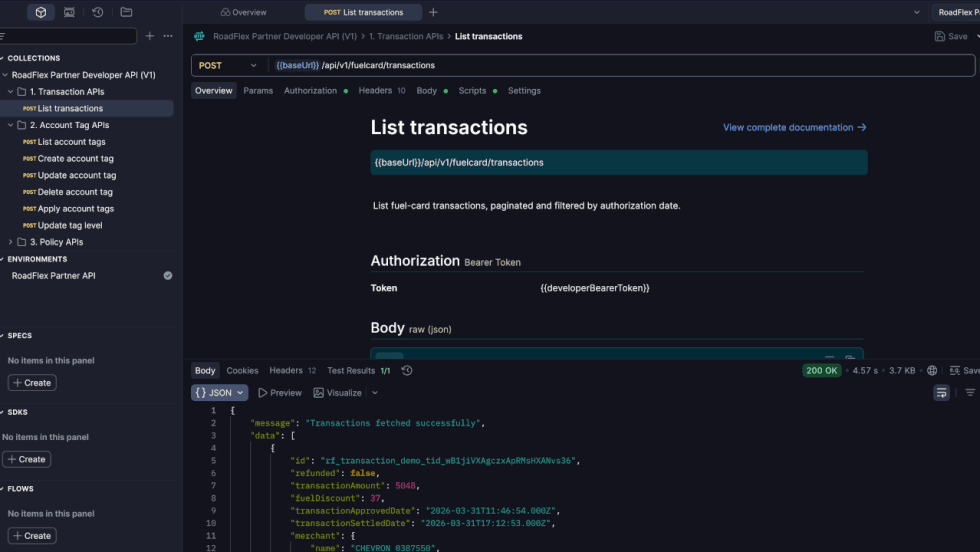
RoadFlex Launches RoadFlex Direct Open API Platform
RoadFlex Direct connects fuel cards, controls, and data to the telematics and fleet management systems fleets already run, from Geotab and Samsara to Fleetio and RTA, with no separate dashboard or double data entry.
Read More →
The Key to Fuel Efficiency Sits in the Cab
Learn how driver behavior, telematics, coaching, and fuel data can help fleets improve fuel efficiency, lower costs, and reduce emissions.
Read More →