




Forecast of Operating Costs for Medium-Duty Trucks in CY-2015
The operating cost forecast for medium-duty trucks is stable for the upcoming calendar year, with fuel economy and cost reduction the top concerns.


Photo via Mitsubishi.

Photo via Mitsubishi.
Operating costs for medium-duty, Class 3-6 trucks are forecast to remain stable for the 2015 calendar-year. The key reason for this forecast is that fuel prices, both diesel and gasoline, are expected to remain flat or decline in the 2015 calendar-year.
“The increase of U.S. oil drilling has contained the price of crude oil the past several years and we expect fuel prices to remain relatively the same in 2015, barring geopolitical risk,” said Collin Reid, strategic consultant at GE Capital Fleet Services.
Other truck subject-matter experts share the same assessment of future fuel prices. One is Megan McMillan, client consultant at Donlen. “The cost of fuel is declining gradually and will continue to decline in 2015,” noted McMillan.
Most forecast a near 5-percent decline in fuel prices. “We anticipate that gasoline prices will drop by about 4.9 percent and that diesel fuel prices will decrease by approximately 4.7 percent during the 2014-2015 time frame,” said Brian Tabel, marketing director at Isuzu Commercial Truck of America.
However, most cautioned that an increase in geopolitical uncertainty, especially in the Middle East, could put unexpected upward pressure on fuel prices, derailing these forecasts.
Another factor influencing fuel costs is that average age of a medium-duty truck asset has peaked. “During the recession, companies held back on cycling. But, companies are now replacing these older trucks with newer trucks, which have lower maintenance costs and higher fuel economy,” said McMillan.
Today, medium-duty trucks have the best fuel-efficiency in the history of this vehicle segment, which is being achieved not only by powertrain efficiencies, but a host of other engineering improvements. “For instance, better aerodynamics and lighter material are also essential to help improve fuel economy,” said Chris Thomas, fleet market requirements manager at Ram Truck. “We take a global approach to engineering and designing vehicles. Our global engineering team provides the latest and greatest in worldwide technological advances and improvements.”
Likewise, Ford promises to make further inroads in truck fuel efficiency in the 2016 model-year. “Our new 2016 F-650 and F-750 will utilize Ford engines and Ford transmissions specifically designed to work together more efficiently,” said Mark Lowrey, fleet trucks marketing manager at Ford Motor Co.
A dark cloud on the horizon is the possibility of increased fuel taxes. “Since the need for federal highway funds is significant, an increase in the gasoline tax may be discussed in the next several years,” said Reid.
Maintenance Costs to Remain Flat in 2015
The other key component of medium-duty truck operating costs is scheduled and unscheduled maintenance expenses.
“We do not foresee a significant increase in maintenance expenses for the remainder of 2014 and beginning of 2015, other than the normal increase from aging fleets,” said Marcin Michno, project manager, strategic consulting at Element Fleet Management.
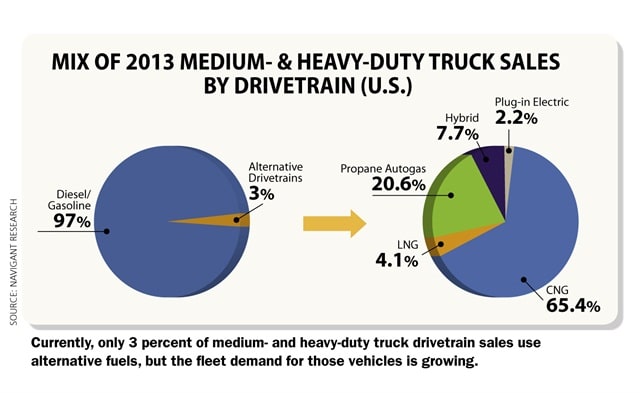
One unknown variable is the severity of weather conditions next winter, which, in the past has caused fuel prices to rise and unscheduled maintenance to increase. “We foresee maintenance and fuel costs remaining constant into 2015. However, this is contingent on winter weather conditions. Most regions of the country experienced a harsh winter in 2014. Potentially severe winter forecasts for 2015 could very easily drive up the fuel and maintenance costs for any fleet,” said Chris Foster, manager, truck account administration at ARI.
Another factor putting upward pressure on maintenance costs is the shortage of technicians. “We expect maintenance costs to continue to be slightly above the inflation rate as qualified mechanics are becoming more limited. This is especially true with diesel mechanics and, as a result, Class 3-4 fleets are becoming more supportive of gasoline engines in this space,” said Reid of GE Capital Fleet Services.
Multi-Pronged Approach
Cost reduction continues to be a constant pressure exerted on fleet managers by management. “The goal is to reduce operating costs and increase profits. Whether it is through telematics, best routing practices, increasing fuel mileage, lighter and more robust upfitting, better work truck configuration for increased work production, driver retention, reduced parts pricing, aggressive reduction in service costs, or a combination of these items, the trend is to drive to the lowest cost of ownership,” said Mark Steffens, medium- and heavy-duty truck consultant at Donlen.
In summary, the consensus among industry subject-matter experts is that operating costs for medium-duty trucks will remain stable for the next year.
“With fuel costs decreasing and projections for 2015 to remain on the lower end, overall operating costs should remain in check. Fuel economy remains the most important driver of LCO (low cost-of-ownership),” said Todd Bloom, president and CEO at Mitsubishi Fuso Truck of America.
Originally posted on Automotive Fleet
More Fuel
July Diesel Trends Update
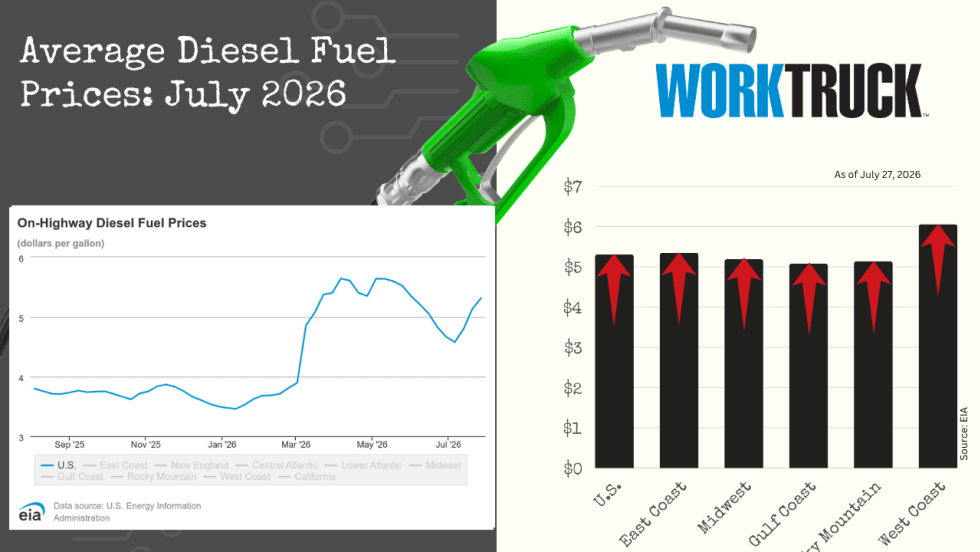
The average price of a gallon of diesel increased again this week, and the EIA reported a new national average of $5.31 at the start of the week.
Read More →
WEX Brings Standard Fleet's Connected Vehicle Platform to Fleet Customers
This week’s product launch with Standard Fleet’s connected vehicle platform reflects WEX Venture Capital's strategy of turning startup innovation into customer solutions. Standard Fleet is now available to WEX fleet customers.
Read More →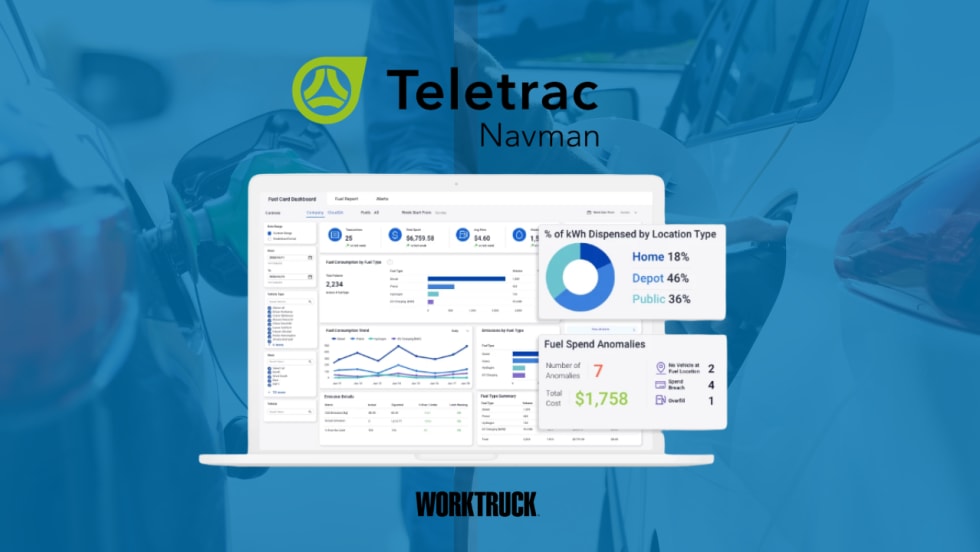
Teletrac Navman Adds Mixed-Energy Fleet Tools to TN360
The new Energy Hub combines fuel transactions, EV charging data, vehicle range, and energy costs in one dashboard for fleets operating multiple vehicle and energy types.
Read More →
WEX DriverDash adds CITGO, Expands Nationwide Access for Fleets
The DriverDash mobile payment app, by WEX, has been integrated into the CITGO merchant network, which means WEX has expanded its U.S. station footprint with the addition of approximately 4,000 CITGO locations.
Read More →
Mixed Energy Fleet Tips for Balancing EVs, Gas and Diesel Vehicles
Mixed energy fleets are becoming the new normal. Learn how fleet managers are balancing EVs, gas and diesel vehicles while controlling costs and planning for the future.
Read More →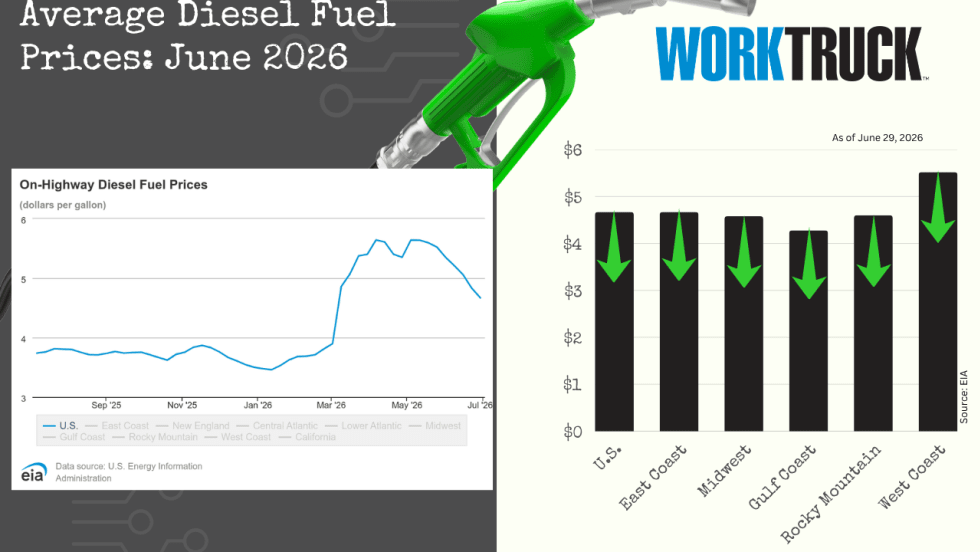
June Diesel Trends Update
The national average price of a gallon of diesel has dropped again, this week by more than 16 cents. All five regions reported lower average prices, ranging from almost 13 cents to more than 28 cents cheaper than a week ago.
Read More →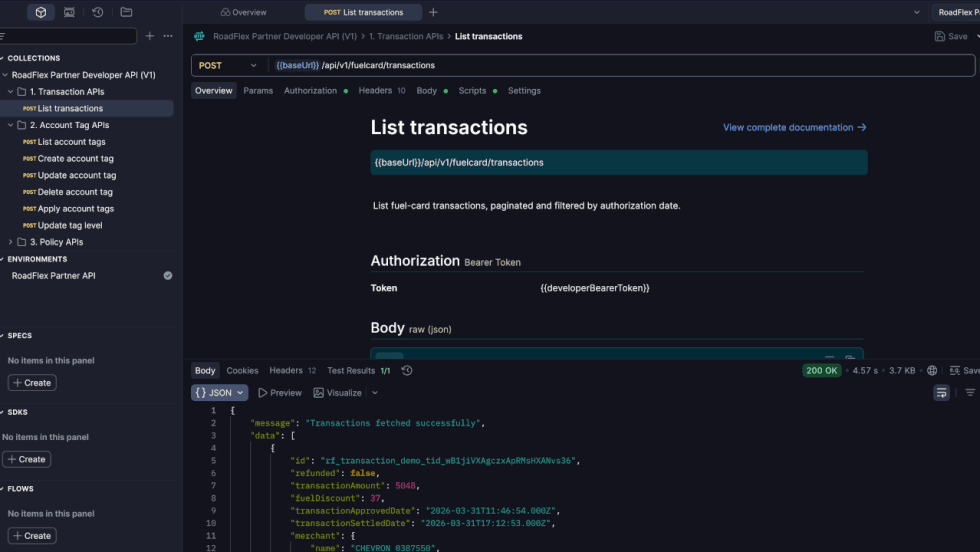
RoadFlex Launches RoadFlex Direct Open API Platform
RoadFlex Direct connects fuel cards, controls, and data to the telematics and fleet management systems fleets already run, from Geotab and Samsara to Fleetio and RTA, with no separate dashboard or double data entry.
Read More →
The Key to Fuel Efficiency Sits in the Cab
Learn how driver behavior, telematics, coaching, and fuel data can help fleets improve fuel efficiency, lower costs, and reduce emissions.
Read More →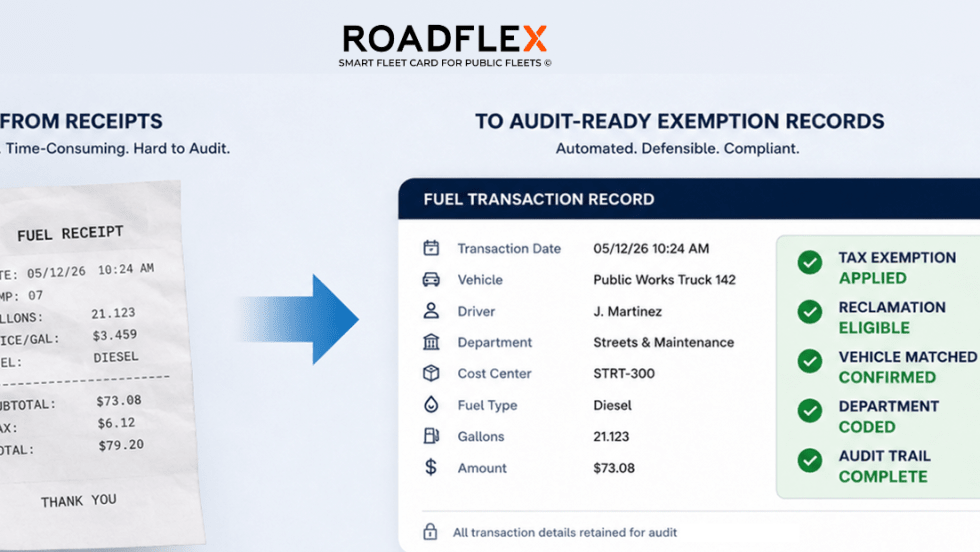
RoadFlex Brings Fuel Tax Compliance & Audit-Ready Reporting to Government Fleets
RoadFlex now offers its capabilities to help public-sector and public works fleets streamline fuel tax exemptions, reclamation, reconciliation, and audit-ready reporting.
Read More →
Fillip Fleet Expands Into U.S. Market With Digital Fuel Card Platform
Fillip Fleet expands into the U.S., bringing digital fuel cards, fleet expense controls, and contactless payments to fleets across North America.
Read More →