




'RydeGreen' Hybrid Trucks Maximize Fuel & Minimize Costs
Ryder’s approach to improving fleet fuel efficiency helps fleets reap the bottom-line benefits of going green.

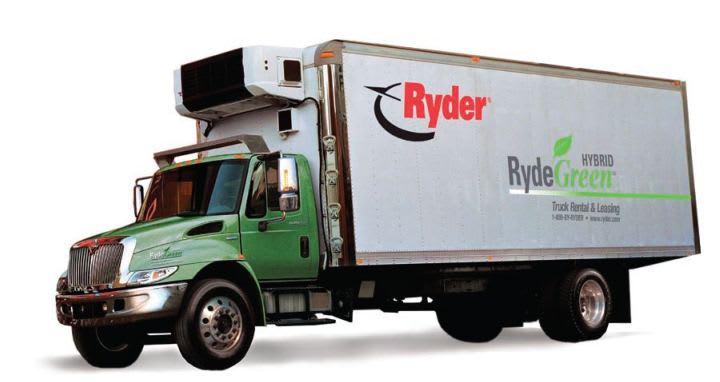
Ryder RydeGreen Truck
In collaboration with the Environmental Protection Agency (EPA) and vehicle engine manufacturers, Miami-based Ryder System, Inc., enhanced its "RydeGreen" product line to help fleets improve fuel economy and reduce greenhouse gas emissions.
Responding to increasing market demand for cost-effective, environmentally friendly transportation solutions, the transportation and supply chain management provider launched its RydeGreen Hybrid straight truck line in December 2008, augmenting the RydeGreen tractor and trailer line established in 2007.
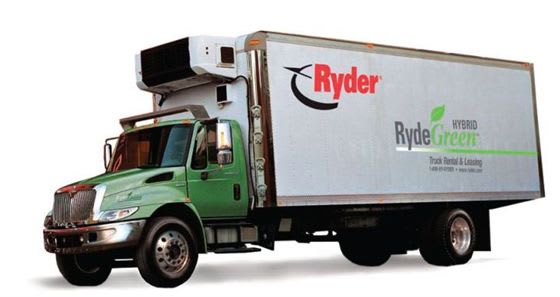
The company’s RydeGreen Hybrid is a medium-duty straight truck, featuring the Navistar MaxxForce DT diesel engine and the Eaton Hybrid Electric System integrated into the International DuraStar Hybrid chassis.
When traveling at low speeds, the hybrid electric motor supplies power to the truck, resulting in reduced fuel consumption and emissions. According to International, the truck has the potential to provide up to 30- to 40-percent improved fuel efficiency in standard in-city pickup and delivery applications. Diesel emissions are dramatically reduced when the vehicle is operating in hybrid mode on battery power.
"The launch of Ryder’s hybrid offering was driven by a number of factors, including customer interest, as well as Ryder’s commitment to stay abreast of key industry trends, provide customers with environmentally sound solutions that drive transportation efficiencies, and support our company-wide green initiatives," said Juliet Johannson, Ryder’s vice president of marketing for fleet management solutions. Several units were requested by lease customers shortly after the hybrid truck line was announced, according to Johannson.
In addition to the new lease offering, a limited supply of RydeGreen Hybrid straight trucks were made available in January for rent to commercial customers at select U.S. Ryder rental locations.
Contributing to its overall green stance, Ryder has also partnered with the EPA’s SmartWay program to promote energy efficiency and reduce greenhouse gas (GHG) emissions. Ryder is currently a SmartWay Carrier Partner for Ryder-owned vehicles and a Logistics Partner for its supply chain operations. To further cut emissions, Ryder committed to a "one-fuel" policy in 2006, converting all fueling locations to low-emissions ultra low sulfur diesel (ULSD) fuel. Ryder also provides biodiesel supplies in areas where this fuel is mandated by regulation.
Other Ryder environmental efforts include use of nontoxic materials, energy conservation, a preventive fleet maintenance program, waste reduction and recycling programs, storage tank management, and emergency spill response programs. Additional information about Ryder’s environmental programs and practices can be found at www.Ryder.com/GreenCenter.
Originally posted on Automotive Fleet
More Green Fleet

Landi Technologies Achieves CARB Certification of Ford 7.3L RNG/CNG Platform
Landi Technologies has gained CARB certification of its Ford 7.3L Renewable Natural Gas (RNG) and Compressed Natural Gas (CNG) platform for the Ford E-450, F-450/550/600, F-650/750, and F-53/59 platforms.
Read More →
Turning Connected Vehicle Data Into Decisions That Matter
Fleet leaders have more data than ever, but turning that data into clear, actionable decisions remains a challenge. This white paper shows how leading organizations are using connected vehicle data to improve safety, reduce costs, and optimize fleet performance. Learn how to turn insight into action across your fleet.
Read More →
Are You Tracking Your Fleet's True Total Cost of Ownership?
Bobit Business Media surveyed 190 fleet professionals and found that while most fleets are tracking costs, fragmented systems and data gaps are keeping true TCO visibility out of reach. With rising pressure to control spend in an increasingly volatile environment, the gap between what fleets think they know and what the data actually shows is wider than you might expect. See how your peers are managing costs today and where the industry still has room to improve.
Read More →
Epic Charging Acquires Bluedot Technologies
Epic Charging has acquired Bluedot Technologies, expanding EV fleet charging access to more than 80% of U.S. public charging networks.
Read More →
CALSTART Adds 64 New Sites and Features to Its Medium- and Heavy-Duty Zero-Emission Infrastructure Map
CALSTART’s interactive National Medium- and Heavy-Duty Zero-Emission Infrastructure Map now locates approximately 1,500 ports at 162 total public, semi-public, and shared electric vehicle (EV) charging and hydrogen refueling facilities for Class 2b-8 trucks.
Read More →
Mack Trucks Expands Full-Service EV Infrastructure Providers
Mack Trucks has expanded its comprehensive Turnkey Solutions program for Mack battery-electric vehicle customers with the addition of two new full-service providers, ABM and Lane Valente Industries.
Read More →
EV Realty Opens Major Truck Charging Hub in California’s Inland Empire
EV Realty’s San Bernardino Powered Properties’ truck charging hub, which has now opened, can serve over 200 medium- and heavy-duty trucks per day.
Read More →
WEX Launches Solution to Close the EV At-Home Charging Visibility Gap for Fleets
WEX unveiled its EV At-Home with Vehicle Fraud Protection, which ensures accurate and secure reimbursement for at-home charging.
Read More →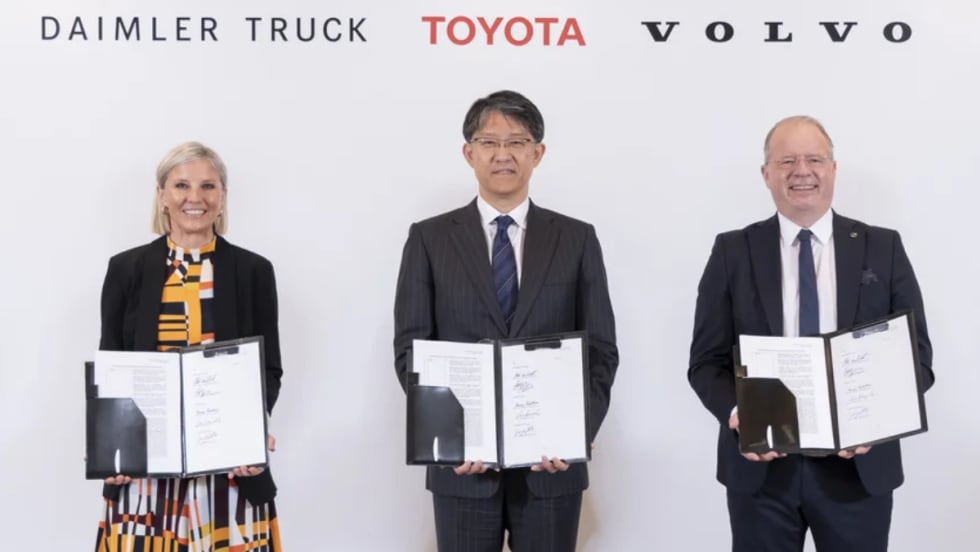
Toyota Motor Corporation to Join Daimler Truck & Volvo Group in Fuel Cell Joint Venture Cellcentric
Toyota intends to join Daimler Truck and Volvo Group as an equal shareholder in Cellcentric. All three shareholders intend to further strengthen Cellcentric as a leading manufacturer of fuel cell systems for heavy-duty commercial applications.
Read More →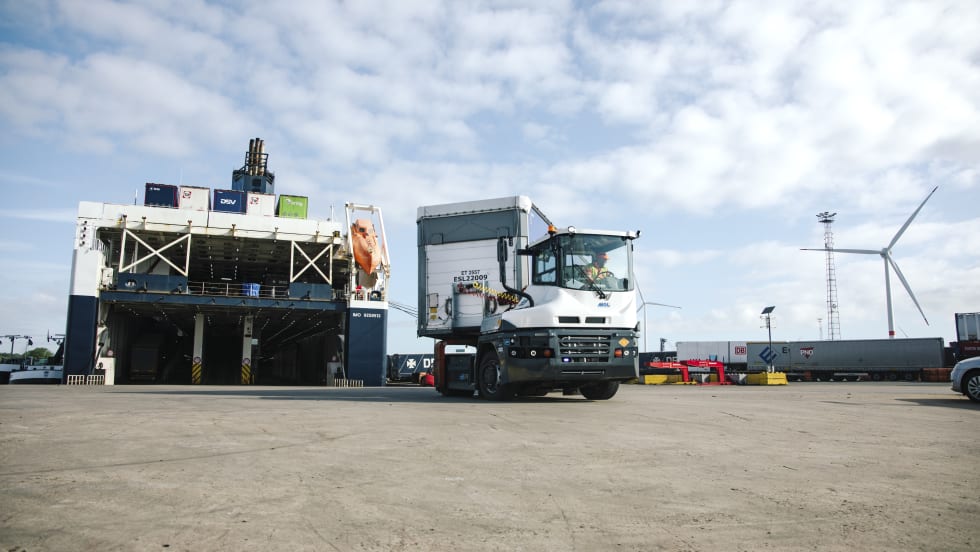
Volvo Penta Electric Drivetrain Powering Terminal Tractors
Volvo Penta and Volvo Financial Services (VFS) have partnered to support one of Northern Europe's largest shipping and logistics companies in its ambition to transition to electric terminal tractors.
Read More →