




Striking the Balance: MVR Checks and Privacy Laws
State and federal laws restrict how companies obtain, use, store, share, and discard confidential information contained in employee driving records. Noncompliance with these laws can result in lawsuits and penalties.
Many companies consider it a matter of course to conduct a motor vehicle record (MVR) check before handing an employee the keys to a company vehicle. Such checks provide vital insight into whether that employee is a safe driver. An MVR check reveals, among other important information, insurance lapses, traffic violations, accidents, license revocations, and, most importantly, DUI charges that may not appear on criminal records.
While such checks help identify high-risk drivers before accidents occur, they also create a potential legal pitfall for companies that conduct them: violation of state and federal laws protecting employee privacy. What many companies do not realize is that when they collect MVRs about employees and applicants, they are amassing a vast store of personal information they are legally obligated to safeguard.
A host of state and federal laws restrict the ways companies obtain, use, store, share, and even discard confidential information contained in employee driving records. Companies that do not comply with these regulations face the risk of lawsuits and government penalties. Yet, understanding and complying with these laws can be tricky, especially given the fact that many states have passed new statutes concerning the protection of personal information.
Protecting Driver Privacy
The primary law governing a fleet manager’s ability to collect and use employees’ MVRs is the federal Driver’s Privacy Protection Act (DPPA) of 1994. That law restricts state DMVs from disclosing personally identifiable driver records without first obtaining the driver’s expressed written consent.
The DPPA provides a few exceptions that allow fleet managers to obtain driving records for the purposes of screening employees. For instance, the law authorizes state DMVs to disclose motor vehicle records for purposes related to "safety or the operation of a motor vehicle." State DMVs may disclose MVRs to anyone who has obtained the consent of the person whose records are sought.
However, even if a company lawfully obtains MVRs, there is a risk in doing so. The DPPA authorizes individuals to file civil lawsuits against any entity that lawfully obtains an MVR check and then re-discloses or misuses the information it contains. The statute allows a plaintiff to sue for actual and punitive damages, attorney’s fees, costs, and equitable relief — such as a court order to cease further misuse or unauthorized disclosure of driving records.
Surprisingly, the DPPA does not regulate the disclosure of information about vehicular accidents or traffic violations, but rather only "personal information," such as:
An individual’s photograph
Social Security number
Driver identification number
Name
Telephone number
Medical or disability information
Thus, a company does not violate the DPPA if it shares information about an employee or applicant’s driving history with supervisors, managers, or outside fleet management companies. However, the employer should take care to conceal the other personal information driving records contain.
Finally, companies need to be aware that the primary purpose of the DPPA is preventing the misuse of driver information for commercial purposes, such as telemarketing or direct mail, or criminal purposes, such as to stalk or harass an individual. The onus is on the company to carefully ensure that the personal information contained in driving records is not accessible to third parties.
Laws Also Cover Records Storage
In addition to managing their obligations under the DPPA, companies that collect driving records must also contend with a patchwork of state laws that govern how employers store and maintain personally identifiable information about their workforce.
In response to growing concern about identity theft, 39 states have recently enacted laws that require a company to notify employees when the security of personal information is breached.
Ten of those state statutes — those enacted in Arkansas, Delaware, Georgia, Maryland, Massachusetts, Montana, North Carolina, North Dakota, Nebraska, and Wisconsin — specifically name driver’s license numbers as a category of personal information that, if accidentally disclosed, triggers this notice requirement.
This means if any unauthorized outside party gains access to unencrypted information from employee driving records, the company must promptly notify the affected individuals.
A company can reduce the risk of such confidentiality breaches by:
Keeping MVRs on file only as long as they are reasonably needed to screen an employee
Sharing those records only with the persons who evaluate the employee’s ability to drive a company vehicle
However, be careful about how those records are disposed of — 12 different state laws govern the manner in which companies dispose of any personally identifiable information about employees, whether that information is stored electronically or in paper format.
For instance, the Massachusetts Identity Theft Prevention Act, which became law in August 2007, requires employers to dispose of information in a manner that makes it irretrievable, such as:
Shredding paper records
Securely erasing a hard drive on which the data was stored
Aside from authorizing affected individuals whose information is disclosed to recover damages they sustain, these laws also often impose steep government penalties. In Texas, for example, a company can be fined $500 for every improperly disposed record containing employee information.
Create a Compliance Checklist
While conforming to the many obligations imposed by laws protecting the privacy of employee records can be difficult, companies can take several steps to promote compliance. As a starting point, companies should audit their current practices for obtaining, using, storing, and disposing of MVRs to identify any compliance lapses.
Legal counsel familiar with the privacy laws in the states in which the company does business can help create a checklist of legal obligations and evaluate current procedures against that list. Some of these issues include:
Is the company obtaining proper consent before seeking records from the DMV?
Is personally identifiable employee information, such as home address and telephone number, removed from the records before sharing it with third parties?
Are records stored in a secure format not easily accessible to third parties?
Are employees properly notified if their information is compromised?
Are employee records disposed of properly?
Finally, if the company finds compliance problems, it should promptly create and implement sound policies to remedy those failures and prevent future slip-ups. More importantly, the company should ensure that the people who handle these records receive training about their legal obligations and the company’s policy for managing them.
A policy can’t work if no one knows about it.
Originally posted on Automotive Fleet
More Safety
J. J. Keller Safety Professional of the Year Awards Nominations Now Open
J. J. Keller & Associates is accepting nominations for the 2026 J. J. Keller Safety Professional of the Year (SPOTY) Awards. Winners will receive prize packages valued at up to $47,200.
Read More →
ASE Aligns Automotive Service Professionals Month With Spring and Fall Vehicle Maintenance Campaigns
ASE will move Automotive Service Professionals Month to April and October beginning in 2026-2027, aligning recognition with Car Care Month events.
Read More →
Turning Connected Vehicle Data Into Decisions That Matter
Fleet leaders have more data than ever, but turning that data into clear, actionable decisions remains a challenge. This white paper shows how leading organizations are using connected vehicle data to improve safety, reduce costs, and optimize fleet performance. Learn how to turn insight into action across your fleet.
Read More →
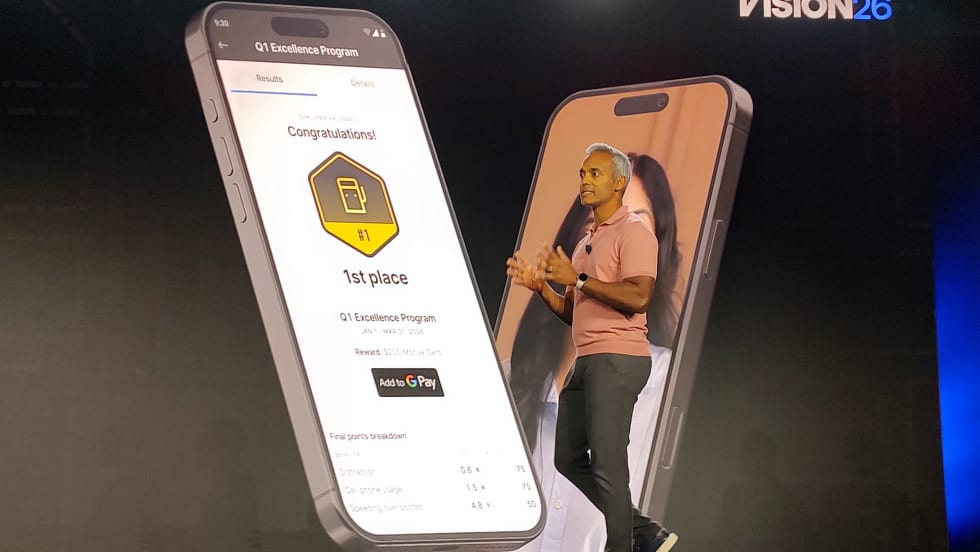
Driver Retention: Motive Automates Driver Coaching & Driver Rewards
New automated rewards and recognition capabilities from Motive can help organizations engage drivers, reinforce positive behavior, and reduce turnover. AI Coach has also been updated to deliver personalized feedback across safety, fuel, and compliance.
Read More →
Experts Forecast Broader Impact of Wildfires in 2026
This year’s wildfire season will likely be more intense than in 2025. The 2026 wildfire forecast from AccuWeather is for fewer fires, but even more acreage will be impacted this year.
Read More →
A Walkthrough of the DataQs Process
Bad data on your carrier record can cost you. Here’s how DataQs helps fleets challenge errors before they hit CSA scores, insurance, and your bottom line.
Read More →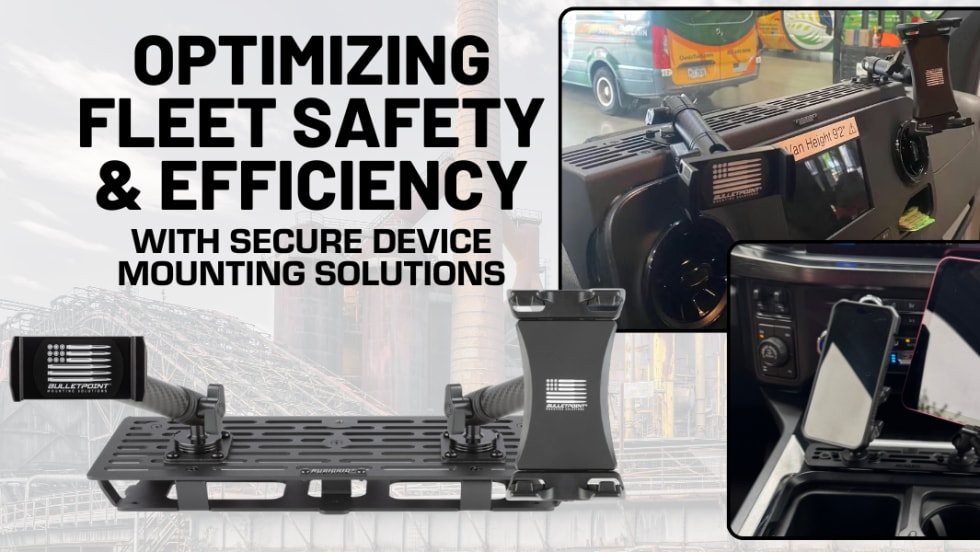
Optimizing Fleet Safety with Secure Device Integration
Unsecured devices are a hidden liability. Learn how precision-engineered mounting solutions enhance driver safety, streamline workflows and protect your technology.
Read More →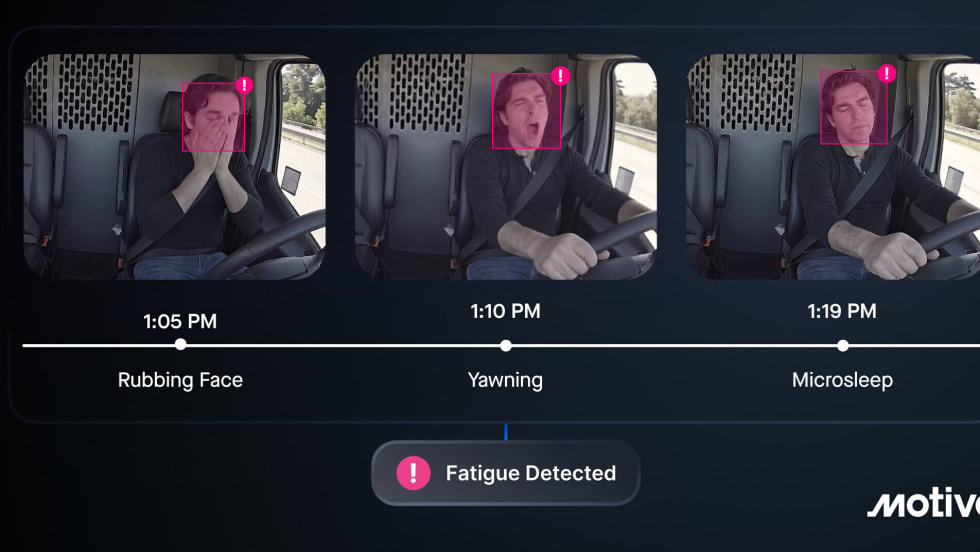
Motive Launches New Edge AI Capabilities to Help Prevent Collisions and Capture Critical Incidents in Real-Time
New AI models from Motive can detect signs of fatigue and eating, plus capture low-severity collisions often missed by telematics.
Read More →
Pro-Vision Acquires Convoy Technologies to Expand Fleet Safety and Video Solutions
Pro-Vision has acquired Convoy Technologies in a deal it said will broaden customer relationships and add specialized vehicle video capabilities for commercial fleets.
Read More →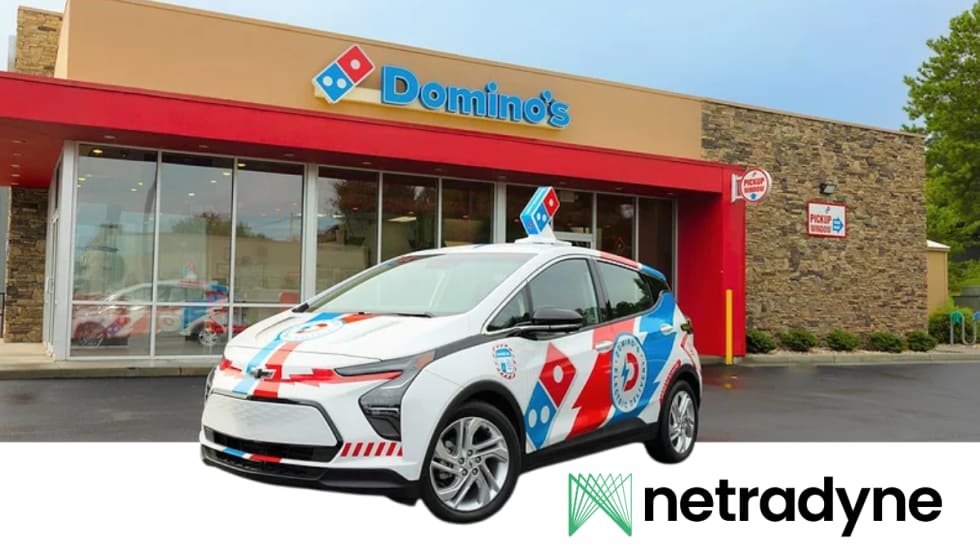
Netradyne Delivers 66% Reduction in At-Fault Crashes Across Domino's Franchise Network
Five Domino's franchises and more than 1,000 vehicles are now running on Netradyne's AI-powered fleet safety and performance platform. Designed for fleets that use personal or non-owned vehicles, FlexMount allows drivers to quickly install and remove Driver-i.
Read More →