




Safety-Conscious Transportation Bill Hailed for Laying Foundation for Efficiency
ARLINGTON, VA – American Trucking Associations commended members of the House and Senate conference committee for their work in passing a safety-conscious highway bill that lays a solid foundation for addressing America's need for an efficient goods movement network.
ARLINGTON, VA – American Trucking Associations (ATA) commended members of the House and Senate conference committee for their work in passing a safety-conscious highway bill that lays a solid foundation for addressing America's need for an efficient goods movement network.
"This legislation, while not all we could have hoped for as an industry and as users of the highway system, makes tremendous strides in the safety arena and puts down a marker for future improvements to our nation's freight infrastructure," ATA President and CEO Bill Graves said. "On behalf of ATA, I'd like to thank Chairmen Boxer and Mica, and all the conferees for putting partisanship aside and putting together a compromise bill that will benefit not just the trucking industry, but highway safety and the economy as a whole and urge all members of Congress to quickly pass this critical legislation."
Graves said of particular importance was the committee's inclusion of several initiatives advocated by ATA, including a requirement that commercial trucks use electronic logging devices to record drivers' compliance with hours of service limits, the creation of a clearinghouse to track drug and alcohol test results, a study of crashworthiness standards for large trucks, the establishment of standards for systems to provide employers with timely notifications of drivers' moving violations, and mandatory testing of new carriers entering the industry to verify their knowledge of safety requirements.
"In addition to the ELD requirement, the bill also requires DOT to conduct a field study of pending changes to the restart provisions in the hours-of-service regulations. ATA has pressed DOT to follow through on the recommendations of their own researchers to confirm their finding in a 'real-world' field study before implementing the pending changes. Logically, DOT should confirm the efficacy of the planned changes in the real world, before making the new provisions effective," Graves said.
According to the ATA, the bill also lays a foundation for much needed improvements in freight transportation, albeit without the increases in funding necessary to address our growing needs.
"ATA has long supported increasing user fees, specifically the diesel tax, to fund overdue repair and expansion of our highway system," said ATA Chairman Dan England, chairman of C.R. England Inc., Salt Lake City. "While this bill does not do that, it does make impressive reforms to the planning process which will reduce costs and speed construction projects, including making freight transportation a greater priority, along with providing certain enticements for states to fund freight projects. It is our sincere hope that as these reforms take effect, Congress quickly gets back to drafting legislation that provides the adequate funding we need to maintain and grow our infrastructure network and dedicates funds to the movement of freight."
Despite all these advances, one area where the bill falls significantly short is in area of truck productivity, according to ATA.
"While there is much to like about this bill, ATA is extremely disappointed that Congress has once again kicked the can down the road with respect to truck productivity," Graves said. "By giving into fear-based misinformation, this bill delays the deployment of some of our industry's safest, most fuel efficient trucks. We fully expect this latest study to confirm what numerous other studies have already told us: modest increases in truck size and weight limits have a net positive effect on highway safety and maintenance."
More Safety & Compliance
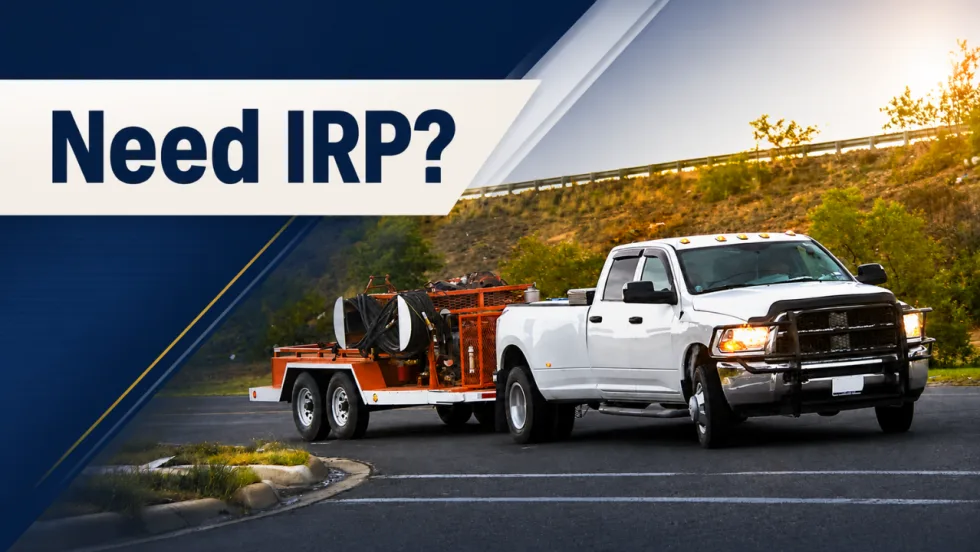
When Work Trucks Under 26,001 Pounds Need IRP Registration
Think trucks under 26,001 pounds are automatically in the clear when it comes to IRP? Not always. Learn where lighter vehicles can still run into trip permit, apportioned registration, and IFTA compliance requirements when crossing state or provincial lines.
Read More →
Volvo Trucks Releases New Safety Recommendations for Traveling with Pets
One of the most important recommendations for professional drivers traveling with pets is to ensure pets are properly restrained while the truck is moving. Other tips are available in the new guide from Volvo Trucks North America and Center for Pet Safety.
Read More →
API Issues Refueling Safety Guidelines
The American Petroleum Institute offers a list of safe vehicle refueling guidelines, including ways to avoid potential problems with static electricity discharges in fall, winter, and early spring.
Read More →


Winter Fleet Prep: Expert Tips to Keep Vehicles Running Smoothly
Cold weather can expose weak batteries, tires, fuel systems, and maintenance gaps fast. Use this winter fleet checklist to prepare trucks and drivers before temperatures drop.
Read More →
When a Work Truck Breaks Down, the Job Can Stop, Too
A work truck breakdown can stop more than the vehicle. Discover how payloads, jobsites, and specialty equipment change the roadside response.
Read More →
What Stronger Long-Term Fleet Service Partnerships Actually Require
Fleet service partnerships rarely fall apart all at once. Learn the three warning signs that trust is eroding and what fleets and providers can do before downtime, frustration, and lost revenue follow.
Read More →
Applause & TRUCE Software Partner to Improve Driver Safety Through AI-Powered Telematics & Employee Performance Management
Applause has integrated TRUCE driving metrics directly into its employee-first performance and safety platform that transforms mobile devices into AI-powered telematics.
Read More →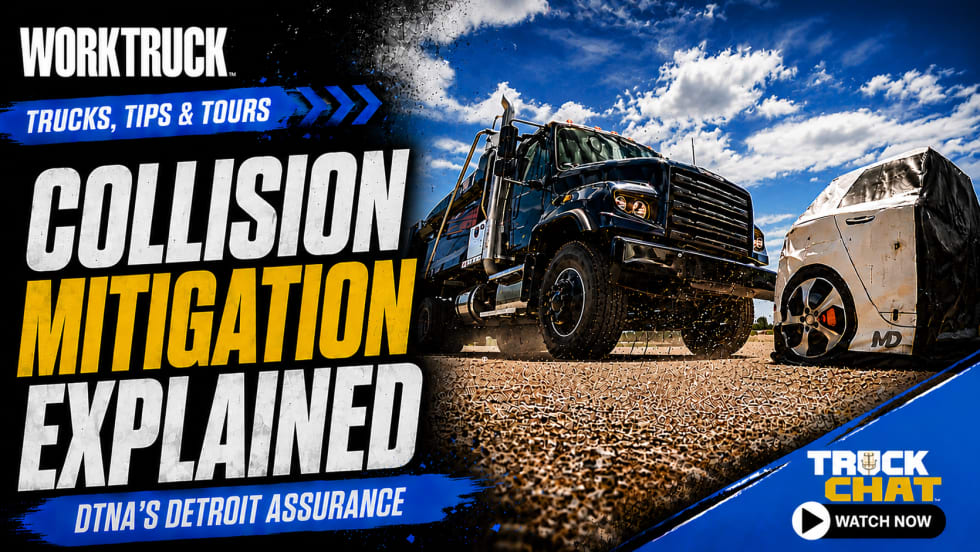
How Detroit Assurance with Active Brake Assist Works
Do you want to see what it is like to experience Detroit Assurance’s Active Brake Assist? In this video, Work Truck will put you in the cab to see how it all works and then hear more details from DTNA’s Mike Young.
Read More →
Get Left of Loss: A 5-Step Workplace Violence Prevention Framework for Fleet Operators
Violence risks do not stop at the driver’s door. Learn five practical steps fleets can take to spot threats early and protect workers before loss occurs.
Read More →
How Better Visibility Cut Speeding Violations by 48%
Fleet leaders don't need more data, they need clearer visibility into what the data is saying. This case study explores how one utility replaced speeding-event counts with a single metric — miles driven in violation — to strengthen safety and significantly reduce speeding violations.
Read More →