




Ford Charges Up for the Transit Connect Electric
Drawing on the success of the Transit Connect, Ford Motor Company will release a battery-powered version of the commercial vehicle to help fleets lower operating costs.


Designed for fleets that travel predictable short-range routes in urban and suburban environments, the Transit Connect Electric offers more than 135 cubic feet of cargo space.
Photo: Ford
In collaboration with Azure Dynamics Corp. and Johnson Controls-Saft, Ford Motor Co. is launching a zero-emissions option of the award-winning light-duty Transit Connect, voted 2010 North American Truck of the Year.
Ford unveiled the 2011 Transit Connect Electric at the Chicago Auto Show in February. The commercial van is the first of four electrified vehicles the automaker plans to roll out within the next three years in the U.S. and Canada under its One Ford global product vision.
Debuting a New Drivetrain
Badged with both the Ford Blue Oval and Azure Dynamics’ (AZD) Force Drive logos, the Transit Connect Electric is designed to offer fleets the opportunity to lower operating costs by eliminating the use of gasoline. Unlike the gasoline-engine Transit Connect, the battery-powered vehicle will offer a payload of 1,000 lbs., 600 lbs. less than the current model’s 1,600 lbs.
Ford is no stranger to AZD, a company responsible for developing hybrid-electric and electric-drive technology for shuttle buses and commercial trucks for more than 20 years. AZD has provided the Balance Hybrid-Electric drive system to Ford’s E-450 cutaway and strip chassis for the medium-duty commercial vehicle segment.
For the new Transit Connect Electric, AZD provides its Force Drive battery-electric drivetrain. Further, the Transit Connect Electric, rechargeable using either 240-volt or standard 120-volt outlets, offers a targeted range of 80 miles on a full charge with top speed of 75 mph and zero tailpipe emissions, according to the company.
AZD asked Johnson Controls-Saft to provide lithium-ion battery cells and battery packs for the vehicle. Ford has already used Johnson Controls-Saft technology in other vehicles, such as the Ford Escape plug-in hybrid. Recharging the Transit Connect Electric will take from six to eight hours, according to Ford.
Safety & Maintenance Key
Designed for fleets that travel predictable short-range routes in urban and suburban environments, the Transit Connect Electric offers more than 135 cubic feet of cargo space and can carry items up to 6 feet long, 4.9 feet wide, and 4.7 feet high. Split rear cargo doors open at a standard 180 degrees or an optionally available 255 degrees.
Power-assisted rack-and-pinion steering allows a 39-foot curb-to-curb turning circle for maneuverability in tight urban spaces. The low side and rear load floor facilitate cargo handling.
The Ford Transit Connect Electric comes standard with power front disc brakes, rear drum brakes, and four-wheel ABS. A tire pressure monitoring system (TPMS) is included as additional standard equipment, which alerts drivers when a mounted road tire drops below certain pressure.
Bulkheads, racks, bins, and other upfits can be mixed, matched, and configured to suit specific commercial applications and needs.
Connecting to Fleets
AZD announced in March that AT&T would be among the first commercial customers of the Transit Connect Electric, adding two of the first models to its growing fleet of alternative-fuel vehicles later this year.
The Ford Transit Connect has already proven a hit among a number of fleets since its launch, with customers such as KONE, DTE Energy, Ambius, and ThyssenKrupp implementing the pickup truck alternative in the past year.
More Green Fleet

Landi Technologies Achieves CARB Certification of Ford 7.3L RNG/CNG Platform
Landi Technologies has gained CARB certification of its Ford 7.3L Renewable Natural Gas (RNG) and Compressed Natural Gas (CNG) platform for the Ford E-450, F-450/550/600, F-650/750, and F-53/59 platforms.
Read More →
Turning Connected Vehicle Data Into Decisions That Matter
Fleet leaders have more data than ever, but turning that data into clear, actionable decisions remains a challenge. This white paper shows how leading organizations are using connected vehicle data to improve safety, reduce costs, and optimize fleet performance. Learn how to turn insight into action across your fleet.
Read More →
Are You Tracking Your Fleet's True Total Cost of Ownership?
Bobit Business Media surveyed 190 fleet professionals and found that while most fleets are tracking costs, fragmented systems and data gaps are keeping true TCO visibility out of reach. With rising pressure to control spend in an increasingly volatile environment, the gap between what fleets think they know and what the data actually shows is wider than you might expect. See how your peers are managing costs today and where the industry still has room to improve.
Read More →
Epic Charging Acquires Bluedot Technologies
Epic Charging has acquired Bluedot Technologies, expanding EV fleet charging access to more than 80% of U.S. public charging networks.
Read More →
CALSTART Adds 64 New Sites and Features to Its Medium- and Heavy-Duty Zero-Emission Infrastructure Map
CALSTART’s interactive National Medium- and Heavy-Duty Zero-Emission Infrastructure Map now locates approximately 1,500 ports at 162 total public, semi-public, and shared electric vehicle (EV) charging and hydrogen refueling facilities for Class 2b-8 trucks.
Read More →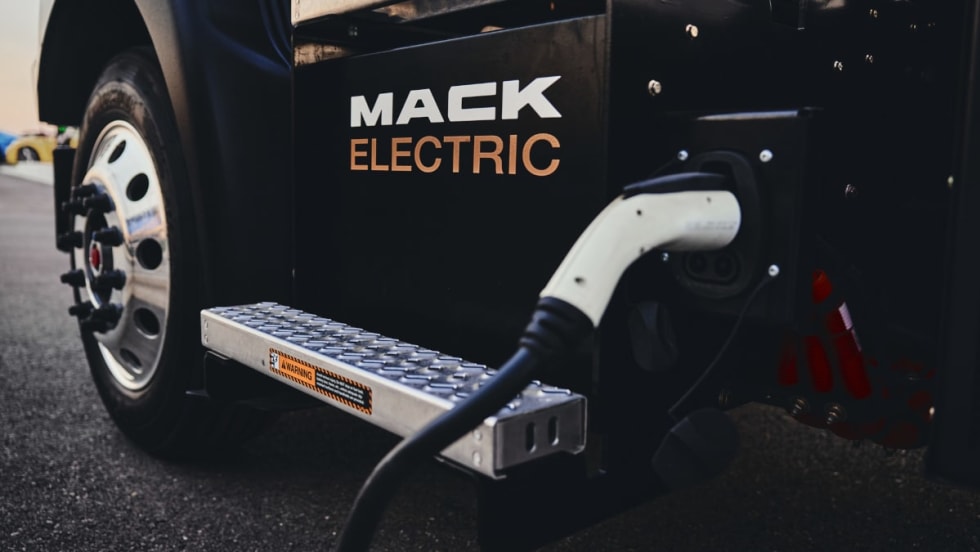
Mack Trucks Expands Full-Service EV Infrastructure Providers
Mack Trucks has expanded its comprehensive Turnkey Solutions program for Mack battery-electric vehicle customers with the addition of two new full-service providers, ABM and Lane Valente Industries.
Read More →
EV Realty Opens Major Truck Charging Hub in California’s Inland Empire
EV Realty’s San Bernardino Powered Properties’ truck charging hub, which has now opened, can serve over 200 medium- and heavy-duty trucks per day.
Read More →
WEX Launches Solution to Close the EV At-Home Charging Visibility Gap for Fleets
WEX unveiled its EV At-Home with Vehicle Fraud Protection, which ensures accurate and secure reimbursement for at-home charging.
Read More →
Toyota Motor Corporation to Join Daimler Truck & Volvo Group in Fuel Cell Joint Venture Cellcentric
Toyota intends to join Daimler Truck and Volvo Group as an equal shareholder in Cellcentric. All three shareholders intend to further strengthen Cellcentric as a leading manufacturer of fuel cell systems for heavy-duty commercial applications.
Read More →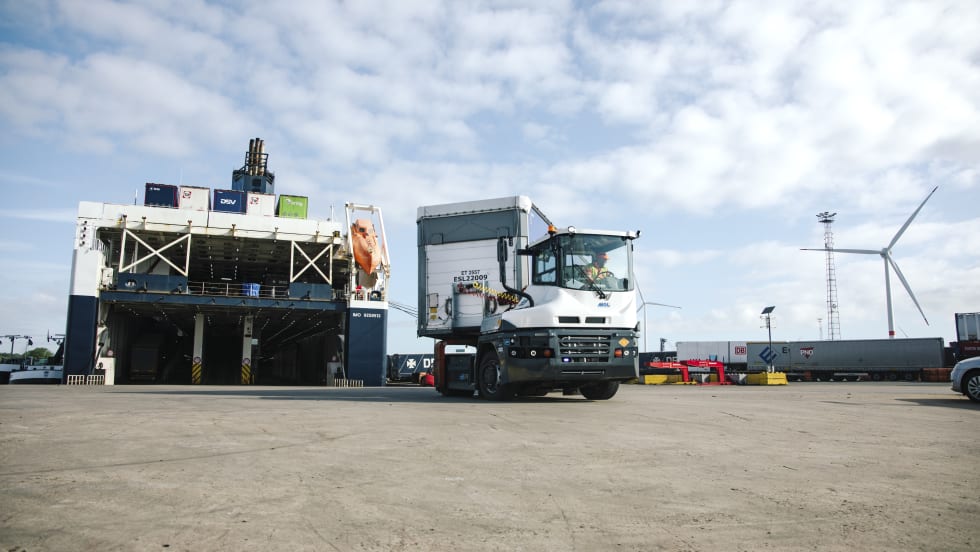
Volvo Penta Electric Drivetrain Powering Terminal Tractors
Volvo Penta and Volvo Financial Services (VFS) have partnered to support one of Northern Europe's largest shipping and logistics companies in its ambition to transition to electric terminal tractors.
Read More →