




Frito-Lay Rolls Out Growing Fleet of All-electric Delivery Trucks in California
PLANO, TEXAS – PepsiCo Frito-Lay North America announced the growth of Frito-Lay's California electric truck fleet, which, by the end of 2012, will be home to 105 all-electric delivery trucks, the largest deployment in any state, according to the company.
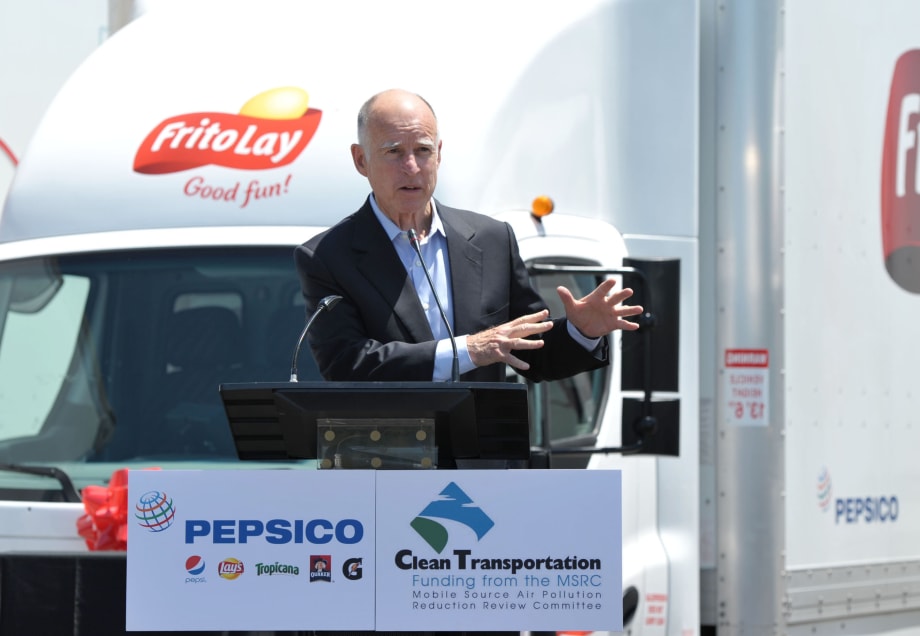
Governor Edmund G. Brown Jr. commends Frito-Lay on the growth of their fleet of all-electric vehicles. Once all of the vehicles are deployed by the end of the year, California will be home to 105 all-electric delivery trucks, the largest deployment in any state, according to the company. (Photo by John Shearer/Invision for Frito-Lay/AP Images).

Governor Edmund G. Brown Jr. commends Frito-Lay on the growth of their fleet of all-electric vehicles. Once all of the vehicles are deployed by the end of the year, California will be home to 105 all-electric delivery trucks, the largest deployment in any state, according to the company. (Photo by John Shearer/Invision for Frito-Lay/AP Images).
PLANO, TEXAS – Senior leadership from PepsiCo's Frito-Lay North America division was joined by California Governor Edmund G. Brown Jr., Matt Rodriquez, secretary of the California Environmental Protection Agency and Gregory Winterbottom, chairman of the Mobile Source Air Pollution Reduction Review Committee to announce the growth of Frito-Lay's California electric truck fleet. Once all of the vehicles are deployed by the end of 2012, California will be home to 105 all-electric delivery trucks, the largest deployment in any state, according to the company.
Electric trucks reduce fuel consumption, noise pollution and CO2 emissions, compared to traditional delivery trucks. By the end of this year, Frito-Lay will have more than 275 electric trucks deployed in the U.S., making Frito-Lay the largest commercial fleet of all-electric trucks in the country, according to the company. In May of this year, Frito-Lay reached a milestone of one million all-electric miles driven.
The initial rollout of all-electric trucks in California has already eliminated the need for an estimated 50,000 gallons of fuel and 1 million pounds of greenhouse gases. When all 105 trucks are deployed by the end of this year, Frito-Lay expects to eliminate 200,000 gallons of fuel and nearly 4.5 million pounds of greenhouse gases annually in the state of California. The new all-electric trucks will operate from distribution centers located throughout California: Alameda, City of Industry, La Mirada, Manteca, San Diego, San Jose, and Torrance.
"With the continued introduction of electric vehicles into our fleet, Frito-Lay continues to assert its commitment to environmental sustainability," said Leslie Starr Keating, senior vice president, supply chain for Frito-Lay North America. "Nearly 20 percent of our medium-heavy duty delivery trucks in the state of California are slated to be transitioned to all-electric vehicles. We have seen the accelerated growth and acquisition of this innovative technology because of the support from California. It's these private and public partnerships that create the momentum that alternative fuel vehicles need to become even more competitive."
To support the introduction of all-electric vehicles to the state of California, Frito-Lay received a grant from the Mobile Source Air Pollution Reduction Review Committee (MSRC), specifically in the South Coast Air Quality Management District. The company also received funding from the California Energy Commission and the Hybrid Truck Bus Voucher Incentive Project from California Air Resources Board, administered by CalStart.
"These electric vehicles prove we possess the capacity, technology and imagination to make change happen," said California Governor Edmund G. Brown Jr. "That's the significance of today — efficiency, elegance and renewable energy coming together for a private company, in partnership with state and federal government. It's a great day, and a great milestone — and is just the beginning of a lot of steps forward."
In the U.S., Frito-Lay hopes to reduce its total fuel consumption and greenhouse gas emissions by 50 percent by 2020, compared to its 2007 baseline. This effort supports PepsiCo's commitments to environmental sustainability, particularly in fuel and greenhouse gas reduction. Across PepsiCo, in addition to electric trucks, the company has introduced 267 hybrid-electric trucks and 67 compressed natural gas (CNG) tractors; 176 hybrid-electric vehicles and 14 CNG tractors are scheduled to operate in California.
"Frito-Lay's investment in cleaner, more sustainable transportation serves as an excellent example of a major U.S. corporation making a significant public commitment to the reduction of greenhouse gases and reduced energy consumption," said Gregory Winterbottom, MSRC chairman. "The Mobile Source Air Pollution Reduction Review Committee applauds Frito-Lay's leadership in this area."
Once all of the electric trucks are fully deployed across the U.S., Frito-Lay will eliminate the need for 500,000 gallons of fuel annually. In addition, the all-electric delivery trucks:
• Can run up to 80 miles on a single charge.
• Have zero tailpipe emissions.
• Emit 75 percent less greenhouse gases than diesel.
• Operate virtually silent, eliminating noise pollution.
• Provide a long-term economically viable solution to traditional fuel sources.
More Fuel

The Smart Way to Build a Mixed-Energy Fleet Isn’t About Picking a Side
Mixed-energy fleets aren’t about picking a winning fuel. Sarah Booth of WEX explains how vehicle data, duty cycles, charging strategy, and real-world costs can help fleets choose the right energy source for each job.
Read More →
Ignoring This Dashboard Warning Could Cost Your Fleet Thousands in Fuel
New research suggests neglected diesel aftertreatment systems could waste up to $30 in fuel per vehicle each day. Here's why vocational fleets should pay attention.
Read More →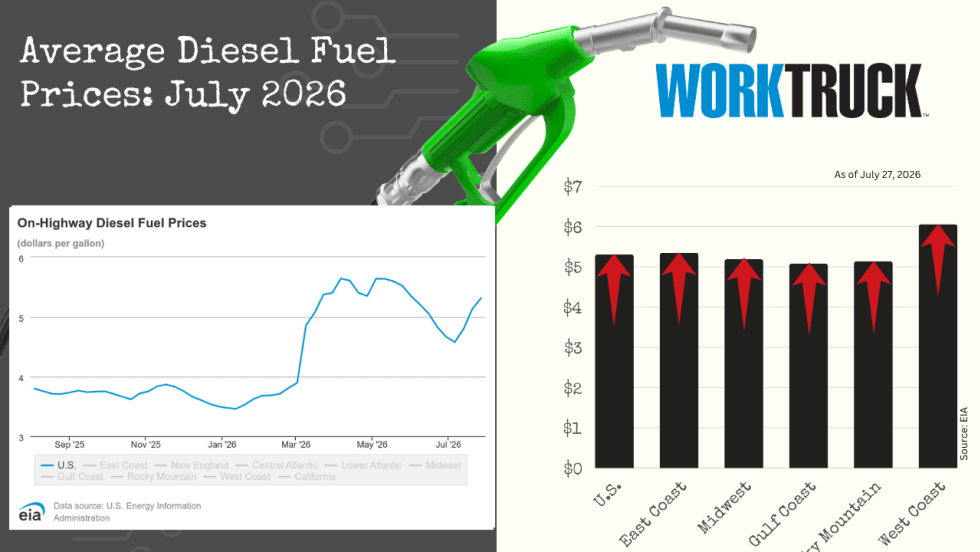
July Diesel Trends Update
The average price of a gallon of diesel increased again this week, and the EIA reported a new national average of $5.31 at the start of the week.
Read More →
WEX Brings Standard Fleet's Connected Vehicle Platform to Fleet Customers
This week’s product launch with Standard Fleet’s connected vehicle platform reflects WEX Venture Capital's strategy of turning startup innovation into customer solutions. Standard Fleet is now available to WEX fleet customers.
Read More →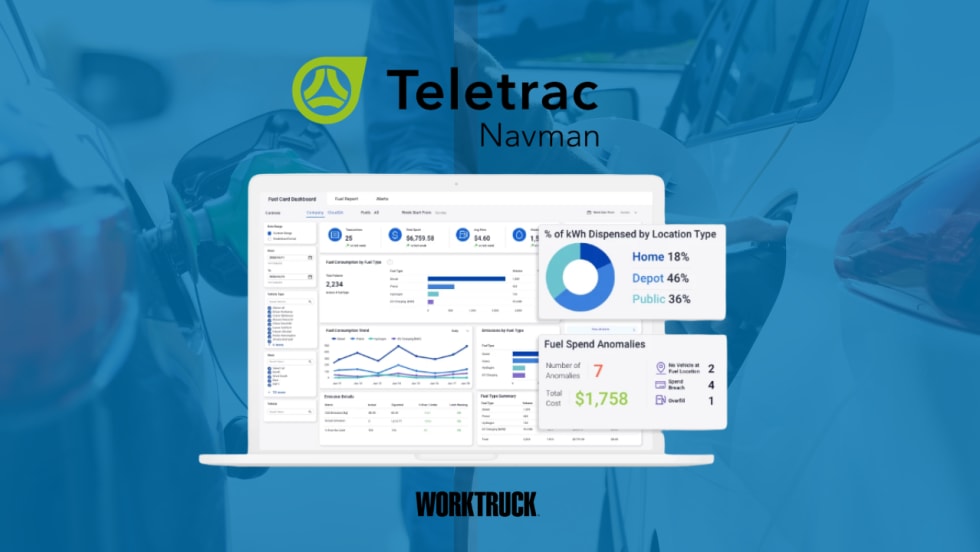
Teletrac Navman Adds Mixed-Energy Fleet Tools to TN360
The new Energy Hub combines fuel transactions, EV charging data, vehicle range, and energy costs in one dashboard for fleets operating multiple vehicle and energy types.
Read More →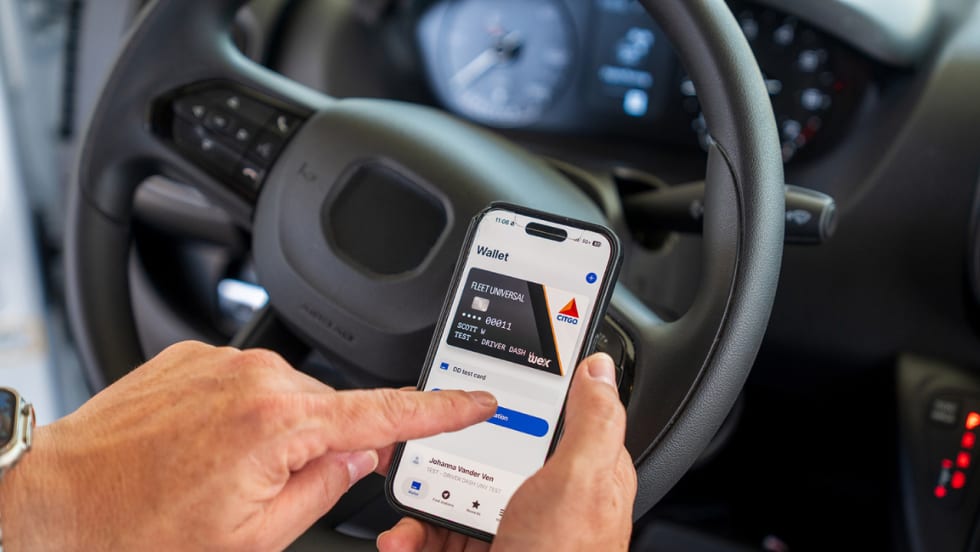
WEX DriverDash adds CITGO, Expands Nationwide Access for Fleets
The DriverDash mobile payment app, by WEX, has been integrated into the CITGO merchant network, which means WEX has expanded its U.S. station footprint with the addition of approximately 4,000 CITGO locations.
Read More →
Mixed Energy Fleet Tips for Balancing EVs, Gas and Diesel Vehicles
Mixed energy fleets are becoming the new normal. Learn how fleet managers are balancing EVs, gas and diesel vehicles while controlling costs and planning for the future.
Read More →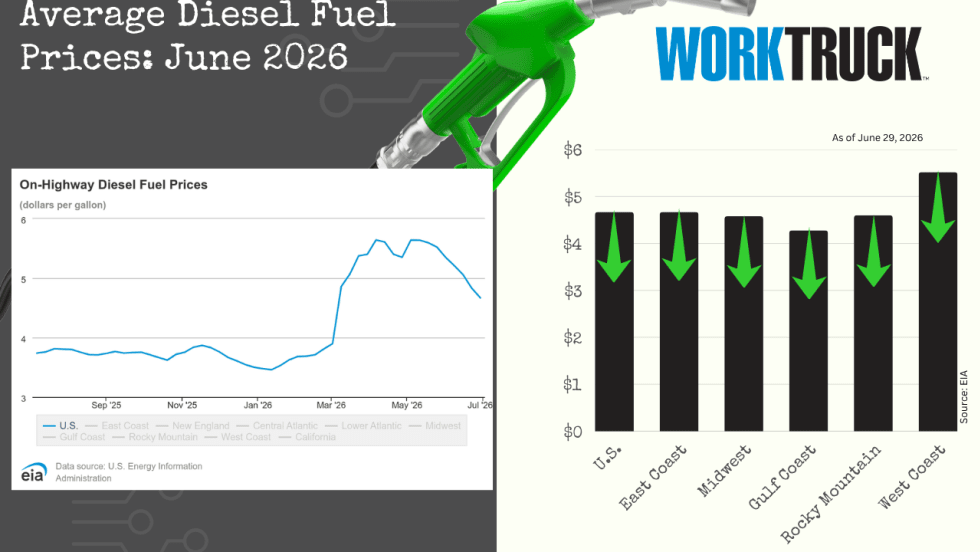
June Diesel Trends Update
The national average price of a gallon of diesel has dropped again, this week by more than 16 cents. All five regions reported lower average prices, ranging from almost 13 cents to more than 28 cents cheaper than a week ago.
Read More →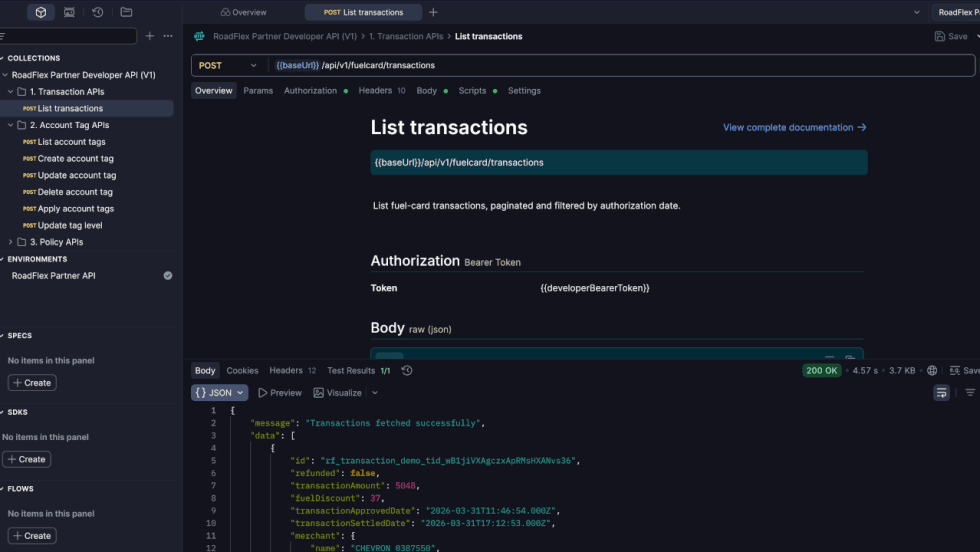
RoadFlex Launches RoadFlex Direct Open API Platform
RoadFlex Direct connects fuel cards, controls, and data to the telematics and fleet management systems fleets already run, from Geotab and Samsara to Fleetio and RTA, with no separate dashboard or double data entry.
Read More →
The Key to Fuel Efficiency Sits in the Cab
Learn how driver behavior, telematics, coaching, and fuel data can help fleets improve fuel efficiency, lower costs, and reduce emissions.
Read More →