




Industry Groups Address Expanding Biodiesel Fuel Use
Government mandates to increase renewable fuels production have prompted a growing use of biodiesel. Industry groups are setting standards for quality and monitoring the fuel’s production, transport, and storage.

Feedstock cost is the largest single component associated with producing biodiesel. While official statistics are not available concerning the quantity of individual feedstocks actually used, it is believed a majority of the feedstock used for biodiesel production in the U.S. is soybean oil.
Photo: Work Truck
President Bush, in his 2007 State of the Union message, set a goal of reducing America’s gasoline consumption by 20% over the next 10 years. In early 2008, Congress passed the Energy Independence and Security Act (EISA), which mandated the production of 36 billion gallons of renewable fuel in 2022, nearly five times the 2012 target of 7.5 billion gallons. Of this target, 500 million gallons of biomass-derived diesel (biodiesel) is required by 2009 and 1 billion gallons by 2012.
A renewable fuel for use in diesel (compression ignition) engines, biodiesel is derived from oils and fats and can be used with petroleum-based diesel fuel in existing diesel engines with little or no modification.
Biodiesel fuel has many important attributes, such as a higher cetane level (refers to better combustion properties) and significant reductions in unburnt hydrocarbons, particulate matter, and carbon monoxide versus conventional diesel. With low sulfur and high lubricity even at very low (less than 2%) blends, biodiesel also has the highest energy balance of any alternate fuel at 3.5 to 1.
Biodiesel is defined technically as a fuel comprised of mono-alkyl esters of long chain fatty acids derived from vegetable oils or animal fats, designated B-100 and meeting the requirements of a national fuel specification, the American Society for Testing and Materials (ASTM) D6751.
Biodiesel Produced from Oil or Fats
Biodiesel can be produced from any oil or fat as well as waste greases. It is generally produced by a chemical process referred to as transesterification, which involves combining an oil or fat with an alcohol (generally methanol) and a catalyst to produce biodiesel and glycerin, a byproduct. Figure 1 presents a diagram of the basic transesterification process. The notable elements in the process are that it removes glycerin from the oil and the vegetable oil or animal fat ingredient is not in a raw form.
Biodiesel that does not meet the chemical and physical parameters mandated by ASTM D6751 can cause significant problems with several engine components as well as problems with storage and handling. Table 1 presents information concerning the most important biodiesel production quality parameters and damages that could potentially occur to a compression ignition engine if they do not meet the ASTM D6751 specification.
Each oil or fat is different in chemical composition, which impacts how biodiesel is manufactured and its cold weather properties, cetane level, and stability. Biodiesel feedstocks high in saturated fat content, such as beef tallow and palm oil, have better cetane values and are more stable, but have poorer cold flow properties. Feedstocks, such as soybean and canola oil, have the opposite properties.
Biodiesel blends are biodiesel fuel meeting the ASTM D6751 specification blended with petroleum-based diesel fuel designated B-XX, where XX is the volume percent of biodiesel (e.g., B-20).
In 2007, estimates from the National Biodiesel Board (NBB) placed the national production quantity of biodiesel at 450 million gallons, up from 250 million gallons in 2006 and 25 million gallons in 2004. A significant factor in this increase was the passage of the "blenders" tax credit in the 2004 JOBS Bill, which allowed persons or businesses who blended B-100 with conventional petroleum diesel to receive $1 for every gallon of B-100 they blended, provided the biodiesel was produced from virgin vegetable oils such as soybean or first-use animal fats (e.g., beef tallow). The credit drops to $0.50 if waste greases are used.
The NBB is a national trade organization representing the biodiesel industry as the coordinating body for research and development in the U.S. The organization was founded in 1992 by state soybean commodity groups. Membership comprises state, national, and international feedstock and feedstock processor organizations, biodiesel suppliers, fuel marketers and distributors, and technology providers.
The NBB goal is to produce 5% of this nation’s on-highway fuel use from biodiesel, equating to roughly 2 billion gallons of B-100. The 5% level also equates to approximately one-fourth of diesel equivalent refined from Persian Gulf crude.
Industry Addresses Biodiesel Quality Standards
Biodiesel is designed for use in compression ignition engines. When considering or using biodiesel fuel, modern fleet managers are concerned about engine warranties, cold weather performance, moisture, engine part degradation, and consistent fuel quality.
Fuel quality is of the utmost concern and importance to the biodiesel industry. Biodiesel fuel quality can be affected throughout the total fuel supply chain from receipt of the biodiesel feedstock (oil, fats, or grease) through utilization in a diesel vehicle. Biodiesel fuel quality can be affected by:
Storage tanks contaminated with water or old fuel, which can lead to sediment accumulation and/or bacterial growth.
Transport trucks that have not been properly cleaned and contain carry-over residues.
Impurities in base biodiesel feedstocks, such as moisture, free fatty acids, proteins, etc.
The biodiesel industry has undertaken two significant measures to address total "system" fuel quality (from receipt of biodiesel feedstock through vehicle utilization). The measures aim to help ensure a product that consistently meets industry specifications for the safe operation of biodiesel in modern compression-ignition engines.
The industry measures include the development and continual upgrade of an ASTM specification devoted solely to biodiesel fuels and a national, voluntary fuel quality program, BQ-9000. All engine manufacturers require bio- diesel, regardless of the blend level they warranty, to meet the ASTM D6751 specification.
ASTM D6751 is the specification for biodiesel fuels irrespective of the feedstock source and/or processing method. The current ASTM specification contains 19 physical and chemical parameters that if met, help ensure safe engine operation and will not void engine warranties.
Most major engine manufacturers allow use of 5% biodiesel in their engines, provided the B-100 used as a blend stock meets ASTM specification prior to blending. Current statements by major engine manufacturers concerning biodiesel use in their individual engines can be found on the NBB Web site (www.biodiesel.org).
These parameters range from the amount of glycerin present after production and the stability of the finished biodiesel to biodiesel’s flash point. If any one of these parameters is not met, serious engine problems can occur, such as filter clogging and injector coking if the glycerin levels exceed specified levels or corrosion if the methanol level is too high.
In addition, the Environmental Protection Agency (EPA), which has certified biodiesel as a legal alternate fuel, and the Internal Revenue Service (IRS), which administers the funds for the "blenders" tax credit, only recognize biodiesel that meets the current ASTM specification.
ASTM D6751 Sets Standard for Biodiesel B-100 Use
ASTM D6751 is the approved standard for B-100 used in blending up to B-20 in the U.S. ASTM has approved D6751 for B-100 use, but only for up to B-20 in the final blend. Higher blends have been and are currently being used, but these must be checked with the OEM before use.
A specification for blend levels up to 5% with petroleum diesel is currently being considered and would require no separate labeling as long as the B-100 used for blending meets or exceeds current ASTM specifications. There would be no changes to the diesel fuel specification, ASTM D375. Additionally, a separate biodiesel specification for biodiesel blends of 6-20% inclusive will be a stand-alone specification with a separate ASTM number.
BQ-9000 Covers Biodiesel Production to End-Use
Biodiesel fuel produced correctly to meet all specifications outlined in ASTM D6751 can still encounter problems after it is produced. Overall, BQ-9000 covers production at the plant: feedstock to fuel; distribution, storage, and handling; and consumer storage, dispensing, and use.
The fuel can become contaminated as it is loaded into transport vehicles (trucks, rail cars, or ships), stored or blended at the petroleum distributor, or stored at the point of end-use. Due to the potential likelihood of this contamination, the biodiesel industry’s BQ-9000 product quality program will help insure biodiesel quality in the United States throughout the total production and end-use system, "cradle-to-grave." The BQ-9000 program’s major objectives are to:
Promote the commercial success and public acceptance of biodiesel.
Help assure biodiesel fuel is produced to and maintained at the industry standard, ASTM D6751.
Avoid redundant testing throughout the production and distribution system, saving biodiesel producers and marketers time and money by minimizing problems with "out of specification fuel."
Other goals of the BQ-9000 program are to provide level of confidence in biodiesel use for:
Users (individuals, fleets, government agencies, etc.).
Engine and vehicle companies, critical to the developing stages of this industry.
Formed by the NBB, the BQ-9000 program provides system-based standards to fulfill ASTM requirements. The program determines Accredited Producers and Certified Marketers. BQ-9000 accredits companies, not fuel; it should be noted that there is no such thing as "BQ-9000 biodiesel." However, BQ-9000 does help insure produced and sold biodiesel meets ASTM D6751 specifications.
Accredited Producer Program Monitors Biodiesel Production
The Accredited Producer program focuses on outlining a system to monitor production of biodiesel according to the ASTM D6751 specification through proper sampling, testing, storage, sample retention, and shipping off-site. At each biodiesel production facility, a set of documented quality system procedures (QSPs), targeting operational elements/issues associated with the testing of individual production lots, must be prepared and rigorously adhered to for each biodiesel production lot. Within this QSP, internal audits must be performed at least once each year for operation verification to determine the effectiveness of the plant or production facility quality program.
A certificate of analysis (COA) must be generated for each production lot with a unique identification code and the actual test results (ASTM D6751 parameter limits). Lastly, the on-site quality program must address cleanliness specifications for truck, rail, and/or ship vessels used to distribute biodiesel. These measures take into account material and chemical compatibility issues for each transport vehicle.
Certified Marketers Focuses on Biodiesel Handling & Distribution
The Certified Marketer outlines a system for handling and distributing biodiesel. This system maintains the fuel properties at ASTM D6751 specifications through proper sampling, testing, storage, sample retention, blending, and shipping for those entities that blend and distribute the product. Each Certified Marketer must also have a QSP in place that addresses these issues, specifying where the biodiesel was produced, the production facility’s BQ-9000 status, COA verification if the producer was not a BQ-9000 producer, and quantity of fuel received.
In a recent biodiesel fuel quality survey conducted by the National Renewable Energy Laboratory, all samples obtained from BQ-9000 companies met or exceeded ASTM D6751 specifications. Samples taken from non-BQ-9000 certified production companies only met the ASTM specification 28-67% of the time, depending upon the capacity of their production facilities.
Feedstock Cost Largest Factor in Biodiesel Fuel Pricing
Feedstock cost is the largest single component associated with producing biodiesel. While official statistics do not exist concerning the quantity of individual feedstocks actually used, it is believed a majority of the feedstock used for biodiesel production in the United States is soybean oil. Other minor feedstocks include canola/rapeseed, inedible beef tallow, and waste grease (yellow grease). The extent to which these minor feedstocks are utilized depends primarily on price relative to soybean oil, availability, and markets. (See Figure 2.)
At some price points, certain feedstocks are too expensive in conjunction with the price of petroleum/diesel fuel for biodiesel production, and the market for other biodiesel feedstocks becomes competitive. This pricing issue began to occur the latter half of 2007 with the price of soybean oil. Figure 3 presents a general view of both biodiesel and regular #2 diesel prices on a national scale.
Biodiesel Production Increased Dramatically in Past 5 Years
Biodiesel is a renewable, alternate fuel currently used in many different sectors of the economy that utilize compression-ignition engines. Biodiesel production has risen dramatically in the past five years due to many factors and has been mandated to expand to 1 billion gallons by 2012 per the recent federal energy legislation.
B-100 quality is important for the industry to continue to grow as customers depend on the industry to produce quality fuel. For the biodiesel industry to expand, fuel quality as defined and set by the ASTM D6751 specifications must be met and demonstrated to the diesel community on a continual basis and new sources of feedstocks must be utilized.
About the Author: Richard Nelson is director of Engineering Extension Programs at Kansas State University College of Engineering, a team leader in biomass feedstock production and assessment with the KSU Center for Sustainable Energy, and principal of Enersol Resources.
More Green Fleet

Landi Technologies Achieves CARB Certification of Ford 7.3L RNG/CNG Platform
Landi Technologies has gained CARB certification of its Ford 7.3L Renewable Natural Gas (RNG) and Compressed Natural Gas (CNG) platform for the Ford E-450, F-450/550/600, F-650/750, and F-53/59 platforms.
Read More →
Turning Connected Vehicle Data Into Decisions That Matter
Fleet leaders have more data than ever, but turning that data into clear, actionable decisions remains a challenge. This white paper shows how leading organizations are using connected vehicle data to improve safety, reduce costs, and optimize fleet performance. Learn how to turn insight into action across your fleet.
Read More →
Are You Tracking Your Fleet's True Total Cost of Ownership?
Bobit Business Media surveyed 190 fleet professionals and found that while most fleets are tracking costs, fragmented systems and data gaps are keeping true TCO visibility out of reach. With rising pressure to control spend in an increasingly volatile environment, the gap between what fleets think they know and what the data actually shows is wider than you might expect. See how your peers are managing costs today and where the industry still has room to improve.
Read More →
Epic Charging Acquires Bluedot Technologies
Epic Charging has acquired Bluedot Technologies, expanding EV fleet charging access to more than 80% of U.S. public charging networks.
Read More →
CALSTART Adds 64 New Sites and Features to Its Medium- and Heavy-Duty Zero-Emission Infrastructure Map
CALSTART’s interactive National Medium- and Heavy-Duty Zero-Emission Infrastructure Map now locates approximately 1,500 ports at 162 total public, semi-public, and shared electric vehicle (EV) charging and hydrogen refueling facilities for Class 2b-8 trucks.
Read More →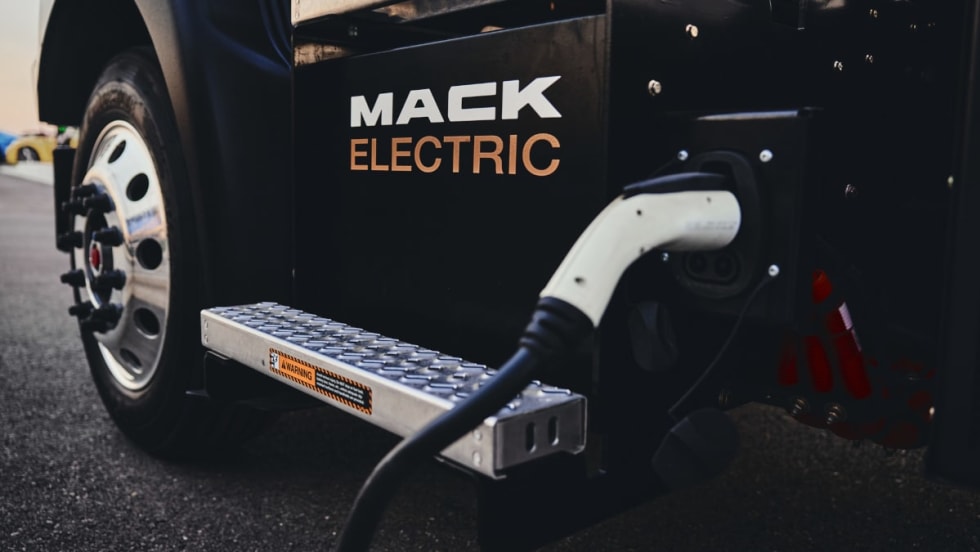
Mack Trucks Expands Full-Service EV Infrastructure Providers
Mack Trucks has expanded its comprehensive Turnkey Solutions program for Mack battery-electric vehicle customers with the addition of two new full-service providers, ABM and Lane Valente Industries.
Read More →
EV Realty Opens Major Truck Charging Hub in California’s Inland Empire
EV Realty’s San Bernardino Powered Properties’ truck charging hub, which has now opened, can serve over 200 medium- and heavy-duty trucks per day.
Read More →
WEX Launches Solution to Close the EV At-Home Charging Visibility Gap for Fleets
WEX unveiled its EV At-Home with Vehicle Fraud Protection, which ensures accurate and secure reimbursement for at-home charging.
Read More →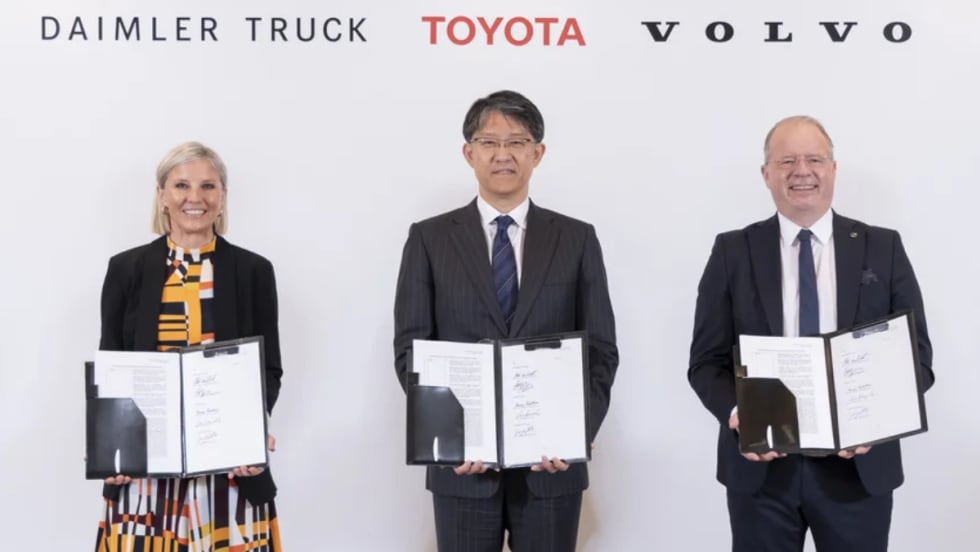
Toyota Motor Corporation to Join Daimler Truck & Volvo Group in Fuel Cell Joint Venture Cellcentric
Toyota intends to join Daimler Truck and Volvo Group as an equal shareholder in Cellcentric. All three shareholders intend to further strengthen Cellcentric as a leading manufacturer of fuel cell systems for heavy-duty commercial applications.
Read More →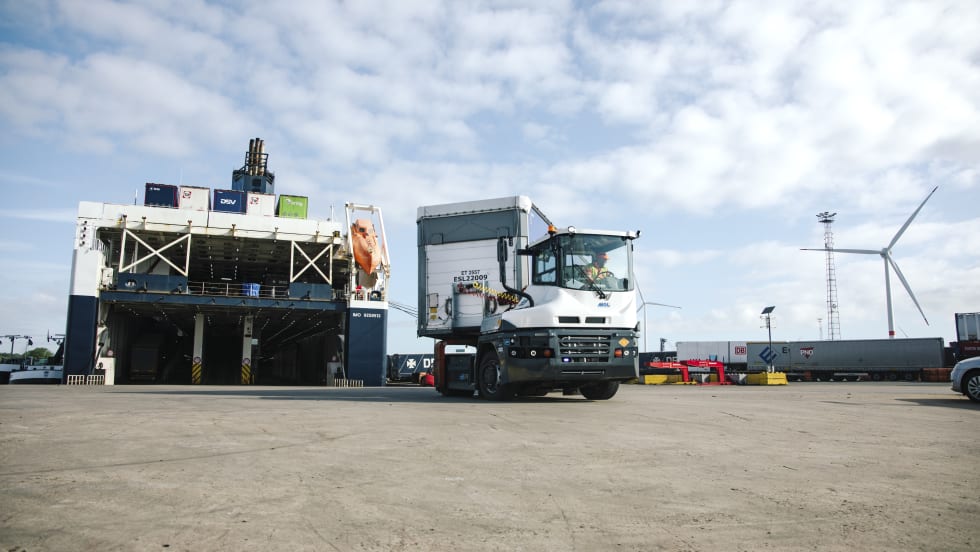
Volvo Penta Electric Drivetrain Powering Terminal Tractors
Volvo Penta and Volvo Financial Services (VFS) have partnered to support one of Northern Europe's largest shipping and logistics companies in its ambition to transition to electric terminal tractors.
Read More →