





Learn More: Pros & Cons of On-Site Fueling
The Gas vs. Diesel Decision
Which is best for your fleet? Several factors must be considered when deciding between gas or diesel. The following information will help guide your decision.
May 1, 2008

Gas many be the more economical choice for vehicles that will run 25,000 miles or less annually.
Photo: Isuzu Commercial Truck of America
6 min to read
The price jump in new diesel engines, resulting from stricter 2007 federal emissions requirements, has caused fleet managers to take a closer look at whether gas or diesel is best for fleet.
On one hand, the diesel engine costs $7,000-$10,000 or more upfront (compared to gas), depending on truck class and manufacturer. This clearly makes the gas engine price more appealing.
On the other hand, diesels offer better fuel economy and greater longevity and durability. This creates potential for lower long-term operational costs, depending on how many miles and/or years the vehicles are run.
Therefore, when it comes to the gas-versus-diesel question, there’s no obvious, one-size-fits-all answer. How do you evaluate whether gas or diesel is better for your trucks? Here are five factors to guide the decision.
1. Projected Annual Miles
As a general rule of thumb, if you plan to run the vehicle 25,000 miles or less per year, gas may be the more economical option. However, conduct a fuel economy analysis to see if this is true for your specific situation.
For example, you’re considering acquiring ¾-ton pickups and deciding between gas and diesel. On one hand, you’re fully aware the diesel engine can offer as much as 30% better fuel economy than gas. On the other hand, the diesel costs about $8,000 more up-front. Will you operate the truck in a way that will recoup the higher initial cost for diesel and realize a savings over the lifetime of the vehicle?
A helpful way to determine the answer is to build a spreadsheet. This allows you to play with different assumptions to see how they affect the overall calculations.
Here are assumptions to compile:
Annual miles. How many miles per year will the vehicle be operated?
Average fuel economy. On trucks over 8,500-lbs. gross vehicle weight rating (GVWR), you will not find published Environmental Protection Agency (EPA) fuel economy ratings. Your truck manufacturer’s rep should provide estimated numbers to work with. You can also contact industry peers who are running similar-type trucks.
Price per gallon. These numbers will certainly change, but as a starting point, use current prices for both gas and diesel. A worst-case scenario can be detailed by putting in higher prices to see how they affect the calculations.
Expected lifecycle. How many months do you plan to keep the truck? The longer you operate the trucks, the advantage trends to diesel. The shorter the period, the greater advantage shifts toward gas. This trending helps determine the lifetime cost advantage or disadvantage of diesel, depending on how long you intend to keep the vehicle.
Diesel price difference. This number ranges from $7,000-$10,000 or more depending on truck size and manufacturer.
Go back to the ¾-ton pickup truck example with these assumptions:
15,000 annual miles.
Gas mpg: 11; Diesel mpg: 16.
Gas: $3.15/gal.; diesel: $3.40/gal.
Expected service life: 60 months.
$8,000 higher initial price for diesel.
Based on these assumptions, you’ll pay nearly $2,500 more for the diesel option than gas over the 60 months in service. In this scenario, it would actually take approximately 87 months to recoup the higher cost of the diesel engine.
What happens if the annual mileage was changed to 25,000? With all other factors equal in this example, the investment in diesel is recouped within 52 months, creating a savings of approximately $1,200 with the diesel.
Play with different assumptions and determine what represents the most likely real-world scenario for you.
2. Trailer Requirements
Will you need to pull a trailer? If so, what will the trailer haul? How much is the total weight of the trailer and its payload?
These questions highlight the limitation of fuel economy analysis alone as the determining factor of whether to go gas or diesel. Here’s why.
Consider the ¾-ton pickup example again. According to a fuel economy analysis, if the trucks will run 15,000 miles or less per year for a total of five years, gas is the more economical option.
The issue is this: Suppose the trucks must be capable of pulling a trailer with a total weight (including trailer and its payload) of 14,000 lbs. With most truck manufacturers, the maximum trailer rating with a gas engine ranges from 10,000 to 12,000 lbs. In comparison, ¾-ton pickups with the diesel engine offer trailering capacities as high as 16,000 lbs. or more. (To determine accurate max trailer ratings, consult your manufacturer’s rep or fleet advisor.)
The conclusion: Diesel is the best option for trailered trucks, regardless of annual miles. Assess what your situation requires.
3. Truck Class and Manufacturer
Depending on the truck class and/or manufacturer, the gas engine may not be an available option.
Take, for example, the medium- duty low-cab forward (LCF) market. Isuzu (along with the Chevy and GMC-badged cabovers) offers the 6.0L gas engine on Class 3 and 4 trucks (NPR and NPR-HDs). In comparison, the Ford LCF offers diesel only. However, when moving to Classes 5-7, the Isuzu cabovers offer only diesel.
Therefore, truck size and make determines gas engine availability. If gas is not available, the decision is made. It’s diesel. If a gas alternative is available in the truck class you’re considering, run an analysis to determine which engine is most suitable.
4. Body/Equipment Requirements
Consider this scenario. You’re running the truck less than 20,000 miles per year and not pulling a trailer. The manufacturer offers a gas option, and you plan on cycling the truck within five years. Slam dunk for the gas engine, right?
Not necessarily. What body and equipment are you putting on the truck? Is a power take-off (PTO) provision required? This adds a new wrinkle to your analysis.
Here’s why. In many cases, the gas engine and its compatible transmission do not offer a PTO provision. If your truck equipment requires a PTO, contact the truck manufacturer’s rep to confirm the gas truck availability. This will save time and headache up-front, should the gas engine prove incompatible.
5. Warranty Terms and Conditions
As you evaluate operational costs between gas and diesel, be aware of the differences in factory warranty coverage and length. This impacts exposure to risk of unexpected repair costs.
For example, let’s say you’re comparing the gas and diesel versions of the Isuzu NPR cabovers to use as in-town delivery trucks. The factory warranty on the diesel engine is three years/unlimited miles. On the gas engine, it’s three years/36,000 miles.
If you’re operating the truck more than 25,000 miles per year, you’ll run out of warranty on the gas truck within 18 months. Whereas, with the diesel, you have an additional 18 months warranty left.
However, if the truck is running only 10,000-12,000 miles per year, the two warranties are essentially equal — three years.
Another consideration is availability of extended warranties, which can reduce repair risk with gas, if the gas engine proves more suitable in relation to the other factors. In the Isuzu example, a four-year/75,000 mile extended warranty is available at additional cost.
The Bottom Line
Clearly, gas engines offer a significant initial cost advantage compared to diesel. And yet, with diesel, you gain fuel economy savings and greater longevity, translating into potential lower cost of ownership.
There’s more to the gas-versus-diesel question than initial cost and fuel efficiency. When you take a more comprehensive view of the question and analyze exactly how you operate your trucks, you’ll uncover the answer that best fits your fleet.
Subscribe to Our Newsletter
More Fuel
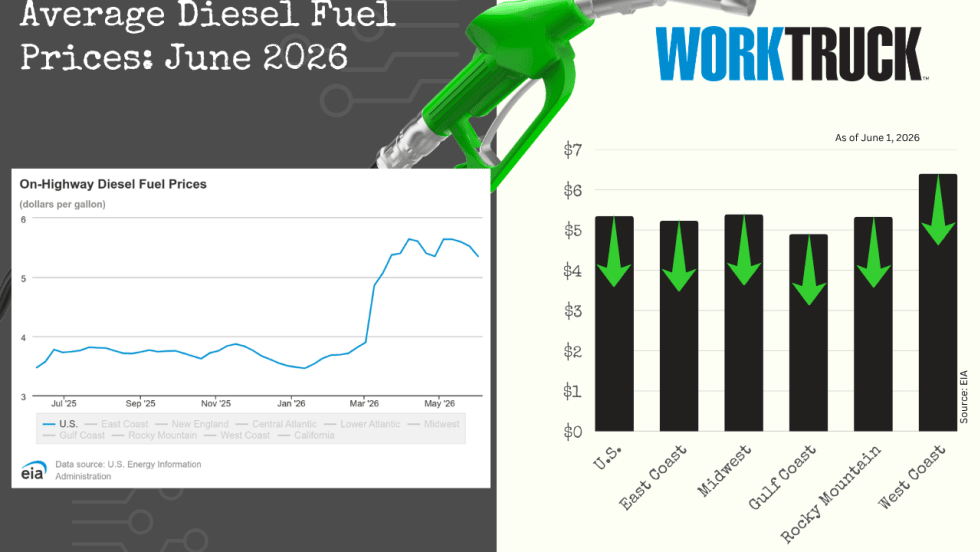
June Diesel Trends Update
The national average price of a gallon of diesel decreased by more than 17 cents this week, and all five regions reported lower prices, ranging from just over 10 cents to more than 23 cents cheaper than a week ago.
Read More →
3 Benefits of Hydrogen as a Fuel
Hydrogen fuel offers zero harmful emissions, incredible energy density, and flexible production pathways. In this video, we learn from a hydrogen industry insider about the three biggest benefits of hydrogen as a fuel to power commercial vehicles.
Read More →
Sponsored•May 29, 2026
Are You Tracking Your Fleet's True Total Cost of Ownership?
Bobit Business Media surveyed 190 fleet professionals and found that while most fleets are tracking costs, fragmented systems and data gaps are keeping true TCO visibility out of reach. With rising pressure to control spend in an increasingly volatile environment, the gap between what fleets think they know and what the data actually shows is wider than you might expect. See how your peers are managing costs today and where the industry still has room to improve.
Read More →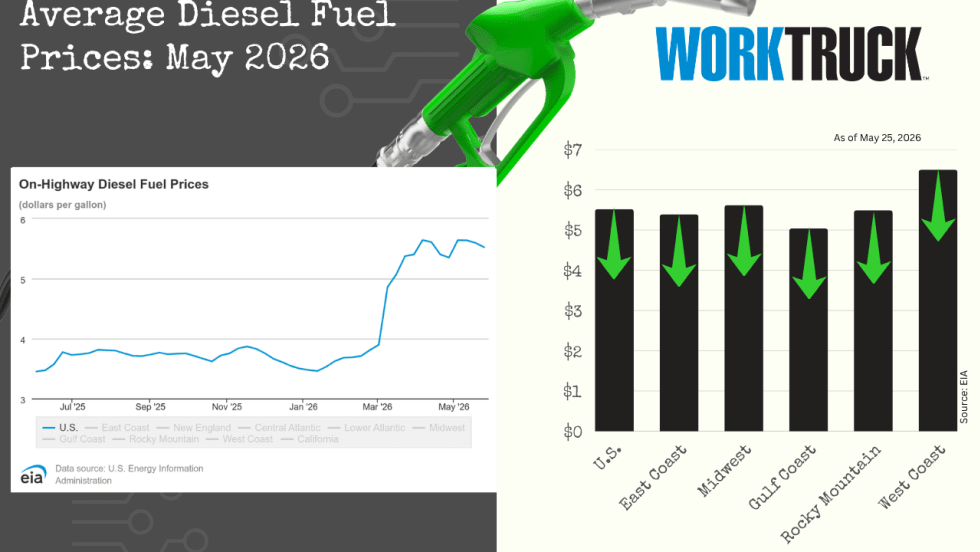
May Diesel Trends Update
The national average price of a gallon of diesel decreased by more than 7 cents this week, and all five regions reported lower prices, ranging from just over 2 cents to more than 12 cents cheaper than a week ago.
Read More →
How Hydrogen Fuel Is Produced for Fuel Cell Trucks
How is hydrogen produced for fuel cell trucks? Let’s learn more about that as Pajarito Powder CEO Christian Mohrdieck walks us through the process in this video.
Read More →
RoadFlex Launches Mobile App for Drivers and Fleet Managers
RoadFlex has launched its mobile app to give fleet teams a faster, easier way to manage fleet card activity, capture receipts, review transactions, and maintain spend visibility from the field.
Read More →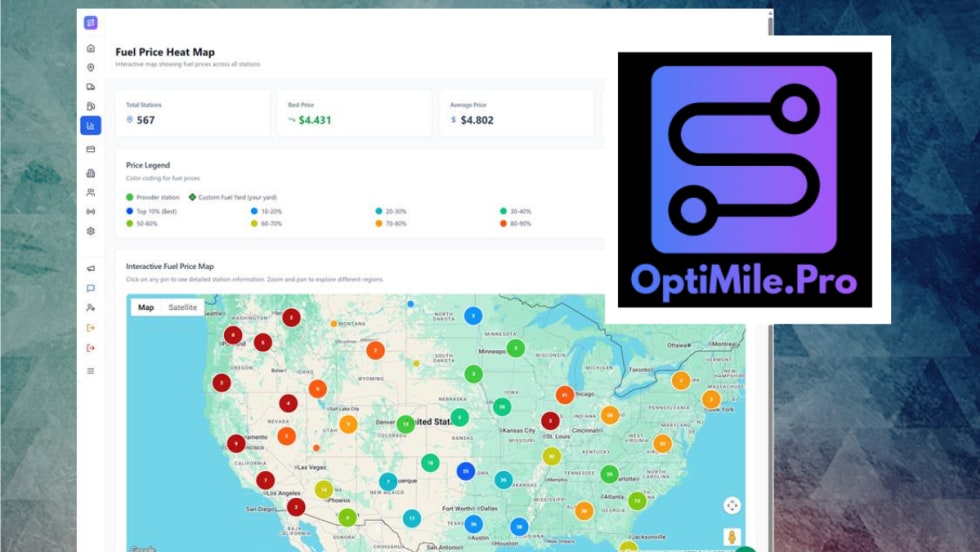
OptiMile Pro Launches Fuel Planning Platform to Cut Fleet Fuel Spend
OmtiMile Pro’s new software replaces the "fill up when empty" habit with a globally optimized fuel plan that picks the cheapest stop in the fleet's contracted network and the precise amount of fuel to load on every run.
Read More →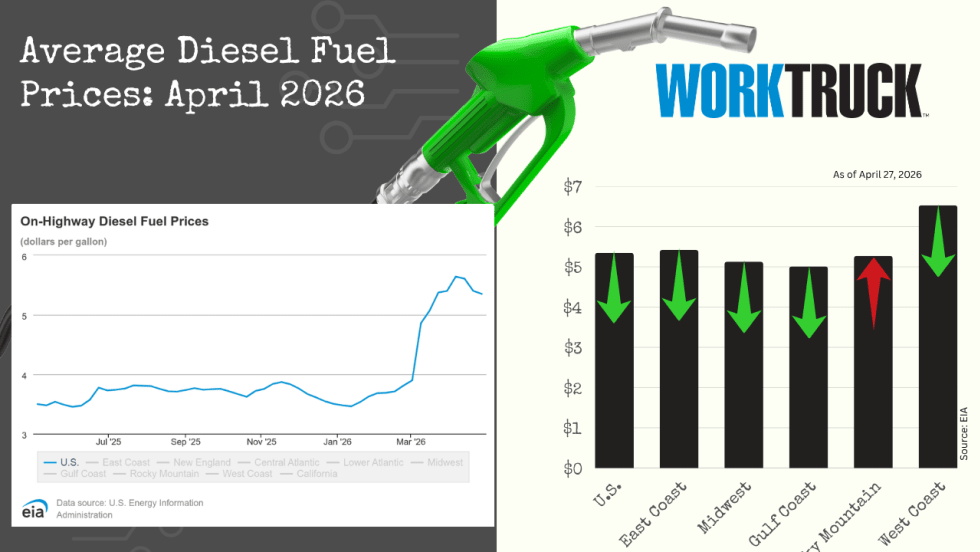
April Diesel Trends Update
The national average price of a gallon of diesel dropped by more than 5 cents this week, and all but one region reported price decreases.
Read More →
ChargePoint & South Coast Air Quality Management District Surpass 90 EV Charger Installations Across Southern California
ChargePoint has enabled more than 90 charging ports for the South Coast Air Quality Management District in Southern California. The project replaced outdated chargers with 55 new, Level 2 ChargePoint units capable of serving 94 vehicles simultaneously.
Read More →
Pajarito Powder Appoints Hydrogen Industry Veteran as New CEO
Pajarito Powder has appointed Christian Mohrdieck, who has a wealth of experience and knowledge in both the fuel cell and electrolyzer businesses, as its new CEO.
Read More →