





Learn More: Pros & Cons of On-Site Fueling
The Gas vs. Diesel Decision
Which is best for your fleet? Several factors must be considered when deciding between gas or diesel. The following information will help guide your decision.
May 1, 2008

Gas many be the more economical choice for vehicles that will run 25,000 miles or less annually.
Photo: Isuzu Commercial Truck of America
6 min to read
The price jump in new diesel engines, resulting from stricter 2007 federal emissions requirements, has caused fleet managers to take a closer look at whether gas or diesel is best for fleet.
On one hand, the diesel engine costs $7,000-$10,000 or more upfront (compared to gas), depending on truck class and manufacturer. This clearly makes the gas engine price more appealing.
On the other hand, diesels offer better fuel economy and greater longevity and durability. This creates potential for lower long-term operational costs, depending on how many miles and/or years the vehicles are run.
Therefore, when it comes to the gas-versus-diesel question, there’s no obvious, one-size-fits-all answer. How do you evaluate whether gas or diesel is better for your trucks? Here are five factors to guide the decision.
1. Projected Annual Miles
As a general rule of thumb, if you plan to run the vehicle 25,000 miles or less per year, gas may be the more economical option. However, conduct a fuel economy analysis to see if this is true for your specific situation.
For example, you’re considering acquiring ¾-ton pickups and deciding between gas and diesel. On one hand, you’re fully aware the diesel engine can offer as much as 30% better fuel economy than gas. On the other hand, the diesel costs about $8,000 more up-front. Will you operate the truck in a way that will recoup the higher initial cost for diesel and realize a savings over the lifetime of the vehicle?
A helpful way to determine the answer is to build a spreadsheet. This allows you to play with different assumptions to see how they affect the overall calculations.
Here are assumptions to compile:
Annual miles. How many miles per year will the vehicle be operated?
Average fuel economy. On trucks over 8,500-lbs. gross vehicle weight rating (GVWR), you will not find published Environmental Protection Agency (EPA) fuel economy ratings. Your truck manufacturer’s rep should provide estimated numbers to work with. You can also contact industry peers who are running similar-type trucks.
Price per gallon. These numbers will certainly change, but as a starting point, use current prices for both gas and diesel. A worst-case scenario can be detailed by putting in higher prices to see how they affect the calculations.
Expected lifecycle. How many months do you plan to keep the truck? The longer you operate the trucks, the advantage trends to diesel. The shorter the period, the greater advantage shifts toward gas. This trending helps determine the lifetime cost advantage or disadvantage of diesel, depending on how long you intend to keep the vehicle.
Diesel price difference. This number ranges from $7,000-$10,000 or more depending on truck size and manufacturer.
Go back to the ¾-ton pickup truck example with these assumptions:
15,000 annual miles.
Gas mpg: 11; Diesel mpg: 16.
Gas: $3.15/gal.; diesel: $3.40/gal.
Expected service life: 60 months.
$8,000 higher initial price for diesel.
Based on these assumptions, you’ll pay nearly $2,500 more for the diesel option than gas over the 60 months in service. In this scenario, it would actually take approximately 87 months to recoup the higher cost of the diesel engine.
What happens if the annual mileage was changed to 25,000? With all other factors equal in this example, the investment in diesel is recouped within 52 months, creating a savings of approximately $1,200 with the diesel.
Play with different assumptions and determine what represents the most likely real-world scenario for you.
2. Trailer Requirements
Will you need to pull a trailer? If so, what will the trailer haul? How much is the total weight of the trailer and its payload?
These questions highlight the limitation of fuel economy analysis alone as the determining factor of whether to go gas or diesel. Here’s why.
Consider the ¾-ton pickup example again. According to a fuel economy analysis, if the trucks will run 15,000 miles or less per year for a total of five years, gas is the more economical option.
The issue is this: Suppose the trucks must be capable of pulling a trailer with a total weight (including trailer and its payload) of 14,000 lbs. With most truck manufacturers, the maximum trailer rating with a gas engine ranges from 10,000 to 12,000 lbs. In comparison, ¾-ton pickups with the diesel engine offer trailering capacities as high as 16,000 lbs. or more. (To determine accurate max trailer ratings, consult your manufacturer’s rep or fleet advisor.)
The conclusion: Diesel is the best option for trailered trucks, regardless of annual miles. Assess what your situation requires.
3. Truck Class and Manufacturer
Depending on the truck class and/or manufacturer, the gas engine may not be an available option.
Take, for example, the medium- duty low-cab forward (LCF) market. Isuzu (along with the Chevy and GMC-badged cabovers) offers the 6.0L gas engine on Class 3 and 4 trucks (NPR and NPR-HDs). In comparison, the Ford LCF offers diesel only. However, when moving to Classes 5-7, the Isuzu cabovers offer only diesel.
Therefore, truck size and make determines gas engine availability. If gas is not available, the decision is made. It’s diesel. If a gas alternative is available in the truck class you’re considering, run an analysis to determine which engine is most suitable.
4. Body/Equipment Requirements
Consider this scenario. You’re running the truck less than 20,000 miles per year and not pulling a trailer. The manufacturer offers a gas option, and you plan on cycling the truck within five years. Slam dunk for the gas engine, right?
Not necessarily. What body and equipment are you putting on the truck? Is a power take-off (PTO) provision required? This adds a new wrinkle to your analysis.
Here’s why. In many cases, the gas engine and its compatible transmission do not offer a PTO provision. If your truck equipment requires a PTO, contact the truck manufacturer’s rep to confirm the gas truck availability. This will save time and headache up-front, should the gas engine prove incompatible.
5. Warranty Terms and Conditions
As you evaluate operational costs between gas and diesel, be aware of the differences in factory warranty coverage and length. This impacts exposure to risk of unexpected repair costs.
For example, let’s say you’re comparing the gas and diesel versions of the Isuzu NPR cabovers to use as in-town delivery trucks. The factory warranty on the diesel engine is three years/unlimited miles. On the gas engine, it’s three years/36,000 miles.
If you’re operating the truck more than 25,000 miles per year, you’ll run out of warranty on the gas truck within 18 months. Whereas, with the diesel, you have an additional 18 months warranty left.
However, if the truck is running only 10,000-12,000 miles per year, the two warranties are essentially equal — three years.
Another consideration is availability of extended warranties, which can reduce repair risk with gas, if the gas engine proves more suitable in relation to the other factors. In the Isuzu example, a four-year/75,000 mile extended warranty is available at additional cost.
The Bottom Line
Clearly, gas engines offer a significant initial cost advantage compared to diesel. And yet, with diesel, you gain fuel economy savings and greater longevity, translating into potential lower cost of ownership.
There’s more to the gas-versus-diesel question than initial cost and fuel efficiency. When you take a more comprehensive view of the question and analyze exactly how you operate your trucks, you’ll uncover the answer that best fits your fleet.
Subscribe to Our Newsletter
More Fuel

The Smart Way to Build a Mixed-Energy Fleet Isn’t About Picking a Side
Mixed-energy fleets aren’t about picking a winning fuel. Sarah Booth of WEX explains how vehicle data, duty cycles, charging strategy, and real-world costs can help fleets choose the right energy source for each job.
Read More →
Ignoring This Dashboard Warning Could Cost Your Fleet Thousands in Fuel
New research suggests neglected diesel aftertreatment systems could waste up to $30 in fuel per vehicle each day. Here's why vocational fleets should pay attention.
Read More →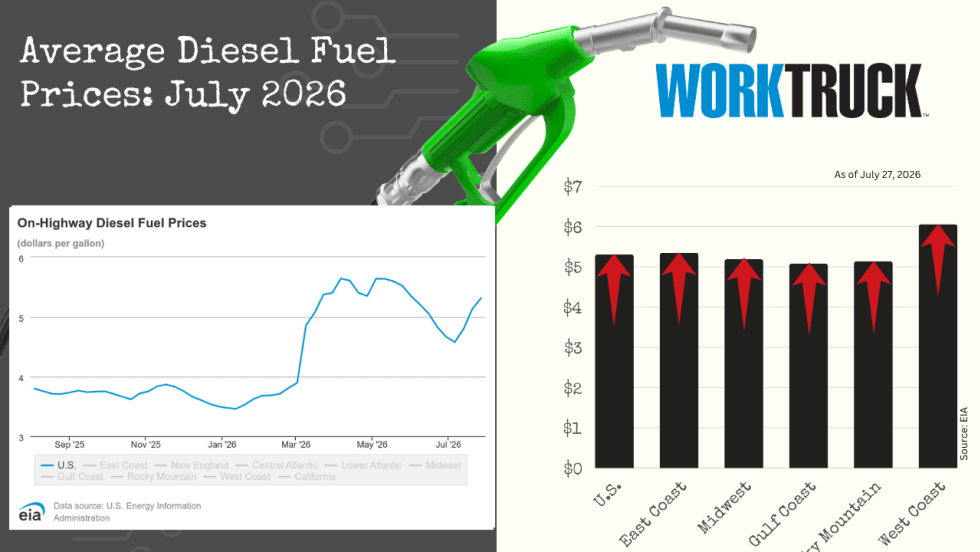
July Diesel Trends Update
The average price of a gallon of diesel increased again this week, and the EIA reported a new national average of $5.31 at the start of the week.
Read More →
WEX Brings Standard Fleet's Connected Vehicle Platform to Fleet Customers
This week’s product launch with Standard Fleet’s connected vehicle platform reflects WEX Venture Capital's strategy of turning startup innovation into customer solutions. Standard Fleet is now available to WEX fleet customers.
Read More →
Teletrac Navman Adds Mixed-Energy Fleet Tools to TN360
The new Energy Hub combines fuel transactions, EV charging data, vehicle range, and energy costs in one dashboard for fleets operating multiple vehicle and energy types.
Read More →
WEX DriverDash adds CITGO, Expands Nationwide Access for Fleets
The DriverDash mobile payment app, by WEX, has been integrated into the CITGO merchant network, which means WEX has expanded its U.S. station footprint with the addition of approximately 4,000 CITGO locations.
Read More →
Mixed Energy Fleet Tips for Balancing EVs, Gas and Diesel Vehicles
Mixed energy fleets are becoming the new normal. Learn how fleet managers are balancing EVs, gas and diesel vehicles while controlling costs and planning for the future.
Read More →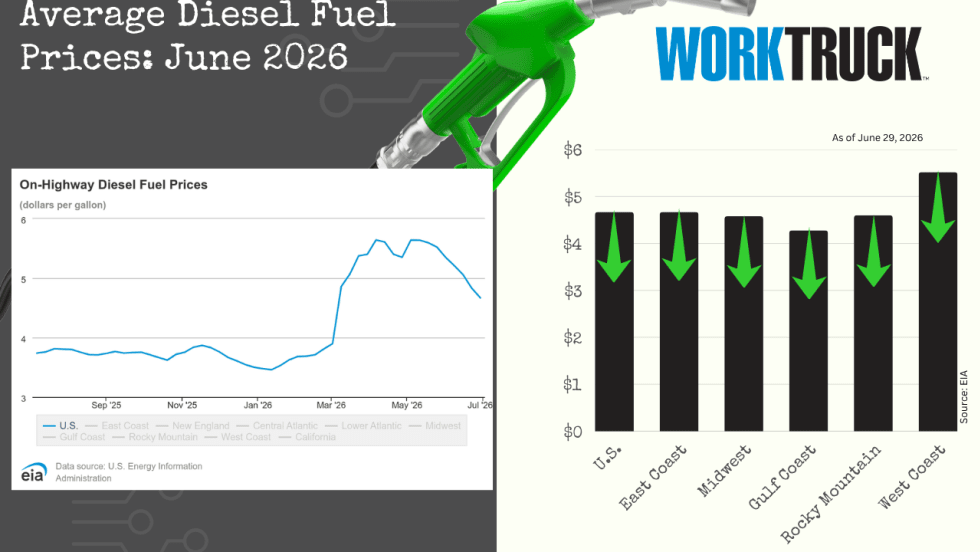
June Diesel Trends Update
The national average price of a gallon of diesel has dropped again, this week by more than 16 cents. All five regions reported lower average prices, ranging from almost 13 cents to more than 28 cents cheaper than a week ago.
Read More →
RoadFlex Launches RoadFlex Direct Open API Platform
RoadFlex Direct connects fuel cards, controls, and data to the telematics and fleet management systems fleets already run, from Geotab and Samsara to Fleetio and RTA, with no separate dashboard or double data entry.
Read More →
The Key to Fuel Efficiency Sits in the Cab
Learn how driver behavior, telematics, coaching, and fuel data can help fleets improve fuel efficiency, lower costs, and reduce emissions.
Read More →