





Related: Upward Pressure on Fleet Costs
What Fleet Managers Should Know About Synthetic Oils
Brought to U.S. market in 1972, synthetic motor oil is produced by most major oil manufacturers. Differences between synthetic and conventional oils, including cost, are examined.
September 6, 2011
What exactly is the difference between synthetic and conventional oils? What are the facts behind the claims?
Photo: Canva
7 min to read
When Albert J. Amatuzio served as a jet fighter squadron commander in the U.S. Air Force in the 1960s, he experienced firsthand the benefits of synthetic motor oils, which were originally designed for the aerospace market to protect jet engines from extreme temperatures and hold up significantly longer than conventional engine lubricants under severe duty cycles.
After leaving the Air Force, Amatuzio pondered how to formulate a synthetic oil that would bring similar benefits to the automotive market.
In 1972, after years of research and development, Amatuzio founded Amsoil Inc., and brought to market the first synthetic motor oil to meet American Petroleum Institute (API) service requirements for automotive engines - Amsoil 10W-40.
Today, most major motor oil manufacturers have followed suit - including ExxonMobil, ConocoPhillips, Ashland, and others - offering synthetic lubricants for automotive engines, all touting ultra-long oil change intervals, fuel efficiency gains, and better overall engine performance compared to conventional motor oils.
What exactly is the difference between synthetic and conventional oils? What are the facts behind the claims? Considering that synthetics cost two to four times more than conventional oil, is there a strong enough business case for medium-duty truck fleets to switch to synthetics?
Work Truck magazine spoke with industry experts, including Roger Gault, technical director, Engine Manufacturers Association (EMA); Phil Sontag, director of marketing, automotive lubricants at ConocoPhillips Lubricants; and Louis Phistry, diesel specialist and instructor at Universal Technical Institute, to get their take on these questions and more.
Q&A on Synthetic Oils
Work Truck: What makes synthetic motor oil different from conventional oil?
ROGER GAULT: What the difference boils down to is where the hydrocarbon molecule of the oil comes from. In conventional oil, the carbon molecule comes from petroleum - crude oil - developed through a refining process that takes the crude oil and turns it into lubricants. Synthetic oil, on the other hand, is also derived from crude oil, but the hydrocarbon molecule is basically manipulated or revised through a manufacturing process to have a more consistent structure for all the hydrocarbon molecules.
With conventional oil, there are probably a hundred different variants of hydrocarbon molecules because not all hydrocarbons are created the same. However, with synthetics, you eliminate the variations - making the hydrocarbon molecules uniform - and it's the uniformity of those molecules that enable synthetics to reduce friction and hold up better in extreme conditions.
WT: Does synthetic oil improve fuel economy?
GAULT: Marketing claims indicate how synthetic oil can increase fuel economy, anywhere from 2 to 10 percent or more. The idea here is that synthetic oils cause less friction or "drag" between engine components, compared to conventional oil, allowing the parts to move more freely and efficiently.
WT: Does that translate into tangible fuel savings?
GAULT: I haven't seen any data that actually backs that up. Theoretically, it's true. In reality, the difference is extremely small. I would be surprised if you could measure it, even if you were a very dedicated fleet that's really paying attention to fuel economy. It's hard to measure that benefit when you have so many factors that impact fuel economy, beyond just motor oil.
WT: Does synthetic oil lengthen oil drain intervals?
GAULT: It clearly has the potential, depending on what the method is to determine the oil change interval. Sophisticated fleets are running oil analysis programs, looking at oil changes over time, with associated triggers as to when they need to change the oil.
In those cases, I'm not sure how much benefit you would see with synthetic versus conventional, because a lot of times the change interval is driven by ash that's building up in the oil - some of which can be enhanced with synthetic and some of which can't. While there are definitely benefits to synthetics in terms of oil drain interval, I don't think it's the quantum 3,000-mile to 15,000-mile-type difference.
WT: Does synthetic oil offer genuine advantages in severe temperatures?
PHIL SONTAG: Synthetic oil is ideal for vehicles operating in extreme temperatures (both hot and cold) and those operating for lengthy periods of time, because it's better at withstanding viscosity breakdown.
GAULT: In extremely high temperatures, synthetics are better and in extremely low temperatures, synthetics are better. This goes back to the difference in the hydrocarbon molecular structure of the oil. Conventional oil has a broad spectrum of hydrocarbon molecules that vaporize at lower temperatures than you would like. And, at the cold end of the spectrum, the conventional oil thickens more than you would like. When you're pushing toward the high end or low end of temperatures, you're going to see benefits with synthetics.
WT: Does synthetic oil contribute to engine longevity?
GAULT: There probably is an improved longevity potential with synthetics, but I'm not sure that anyone in the engine community is going to recognize that.
WT: Any impact on OEM warranties?
GAULT: Not that I'm aware of. That would be a manufacturer-by-manufacturer situation. The fleet manager would need to talk with his or her engine manufacturer representative about warranty effects.
LOUIS PHISTRY: If the manufacturer recommends synthetic, then that is what should be used. If not a warranty factor, then the fleet manager should take into consideration the truck's duty cycle, or how the truck is used.
WT: In what way does the truck's duty cycle impact which type of oil a fleet manager should use?
PHISTRY: If it is a light-haul short trip, then the fleet manager may just choose conventional oils because of cost factors. However, if the fleet is heavy-hauling for long distances or long run times, then synthetic would be the best choice.
WT: Does synthetic oil impact diesel particulate filters (DPF) or selective catalytic reduction (SCR) systems?
GAULT: Not that I'm aware of. I'm not sure there is a dramatic difference between conventional and synthetic in regard to after-treatment compatibility.
PHISTRY: The impact synthetics have on DPF and SCR is better for the new emissions devices because the synthetics use a low ash additive to prevent contamination of SCR and DPF.
WT: Does synthetic oil affect biodiesel use?
GAULT: That one is tough to answer. We're trying to get our arms around biodiesel fuels and how they interact with engine lubricants in general. There's a lot of discussion about how biodiesel interacts with lubricants - and we just don't have a good handle on that yet. My gut feel is that it's probably not materially different between conventional and synthetic, but that's really a gut feeling as opposed to an educated opinion.
WT: Considering that synthetics can cost 2-4 times more than conventional oil, is there a strong enough business case for medium-duty fleets to switch?
GAULT: I think it's more or less simple economics. If you're looking at an oil cost differential that's relatively substantial, how do the economics work to cause you to change? If conventional oil is working well for you, and it's going to cost you 1-, 2-, or 5-percent more annually in maintenance to go with synthetic, then you're probably not going to make the change. If fleet managers have a firm way of convincing themselves they will save a percentage because of longer oil change intervals, they might do it. Otherwise, if it's a case where they might save a percentage or it might cost a couple percentage points, then they probably won't do it.
To narrow the cost differential, some oil manufacturers offer synthetic blends, which combine conventional and synthetic oil into a mixture that offers some of the benefits of full-synthetics, at a reduced cost.
The Bottom Line
If you're considering a change in oil type, Gault of the EMA recommends consulting with your engine manufacturer and current or proposed oil supplier to make sure you have a firm understanding of what you're switching from, what you are looking at switching to, and what the benefits (and costs) would be.
"The only thing I can say is to gather as much information as you can to make an informed decision," Gault said.
Performance Advantages of Synthetics vs. Conventional Oils
According to Phil Sontag, director of marketing, automotive products, at ConocoPhillips Lubricants, synthetic oil:
Improves protection against viscosity breakdown and deposit formation at high temperatures.
Lowers volatility for reduced oil consumption.
Increases oil circulation at low temperatures for easier starting and better protection during cold starts.
Reduces wear under all operating conditions, which helps to protect the equipment and extend its life.
Provides better engine protection, which can lead to less downtime, meaning increased productivity for an operator.
For More Information
To learn more about synthetic oils, check out the American Petroleum Institute (API).
Subscribe to Our Newsletter
More Maintenance
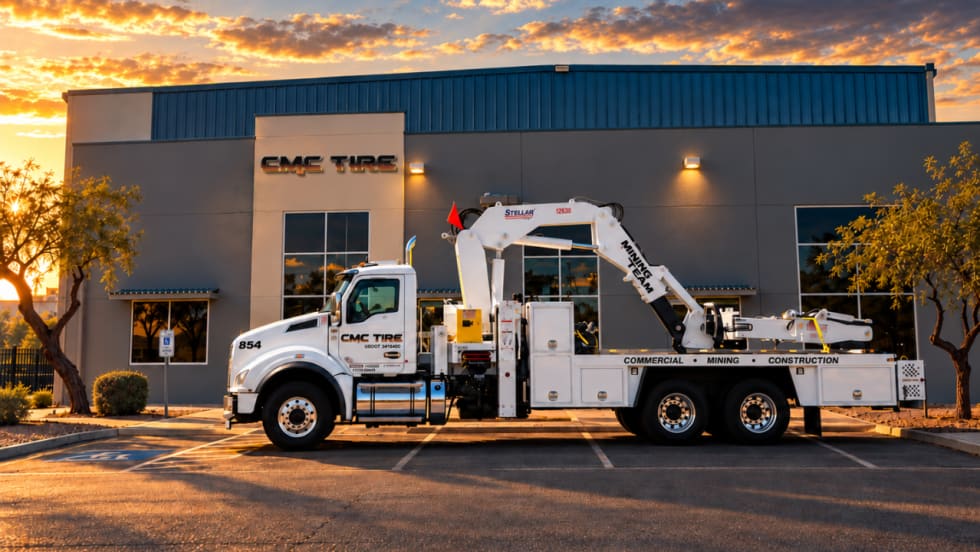
Les Schwab Expands Commercial Tire Footprint Into Arizona
Les Schwab Tires has expanded into Arizona with two commercial tire locations in Phoenix and Tucson, strengthening its fleet service footprint in the Southwest.
Read More →
Volvo Trucks’ 'Lock and Leave' Software Updates Go Live Across North America
Unattended over-the-air software updates are now available in Volvo trucks across the U.S. and Canada. The new capability lets trucks stay current with the latest software without interrupting operations or requiring a dealership visit.
Read More →
Why Technician Appreciation Can’t Be a Once-a-Year Thought
For fleets trying to keep skilled technicians, recognition cannot begin and end with Technician Appreciation Week. Learn what year-round appreciation really looks like and why the everyday technician experience matters just as much as pay when fleets are trying to keep good people.
Read More →
How Faster Driver Reporting Can Keep Small Truck Problems Small
When minor damage, warning lights, or equipment issues are reported late, small problems can quickly become bigger maintenance headaches. Conversational AI can help shorten the path from what a driver notices in the field to the person who can act on it.
Read More →
BendPak’s Ranger Wheel Service Equipment Achieves North American Safety Certification
BendPak’s full line of Ranger tire changers and wheel balancers has been ETL certified to UL and CSA standards to improve operator safety.
Read More →
Isuzu & U.S. Department of Labor Celebrate Milestone for Veterans Apprenticeship Program
The Isuzu Veterans Apprenticeship Program (IVAP) signing ceremony highlighted Isuzu’s long-term commitment to veterans, Isuzu dealers, and the skilled workforce supporting its customers and the commercial transportation industry.
Read More →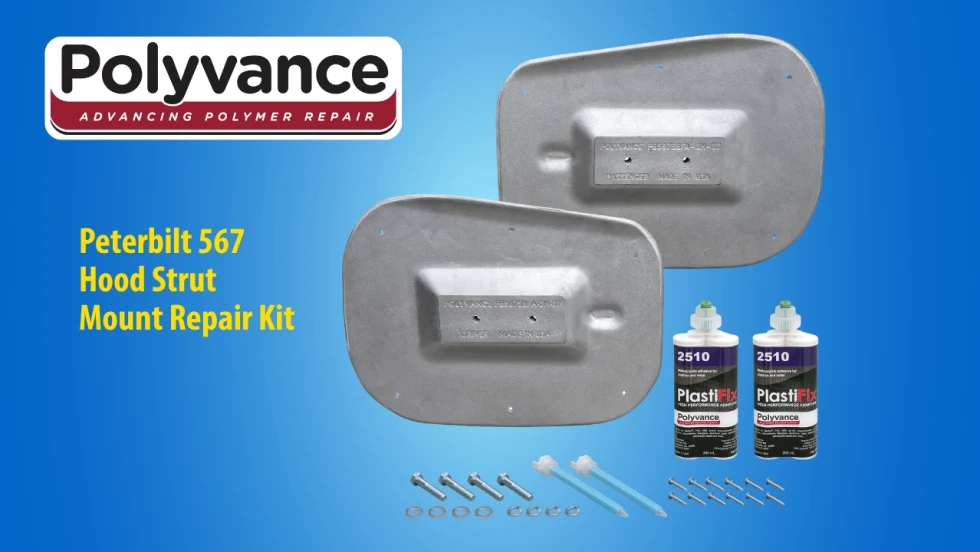
Polyvance Introduces New Peterbilt 567 Hood Strut Mount Repair Kit
Polyvance has launched a repair solution for Peterbilt 567 hood struts, helping truck owners and repair facilities avoid costly hood replacements.
Read More →
Cox Automotive Celebrates Technical Excellence at 2026 Top Tech Finals
The top technicians from Cox Fleet and Manheim tested their skills in Nashville, Tennessee, at Cox Automotive’s 2026 Top Tech Finals. The overall winners will advance to compete at the American Trucking Association’s TMC SuperTech competition.
Read More →
Grote Industries Appoints Vice President of North American Operations
Grote Industries has appointed Patrick Smith as vice president of North American operations as it celebrates 125 years of innovation and manufacturing excellence. He has more than 20 years of manufacturing leadership experience.
Read More →
Winter Fleet Prep: Expert Tips to Keep Vehicles Running Smoothly
Cold weather can expose weak batteries, tires, fuel systems, and maintenance gaps fast. Use this winter fleet checklist to prepare trucks and drivers before temperatures drop.
Read More →