





Think About: 5 Considerations to Make When Upfitting HVAC Vehicles
Generator & Inverters: Addressing Mobile AC Power Needs
Commercial vehicles need auxiliary power to operate tools, equipment, and cell phone chargers. New technology offers exciting new technological developments in auxiliary power.
June 23, 2009
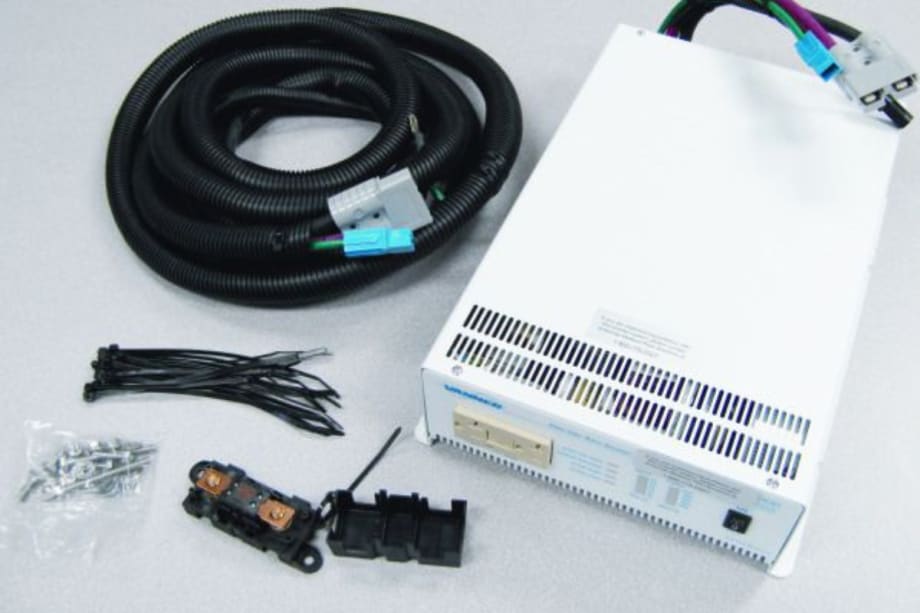
With the advent of hybrid vehicles, inverter technology, in particular, has begun to offer exciting new technological developments to meet fleet operators' mobile truck power requirements.
Photo: Kohler Power Systems
5 min to read
Demand for commercial- grade electric power capability on vehicles to operate tools and equipment, and for general utility applications has been increasing, even as fleets have become more fuel and environmentally conscious.
The diverse requirements have spurred a return to auxiliary engine-driven generators and inverters, the latter used to convert DC battery power into AC. With the advent of hybrid vehicles, inverter technology, in particular, has begun to offer exciting new technological developments to meet fleet operators' mobile truck power requirements.
Auxiliary Engine Generators
Generators driven by auxiliary engines provide obvious fuel-saving benefits for small horsepower requirements. Fairly common at one time, they subsequently fell out of favor chiefly because of maintenance issues, as Bob Johnson, fleet relations director for the National Truck Equipment Association (NTEA), Farmington Hills, Mich., pointed out.
"The combination of fuel economy and environmental issues, plus improvements in the design of auxiliary engines themselves, has people taking a fresh look at them," said Johnson.
Tim Cummings, sales representative for Knapheide Truck Equipment Center, Kansas City, Mo., added, "Small engine manufacturers used to have a lot of problems, but they've come a long way with improvements such as overhead valve designs and pressurized crankcases. The carburetion is more advanced."
The 15-and-under horsepower engines used with generators are popular for running power tools and lights, for example. Larger units, such as 10 kW-and-up mobile generators from Kohler Power Systems, Kohler, Wis., use more sophisticated engine technology, such as port fuel injection and electronic control modules.
The 15-and-under horsepower engines used with generators are popular for running power tools and lights, for example.
Photo: Kohler Power Systems
Inverters Attract Attention
Inverters are attracting even more fleet attention because, often, an operator's electrical demands aren't strong enough to require a generator. Typically, inverters also operate more quietly, cleanly, and efficiently, and have fewer maintenance issues than auxiliary generators. In addition, new hybrid-engine trucks are opening exciting opportunities to expand inverters' electrical-generating capabilities.
Later this year, Kohler will introduce a backup system for a vehicle's battery, when the operator is running AC power off the inverter with the engine off.
Kohler's 1.4BEOR unit, providing 12 DC volts/110 amps, senses when battery power starts to reach low levels and automatically starts the engine to maintain the battery's charge level, according to Stacy Peshkopia, marketing manager for Mobile Systems.
The company's mobile idle-reduction DC power unit has a single-cylinder, four-cycle, air-cooled engine and such features as standalone operation, remote start capability, and power to recharge a number of truck batteries.
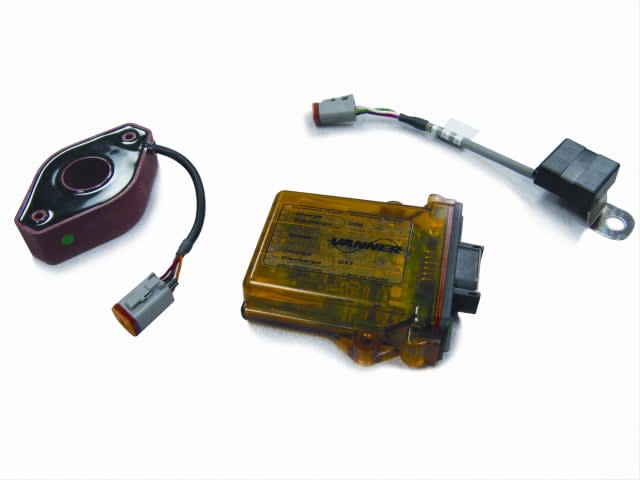
Vanner Inc., a leading Hilliard, Ohio-based mobile power supplier, has also been developing a "no idle" AC power system, currently being tested in Canada, which provides worry-free tool operation through use of an inverter with the engine off.
The unit works with any inverter brand and any vehicle make. Connected to the auxiliary batteries, the system monitors battery temperature, over/under voltage, and the battery's health while the inverter is running.
If the batteries drop to a predetermined discharge level, for example, a 12-volt signal is sent through the system that can be combined with an automatic starter to recharge the battery or it can simply blow the horn, alerting the driver to start the engine, said Bruce Beegle, Vanner vice president of sales and marketing.
The company has also been using conventional inverters to build hybrid-integration kits for hybrid trucks such as the Ford Escape and Chevy Tahoe. The "plug-and -play" hybrid systems connect to the vehicle's DC-DC converter to supply AC power for stationary or mobile use.
Vanner partnered with Fleet Electric, an electrical system integrator, to provide turnkey electrical solutions for mobile requirements.
Their Vanner/Fleet Gold program analyzes a vehicle's application and selects the correct components for its work requirements. The installation procedure is customized to the application to ensure all systems are installed in the same manner.
All components are also shipped in a turnkey installation kit to the fleet or truck equipment manufacturer to reduce installation time and ensure long-term reliability.
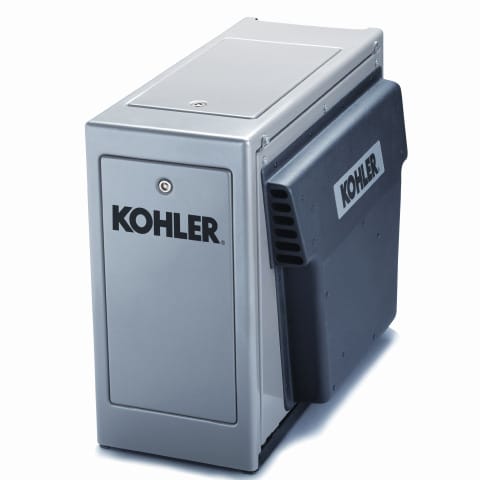
Larger units, such as 10 kW-and-up mobile generators from Kohler Power Systems.
Photo: Kohler Power Systems
2010 and Beyond
The growth of the hybrid-vehicle market offers the opportunity to leverage large traction-drive motors and large battery banks for even greater adaptation of inverter technology.
Currently aided by federal grants and driven by federal mandates, this technology's development is spearheaded by the transit bus industry. However, once developed for use in larger vehicles, industry members such as Beegle believe inverter technology can be scaled down for use in various size commercial trucks.
OEM truck/powertrain manufacturers still use auxiliary power units (APU) - essentially bolt-on generators - for auxiliary loads, utility, or work applications. In the bus and transit market, for example, Vanner has been working with Allison Transmissions to tie into hybrid-vehicle systems, tapping into the traction-drive motor that drives the wheels to provide an alternative to the bolt-on generator.
In diesel engine trucks, for example, the only power generation source is the alternator. All its power is consumed in supplying the vehicle's electrical needs.
Truck customers and distributors have often upgraded or oversized alternators to run auxiliary loads, such as may be required by inverters for work applications. The downside is the engine must remain running.
"Now, with tighter restrictions on engine idling and idling laws, we're seeing a decline in that practice," said Beegle.
Hybrid vehicles, he added, already have an ample power source because they have the large traction-drive motor and a large battery bank, capable of providing power with the engine on or off.
By tying into this power with a DC converter, the vehicle's mechanical alternator can be eliminated and replaced with a solid-state device to handle auxiliary loads/work applications, Beegle added.
Eliminating the vehicle's alternator and, basically, one belt from the engine accommodates all electrical support needs with a solid state device.
With inverter technology, the DC can be converted to 120V AC to supply all the vehicle's power needs, such as air conditioning, power-steering pumps, and even air compressors, as well as other auxiliary needs, such as powering tools, without belts and without running the engine unnecessarily. The upshot provides fleets even better fuel economy and more maintenance-free operation.
Subscribe to Our Newsletter
More Maintenance
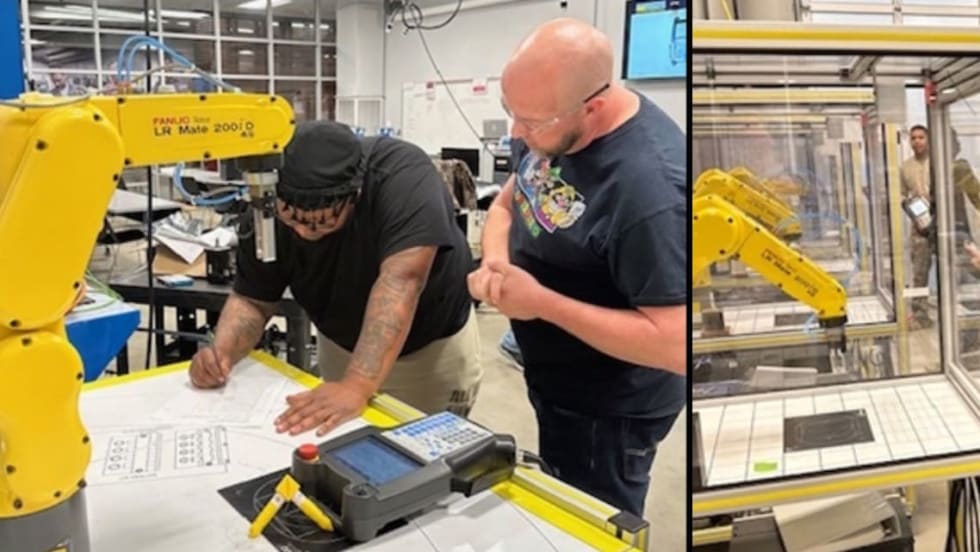
Hands-on Program at Yokohama’s Mississippi Truck Tire Plant Helps Employees Build Skills
Yokohama Tire Manufacturing Mississippi’s Maintenance Apprenticeship Program, in partnership with East Mississippi Community College, combines classroom instruction with on-site experience as employees pursue an associate degree.
Read More →
Sponsored•May 29, 2026
Are You Tracking Your Fleet's True Total Cost of Ownership?
Bobit Business Media surveyed 190 fleet professionals and found that while most fleets are tracking costs, fragmented systems and data gaps are keeping true TCO visibility out of reach. With rising pressure to control spend in an increasingly volatile environment, the gap between what fleets think they know and what the data actually shows is wider than you might expect. See how your peers are managing costs today and where the industry still has room to improve.
Read More →
The Power of Inspection Lighting in Modern Fleet Maintenance
Technicians tackle varied tasks every day, but as problem-solvers, they need good illumination during inspections, repairs, and maintenance. So, what makes a good technician inspection light?
Read More →
Kenworth Names 2026 Service Council
Kenworth Truck Company has selected leading Kenworth service professionals for its 2026 Kenworth Service Council, which will promote service and product enhancements. See who was selected and which Kenworth dealers they represent.
Read More →
Why The Skilled Trades Shortage Leads to Opportunity
The skilled trades are short millions of workers, but the upside is big: strong pay, job security, and careers AI can’t replace
Read More →
How GM is Growing Skilled Trades Careers Nationwide
In the past year, General Motors has invested nearly $200 million to grow skilled trade careers across the U.S. The goal for GM is to support its current workforce with the skills and development they need while building clear, compelling career paths for the next generation.
Read More →
CMA/Double Coin Announces Appointments
Patrick Etheridge has been promoted to director of OEM/truck stop sales for CMA/Double Coin, and Jose Pfirrmann has been promoted to director of sales for Region 1 for CMA.
Read More →
DRiV Launches Installer’s Advantage Program to Resolve Technician Challenges
Installer’s Advantage, by DRiV, brings together more than 5,000 exclusive parts engineered to address common challenges technicians face every day in the service bay.
Read More →
The Future of Fleet Maintenance Is Predictive
Downtime is costing fleets more than most realize. Hear how AI, predictive maintenance, and smarter fleet strategies are changing the game.
Read More →
Hunter Engineering Receives Rivian Approval for Ultimate ADAS Alignment and Calibration System
Hunter Engineering’s Ultimate ADAS alignment and calibration system has been approved for Rivian’s entire vehicle lineup. Ultimate ADA provides static calibration coverage for more than 90% of vehicles in operation.
Read More →