




Dig Deeper: The Future is Now: Upcoming Hybrid and Electric Trucks and Vans
Hybrid Large Trucks: The Road to Viability
Through the support of WestStart-CALSTART’s Hybrid Truck Users Forum, 13 utility fleets became early adopters of medium- and heavy-duty hybrid truck technology.
by Chad Simon
February 3, 2009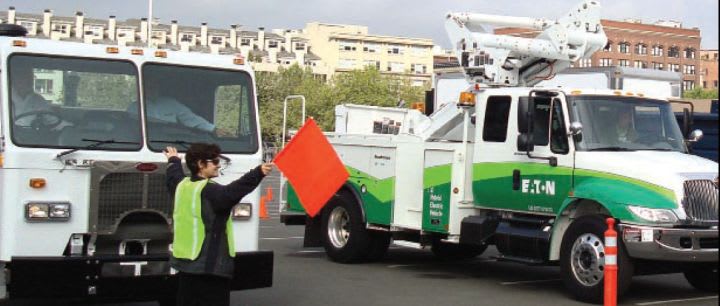
Work Truck surveyed five participating Hybrid Truck Users Forum (HTUF) fleet managers to learn how they have benefited from implementing hybrid trucks for their specific application.
Photo: CALSTART
10 min to read
Thirteen utility fleets that wanted to cut their dependence on foreign oil and combat global warming purchased and evaluated hybrid trucks through the help of WestStart-CALSTART. Consider them early stalwarts or trailblazers of unproven technology in medium- and heavy-duty trucks.
Work Truck surveyed five participating Hybrid Truck Users Forum (HTUF) fleet managers to learn how they have benefited from implementing hybrid trucks for their specific applications.
WestStart-CALSTARTis a nonprofit organization that supports and accelerates the growth of advanced transportation technologies in both public and private sectors.
The Hybrid Truck Users Forum (HTUF) is a national, multiyear, user-driven program that assists the commercialization of heavy-duty hybrid technologies. Operated by Bill Van Amburg, senior vice president of CALSTART, HTUF is supported by the U.S. Army’s National Automotive Center (NAC) and the Hewlett Foundation.
HTUF Working Groups are targeted, user-driven teams made up of leaders from commercial and military fleets interested in using hybrid trucks in a specific application. The seven Working Groups are: Hybrid Utility Truck, Hybrid Parcel Delivery Truck, Hybrid Refuse Truck, Hybrid Bus, Plug-In Task Force, Incentives, and Class 8 Over the Road/Regional Delivery.
George Survant of Florida Power & Light
Florida Power & Light’s (FPL) hybrids are primarily 27,000-lb. GVWR service trucks made by Azure Dynamics and Ford chassis with Eaton hybrid and Odyne plug-in hybrid units sitting on an International chassis. The fleet also has P-Series vans (UPS style).
FPL was the first to put medium-duty hybrid trucks in service nearly two years ago. Survant, who heads HTUF’s Hybrid Utility Truck Working Group, says his fleet’s hybrid program has saved about 40 percent in fuel costs the first six months of 2008.
Survant noted other benefits of the hybrid trucks include quiet operation and cleanliness. The fleet’s equipment operates around residential districts, hospital zones, and other noise-sensitive areas.
Hybrid trucks are well suited for power take-off (PTO) applications. On a utility truck, the boom is the primary PTO operation. Other PTO-driven tools include winches, hydraulic pumps, lift gates and loading applications. During PTO applications, the truck’s main power plant shuts off and the boom operates solely on stored battery energy.
FPL received purchase help for its first three hybrid trucks from the Department of Defense through a partnership operating in conjunction with HTUF and WestStart-CALSTART. The fleet replaces about one-tenth of its equipment annually.
Depending on how the hybrid truck is equipped, there’s a $30,000–$40,000 premium over its diesel counterpart, and it can be as much as $60,000 depending on customization, Survant said.
"When we did the business case for these trucks several years ago, fuel was about $2.50 a gallon," Survant said. "We felt it would take about eight years to pay off the upcharge for the hybrid trucks, but subsequent prices have reduced that to less than four years," he said.
Reducing Maintenance Needs with Hybrids
Hybrids require less maintenance than conventional diesel. The electric motor not only powers the PTO applications, it also powers the truck while idling in traffic, so the engine doesn’t work as hard or as often, extending the life of the truck’s components.
Regenerative braking takes wear off the brake system, extending brake life.
Since maintenance cost is lowered, Survant targets reselling one of his trucks in this class in about 10 or 11 years, though the batteries may need to be replaced every six or seven years. He says extending the trucks’ lifecycles to 12 or 14 years will save more money.
The electrification of truck features, including air conditioning, power steering, and power brakes, will be another big step in making these trucks more commercially viable, Survant said. "It’s not too difficult to envision the future where you have really efficient batteries and a very small powerplant burning very little petroleum."
Pacific Gas & Electric
Pacific Gas & Electric’s (PG&E) three hybrid trucks are equipped with service and bucket configurations, including a 26,000-lb. GVWR International and two 33,000-lb. GVWR Peterbilts. All three use the Eaton hybrid drive system.
The fleet is expecting delivery of two Dueco trucks with Odyne plug-in hybrid drive systems and two Terex units on an International platform. The Terex trucks are equipped with a battery pack system that drives an electric hydraulic pump, which runs the hydraulics and auxiliaries.
The fleet is also expecting a preproduction version of a Ford F-550 Super Duty in a plug-in hybrid trouble truck configuration, in conjunction with the Electric Power Research Institute (EPRI), Eaton, and Ford. "Those are our first-responder vehicles and will give us between 10 and 15 miles of dedicated electric range," Ornelas said.
PG&E is part of the original HTUF and one of 13 utilities that received 24 Eaton International hybrids as part of a preproduction test and field evaluation.
Quieter Operation & Fuel Savings
The trucks’ onboard battery packs drive the PTO and auxiliary loads. The vehicles are so quiet they can be utilized in noise-sensitive areas and perform work during normal working hours, when in the past it had to be done on overtime or weekends.
Ornelas says crews love the trucks because they can have normal conversations from the street to the bucket 40 feet off the ground.
The PG&E hybrids are realizing a 33-55 percent improvement in fuel economy or about one gallon per hour. Most driving is done in urban San Francisco, where the electric idling launch capabilities take full advantage of the stop-and-go traffic.
Spreading to Class 8
International, Freightliner, and Peterbilt are developing not only the bucket platform, but also UPS and FedEx-type hybrid vans for inner-city delivery, further capitalizing on hybrid’s benefits in stop-and-go driving.
Manufacturers are even exploring nontraditional hybrid applications such as Class 8 trucks.
"Most people don’t think hybridization of a Class 8 truck pays for itself, but there is a 3-5 percent fuel economy savings in those big trucks due to hybridization," Ornelas says. "A lot of work has been done with rectifying the air conditioning and heating units so truckers can shut their engines down and still be comfortable."
Ornelas believes the reason hybridization has taken so long to spread to heavier trucks, in part, has to do with the misconception that an over-the-road truck doesn’t vary speed while on cruise control — yet that’s where the hybrid shines. With an 80,000-lb. truck accelerating and decelerating up and down hills with the flow of traffic, a hybrid system can recapture regenerative braking and use the electric motor for mild acceleration.
"In the medium- and heavy-duty classes, the hybrids have better paybacks than some of the other platforms," Ornelas says.
Paying a Premium
The premium of the hybrid truck over diesel can be $40,000–$80,000. Tax credits are available for hybrid truck purchases, some as high as $12,000 per truck. Meisel ran some numbers two years ago when diesel was $3.50 per gallon and paybacks were in the five- to six-year range.
To meet the 2007 emissions regulations, manufacturers installed new emissions control technologies that added $3,000-$13,000 to the overall cost. When the latest set of emissions regulations are instituted by 2010, Ornelas anticipates that price will increase further and impact performance, efficiency, and maintenance, so the fleet is looking into other technologies to help offset some of the additional cost, including plug-in hybrids.
"For the future, there’s no silver bullet," Meisel says. "I think we’re going to be looking at a combination of hybrids, plug-in hybrids, and some of the other alternative-drive technologies that are going to all have a niche in meeting fleet requirements. We need to have a blended approach that addresses the capabilities of the unit with the needs of the business."
Duke Energy
Duke Energy currently has three 4200 Series International hybrid bucket trucks in service and two Freightliner units on order. The company became involved in WestStart CALSTART’s Utility Working Group about five years ago.
Duke Energy’s trucks are equipped with telematics systems to gather information about usage, battery performance, and fuel consumption. The captured information goes to a Web site that can be accessed by the fleet operator, manufacturer of the truck, Eaton Corp. (the hybrid system manufacturer), and CALSTART.
Savings Driven by Application
Allison found that hybrid savings were application-driven. A larger percentage of savings occurs when drivers are off-road using hydraulic power, whereas in the past, the truck’s internal combustion engine provided hydraulic power while someone was in the bucket working. Here, the truck is off the majority of the time.
"Some trucks were gaining about 15-percent savings in fuel efficiency and others 30 percent. We found those trucks that had a lower savings percentage were not using the bucket as often as the others," Allison says.
Since then, the company has moved two of the trucks to do streetlight work where the bucket would be used more frequently.
From a fuel efficiency and maintenance standpoint, the trucks have delivered as promised, according to Allison. The hybrids’ maintenance issues are similar to the existing fleet’s. If the incremental cost can be driven down to the $30,000 range, Allison believes it would be a good economic proposition and the fleet would move toward hybrid trucks as its standard fleet vehicle.
In the right application with a $60,000 premium, fleets can recoup the extra cost of the hybrid truck within five to seven years, according to Allison.
Creating More Hybrid Demand
Manufacturers need to sell a few thousand hybrid units per year to achieve better economies of scale, Allison says. Battery technology needs to improve and manufacturing costs must decrease for the trucks to become more commercially viable. Tax credits are available, but difficult to obtain.
"They’re becoming mainstream, and folks need to understand they can run it everyday," Allison says.
Alabama Power Fleet
Alabama Power’s fleet currently has two 33,000-lb. GVWR International trucks with Eaton hybrid powertrains in service.
The fleet became interested in hybrid trucks because of fuel economy considerations and the Energy Policy Act (EPA) mandated that fleets buy electric or alternative-fuel vehicles.
A 'Re-Greening' Process
The fleet has completed an 18-month field trial and has received its trucks back from being "regreened" by Eaton. Eaton upgraded the truck from research vehicles to commercial viability by taking the hybrid test components off the truck and replacing them with state-of-the-art commercially available hybrid components.
Alabama Power had the option to either buy the transmission or return it to Eaton. "We had a successful trial that exceeded our expectations so we purchased the hybrid package from Eaton," Kings says.
Results from the fleet’s field test showed the hybrid trucks were 30 percent more fuel efficient. Similar to other tests, the operators appreciated the quietness of the boom operation.
Alabama Power’s trucks idle as much as four hours per day, Kings says. One hour of operation at idle equals one gallon of fuel consumed for a typical heavy-duty truck, therefore the hybrids dramatically reduce fuel consumption.
Electrification of Auxiliaries
"There are still a lot of unknowns," Kings says. "The premium is about $50,000. Your usage and work profile greatly impacts how quickly your fuel savings will pay that back. We forecast recouping our premium in eight years, but as technology advances, the payback time should decrease."
Southern California Edison
Southern California Edison’s (SCE) program is different than other participating HTUF fleets because Smith has combined field trials with lab testing. The program consists of tests to ensure the vehicle’s performance compares to manufacturer specifications. The company also conducts tests for fuel economy, acceleration and braking, and grades and mountain driving.
In conjunction with this project, the company developed a special test designed to simulate actual work operation involving both city and freeway driving and stationary work time where the boom is operated.
The Testing Process
While achieving uniform results from a controlled test in the field is difficult, lab tests ensure that each truck does exactly the same amount of work, Smith says.
After lab tests, Smith delivered the truck to the fleet and performed two fleet trials. One test was conducted at the company’s Santa Monica, Calif., location, which has moderate weather for shorter driving distances. The other was at its Redlands, Calif. service center, when summer temperatures require longer driving distances and severe operation. Smith was pleased with both results.
"In lab tests, I saw an almost 30- percent reduction in fuel economy," Smith says. "You can get more improvement in stop-and-go driving and less so with freeway driving. We try to place it in an operation with shorter drives and a lot of stationary boom time. If we were to drive this truck on the freeway all the time, it wouldn’t make much sense."
SCE is also working with the Electric Power Research Institute and other utilities to develop a plug-in hybrid utility truck. This involves a much larger battery pack with the ability to charge off the utility grid while also offering more electric drive capabilities and electric air conditioning.
SCE’s prototype vehicle is now being evaluated.
Smith says fleets will pay $20,000 to $30,000 more for a hybrid truck, so the present premium needs to drop to make hybrid trucks more commercially viable.
Subscribe to Our Newsletter
More Green Fleet
Landi Technologies Achieves CARB Certification of Ford 7.3L RNG/CNG Platform
Landi Technologies has gained CARB certification of its Ford 7.3L Renewable Natural Gas (RNG) and Compressed Natural Gas (CNG) platform for the Ford E-450, F-450/550/600, F-650/750, and F-53/59 platforms.
Read More →
Sponsored•June 1, 2026
Turning Connected Vehicle Data Into Decisions That Matter
Fleet leaders have more data than ever, but turning that data into clear, actionable decisions remains a challenge. This white paper shows how leading organizations are using connected vehicle data to improve safety, reduce costs, and optimize fleet performance. Learn how to turn insight into action across your fleet.
Read More →
Sponsored•May 29, 2026
Are You Tracking Your Fleet's True Total Cost of Ownership?
Bobit Business Media surveyed 190 fleet professionals and found that while most fleets are tracking costs, fragmented systems and data gaps are keeping true TCO visibility out of reach. With rising pressure to control spend in an increasingly volatile environment, the gap between what fleets think they know and what the data actually shows is wider than you might expect. See how your peers are managing costs today and where the industry still has room to improve.
Read More →
Epic Charging Acquires Bluedot Technologies
Epic Charging has acquired Bluedot Technologies, expanding EV fleet charging access to more than 80% of U.S. public charging networks.
Read More →
CALSTART Adds 64 New Sites and Features to Its Medium- and Heavy-Duty Zero-Emission Infrastructure Map
CALSTART’s interactive National Medium- and Heavy-Duty Zero-Emission Infrastructure Map now locates approximately 1,500 ports at 162 total public, semi-public, and shared electric vehicle (EV) charging and hydrogen refueling facilities for Class 2b-8 trucks.
Read More →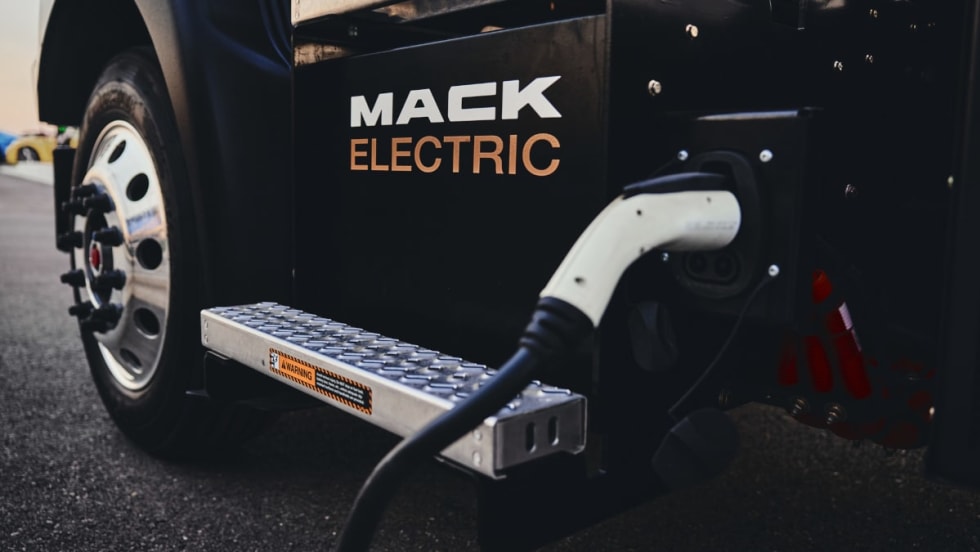
Mack Trucks Expands Full-Service EV Infrastructure Providers
Mack Trucks has expanded its comprehensive Turnkey Solutions program for Mack battery-electric vehicle customers with the addition of two new full-service providers, ABM and Lane Valente Industries.
Read More →
EV Realty Opens Major Truck Charging Hub in California’s Inland Empire
EV Realty’s San Bernardino Powered Properties’ truck charging hub, which has now opened, can serve over 200 medium- and heavy-duty trucks per day.
Read More →
WEX Launches Solution to Close the EV At-Home Charging Visibility Gap for Fleets
WEX unveiled its EV At-Home with Vehicle Fraud Protection, which ensures accurate and secure reimbursement for at-home charging.
Read More →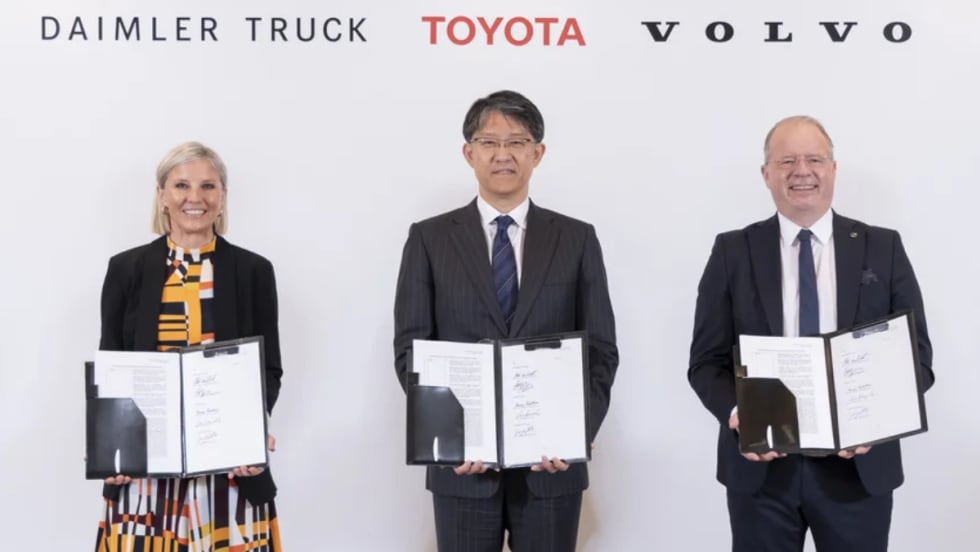
Toyota Motor Corporation to Join Daimler Truck & Volvo Group in Fuel Cell Joint Venture Cellcentric
Toyota intends to join Daimler Truck and Volvo Group as an equal shareholder in Cellcentric. All three shareholders intend to further strengthen Cellcentric as a leading manufacturer of fuel cell systems for heavy-duty commercial applications.
Read More →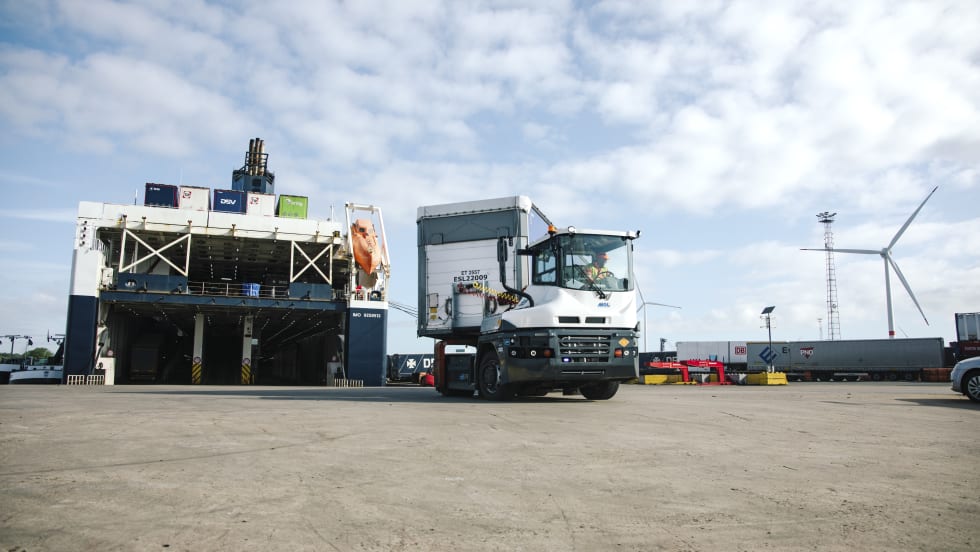
Volvo Penta Electric Drivetrain Powering Terminal Tractors
Volvo Penta and Volvo Financial Services (VFS) have partnered to support one of Northern Europe's largest shipping and logistics companies in its ambition to transition to electric terminal tractors.
Read More →