





Watch Now: GPS Tracking Proves Data is King
Fleets Search for Effective Anti-Idling Solutions
Fleets large and small investigate wireless technologies and changing driver habits to reduce the fuel costs and environmental impact caused by excessive and unnecessary truck idling.
May 1, 2008

In a quest to curb excess idling, a rapidly growing number of fleets of varied sizes and endeavors are now turning to global satellite positioning (GPS) tracking systems.
Photo: Samsung
9 min to read
With persistently high fuel prices, many fleets are still looking for ways to reduce excessive engine idling. In March, a 50-cent per gallon increase in diesel fuel, for example, really caught the attention of Russell Hemann, fleet administrative manager for Alliant Energy, based in Dubuque, Iowa.
His fleet includes about 2,500 trucks, and “when you’re using two million gallons of fuel a year, 50 cents is $1 million in added costs,” Hemann noted.
Along with wasting fuel, unnecessary idling also creates excessive engine wear and unnecessary pollution and noise — further inducements to clamp down on it.
Although estimates vary, International Truck & Engine Corp., for example, has estimated that a typical operator burns a half-gallon of fuel for every hour a truck idles — in the process, adding about 40 miles of engine wear and tear.
Alliant’s management and fleet department are still “struggling to come up with an effective answer” to the excessive idling problem, Hemann said.
The company has tried using internal communications with drivers to address the issue to little avail. “Has that been successful? Probably not,” said Hemann. “Statistically, we have not seen any impact of that (communications effort).”
More recently, the company has been considering driver incentives as another means of solving the idling issues. However, education, including discussions with drivers, has proven effective for TDS Telecom, headquartered in Madison, Wis.
TDS, along with Chicago-based sister company U.S. Cellular, operates about 1,900 trucks, chiefly light- and medium-duty models, according to Paul Harrison, senior administrator, eSourcing & Fleet.
The TDS fleet group has discussed the idling issue at weekly meetings and talked to technicians to make sure they’re not running their engines needlessly, said Harrison.
“It’s something that most technicians have been made aware of,” he added. As a result, “we’re not finding situations of excessive idling. Our technicians look at their van or truck as a tool to do their job. It’s a work truck as opposed to a perk truck,” he noted. Technicians idle vehicles only if using the battery for work-related purposes.
GPS Use Spreading
In a quest to curb excess idling, a rapidly growing number of fleets of varied sizes and endeavors are now turning to global satellite positioning (GPS) tracking systems as the most cost-effective tool for curbing excessive idling and other “fuelish” driver behavior.
Formerly, GPS tracking systems were expensive; their information often had to be downloaded from a module and/or required specialized software or a dedicated computer.
But GPS hardware costs — along with monthly service fees — have dropped sharply. In addition, the ability to use the Internet to obtain the data has made the systems highly flexible. As a result, even small fleets, such as Premier Indoor Comfort Systems LLC, Canton, Ga., are now taking advantage of them.
Premier Indoor Comfort, with a fleet of 30 light-duty pickups, vans, and work body trucks, uses a real-time GPS system, supplied by Time Management Inc., Orlando, Fla., according to Tyson Swann, Premier’s owner.
Swann first began using GPS tracking when he discovered his drivers “sitting in their trucks, eating lunch, and running the air conditioning for up to an hour at a time. It was unbelievable,” he said.
His system’s hardware, consisting of a control box with wires for attachment and an antenna mounted on the vehicle, costs about $395 per truck. The hardware is so easy to install that Swann has his own mechanic do it.
Monthly service fees average about $25 per truck — even less for larger fleets, according to Mario Johnson, president of Time Management.
The company’s tracking system is used in more than 30,000 customer fleet trucks, Johnson added.
The tracking system tells an operator in real time each time a truck is started or stopped, the length and time of the trip, if the engine was left running when it arrived, if the vehicle is speeding, and various other kinds of information.
Fleet managers are also alerted with an e-mail straight to their computers, iPhone, or BlackBerry any time a driver is speeding or leaves a certain geographic area (city/county).
E-mail alerts and other feedback are available on any computer with Internet access via a sign-on.
Swann said he’s able to continually monitor the movement of his trucks, including idling time. He gets e-mail alerts on speeding vehicles, off-hour use, and other driver violations on his phone.
Such a tracking system also allows the fleet manager to view an entire fleet on a map from any computer with Internet access at any time (24-hour/7-day) and click on the vehicle to see its exact location.
A truck displayed in green on the map indicates it’s moving. Signals from the vehicle are called in every five minutes. The system can also be used to set up routes and maintenance program reminders.
Totally sold on GPS tracking, Swann said, “I guarantee a company can get its investment costs in a GPS system back within the first month or two.”
Piedmont Landscape Contractors LLC, located in Chamblee, Ga. with fleet of 90 light and medium trucks, uses two GPS providers, according to Dan Headley, fleet manager.
Both provide the same service, aimed at reducing fuel costs and idling time. Networkcar, headquartered in San Diego, is used in some of Piedmont’s trucks and FleetBoss Global Positioning Solutions of Fern Park, Fla., runs in others.
Headley noted that one of the GPS providers charges a little more, though the overall monthly service charges from both average about $30 per truck.
Noting the precision of the data he gets from the tracking systems, “I can tell whether the drivers are eating lunch and how many toothpicks they’re using,” Headley said.
“I can tell how fast they’re going, pull up a map, and click on it to tell where they were, what time they left, how long they’ve been idling, how many miles on it — everything,” he added.
Headley has been using GPS tracking to help control excessive idling for about 2½ years and values its cost-effectiveness.
“It gives me all the control I need,” he concluded.
Market Includes Larger Providers
Along with small- and medium-sized GPS providers, numerous other companies provide wireless vehicle management and GPS services for large fleets.
They include companies such as XATA Corp., Minneapolis; Cadec Global LLC, Manchester, N.H.; Tripmaster Corp., Grand Prairie, Texas; and QUALCOMM Corp., San Diego.
XATA Corp., for example, services more 62,000 trucks, including large fleets such as Sysco Food Service, based in Houston, and Safeway Inc., in Pleasanton, Calif.
Along with marketing its services directly to customers, XATA also offers them through Reading, Pa.-based Penske Truck Leasing.
“One of the most difficult things for XATA and similar-size vendors is the expense of a direct sales force calling on smaller customers,” said Tom Flies, senior vice president of product management for XATA.
“Penske resells our product. They package it,” Flies added.
Penske handles installation of XATA technology in its lease vehicles and also performs maintenance and service on the XATA system for its customers. “It’s a one-stop shop,” Flies said.
Typically, larger companies such as XATA offer advantages in working with the varied assortment of vehicles in a large fleet operation, and they “provide various resources to help optimize the fleet’s operations,” Flies added.
He also cited the company’s expertise with electronic compliance regulations, such as Department of Transportation (DOT) regulations for hours of service, and its ability to break down data into detailed vehicle and driver performance reports.
“We don’t just report straight idling time, for example, but percentages on who was driving the vehicle during a specific time frame. And, instead of total miles per gallon on a trip, we track what speeds the vehicle was driven, whether cruise control was used or, with a manual transmission, what the shifting pattern was,” he explained.
“We really break the data down for a fleet so they can more effectively pinpoint their fuel economy,” Flies added.
In general, the company charges a per-vehicle installation fee. And because vehicle data is normally fed through a cellular network, the fleet also pays a monthly cell phone bill.
Essentially, the system uses a computer/GPS system, mounted on the truck roof and connected to the engine’s J1708 electrical bus with a cable, which sends information through the wireless network. Satellite is used where cell phone transmission isn’t available.
XATA then feeds the data to the fleet operator’s Internet Web site.
Large Fleets Try GPS
Among major fleet operators, Kirk Herniman, manager, equipment and leasing for Integrated Electrical Services in Houston, is still awaiting potential fuel-saving possibilities from the GPS tracking system the company has begun using. The systems are supplied by @Road, a division of Trimble.
Integrated Electrical Services, with more than 2,000 trucks, began installing GPS systems in the past year. Its operations include more than 30 companies around the country. So far, the company has installed GPS systems in about 120 trucks.
Integrated started using GPS tracking primarily “to assist in dispatching and improving the efficiency of work crews,” said Herniman.
“Its other benefits (such as control of excessive idling, speeding) are secondary,” said Herniman. “But this is another important use: we’re definitely looking at it as a way to reduce idling and fuel costs,” he explained.
“Drivers on their own wouldn’t think they were idling excessively, even if they were sitting in their trucks, running the engines, and eating their lunch. The only way to correct the problem is to find it. We can find it using a GPS-type system,” Herniman said.
Over the past year, Verizon Inc., headquartered in Piscataway, N.J., has been successful in avoiding fuel costs by curbing unnecessary engine idling, said Dominick Harrison, manager, fleet operations.
But the company still has a potential to save a lot more, he added.
“We think there’s about a $20 million cost to unnecessary idling,” Harrison noted, citing a targeted 3% reduction for 2008 in the 53 million gallons of fuel used by the company’s vehicles. Most are light- and medium-duty trucks.
Verizon has been using a combination of GPS tracking and employee education efforts to curb unnecessary engine idling.
GPS tracking systems have been installed in about 25% of its trucks. Some GPS systems have the ability to shut off an idling truck’s engine by remote control, and the company has considered that, Harrison said.
But safety issues have made the company leery of pursuing that course. “You don’t want to turn off a truck’s engine if it’s off-road in an emergency situation with its beacon light on,” said Harrison, citing an example of potential dangers.
Along with using GPS for the past year, Verizon has been conducting intensive driver group education through its internal Web site, e-mails, and staff meetings, emphasizing the impact unnecessary idling has on fuel costs and the environment.
“Some people are more concerned with fuel costs; others care more about the environment. But it really goes back to the driver education and finding out why drivers are leaving the trucks idling,” said Harrison.
“A lot of it is related to weather conditions. In the South, oftentimes they’re running the air conditioning. In the wintertime, they need the heat,” he added.
Harrison has also looked at how to educate the supervisor too. “The GPS system alerts the supervisor that this vehicle has been idling in the same spot for an hour, and he can call the driver,” he said. “We’ve also looked at a reward program. If we target a 5% reduction in fuel use, how to make it worth the employees’ effort when they achieve that reduction goal?”
Subscribe to Our Newsletter
More Technology

AI Is Reshaping Fleet Management Faster Than Most Fleets Realize
Learn more about how AI, data, and operational intelligence are transforming fleet management, replacement planning, and the future of fleet operations.
Read More →
What is Motive Vision?
Motive Vision brings together fleet operators, safety leaders, and industry professionals to collaborate, share insights, and help shape the future of fleet technology. Learn why the Motive innovation summit continues to grow year after year.
Read More →
Motive Focuses on Integration & Automation as it Rolls Out New AI-Driven Systems & Hardware
Motive unveiled new AI-driven safety tools, systems, and hardware during its annual innovation summit. New launches included the Atlas AI assistant, Automations, AI Omnicam Plus, and updates to AI Dashcam Plus.
Read More →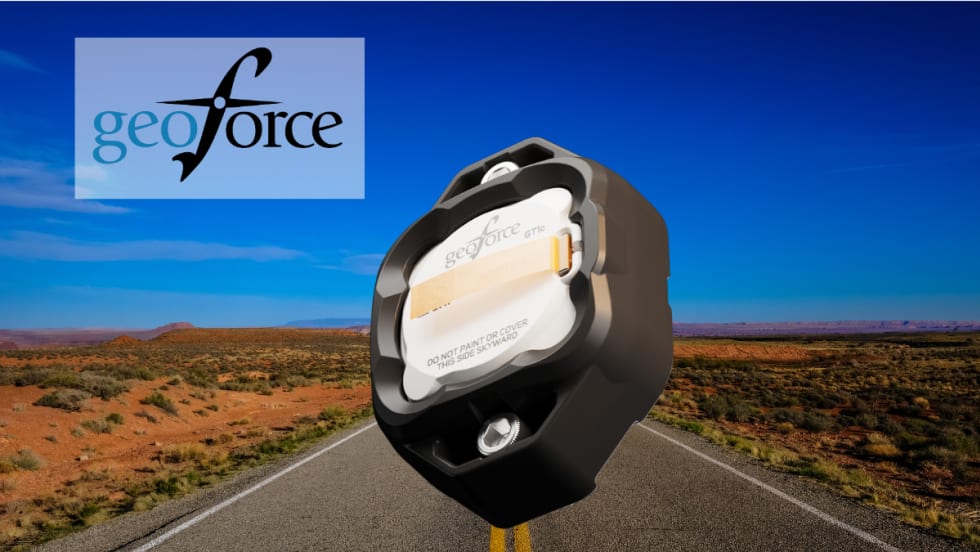
Geoforce Launches GT1c with AT&T Business for Rugged Cellular Asset Tracking
Geoforce, a global leader in rugged asset tracking, has launched the GT1c, which leverages cellular technology and has a more cost-effective, purpose-built design to enable rugged cellular equipment tracking at scale. The GT1c complements Geoforce's full range of satellite tracking devices.
Read More →
Lytx Expands All-In-One Fleet Platform Strategy With AI, Video, and Asset Tracking Updates
Lytx introduces LytxOne and expands its all-in-one ecosystem with AI insights, 360-degree visibility, and integrated asset tracking.
Read More →
GM Brings Google Gemini to Millions of Vehicles
General Motors will roll out Google Gemini to model year 2022 and newer Cadillac, Chevrolet, Buick, and GMC vehicles with Google built in, meaning approximately 4 million vehicles will be eligible for the update.
Read More →
Fleetio Wins Innovations Showcase People’s Choice Award at NAFA’s 2026 I&E
Fleetio’s AI Service Advisor won the People’s Choice Award in the 2026 Innovations Showcase at the NAFA Fleet Management Association's 2026 Institute & Expo (I&E) this week.
Read More →
Mack Trucks’ Connected Services Platform Drives Measurable Uptime, Cost & Safety Results
Data from AutoSend Over-The-Air Updates, GuardDog Connect Predictive Uptime, and Tailored Service Contracts demonstrate how software and services are delivering real-world outcomes for Mack Trucks customers.
Read More →
Sponsored•April 1, 2026
Future-Proofing Fleet Tech with Modular Mounting
Technology cycles move faster than vehicle rotations. Discover how modular mounting infrastructure protects your investment and reduces fleet-wide downtime.
Read More →
Sponsored•March 30, 2026
Improving Jobsite Safety and Uptime with Advanced Driver-Assist Technology
Safer crews. Fewer incidents. Better uptime. Learn how driver-assist technology is changing the way vocational fleets operate.
Read More →