




What Fleet Managers Should Know About Diesel Particulate Filters
Developed to achieve government-mandated diesel emissions levels, DPF operation requires little driver involvement. The units are designed for long life, but must be properly maintained.

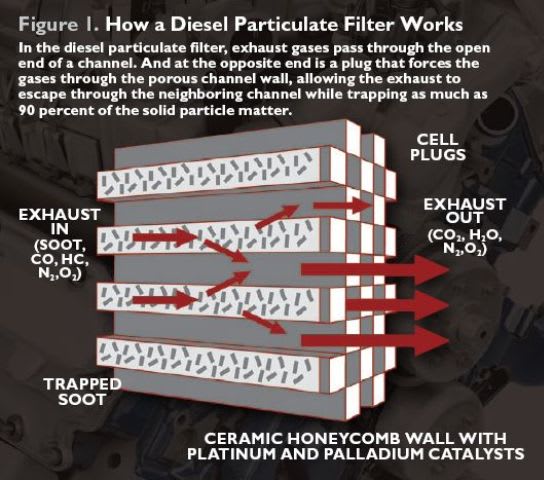
DPFs are commonly made from ceramic materials such as cordierite, aluminum titanate, mullite, or silicon carbide. Inside the DPF is a honeycomb structure with alternate channels plugged at opposite ends.
Source: Manufacturers of Emissions Controls Association
Fleet managers should be up to speed on the 2007 federal diesel emissions standards. Diesel engines built on Jan. 1, 2007, and thereafter are required to reduce nitrogen oxide (NOx) emissions by 50% and particulate matter (PM) emissions, also known as soot, by 90%, relative to the 2004 standard.
A critical technology engine manufacturers developed to achieve these requirements is the diesel particulate filter (DPF), which traps and removes particulate matter from diesel exhaust.
What should be expected when operating trucks with a DPF? How does it affect maintenance schedules? In what ways, if any, does the DPF require driver involvement? What should fleet managers know to reduce risk of premature DPF clogging that leads to costly repairs and downtime? Here are the basics.
How a DPF Captures Soot
What exactly is a diesel particulate filter and how does it work? According to the Manufacturers of Emissions Controls Association, DPFs are commonly made from ceramic materials such as cordierite, aluminum titanate, mullite, or silicon carbide.
Inside the DPF is a honeycomb structure with alternate channels plugged at opposite ends. (See Figure 1.) The diesel exhaust gases pass through the open end of a channel. At the opposite end is a plug that forces the gases through the porous channel wall, allowing the exhaust to escape through the neighboring channel while trapping as much as 90% of the solid particle matter (soot).
Regeneration Removes Buildup
Over time, soot builds up on the DPF channel walls. How is that soot removed to keep from clogging the DPF?
The process is called regeneration. The filter is cleaned — "regenerated" to its original state — by burning off the soot at a high temperature (could be as high as 1,000 degrees F inside the filter). What’s left over is harmless ash residue.
Most 2007-compliant engines feature two types of regeneration.
Passive regeneration. This occurs automatically when exhaust gases are hot enough during vehicle operation, usually with highway driving or higher load applications, to burn off accumulated soot. An ongoing process, it occurs when conditions permit and are not noticeable to the driver.
Active regeneration. This occurs when enough soot accumulates in the filter to raise exhaust backpressure to a certain limit. The process is initiated by injecting fuel into the exhaust automatically, requiring no driver interaction. With International medium-duty trucks, for example, active regenerations occur at speeds over 17 mph and last 15-20 minutes. The driver is not alerted and doesn’t notice a change in performance.
How often does active regeneration occur? City driving with light load applications can require active regeneration as much as every 300-400 miles.
Activating Parked Regen
Parked regeneration is a form of active regeneration in which the driver must park the vehicle and initiate the regeneration process by pushing a button on the dash.
This process does not pertain to light-duty pickups and vans with 2007-compliant diesel engines. However, most medium-duty trucks are equipped with dash indicators alerting driver of the need for parked regeneration (also known as manual regeneration). The process takes approximately 20-40 minutes to complete.
How often is the parked regeneration process required? According to Bob Aquaro, vice-president of product assurance with Mitsubishi Fuso Truck of America, very few applications require parked regeneration. "If you had a truck in ultra-low speed mode, a truck that never got over 25 miles per hour, that would be an instance for manual regeneration," advises Aquaro.
What happens if the driver ignores warning indicators? A "Driver Interface" document created by International Truck and Engine Corporation puts it this way: "WARNING: Failure to alter the duty-cycle or initiate manual regeneration will cause the engine to lose power (and therefore limit vehicle speed) and eventually stall out engine, which could cause an accident. . . Failure to abide by these instructions may result in severe loss of power, engine vehicle speed and may cause an accident or a fire."
DPF Maintenance 101
Although the DPF is designed for long life, eventually the accumulated ash must be removed by special cleaning equipment. What is the typical cycle for the DPF before it needs to be cleaned? "We’re looking at least 100,000 miles before having to worry about it," projects Aquaro. Engine manufacturer estimates range from 100,000-150,000 miles in most light- and medium-duty applications.
"The question then becomes do we clean (the DPF) or do we offer a DPF exchange program, replacing it altogether?" poses Aquaro. The answer is manufacturer- and truck class-specific. Fleet managers should consult the manufacturer’s rep to determine the cleaning/replacement processes for specific trucks.
What costs should can be expected for DPF cleaning/replacement? Estimates range from several hundred dollars to $2,500 and more.
Factors That Impact DPF Life
Here are factors to consider to maximize DFP life.
Fuel. Too much soot leads to premature clogging and change cycles for the DPF. One way to counteract this issue is to focus on removing any controllable sources of soot or particulate matter.
One particular controllable source is the amount of sulfur in fuel. And this is where ULSD comes into play because its sulfur content is only 15 parts per million (ppm), down from the 500 ppm in the previous low sulfur fuel.
A Frequently-Asked-Questions document, produced by International Truck and Engine Corporation and posted on the Ryder Truck Leasing Web site, www.ryder.com, says this: "Misfueling once or twice won’t create problems; however, continuous use of diesel fuels containing more than the recommended 15 ppm of sulfur will cause a poisoning effect of the catalyst in the exhaust system and ruin the emissions system, causing the vehicle to break down with costly repair implications and void warranties."
"Anything that goes into the fuel tank," Aquaro warns, "will impact the DPF. So make sure you’re putting in the right fuel."
Engine oil. To meet 2007 emissions requirements, engine oil manufacturers have developed a new standard: CJ-4. The standard for pre-2007 oils is CI-4 Plus, which was designed to meet 2004 EPA regulations.
What makes CJ-4 more compatible to 2007 engines? The difference is lower levels of phosphorous, ash, and sulfur. If used in 2007 engines, these additives could prematurely plug up the diesel particulate filter (DPF), increasing maintenance issues.
What are the risks if the previous standard, CI-4 Plus, is used in a 2007 engine? "You may find that you have to replace the DPF at a much earlier than anticipated time," says Dennis Bachelder, senior associate for Engine Oil Licensing and Certification at API, with over 25 years of experience in the areas of fuels, lubricants, and exhaust emissions. "You then face performance problems as a result of any backpressure from a plugged-up DPF."
Would this practice void the engine warranty? "It’s a risk, but that’s the call made by the engine manufacturer on a case-by-case basis. But one thing’s for sure: replacing the DPF is not cheap and will result in performance problems and cost issues incurred by downtime for the repair," Bachelder explains.
Oil change intervals. "Abide by manufacturer oil change intervals," Aquaro advises. "That can have a huge impact on DPF longevity. If the manufacturer says to change oil at 6,000 miles, you should change it at 6,000 miles. Those numbers aren’t just pulled out of the air. Engines are tested extensively to arrive at those intervals."
More Fuel
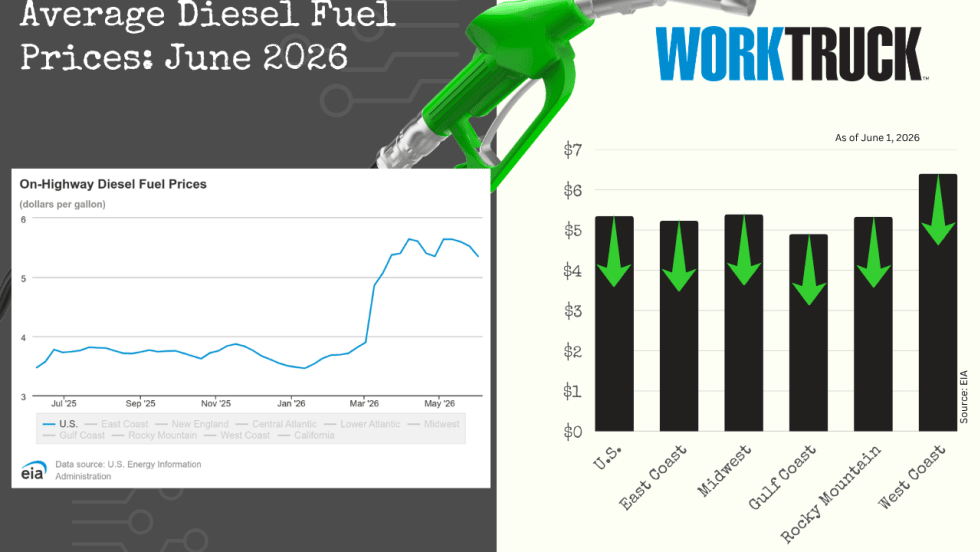
June Diesel Trends Update
The national average price of a gallon of diesel decreased by more than 17 cents this week, and all five regions reported lower prices, ranging from just over 10 cents to more than 23 cents cheaper than a week ago.
Read More →
3 Benefits of Hydrogen as a Fuel
Hydrogen fuel offers zero harmful emissions, incredible energy density, and flexible production pathways. In this video, we learn from a hydrogen industry insider about the three biggest benefits of hydrogen as a fuel to power commercial vehicles.
Read More →
Are You Tracking Your Fleet's True Total Cost of Ownership?
Bobit Business Media surveyed 190 fleet professionals and found that while most fleets are tracking costs, fragmented systems and data gaps are keeping true TCO visibility out of reach. With rising pressure to control spend in an increasingly volatile environment, the gap between what fleets think they know and what the data actually shows is wider than you might expect. See how your peers are managing costs today and where the industry still has room to improve.
Read More →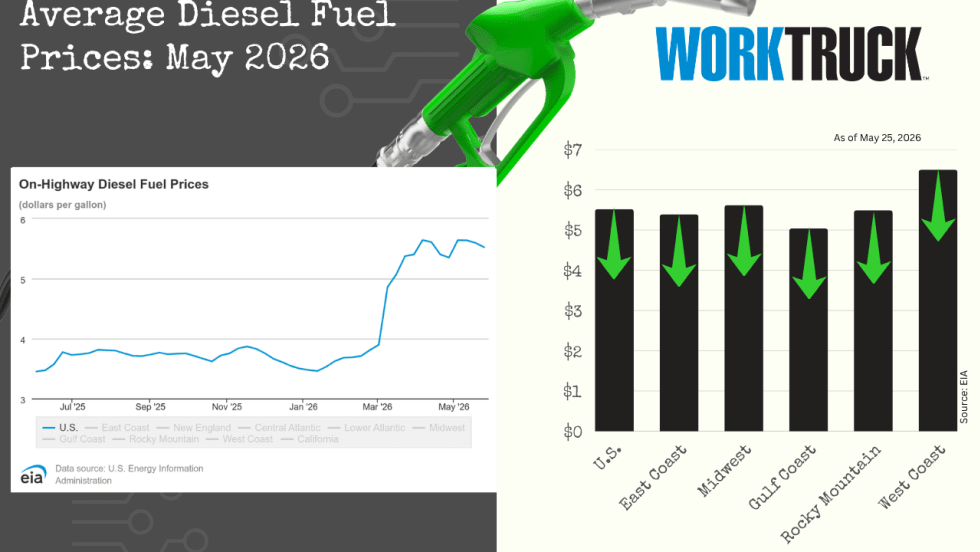
May Diesel Trends Update
The national average price of a gallon of diesel decreased by more than 7 cents this week, and all five regions reported lower prices, ranging from just over 2 cents to more than 12 cents cheaper than a week ago.
Read More →
How Hydrogen Fuel Is Produced for Fuel Cell Trucks
How is hydrogen produced for fuel cell trucks? Let’s learn more about that as Pajarito Powder CEO Christian Mohrdieck walks us through the process in this video.
Read More →
RoadFlex Launches Mobile App for Drivers and Fleet Managers
RoadFlex has launched its mobile app to give fleet teams a faster, easier way to manage fleet card activity, capture receipts, review transactions, and maintain spend visibility from the field.
Read More →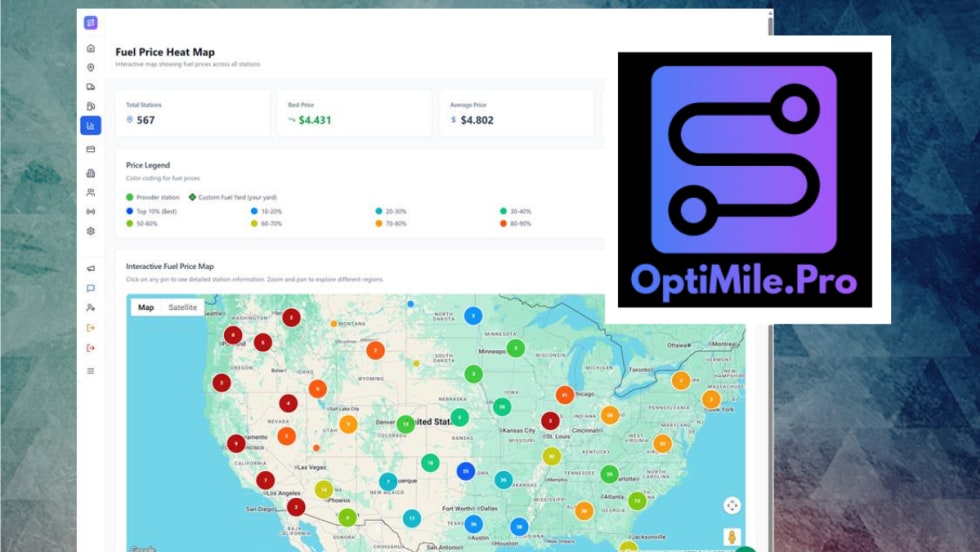
OptiMile Pro Launches Fuel Planning Platform to Cut Fleet Fuel Spend
OmtiMile Pro’s new software replaces the "fill up when empty" habit with a globally optimized fuel plan that picks the cheapest stop in the fleet's contracted network and the precise amount of fuel to load on every run.
Read More →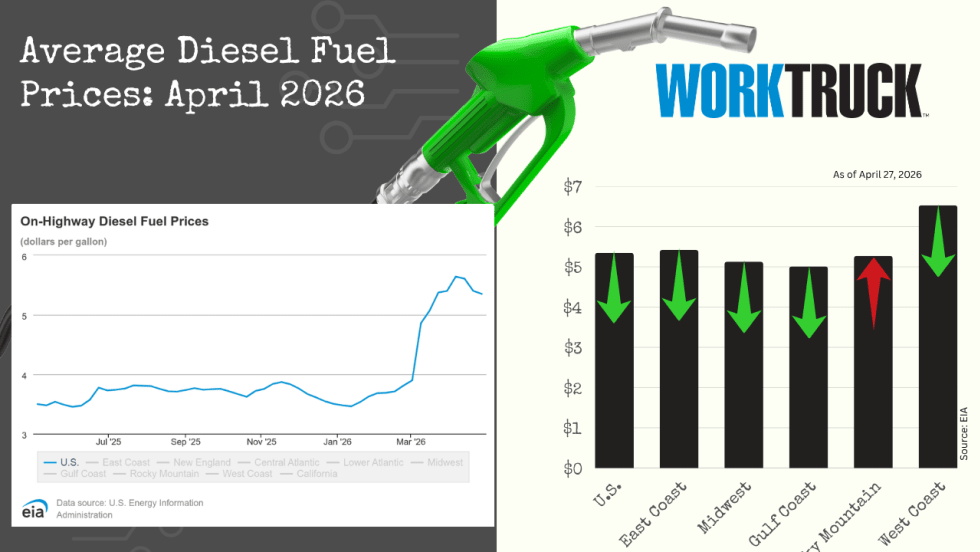
April Diesel Trends Update
The national average price of a gallon of diesel dropped by more than 5 cents this week, and all but one region reported price decreases.
Read More →
ChargePoint & South Coast Air Quality Management District Surpass 90 EV Charger Installations Across Southern California
ChargePoint has enabled more than 90 charging ports for the South Coast Air Quality Management District in Southern California. The project replaced outdated chargers with 55 new, Level 2 ChargePoint units capable of serving 94 vehicles simultaneously.
Read More →
Pajarito Powder Appoints Hydrogen Industry Veteran as New CEO
Pajarito Powder has appointed Christian Mohrdieck, who has a wealth of experience and knowledge in both the fuel cell and electrolyzer businesses, as its new CEO.
Read More →