





Related: Reducing Work Truck Fleet Costs & Increasing Uptime
Anti-Idling Programs that Work
Idling is a common concern for fleets trying to manage fuel consumption. With the help of the right anti-idling program, fleet managers can decrease fuel use and regulate fuel budgets.
May 1, 2007

Photo: Getty Images
5 min to read
Excessive engine idling has long been recognized for its high cost and damaging environmental effects. Wasting fuel creates excessive engine wear and unnecessary pollution and noise. Within the past year, high fuel prices have elevated idling to a new level of concern for fleet management.
Although estimates vary, International Truck & Engine Corp., for example, estimates that a typical operator burns a half-gallon of fuel for every hour a truck idles — adding about 40 miles of engine wear and tear. This cost adds up quickly.
Claude Masters, CAFM, manager of acquisition and fuel for Florida Power and Light in West Palm Beach, says, “If you can cut an hour of idling per day, it will result in significant savings across the entire fleet.”
Masters’ fleet traditionally had an anti-idling program that was “limited in scope,” but, with the onset of high fuel prices, the policy was revised and strengthened with strong support from upper management. “When fuel prices got so high, it grabbed everybody’s attention,” Masters says.
Using Telematics
Preprogrammed engine shutdowns are a fairly effective — though by no means foolproof — way to curb unnecessary idling. The J1708 protocol has an override — easy for drivers to use and understand. If a driver wants to run the engine to maintain cab comfort, he or she just has to kick the engine RPMs up to a certain level, reset the idling shutdown clock, and defeat the automatic control. Typically, a company pulls engine data from its maintenance data system and checks idle shutdown activity to discover drivers’ activities. This rather cumbersome process discourages many companies from this practice.
Many fleets, seeking to minimize idling and improve other aspects of productivity, are turning to vehicle recorders and GPS tracking systems as the most cost-effective solution.
With approximately 1,100 vehicles, including a large number of light and medium trucks, Frank Castro, CAFM, utilities fleet manager for Tacoma Public Utilities, Tacoma, Wash., is among those still seeking to implement a program.
“It’s on our radar screen as an opportunity for cost savings,” he said. “The only way I can enforce anti-idling is with GPS telematics. Idle reduction is one of our main objectives, but we’re also looking at GPS for other productivity improvements,” Castro concluded.
Meanwhile, Genuine Parts Inc., an Atlanta distributor of NAPA components, is rolling out such a GPS tracking program, initially launched last year.
The company operates a fleet of 520 vehicles, 90% of which are medium-duty Freightliners, according to Jerry Greiner, manager of logistics. Some 39 of its trucks have the GPS system installed, and the company plans to install the system in the rest of its fleet this year.
During initial testing and evaluation, Genuine Parts determined drivers idled their trucks 2-3 hours per day — a pretty heavy hit in terms of fuel consumption.
Still, such numbers aren’t unusual, according to fleet management service providers. “I can tell you private fleets generally idle upwards of 35% of the time. It’s very high,” said Pete Allen, vice president of national accounts for Xata Corp., a Minneapolis fleet management applications company.
In Genuine Parts’case, extensive idling resulted from an accumulation of small chunks of time at numerous stops. Drivers leaving the distribution center make 12-15 stops and deliveries per evening. They idle engines 15-20 minutes at each stop, Greiner said. He attributes this practice to a combination of reasons. Drivers typically want to maintain cab climate comfort but many also fear running down the battery because of their frequent liftgate use. That fear was proven to be largely groundless. A test by the company’s liftgate installer determined liftgates could actually be cycled 14 times before the battery ran down.
For some drivers, keeping the engine on was just a bad habit. “In the past, they always kept their trucks running, and it was simply a hard habit to break,” Greiner said. “Once we found we could track and cut that out, our fuel economy went up, and that’s what really sold the program to our executives. Other than telling drivers ‘don’t idle the trucks,’ we previously had no other way of backing it up and weren’t sure whether they were listening or not.”
By making drivers accountable, Genuine Parts reduced idle times on average to one hour a week from a previous 2-3 hours per day.
U.S. Foodservice, based in Baltimore, Md., is a large operator of more than 5,000 vehicles, uses a data-tracking system for all its fleet vehicles, including medium-duty and light-duty vans, according to Bernie Cassetori, the company’s vice president of fleet management.
Xata Corp. provides U.S. Foodservice with real-time information fed directly to a fleet manager’s computer on a controlled, closed Web site. Depending on a fleet operator’s needs, some of the more prominent fleet management providers supply the data required and the total cost of service.
“We don’t have any computers recording anything. It’s all off the Internet, so even if you had just three trucks, there’s no investment other than installing the system into the truck,” Cassetori, said. Installation runs about $2,000 per vehicle, including all phone charges, because data from the vehicle is normally fed through a cellular network.
Xata uses a GPS system, mounted on the truck roof and connected to the engine’s J1708 electrical bus with a cable that sends information through the wireless network. Satellite is used where cell phone transmission isn’t available. Xata then feeds the data to the fleet operator’s Web site. Vehicle idling times — along with overall fuel economy — are tracked by U.S. Foodservice’s various fleet managers on a divisional basis, Cassetori said.
But, he added, “I can run daily or monthly reports as far as idling time is concerned. A pop-up screen tells me within different divisions, truck level, or the driver level what kind of fuel efficiency I’m getting.”
The company’s goal is to reduce engine idling time to less than 5%, and enforce its policy through discipline.
“You sit down with the driver and tell him that, ‘based on today, you’re idling 27% of the time at stops and our goal is to be under 5%. When you get to a stop, shut the truck off,’” said Cassetori.
“The Xata software provides information on whether drivers idle at a traffic signal or a regular stop. We don’t look at idling times at traffic signals — just the route stops and, if next week the driver has the same idling time, we give that person a ‘failure to communicate’ warning,” Cassetori said. “After that, we use progressive discipline with our drivers,” he added. “We pay close attention to the return on investment and we’re happy with the Xata system.”
Subscribe to Our Newsletter
More Technology

AI Is Reshaping Fleet Management Faster Than Most Fleets Realize
Learn more about how AI, data, and operational intelligence are transforming fleet management, replacement planning, and the future of fleet operations.
Read More →
What is Motive Vision?
Motive Vision brings together fleet operators, safety leaders, and industry professionals to collaborate, share insights, and help shape the future of fleet technology. Learn why the Motive innovation summit continues to grow year after year.
Read More →
Motive Focuses on Integration & Automation as it Rolls Out New AI-Driven Systems & Hardware
Motive unveiled new AI-driven safety tools, systems, and hardware during its annual innovation summit. New launches included the Atlas AI assistant, Automations, AI Omnicam Plus, and updates to AI Dashcam Plus.
Read More →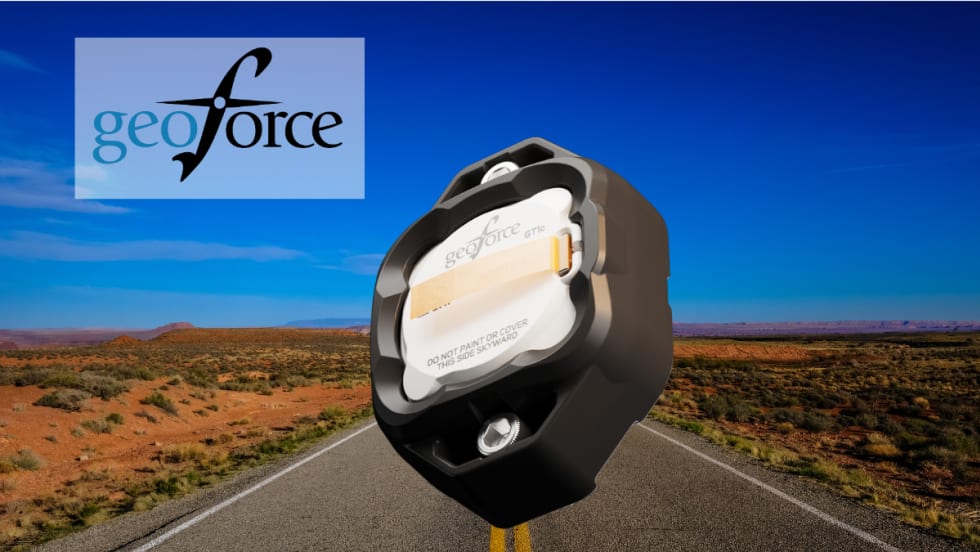
Geoforce Launches GT1c with AT&T Business for Rugged Cellular Asset Tracking
Geoforce, a global leader in rugged asset tracking, has launched the GT1c, which leverages cellular technology and has a more cost-effective, purpose-built design to enable rugged cellular equipment tracking at scale. The GT1c complements Geoforce's full range of satellite tracking devices.
Read More →
Lytx Expands All-In-One Fleet Platform Strategy With AI, Video, and Asset Tracking Updates
Lytx introduces LytxOne and expands its all-in-one ecosystem with AI insights, 360-degree visibility, and integrated asset tracking.
Read More →
GM Brings Google Gemini to Millions of Vehicles
General Motors will roll out Google Gemini to model year 2022 and newer Cadillac, Chevrolet, Buick, and GMC vehicles with Google built in, meaning approximately 4 million vehicles will be eligible for the update.
Read More →
Fleetio Wins Innovations Showcase People’s Choice Award at NAFA’s 2026 I&E
Fleetio’s AI Service Advisor won the People’s Choice Award in the 2026 Innovations Showcase at the NAFA Fleet Management Association's 2026 Institute & Expo (I&E) this week.
Read More →
Mack Trucks’ Connected Services Platform Drives Measurable Uptime, Cost & Safety Results
Data from AutoSend Over-The-Air Updates, GuardDog Connect Predictive Uptime, and Tailored Service Contracts demonstrate how software and services are delivering real-world outcomes for Mack Trucks customers.
Read More →
Sponsored•April 1, 2026
Future-Proofing Fleet Tech with Modular Mounting
Technology cycles move faster than vehicle rotations. Discover how modular mounting infrastructure protects your investment and reduces fleet-wide downtime.
Read More →
Sponsored•March 30, 2026
Improving Jobsite Safety and Uptime with Advanced Driver-Assist Technology
Safer crews. Fewer incidents. Better uptime. Learn how driver-assist technology is changing the way vocational fleets operate.
Read More →