




How to Avoid Over- and Under-Spec'ing Pitfalls
Spec’ing a medium-duty truck is a complicated process that requires hundreds of decisions and choices, with each potentially impacting another. It is a science to achieve the balance between over-spec’ing and under-spec’ing a truck.

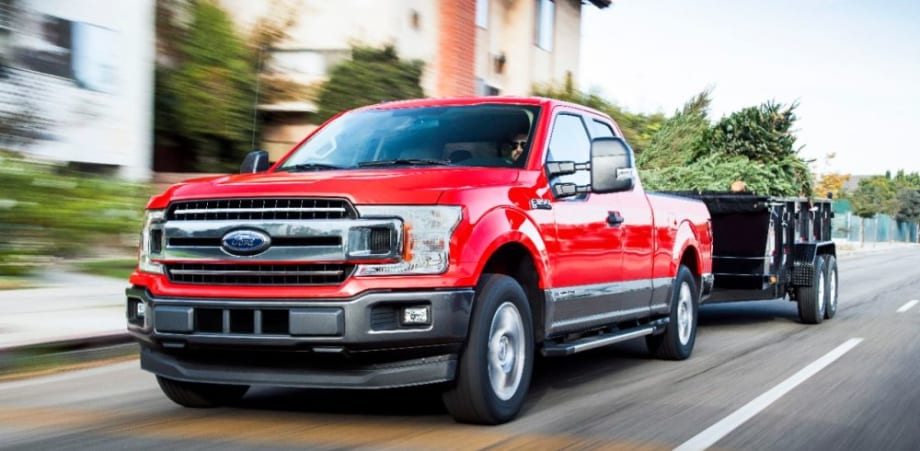
Over- and under-spec’ing also impacts resale from the standpoint of weight. Many companies over-spec to handle more weight than necessary, which costs much more up front and is not necessarily recouped on the resale.
Photo courtesy of Ford Motor Co.
When spec’ing a medium-duty truck, there are a number of key factors that must be spec’ed correctly. If not, you’ll end up making an expensive mistake.
Over-spec’ing a truck can dramatically increase acquisition costs or reduce fuel mileage by acquiring a less fuel-efficient larger displacement engine. But there can be extenuating circumstances justifying over-spec’ing. For instance, specifications are dependent on the expected life of the equipment. For fleets unable to make timely replacements, over-specifying becomes more valuable.
On the opposite end of the spectrum, under-spec’ing could increase maintenance costs and accelerate wear and tear as it strains to move a load. With under-spec’ed trucks, there is a tendency by users to overload the vehicle. Besides accelerating replacement of wear items, such as brakes, an overloaded vehicle also increases the company’s liability exposure if it is involved in a preventable accident.
Usually, the majority of trucks that have unscheduled maintenance problems are underpowered and overloaded, which, in addition to increased shop time, results in increased driver downtime. Maintenance records often reveal that most of the vehicles that experience repeated mechanical failures are under-spec’ed.
While buying minimal horsepower and low-torque engines and least expensive transmissions may get your job done, will this be desirable to the next owner? Likewise, don’t acquire the lowest acceptable axle weight ratings and gross vehicle weight rating (GVWR). This too will limit the number of buyers who might consider buying the unit when it is taken out of service.
Another consequence of an under-spec’ed truck is it may require multiple trips due to limited payload capacity.
It is common for a company to allow budget restraints or commercial driver’s license (CDL) requirements to drive GVW decisions. For instance, there is a tendency to under-spec trucks to avoid exceeding 26,000-pounds-GVW, which requires drivers to have a CDL and triggers the need for compliance with increased regulatory requirements.
Over- and under-spec’ing also impacts resale from the standpoint of weight. Many companies over-spec to handle more weight than necessary, which costs much more up front and is not necessarily recouped on the resale. Conversely, many companies under-spec their trucks then run heavier than allowed, causing damage and incurring higher maintenance and repair costs, along with long-term damage to the truck chassis and components which could impact resale.
The challenge is to achieve the right balance between the truck’s job requirement and expected annual mileage to help produce the lowest cost per mile.
Obtain End-User Input
A fleet manager must talk with the end-users in the field to understand what type of service the truck is expected to perform and how it will be used. You should solicit input from field personnel to ensure that local issues affecting the vehicle’s operation are taken into account.
When talking with employees who are actually using the trucks, you may discover they have been experiencing problems unknown to you. It is common to discover after-the-fact problems with loading height, cab access, lack of bins, limited visibility when backing, or insufficient tool storage space. When in the field, it is your opportunity to ask a lot of questions to determine vehicle or truck upfit deficiencies. For instance, ask employees about passenger requirements, whether there is a high idling requirement, how the payload is distributed, whether the vehicle will be fully loaded, or operating with a diminishing load, and how they load and off-load cargo.
Talk to your drivers and your in-house technicians or third-party maintenance provider to analyze maintenance trends for your trucks in operation. For example, what are common maintenance problems? Do your trucks have sufficient tool storage? Are drivers having a hard time getting in and out of the truck or accessing the bed?
While talking to drivers is key to building the right truck, keep in mind that some features are subjective. For example, your drivers might say a truck needs “more power.” Before acquiescing to user requests, do the math in terms of gross vehicle weight and payload, type of drive cycle and road conditions, and what powertrain is really going to be best suited for the job.
The key objective of your discussions with vehicle end-users is to match the truck with the fleet application.
When meeting with field employees, ask questions about their current vehicles. For example, is the powertrain right for their application? Similarly, investigate whether the gross axle weight rating (GAWR) is adequate for the payload carried? Or, is gross combination weight rating (GCWR) high enough if the vehicle will be towing a trailer?
It is also important to understand how a vehicle will be loaded and unloaded to determine whether a liftgate or pull-out ramp should be chosen for the truck body. Ask how employees load the payload. Do they use pallet jacks or forklifts? What are the dimensions of the payload? It is important to know the height requirements of the truck. For instance, if payload will be loaded and off-loaded at a dock, what is the dock height? If a forklift is utilized in the loading or unloading payload, it is essential to have the forklift reinforcement option included in the body specifications. Also, know where and how your drivers are securing the load. Take into consideration the height and bulk of your product to ensure the truck has the proper cargo restraint system.
Determining Truck Payload is Critical
The most important factor in truck selection is determining the payload needed to perform a particular operation.
Overextending a truck’s payload capacity beyond the chassis’ weight specifications is a good way to shorten the truck’s service life. Overloaded trucks will cause premature tire wear, decreased fuel economy, and downtime due to engine or transmission repair. In addition, overloading results in fines and possible impoundment of the vehicle by the authorities.
The first step in calculating payload is to determine how much weight a truck will need to carry in its daily work application. It is important to determine the maximum need here, not an average. The vehicle must be able to do the job every day with the maximum load at any given time. In addition, you need to make sure that the truck can carry not only the payload, but also any additional equipment you put on the truck. It is important to factor in the body and equipment weight, as well as any tools or other material that may be stored or transported by the chassis.
The second component is the type of payload. Are you hauling loose gravel, pallets, or boxes of merchandise? This will determine the type of truck and body combination you need to choose.
Another determinant is the volume or size of the payload. The truck needs to be large enough to handle the volume. You need to know how the payload will be loaded. Payload weight will also help determine if the cargo can be loaded and unloaded by hand, or whether you will need a power liftgate or some other type of assist to get it up in the body or bed. Ask if the payload stackable? If yes, can you stack it right to the ceiling? Or, can only the floor space be used? How do you secure the product? Getting any of these factors wrong can mean the vehicle will be spec’ed incorrectly.
The best way to determine actual payload is to take a truck as it would be normally loaded and weigh it on a highway scale. Another practical tip is to separately weigh the front axle and rear axle. This will tell you if you are overloading the whole truck or just one of the axles.
To determine the correct size of a chassis for the intended payload often requires a non-scientific judgment call: namely, how much over-capacity to build into the payload capacity of the vehicle when spec’ing its requirements. Spec’ing the truck to the minimum necessary payload rating (by basing it on an average load, or looking at only today’s business needs instead of trying to anticipate future needs) means that the vehicle will be operating at peak capacity most of the time, which may compromise safety and the length of its service life.
Using average payload for specs means that the vehicle will sometimes be overloaded – and that means excessive wear and tear, higher maintenance costs, and poor fuel economy.
At the same time, too much payload capacity is wasted capacity that should be avoided. One of the most common mistakes made by fleet managers is not understanding the importance of allowing reserve GVW when spec’ing a truck.
You need to make sure that the truck can carry not only the payload but also any additional equipment you put on the truck. The fleet manager needs to add the body and equipment weight to that of any tools or other material that could be stored or transported by the chassis.
Engine Considerations
There are many mistakes that can be made when spec’ing and selecting an engine. Fleet managers should also take into account an engine’s proven reliability and durability into consideration. An engine may look good on paper but not provide the desired characteristics in real-world applications.
Analyze the fleet application to determine the required horsepower and torque needed to get the job done efficiently and effectively. The powertrain needs sufficient horsepower to supply gradeability, startability, and useful work capacity.
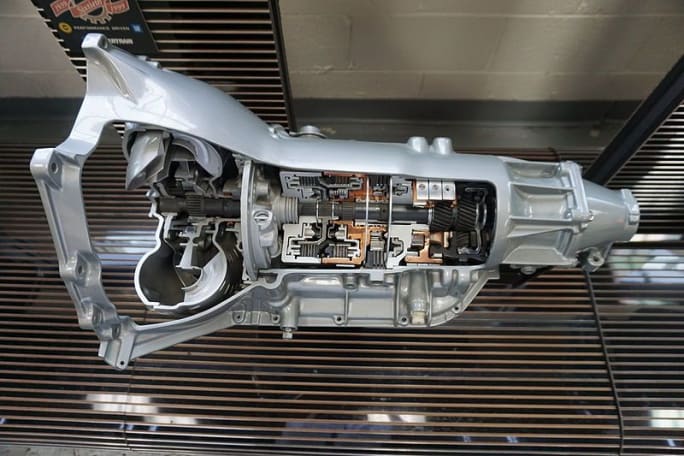
One of the biggest challenges in spec’ing a transmission is whether to select an automatic or manual. Not all OEMs offer both manual and automatic transmission options, so be sure to find out what offerings are available based on your needs.
Photo courtesy of Ypsilanti Automotive Heritage Museum
Diesels provide more low rpm torque, which can be important in stop-and-go driving and when moving heavy loads, as well as provide better fuel economy and potentially better long-term durability and resale value. But this comes with a higher upfront cost. Fleets that replace their vehicles more quickly, drive mostly highway routes, and do not move heavy loads all the time may be better served by a gasoline truck. If a truck is driven fewer than 20,000 to 25,000 miles annually and the work required is on-road delivery, a gasoline engine can reduce overall purchase and long-term maintenance costs.
It is important not to over-spec the powertrain. It is a common mistake to spec an engine with too much capability. Some fleets spec a diesel engine with the most output, which results in higher acquisition cost and a higher cost of operation throughout its service life.
When spec’ing engines for your fleet operation, it is recommended to consider not just the current needs of the operation, but future plans as well. It’s important to consider long-term costs, not simply upfront costs.
Not only does a fleet’s needs change over time, but so do available engine options. Simply utilizing your prior engine specifications for your work trucks may be the easiest option, but may result in a final product that doesn’t exactly fit a fleet’s needs.
In addition, future resale value is an important factor when spec’ing a truck. Take into account which engine will be more desirable in the secondary market. Make sure the truck is equipped with an engine that has enough power to be used in a variety of applications, which will expand your used-vehicle buyer pool.
Real-World Spec'ing Advice
Over the years, I have been privileged to be “trained” by some of the best truck professionals in the industry. Here are a few additional factors to consider when spec’ing medium-duty trucks that were recurrent themes in my conversation with these different truck experts:
- Always include the power take-off (PTO) provision: Even if there’s no need for PTO in a truck’s initial use, the availability of the PTO provision will make a truck more attractive to buyers in the secondary market because it saves the future owner from having to pay to add the provision. The PTO provision is a relatively inexpensive option when ordering a truck, and can stop a sale cold if the buyer needs a PTO.
- Do not spec diesel engines under 230 horsepower: Spec’ing higher horsepower and torque ratings will allow a truck to be used for a wider range of applications, expanding the potential pool of customers on the secondary market. The key is determining the horsepower/torque “sweet spot” where the truck offers sufficient power for its initial duty cycle, while increasing possibilities for future resale, without paying too much up front.
- Balance the selection between too short or too long body lengths: A body that is too short limits the available cargo space, while a longer body requires an extended wheelbase, which makes it much more difficult, slower, and riskier to maneuver within a confined yard or in congested urban traffic
- Avoid spec’ing a manual transmission: Truck manufacturers do a good job matching engines and transmissions to provide powertrain combinations that provide optimal performance.
One of the biggest challenges in spec’ing a transmission is whether to select an automatic or manual. Not all OEMs offer both manual and automatic transmission options, so be sure to find out what offerings are available based on your needs.
Automatic transmissions tend to be more expensive, but are much easier to operate. But today’s reality is that there are fewer qualified drivers capable of operating a manual transmission than in the past. Automatic transmissions are required by most companies when selecting a vehicle, which makes automatics more desirable from a resale perspective.
In addition to resale value, an automatic transmission assists in driver acquisition and retention, lowers maintenance costs, and increases uptime. A manual transmission may be desirable if you are operating in mountainous terrain, but most applications work fine with an automatic.
Automatics are better suited for urban driving that requires constant gear changes.
Spec liftgates that take into account secondary buyers: If you are going to use a liftgate, important considerations are tuck-under versus flip-up, level-ride versus wedge, composition (aluminum versus steel), operating characteristics (power down versus gravity), and platform size. In addition to considerations for your current fleet application, these are important differentiators for secondary buyers in the resale market.
Don’t make the truck’s wheelbase longer than necessary: A long-wheel truck reduces maneuverability and turning radius, which can be a disadvantage when operating at crowded job sites.
There are advantages to a longer wheelbase. A longer wheelbase may be required when auxiliary equipment is installed on a truck. In larger GVW trucks Class 7-8, a longer wheelbase more desirable for spreading the load.
More Vehicle Insights
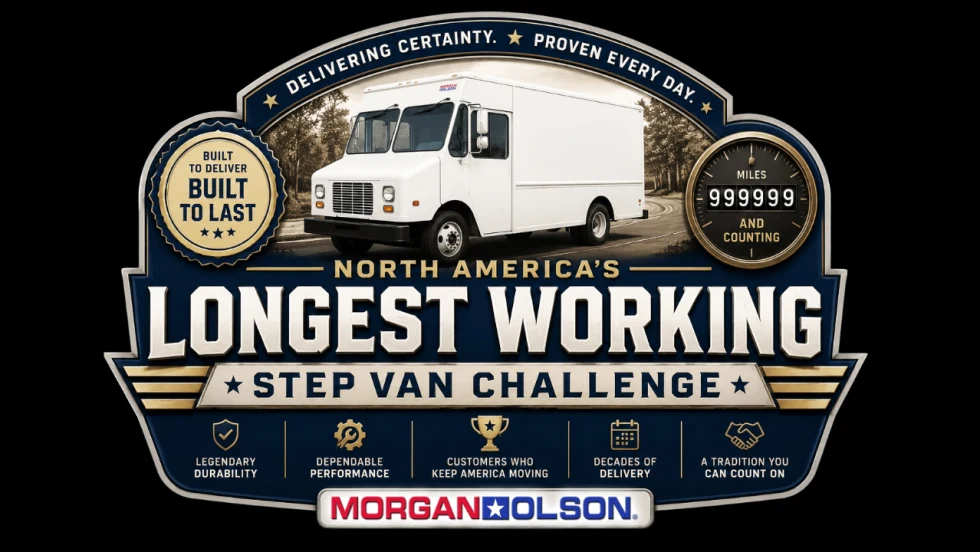
Morgan Olson Launches North America’s Longest Working Step Van Challenge
Morgan Olson has launched North America’s Longest Working Step Van Challenge, a new customer campaign to find the longest-working qualifying Morgan Olson or Grumman step van actively delivering packages for an independent service provider contracted by FedEx.
Read More →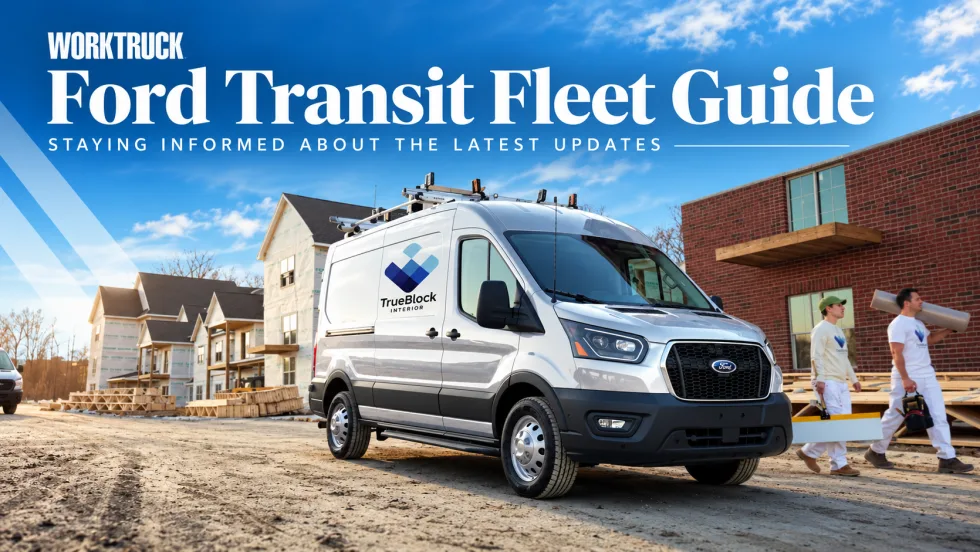
Ford Transit Fleet Guide Specs Capability and 2027 Model-Year Updates
Explore 2027 Ford Transit fleet specs, engines, payload and towing capability, cargo configurations, work features, technology, and model-year updates.
Read More →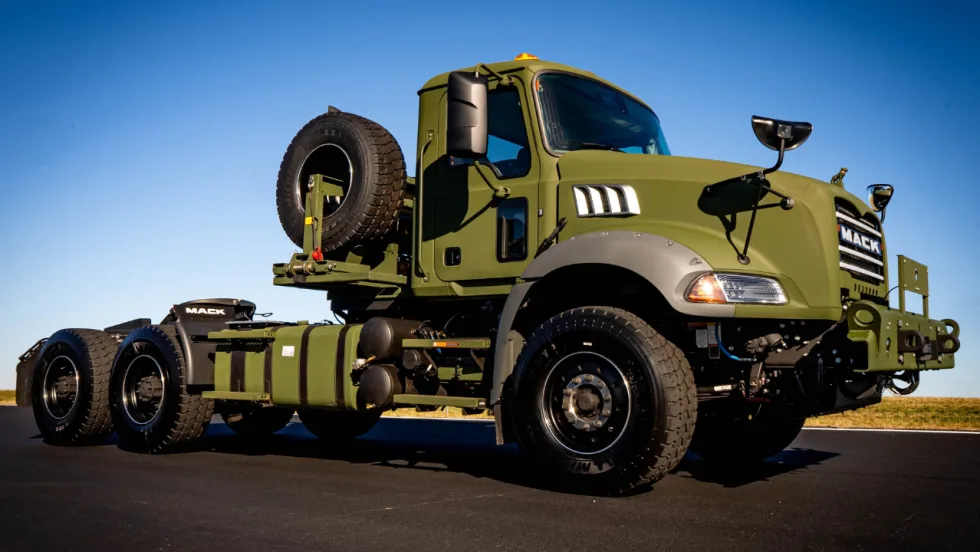
Mack Defense to Spotlight Common Tactical Truck Line Haul Hybrid Tractor During AUSA 2026
Mack Defense was awarded a contract to design, build, and deliver prototype vehicles for the U.S. Army’s Common Tactical Truck (CTT) program. It will show off its line-haul hybrid tractor prototype, based on the Mack Granite, at the 2026 United States Army (AUSA) Annual Meeting and Exposition.
Read More →
Advance Produces 20,000th Front-Discharge Mixer
Advance celebrated the production of its 20,000th front-discharge mixer, a Commander Series FD4000 mixer. Jack Willard first developed the original Rite-Way Truck in 1964, and then Advance was established in 1972.
Read More →
GM Launches Clean Sheet Duramax 8.3L Turbo-Diesel V8 for 2027 HD Pickups
General Motors previewed key updates for its 2027 HD pickup lineup, which will now include a new Duramax 8.3L Turbo-Diesel, electric power steering, and electronic brake boost.
Read More →
GMC Sierra 1500 Fleet Guide Specs Capability and 2027 Model-Year Updates
The next-generation 2027 GMC Sierra 1500 brings new V-8 engines, more standard safety technology, updated trailering tools, and a work-focused Pro trim. Here’s what fleets need to know.
Read More →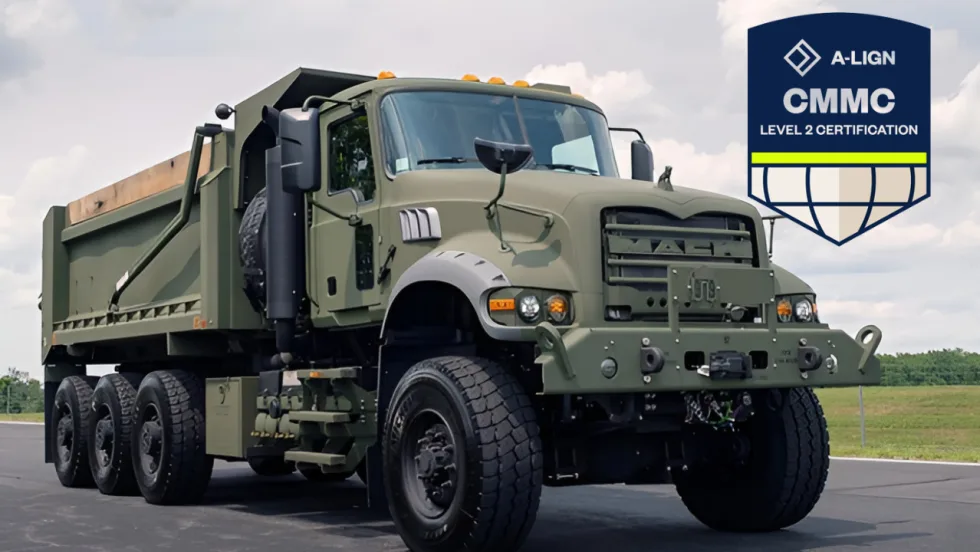
Mack Defense Achieves Cybersecurity Maturity Model Certification Level 2
After an assessment conducted by an authorized Certified Third-Party Assessment Organization (C3PAO), Mack Defense has achieved Cybersecurity Maturity Model Certification (CMMC) Level 2.
Read More →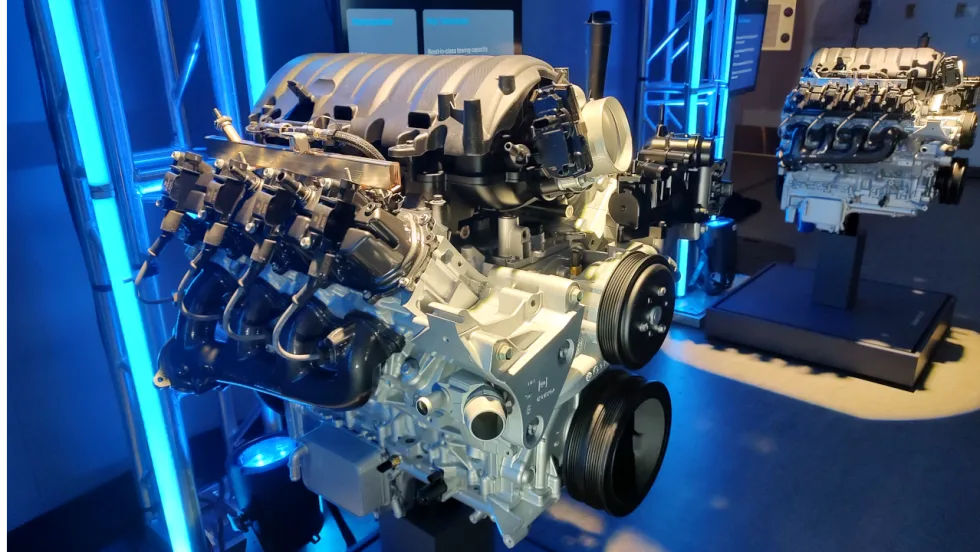
GM Unveils New Sixth-Generation Small Block Engines for 2027 Light-Duty Pickups
General Motors unveiled two new small-block engines, backed by extensive real-world validation and more than 70 years of small-block V8 manufacturing experience, as part of the engine portfolio for the 2027 Chevrolet Silverado 1500 and GMC Sierra 1500.
Read More →
Chevrolet Silverado 1500 Fleet Guide Specs Capability and 2027 Model-Year Updates
The next-generation 2027 Chevrolet Silverado 1500 brings new V-8 engines, updated technology, expanded safety features, and a fleet-focused Work Truck. Here’s what commercial fleets need to know so far.
Read More →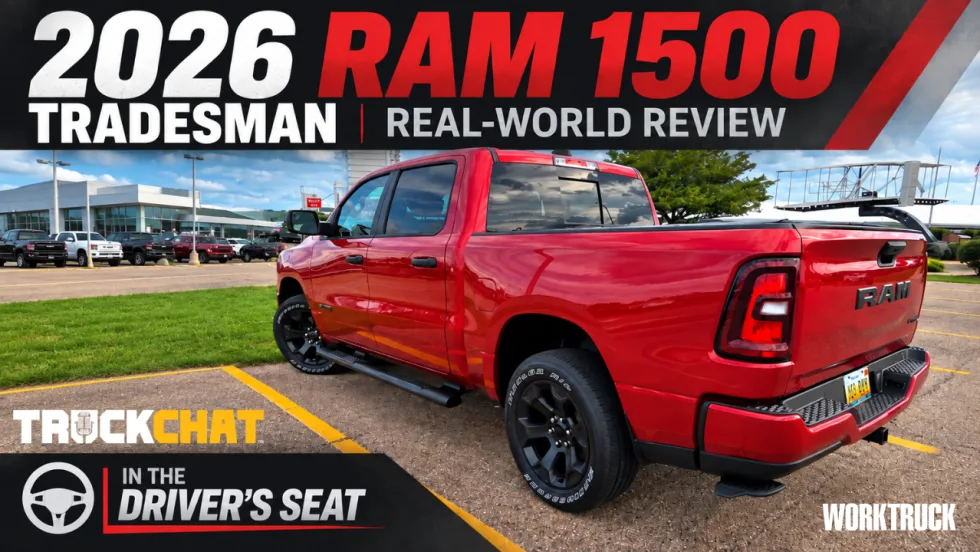
2026 Ram 1500 Tradesman Put to a Real-World Fleet Test
A few days behind the wheel of a 2026 Ram 1500 Tradesman turned into a test of visibility, parking, work-ready features, and even severe-weather driving.
Read More →