





To increase fuel efficiency and reduce the overall weight of a van, upfitters are transitioning from steel racks and bins to heavy-duty plastic composites and aluminum.
More companies are looking for consolidation of upfit suppliers and spec options for better pricing, interchangeability of parts, and a push toward standardization across their fleet.
Top Trends: Chassis, Auxiliary Equipment, Upfitting
There are a variety of upfitting trends occurring in today’s commercial fleet market. Here are the top trends currently influencing chassis, auxiliary equipment, and upfit equipment design and specifications.
June 3, 2016
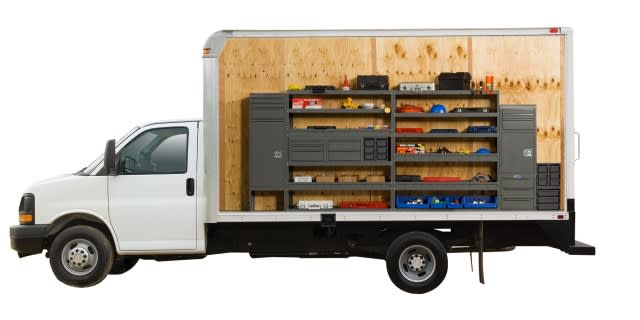
One benefit to lightweighting is the ability to increase the legal payload of a vehicle without having to migrate to a larger GVW truck. (PHOTO: Adrian Steel)
7 min to read
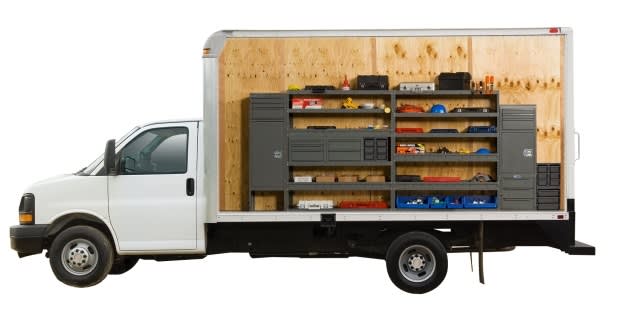
One benefit to lightweighting is the ability to increase the legal payload of a vehicle without having to migrate to a larger GVW truck. (PHOTO: Adrian Steel)
One of the largest vocational markets for upfitted work trucks and vans is the construction industry, which is slowly emerging from the economic doldrums that have stalled this fleet segment since 2008. The upturn in new construction is helping compensate for the current slowdown in the energy sector resulting from the decline in oil prices.
As the economy improves, upfitters are feeling the pressure from the increase in the number of upfits requiring a ship-thru. Upfit demand is very strong and there is some spotty transport delays post-upfit.
There has been an increased utilization of bailment pools to minimize order-to-delivery times. There is a trend for increased utilization of ship-thru upfitting to provide turnkey-ready vehicles at the time of vehicle delivery.
The upfitting industry has been impacted by the long-term trend by many fleets to downsize to a smaller vehicle chassis.
With commercial fleets continuing to downsize to smaller vehicles, the need to maximize cargo space has become much more important. Upfitters, for both pickup trucks and cargo vans, are recognizing this need and are offering maximum storage space solutions in slide-in storage units and interior upfit van packages.
As upfit volume has grown proportional to the increase in fleet truck and van new-order volume, Work Truck has identified the top trends currently influencing chassis, auxiliary equipment, and upfit design and specifications.
Lightweighting Upfit Equipment
The use of lightweight materials in aftermarket body and equipment — and vehicle manufacturers — has become more prevalent, primarily due to the desire for increased fuel economy, payload capacity, and corrosion protection. The amount of lightweighting will vary depending on the particular application of the body and equipment, and typically have a higher cost versus traditional materials.
Upfits are being re-engineered to trim as much weight as possible without sacrificing function.
To increase fuel efficiency and reduce the overall weight of a van, upfitters are transitioning from steel racks and bins to heavy-duty plastic composites and aluminum. The same thing is happening with service bodies, as upfitters are concentrating on reducing the weight of service bodies on truck chassis.
The increased use of lightweight materials in upfit packages has been on the rise for several years and there are many advantages to doing so.
First, specifying lighter-weight upfit materials decreases the vehicle’s curb weight, which, in turn, lowers operating costs by reducing fuel consumption. In addition, by reducing fuel consumption, fewer greenhouse gases are emitted, which contributes to meeting corporate green fleet goals.
Similarly, many lightweight materials used in upfits are recyclable, further contributing to a corporation’s overall sustainability initiatives.
A second benefit to reducing GVW is that it creates the potential opportunity to downsize to a smaller vehicle. In certain situations, the lightweight upfit may enable the fleet to select a smaller chassis that not only improves fuel economy, but also lowers initial acquisition cost.
A corollary benefit to lightweighting is the ability to increase the legal payload of the vehicle without having to migrate to a larger truck. Lighter bodies, racks, bins, and shelves mean more cargo can be carried, allowing fleets to accomplish more with the same vehicles. This is especially important with the proliferation of smaller, lighter platforms.
Another reason for lightweighting is to ensure the vehicle stays below a specific GVW threshold to avoid DOT regulations.
Similarly, the additional capacity may result in fewer trips per day because the vehicle can carry more payload. It is important to note; however, that while lightweighting may allow a fleet to increase payload or reduce fuel consumption, it cannot achieve both simultaneously.
A lightweighting strategy is designed to take weight out of the vehicle by specifying upfit components built from lightweight materials, such as aluminum, fiber-reinforced composites (FRC), or fiber-reinforced plastic (FRP) composites.
Similarly, today’s cargo van interiors feature increased use of lightweight materials to reduce overall vehicle weight. Upfitters are transitioning from steel racks and bins to heavy-duty plastic composites and aluminum. Lightweighting also extends to auxiliary equipment mounted on a service body, such as aerial platforms and other equipment, that use high-strength steel, which is thinner and lighter than traditional steel, but with comparable strength.
Lightweighting also extends to auxiliary equipment mounted on a service body, such as aerial platforms and other equipment, that use high-strength steel, which is thinner and lighter than traditional steel, but with comparable strength.
Corrosion resistance is another benefit of some lightweight materials, specifically aluminum, fiberglass, and plastics, which helps extend the service life of an upfit, especially those operating in Snowbelt states and coastal regions.
Lightweighting a service body at nonstructural areas in the body, such as side compartments, doors, floor pan, aluminum tool boxes, ladder racks, and other service-body-mounted equipment.
Also, lightweight materials, for the most part, have a higher initial cost relative to conventional steel, depending on the type of material and amount of that material used in the upfit design. While lightweight materials may increase fuel economy, will the vehicle travel a sufficient number of miles per year to recoup the higher materials price? In a low-mileage duty cycle, the total cost of ownership (TCO) of steel may pencil out better because the vehicle won’t be driven enough to justify the higher materials cost. Some lightweight materials do not have the same durability as steel, which are required for extended lifecycles or severe-duty applications.
There’s an immense drive to reduce weight so a vehicle is below the threshold for DOT and CDL requirements. In addition, the space savings created by multi-function equipment and ease of operator access is a win for drivers. One example of multi-function equipment used in upfits is a three-in-one air compressor, generator, and welder.
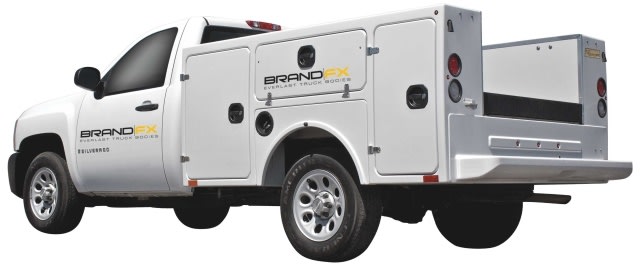
While lightweighting may allow a vehicle to increase its payload or reduce fuel consumption, it cannot achieve both simultaneously. (PHOTO: BrandFX)
Ergonomic & Productivity
Over the years, work trucks have evolved into mobile offices equipped with a variety of in-cab devices, such as GPS and mobile data terminals for job-site reporting, routing, and work orders; along with in-cab filing bins and swivel writing boards, all of which have dramatically enhanced driver productivity. But, these devices and equipment take space, creating a cramped cab environment, restricting a driver’s body movement, which can potentially lead to ergonomic injuries.
Fleet managers are giving increased consideration as to whether an upfit will be ergonomically safe for the driver over the service life of the vehicle. Fleets are focusing on ergonomic specifications to enhance driver safety and comfort, which ultimately increases employee productivity.
Fleet managers reason that adding ergonomic safety equipment, such as grab handles or a drop-down ladder rack in lieu of a fixed ladder rack, will reduce insurance claims and improve operator efficiency.
Under OSHA regulations, an employer must provide a workplace (which includes work vehicles) free from recognized hazards. A variety of upfitting options are available to fleets to help reduce the risk of injury to employees, such as hydraulic self-unloading ladder racks, lower-profile service bodies, and even simple features such as step bumpers; however, workers’ compensation claims resulting from poorly spec’d add-on equipment are on the rise.
In terms of productivity enhancements, there is an increased frequency in being asked by customers to include equipment such as cranes, compressors, and inverters, within our upfit quotations prior to an order being placed.
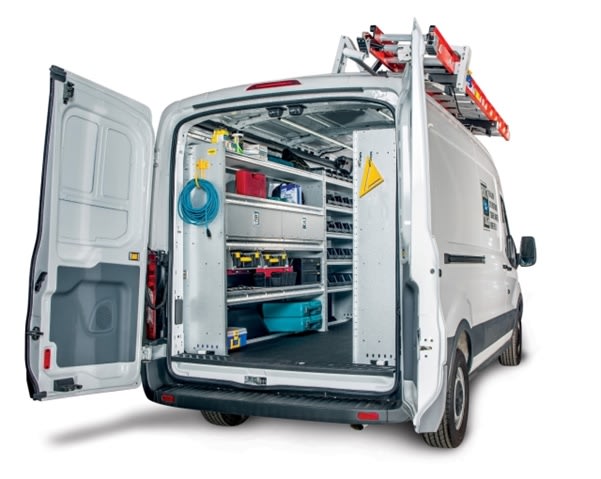
Upfits are being re-engineered to trim as much weight as possible without sacrificing function. (PHOTO: Ranger Design)
More Safety Equipment
More fleets are requesting additional safety equipment, such as a rear-view camera system, reverse sensing system, back-up alarm, remote start, grab handles, convex spot mirrors, and drop-down ladder racks. Rather than factory order a rear-view camera system, reverse sensing system, or remote start features, fleets are adding the equipment at the time of upfitting to avoid the added initial vehicle cost, requiring a possible upgrade to a higher trim level or forcing the selection of additional option package content that is not required for the fleet application.
Manufacturers are offering safety features on base-trim levels previously only offered on higher-trim levels.
Examples include back-up cameras and reverse sensing systems. When not available, these options are being requested by fleets as part of the upfitting.
OEM option packaging restrictions are causing many fleets to add safety equipment at the upfitter.
The majority of crash-avoidance features are offered by OEMs, which requires customers to select up-level or luxury trims. As a result, fleets are utilizing aftermarket companies and upfitters to install crash avoidance features on work level or base trim vehicles. The most common crash avoidance technologies used by fleets are forward-collision warning, lane-departure warning, and lane-departure prevention. This technology enables safer driver behavior, reduces the risk of accidents, and saves lives.
In terms of lighting, there has been a dramatic shift in the use of LED lighting in upfit packages. LED lighting creates a smaller electric current draw on the electrical components and has a longer service life.
Standardized Upfit Specifications
Standardized upfit packages to reduce the number of individual branch equipment variances without sacrificing safety or efficiency. Standardization allows for volume price discounting from the equipment manufacturer, the ability to stock equipment at the installer to shorten upfit lead time, and flexibility if a vehicle needs to be transferred between branch locations, and facilitates quicker new-hire training.
More companies are looking for consolidation of upfit suppliers and spec options for better pricing, interchangeability of parts, and a push toward standardization across their fleet.
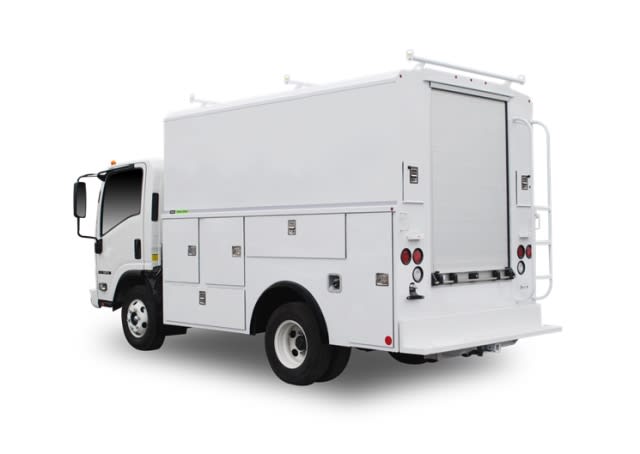
Use of lightweight materials in aftermarket body and equipment has become more prevalent. (PHOTO: Reading Truck Body)
Subscribe to Our Newsletter
More Upfitting
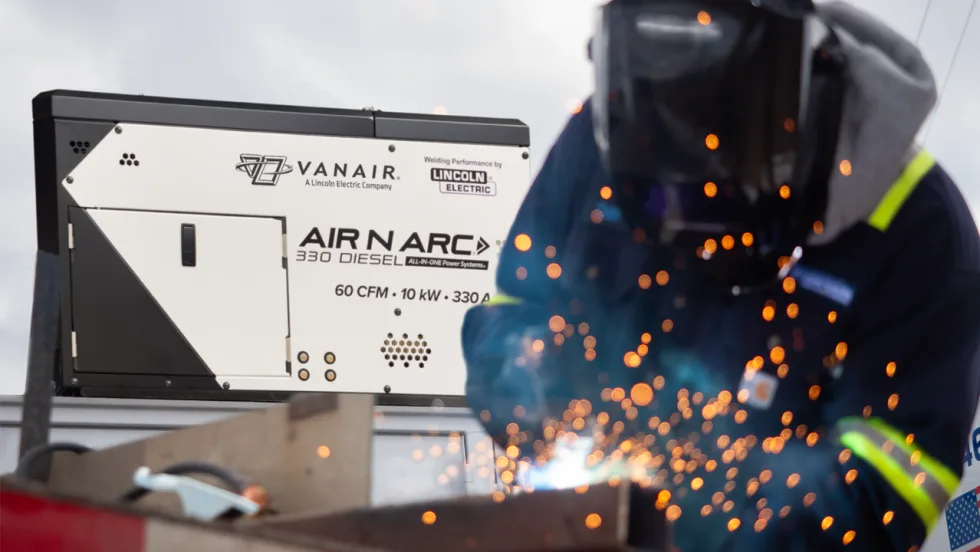
Multitasking: Vanair’s Air N Arc 330 Diesel 60 CFM All-In-One Power System
The Air N Arc 330 Diesel 60 CFM from Vanair consolidates a welder, generator, rotary screw air compressor, battery booster, battery charger, and EV charger into a single 750-pound enclosure driven by one 24.8-horsepower Kubota diesel engine.
Read More →
Buyers Products Awarded Sourcewell Cooperative Purchasing Contract for Snow & Ice Equipment
Buyers Products has been awarded a Sourcewell contract for a wide range of winter maintenance equipment and accessories, including snowplows, municipal plow systems, wing plows, spreaders, and more.
Read More →
Hilltip Introduces the SnowStriker SFT Flex Expandable Box Plow
Hilltip’s new SnowStriker SFT Flex expandable box plow features hydraulically extendable sections that allow operators to adapt the clearing width to changing conditions and applications on the go.
Read More →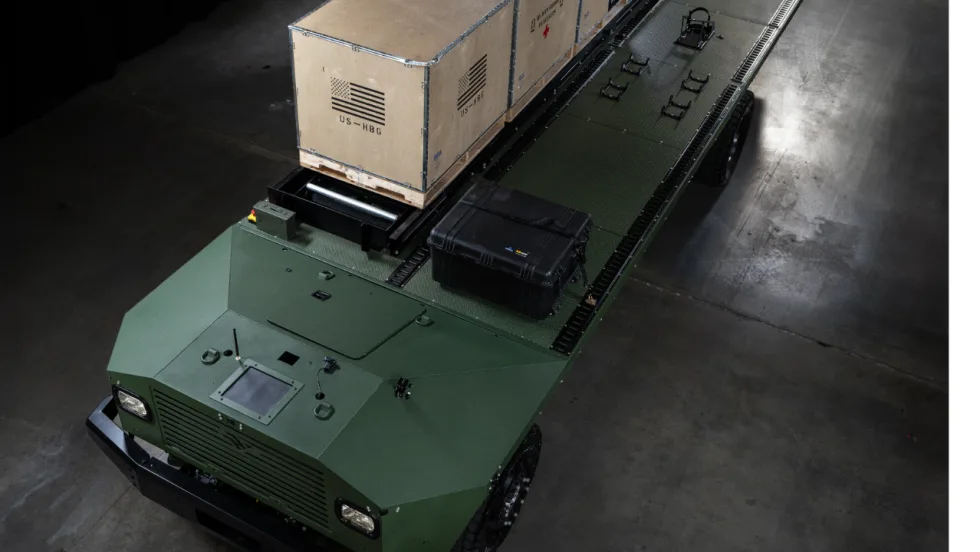
Harbinger Part of Effort to Deliver Autonomous Logistics Capabilities for U.S. Army
American Rheinmetall received an 18-month U.S. Army contract to deliver autonomous, hybrid-powered uncrewed ground vehicles. Harbinger is providing the truck platform for those vehicles.
Read More →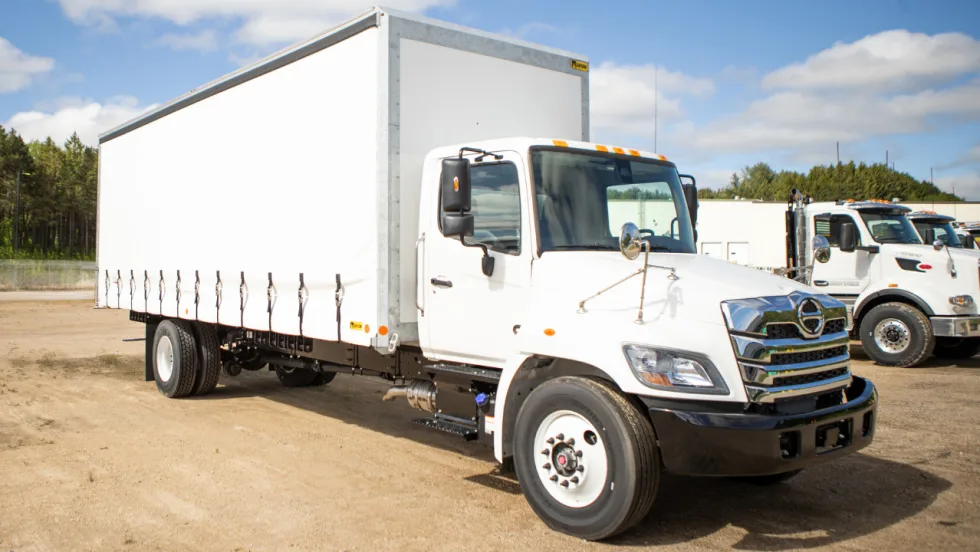
Thinking Outside of the Box: Choosing the Right Truck Body for Your Fleet
Choosing the right truck body can have a major impact on loading efficiency, cargo protection, downtime, and long-term operating costs. Here’s how dry vans, platforms, and curtainsiders compare, plus what fleets should consider before spec’ing their next truck.
Read More →
Fourth Annual Upfit Package of the Year Awards Open for 2027 Entries: One Month Left!
Think your upfit deserves industry recognition? Enter the 2027 Work Truck Upfit Package of the Year Awards before the Sept. 30 deadline. There is less than a month left to get your submissions in!
Read More →
Reading Truck Equipment & Masterack Unite as One of North America's Largest Commercial Vehicle Upfit Networks
Reading Truck Equipment and Masterack have integrated operations to create one of North America's largest and most comprehensive commercial vehicle upfit organizations.
Read More →
Kinedyne Launches Heavy Duty Logistic Shoring Strap
Kinedyne’s new Heavy Duty Logistic Shoring Strap features a patent-pending four-point design to deliver greater cargo stability, increased strength, and easier handling for rolling and shifting freight.
Read More →
Hooklift Bumper Design from Stellar Showcases Strength & Versatility
Stellar Industries’ new bumper for the NZT Series Hooklifts come in two capacity options: the 20K, designed for Class 3 – 6 chassis with a 20,000-pound pull capacity, and the 90K, built for Class 7 and 8 chassis with a 90,000-pound pull capacity.
Read More →
Maxon Lift Awarded the Wabash Platinum Award for Supply Chain Performance
Maxon Lift, a liftgate manufacturer since 1957, received the Wabash Platinum Award for supply chain performance in 2025. Each year, Wabash presents awards to top suppliers for excellence in supply chain performance.
Read More →